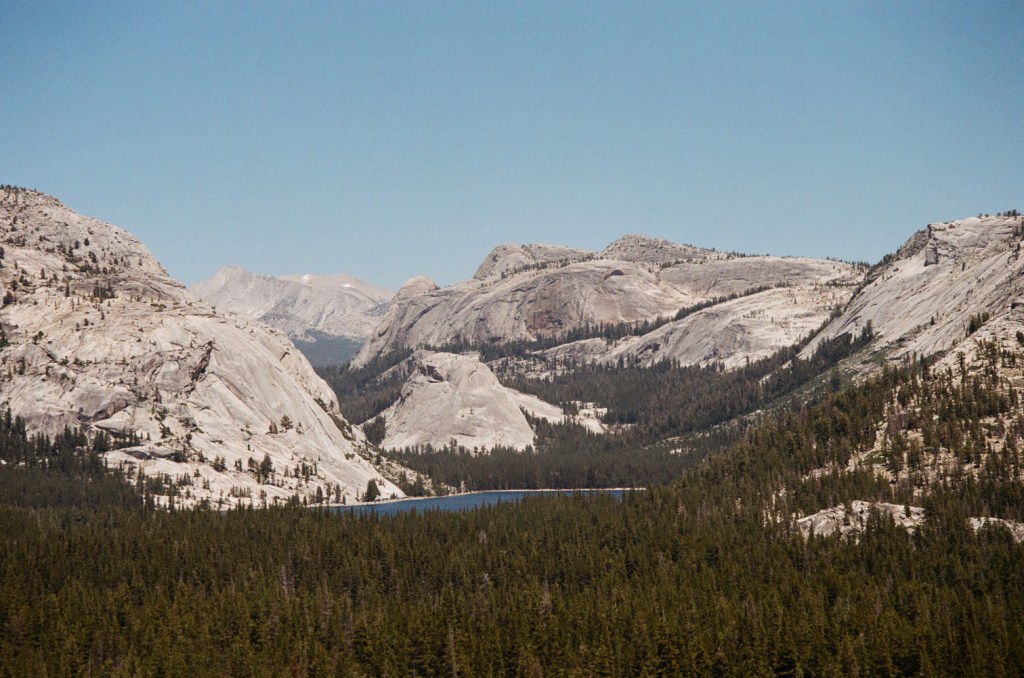
Patience is rewarded in the mountains. Without it, the backcountry can become quite an unforgiving force. This year I’ve tried to accept the right time to turn around. I’ve bailed from many spring skiing objectives. Twice its happened at the base of Snake Dike. Most recently it was at the trailhead of Temple Crag with overnight bags already packed. But on the third week of July in 2026, my patience finally paid off. Over 9 days the stars aligned and I was able to climb nearly everyday. My buddy Trevor and I made a brutally long mission to Mt. Williamson and Mt. Tyndal. Joe and I climbed 4 more big routes in Tuolumne and Yosemite immeidately after. Shyvonne and I capped off the week climbing and skiing some of the most incredible terrain of the Eastern Sierra. Weeks like this are few and far between. I would not have it any other way.
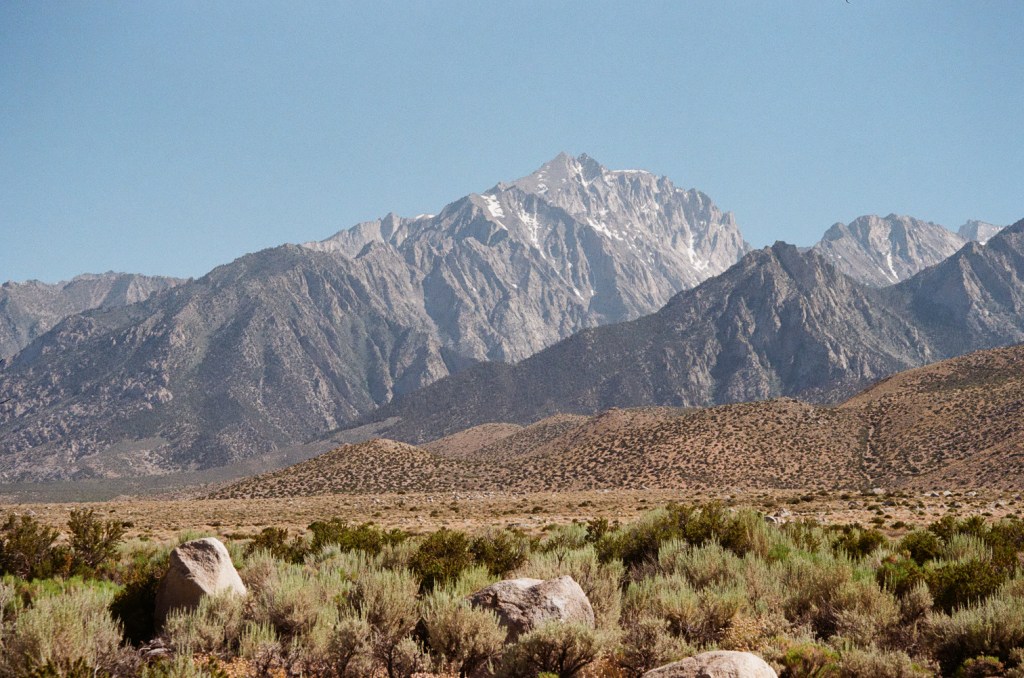
It was a Saturday morning when I began the drive out to the Eastern Sierra. Trevor, my climbing partner from LA, had organized the trip in pursuit of summitting two more California fourteeners. The summer prior we had an epic experience linking Mt. Russel, Mt. Whitney, and Mt. Muir in a single push1. It was a challenging day and we wanted a repeat trip to the less traveled fourteeners neighboring Whitney to the North. Our plan was to travel light and summit both Mt. Williamson and Mt. Tyndall with a short cowboy camp the night prior. Trevor met at the trailhead around 4pm that Saturday afternoon. We didn’t have much time left in the day and quickly packed our bags. Between us was one stove, two sleeping pads & bags, lots of fuel, and some snow climbing gear. Our plan that night was to make it to Anvil camp, approximately 9 miles and 5000 ft towards Sheppard’s Pass.
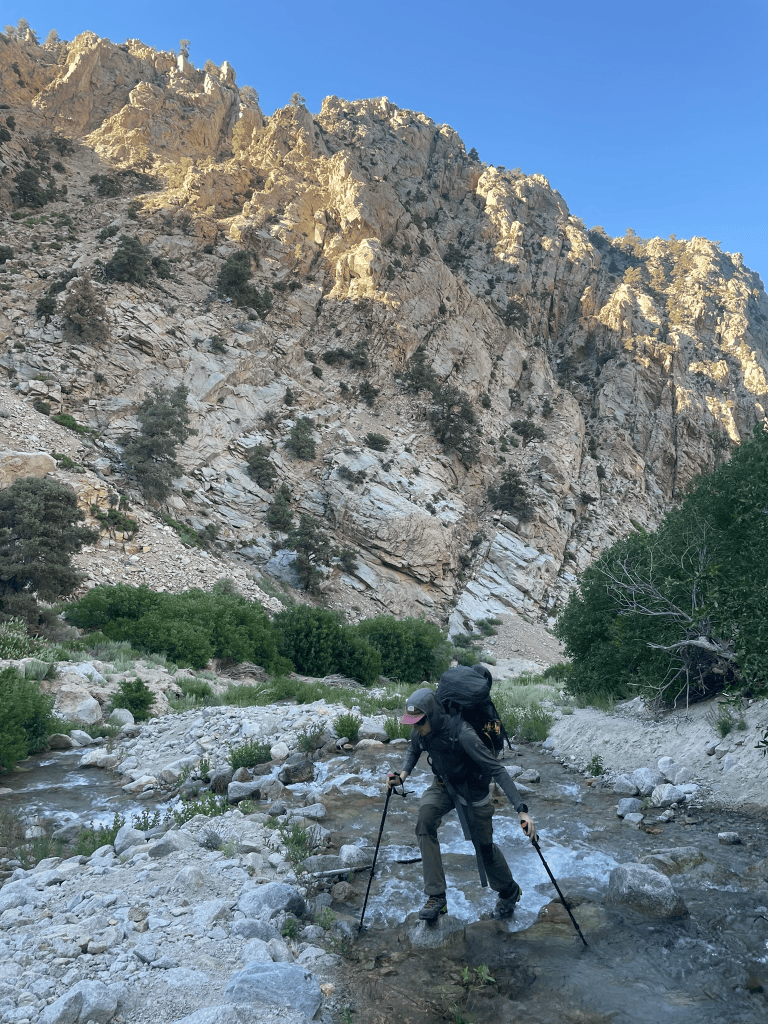
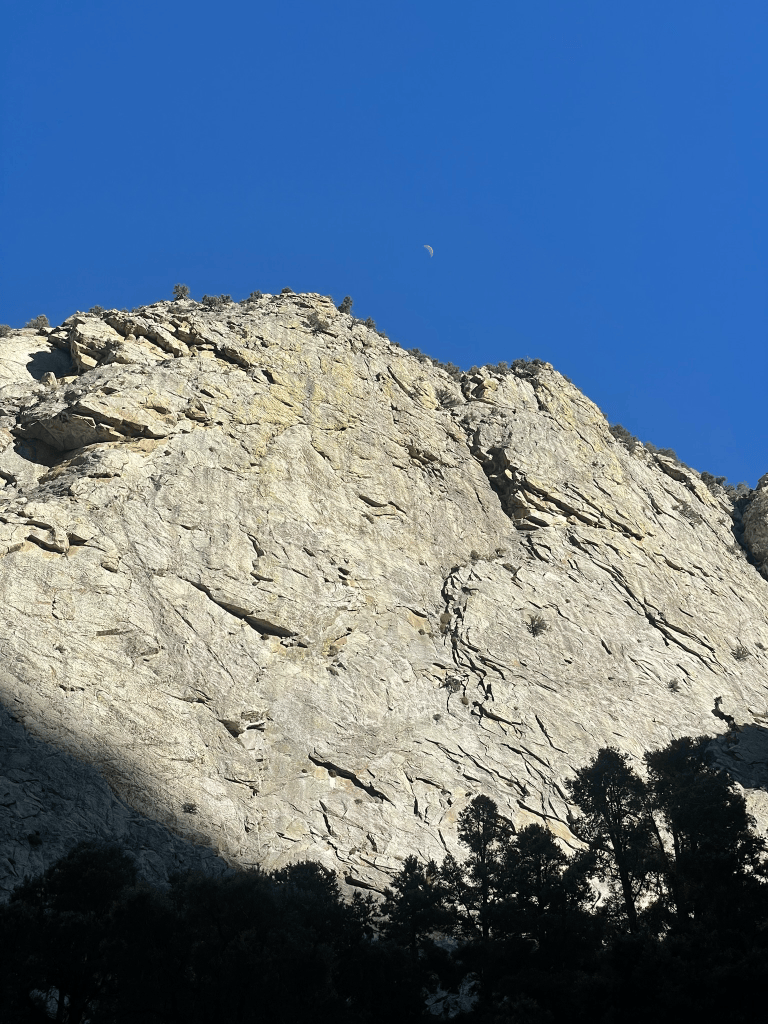
The trail started off in a windy path filled with bushes and four distinct stream crossings. It was lucky that we made it through with daylight but knew we might not have the same luxury on the way out. Following the bottom of the drainage was the start of a huge climb up the valley. Sheppard’s pass winds it way through several smaller ridgelines before even entering Mt. Williamson’s vicinity. We reached the first ridge around 7pm and were finally able to see the peak for the first time. It was glorious in the evening light, but following this point was about a 1000 ft of downhill to reach the next prominent ridgeline. By the time we made it there the light was beginning to fade and we were both feeling the pressure of the weekend. We’d have two more hours of hiking that evening and nearly 20 more the next day. Regardless we pushed onto camp and quickly set ourselves up for bed. The stars that night were incredible and set a great ambiance for our backpacking meals. Luckily for us the weather was perfect for a night out in the open and we were falling asleep just after 11 pm.
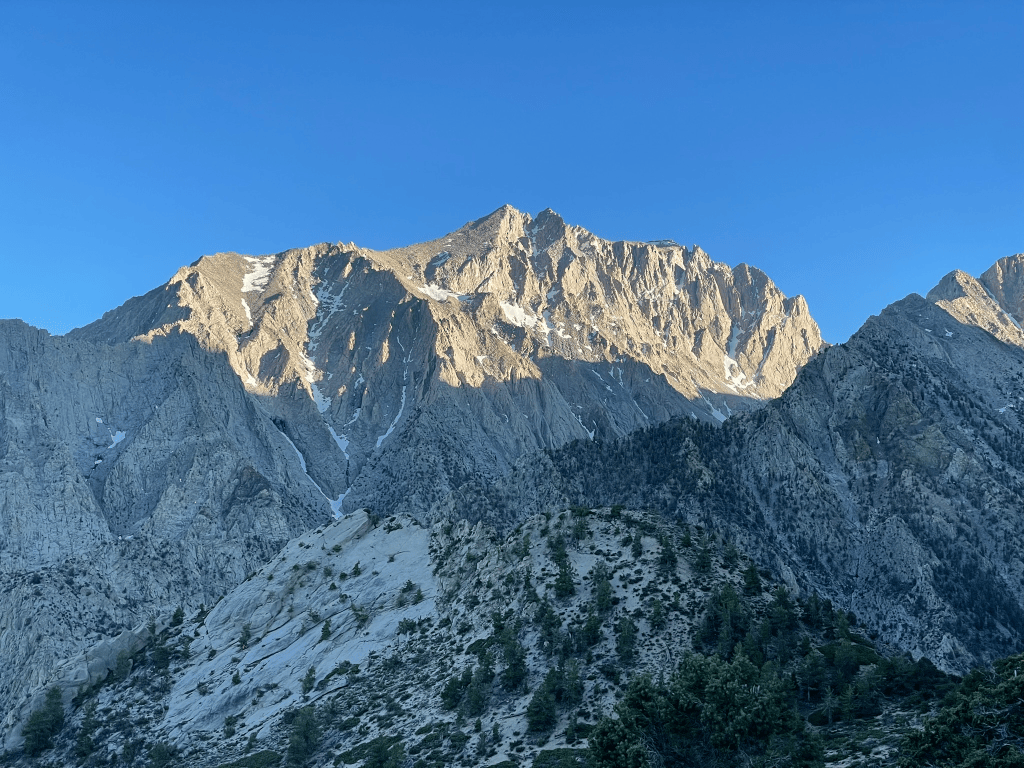
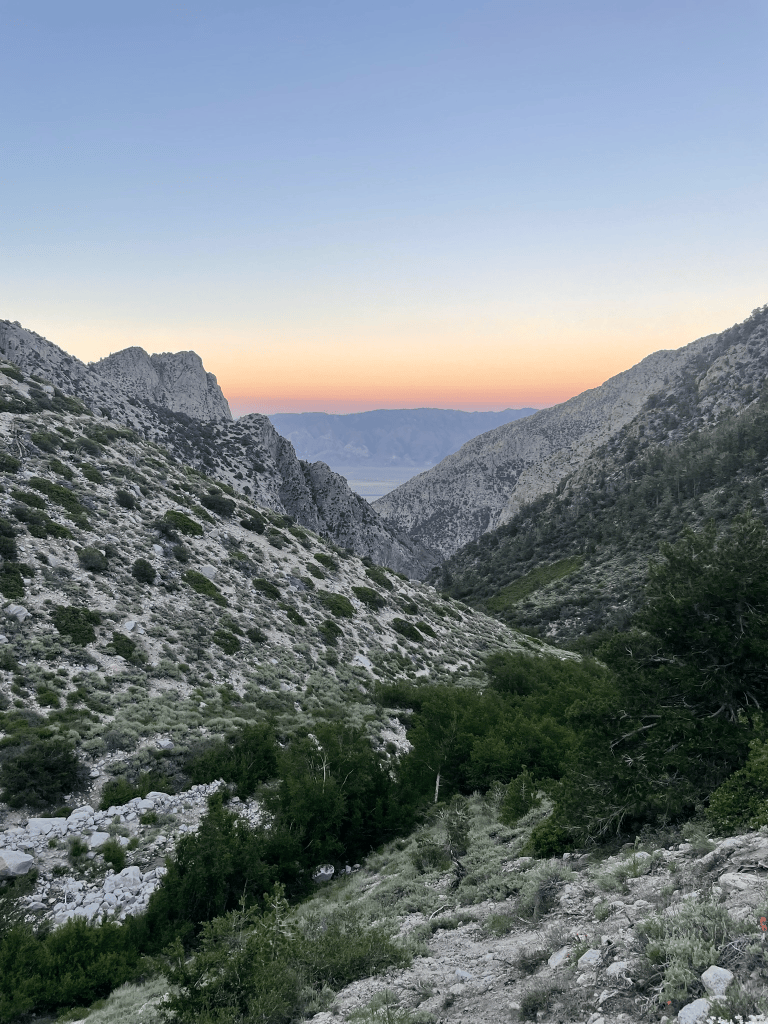
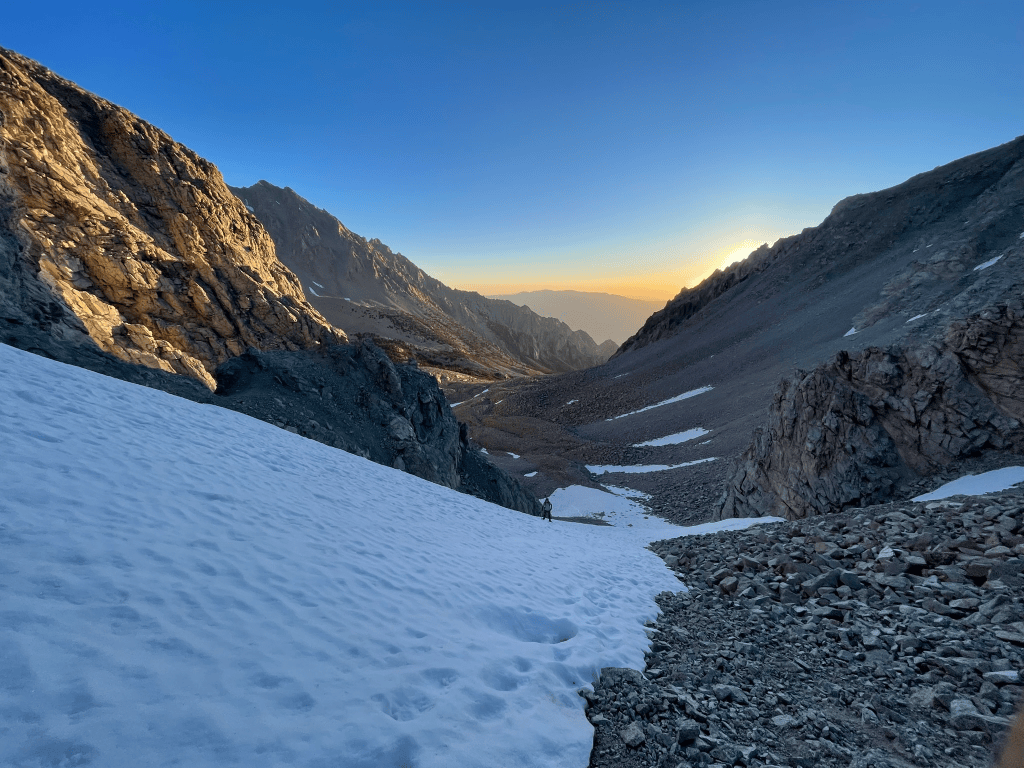
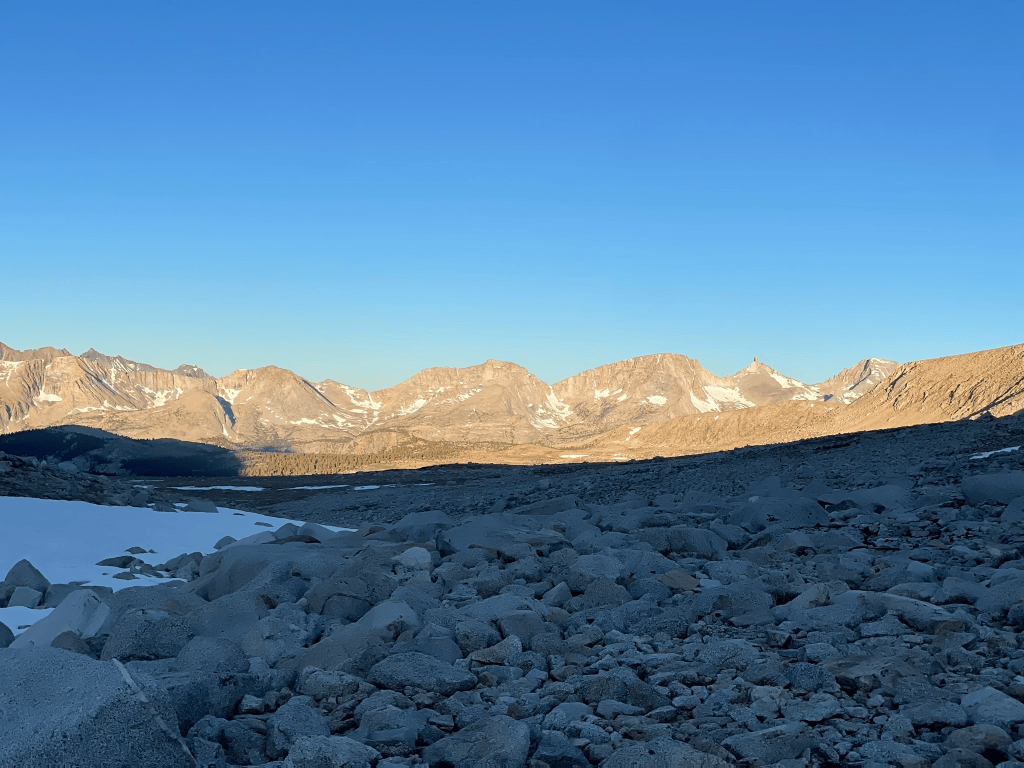
My alarm rang at 4 am that next morning and I felt ready. Despite our huge hike in the day prior, we still had a couple miles and about 1500 ft of climbing before we reached the end of Sheppard’s Pass. This remarkable alpine zone towered above the valley at 12,000 ft and served as a grazing refuge for herds of livestock in the hot desert summers. In our context, it also allowed passage to the massive Williamson Bowl where both fourteeners lie. The final 500 ft of the pass required crampons as we stepped straight up its snow covered headwall. The sun had risen at this point and we could see thousands of feet into the valley below. Next up was the long cross country journey through the Williamson Bowl several miles away. The views of the high alpine peaks in all directions was glorious but hiking through endless talus made for a tough morning. Although there were still some snowfields left in the bowl, we luckily did not see anything significant in main gully up to Williamson. This West facing gully was about 2000 ft tall and was nearly all loose talus and scree. Before starting up we took a well deserved snack break and took in the enormity of the landscape.
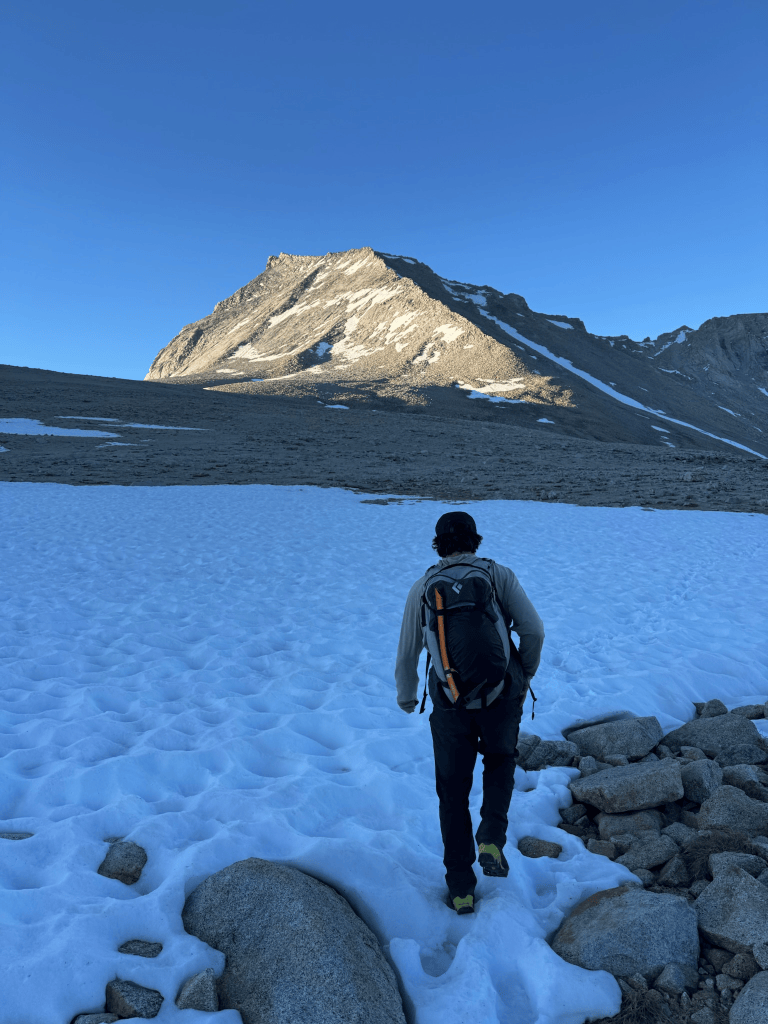
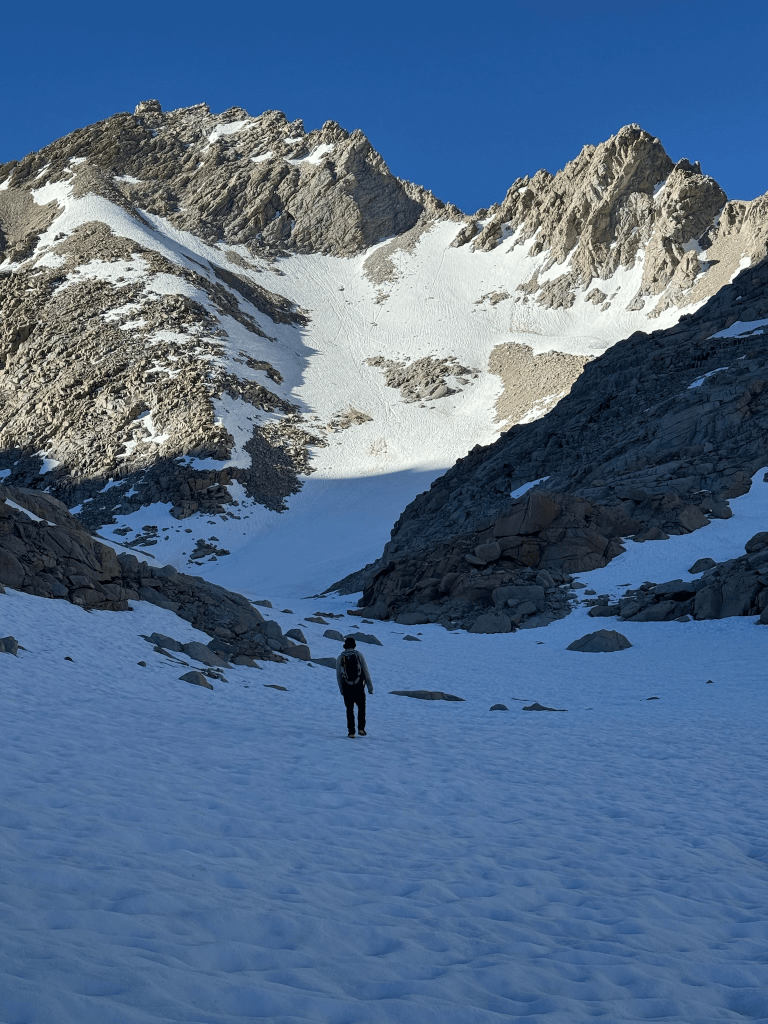
Our ascent up the scree field was slow and steady. Occasionally there were small obstacles like snow and steep sections of rock. Nothing was technically difficult, but we were starting to feel the altitude as we approached 14,000 ft. At 10 am we had one remaining obstacle between us and the summit plateau. This ~100 ft chimney was Sierra fourth class and turned out to be an exciting treat to cap off the otherwise loose and low angle gully. Downclimbing would be slightly more tricky but we both felt pretty comfortable. In classic fashion, we still had another 20 mins or so of scrambling on the ridge before we got to the true summit. Once we arrived we were granted with one of the most spectacular views of the High Sierra I have ever witnessed. Trevor and I glared at the granite panorama in awe. To the South was Mt. Whitney’s cirque, our climbing epic from the summer prior. To the North was the grand Palisade Crest, a ridgeline we both admired greatly. Mt. Williamson is the 2nd highest peak in the Sierra and rewarded us with a great sense of accomplishment to start the day.
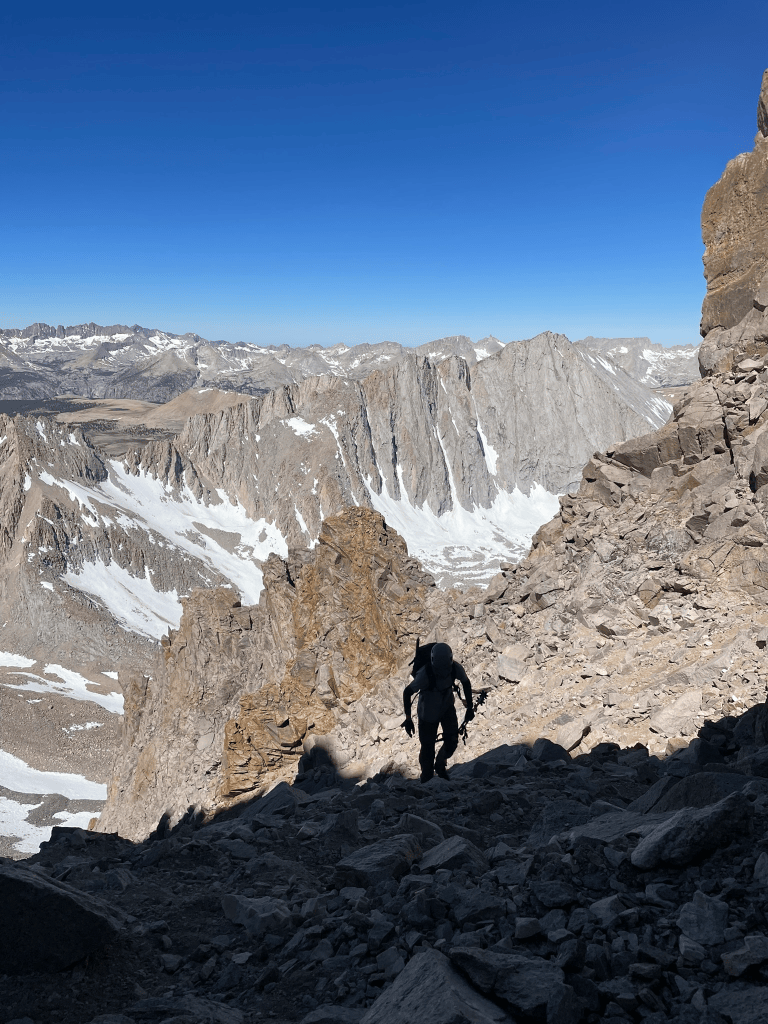
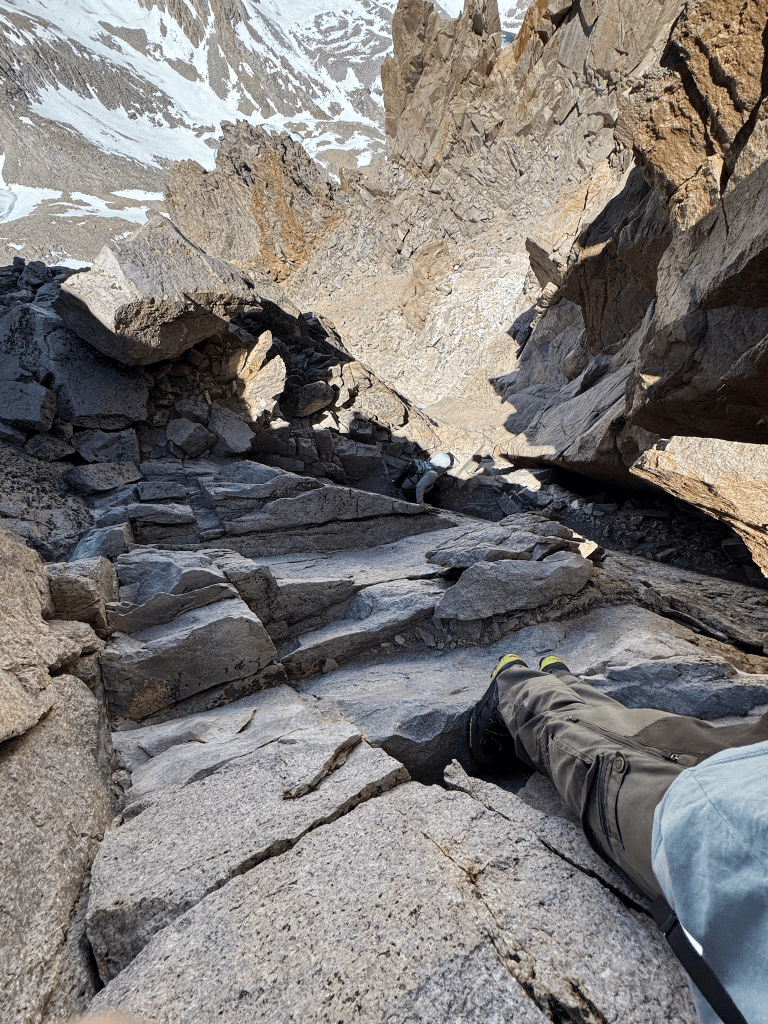
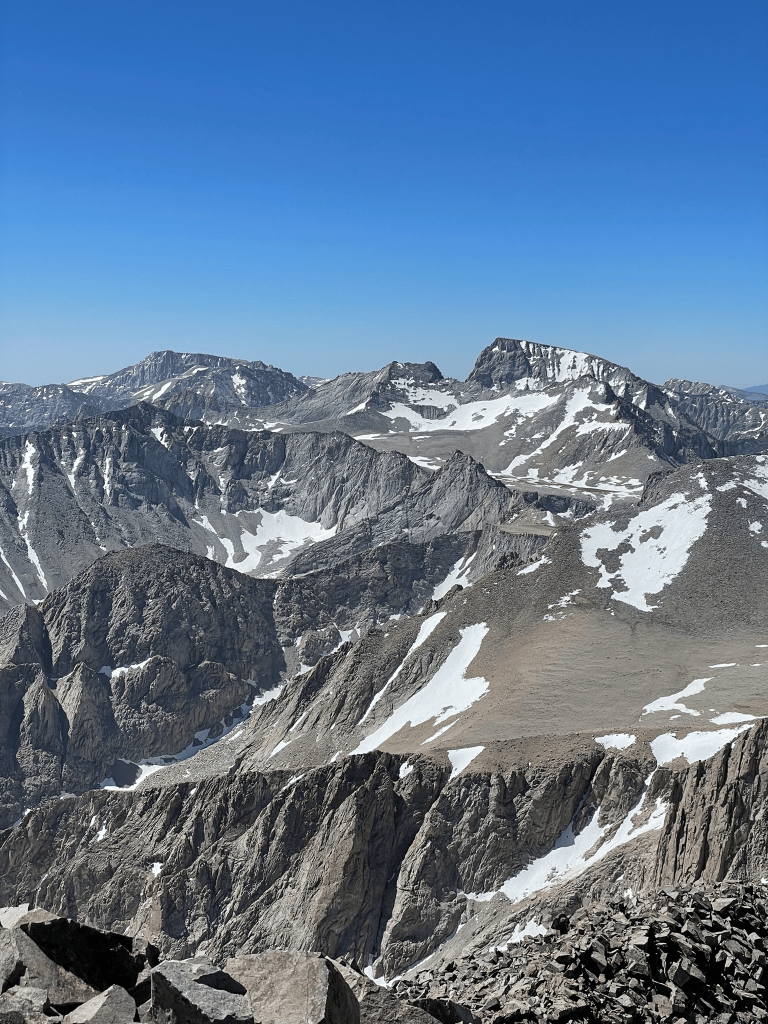
After about 10 mins we snapped back to reality. Up next we would have to downclimb the fourth class chimney and then descend another 2000 ft to the bowl below. Surprisingly I was still feeling quite good given the altitude, but Trevor lagged behind slightly. I waited back at the base of the bowl and we both shared another snack break. At this point we discussed Mt. Tyndall. This fourteener was on our way back and in theory had an easy third class scramble to its summit. However from our morning approach below it looked pretty steep and exposed for the grade. I knew we would have to move fast for good conditions on the descent and began to question whether or not we should pursue this 2nd peak. In contrast Trevor was still quite optimistic. We could still descend in the dark and knew that the day would be excruciatingly long in either case. So we took the gamble and continued onwards towards Tyndall.
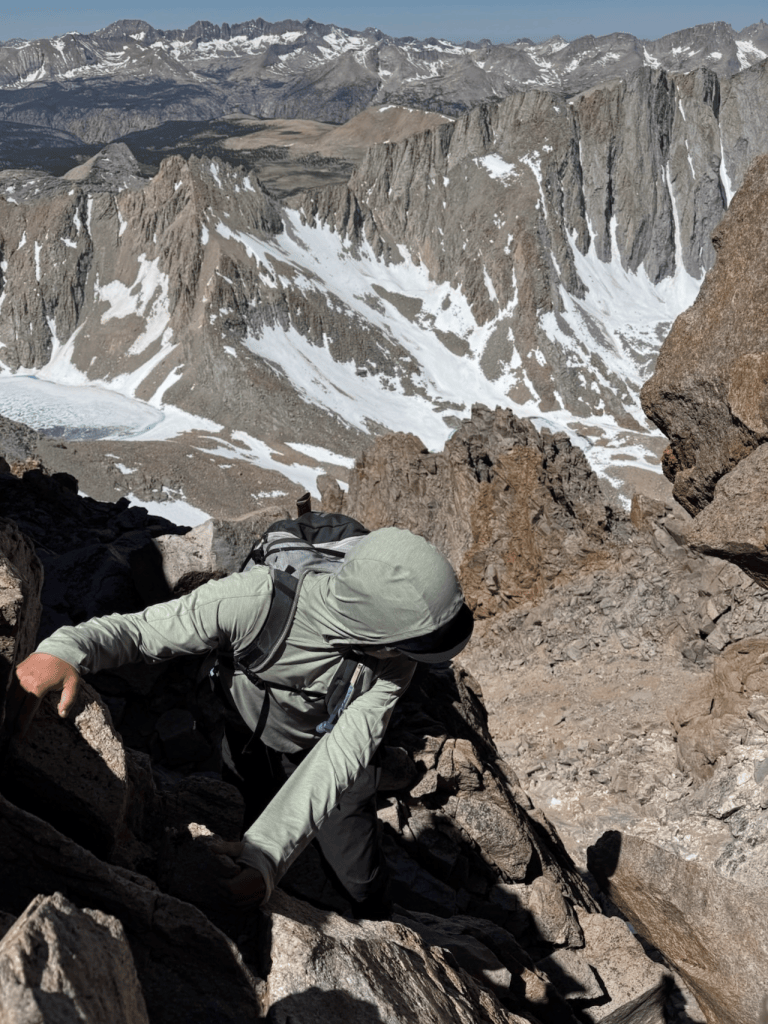
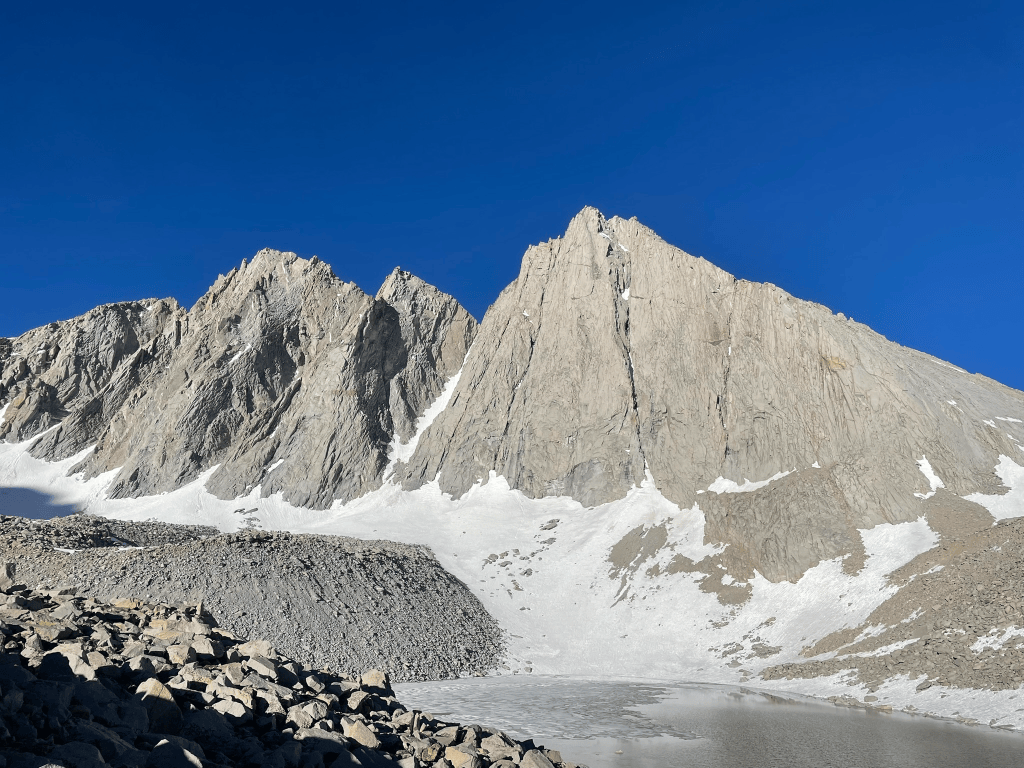
Around 2pm we finally made it to the base of the route. Mt. Tyndall’s North Rib was striking and took a direct route up its face. The beginning 500 ft or so was all loose talus before steepening with increased rock quality. Progress was still slow and steady as we charged up the exposed rib. Due to the snow travel earlier in the day, we both opted for stiff mountaineering boots. These were great for lots of cross country travel, but made the scrambling feel a little less secure than I would have liked. Route finding up high was also difficult and there were several sections where I knew Trevor was uncomfortable. I stayed close and pointed out the way were I could. We’d have to move fast enough to keep daylight but slow enough to feel confident the whole way. The last crux gave way to an easy but exposed ridgeline leading to the summit. Crossing this terrain felt tough. It was slow moving and longer than I expected. We both felt worked at the summit and I was less confident in downclimbing than ascending by far. At least we had another spectacular view in front of us. I tried to admire the shear 2000 ft drop off the East face, but could not truly enjoy the moment while we remained in uncertainty for the descent.
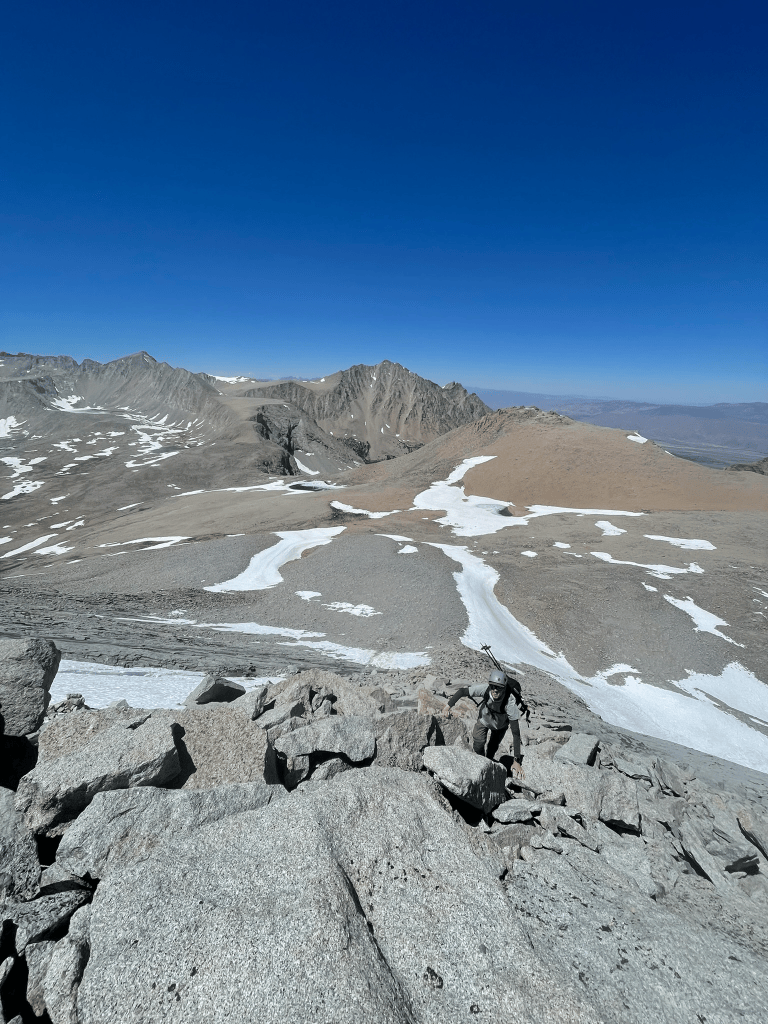
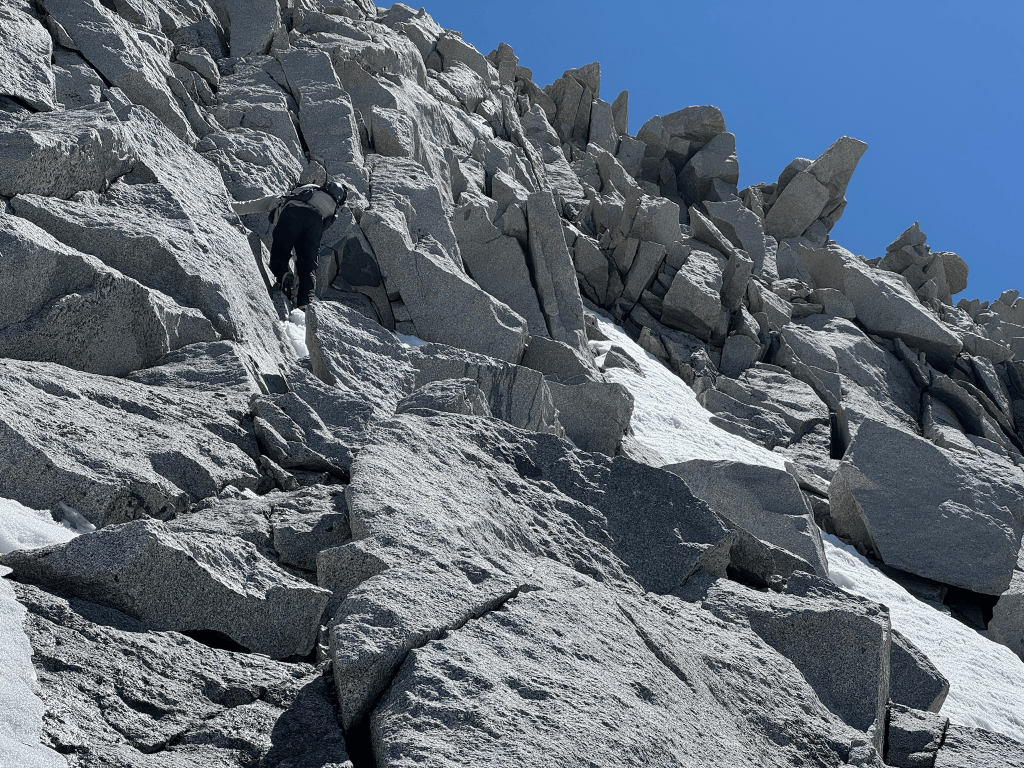
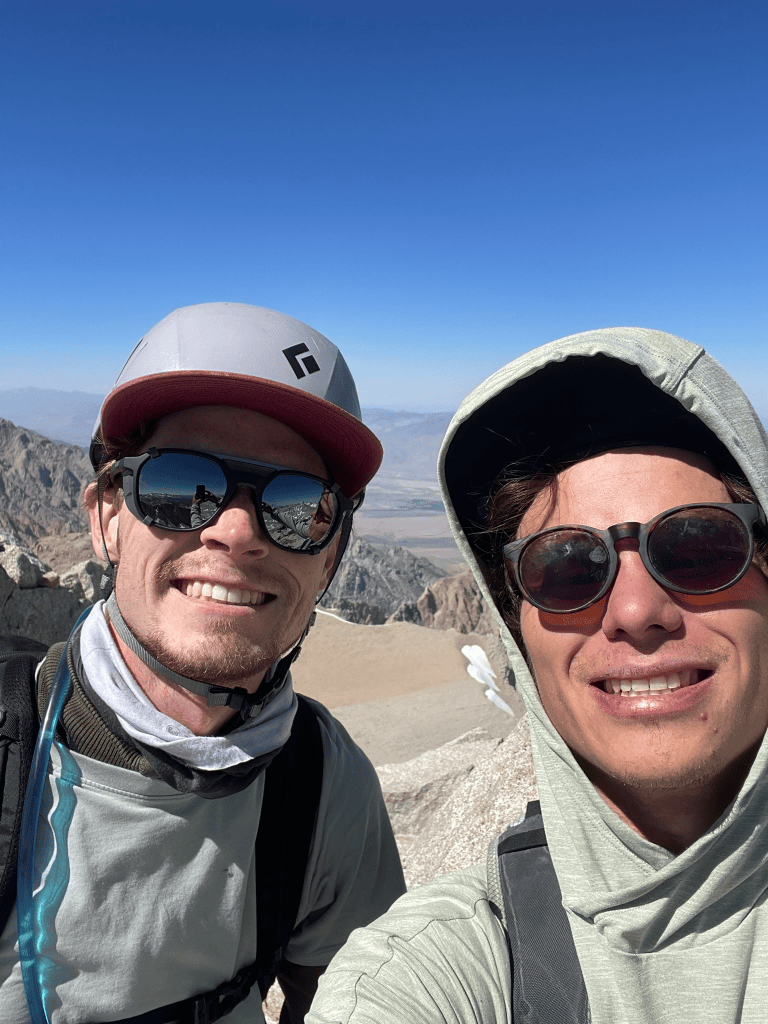
Another 20 mins later and we arrived back at the crux of the route. Trevor initially did not feel comfortable downclimbing what we had just come up. Briefly we searched for an alternative scree descent but I felt like any new terrain was a huge risk in itself. Instead we reluctantly committed to the descent and began the arduous route finding process. There were several small snowfields, convex roll overs, and slabs to cross. Trevor and I stuck together and made slow progress. In total the route was about 1500 ft and felt like it went on forever. Despite my temporal anxiety, we did made it up and down in just under 4 hours. It was decent pace and set us up well for the return to Owens Valley. I waited for Trevor at the base and finally took a moment to appreciate what we had just accomplished. Neither of the two peaks were easy. We had just ascended nearly 11,000 ft over 20 miles in a day and a half. The only thing left was an 11 mile stretch through Sheppard’s pass for the end of the day.
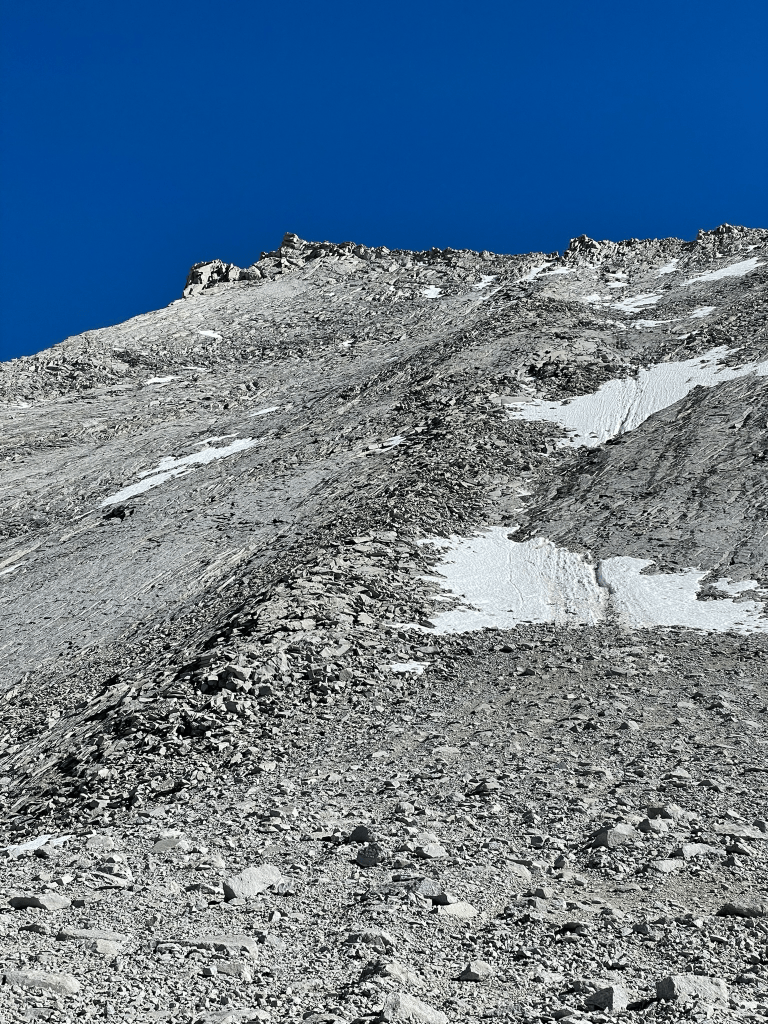
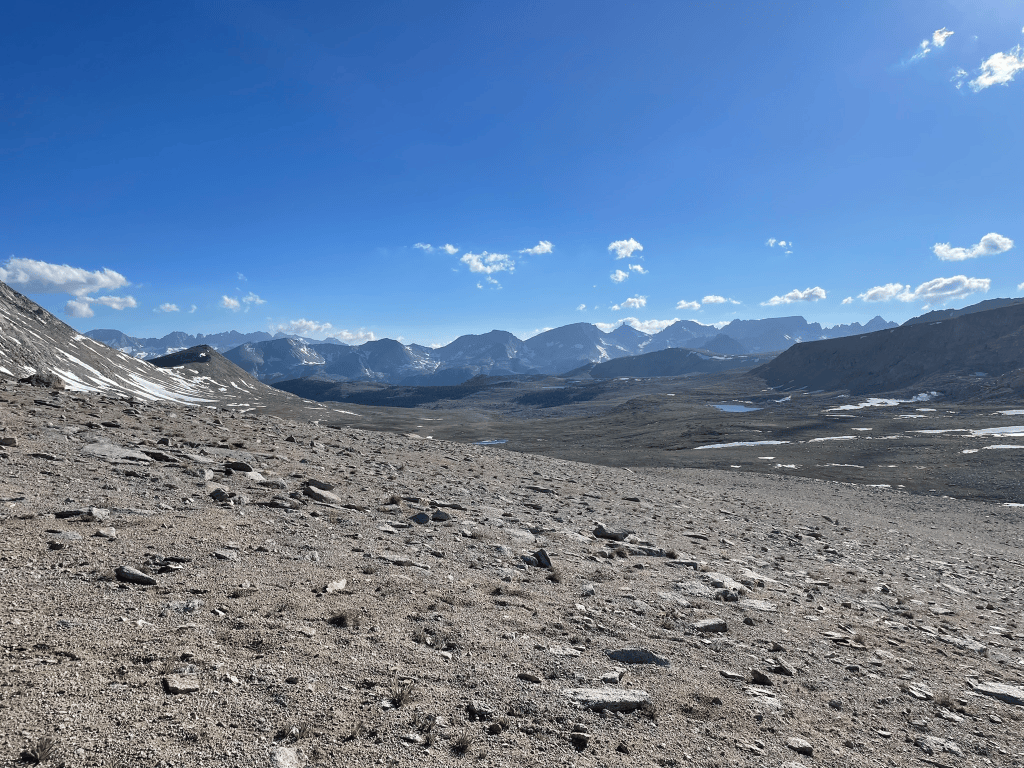
Graciously, Trevor led the descent down the Sheppard’s pass headwall. We plunge stepped and glissaded down its softened afternoon snowfield. The sun would go down in another couple of hours and any time save felt like a gift. After another hour or so we finally made it back to our campsite. There we enjoyed our last major snack break and refilled on water for the first time that day. Descending at our current pace would put us at just about a midnight finish. I was feeling the accumulation of so many miles and brought up the idea of jogging down to save some time. Luckily the trail was incredibly straightforward so we decided to both go at our own pace and just meet at the trailhead. Not long after I put in some headphones, laced up my boots, and took off down the trail.
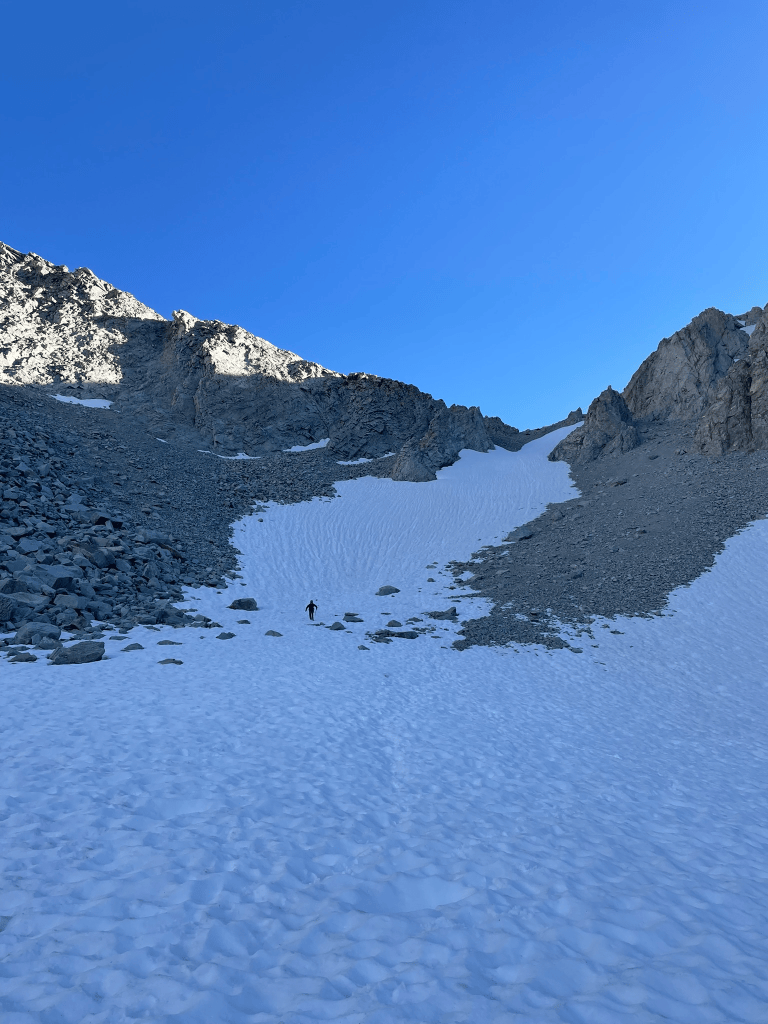
Surprisingly I felt great after a mile or so and knew I could charge ahead. At the time I was listening to Red Rising’s 2nd book and let my mind drift away as I cruised down the trail. By the time I reached the uphill section the sun was just starting to set. I had cleared the most difficult stretch in just over an hour and enjoyed the momentum of the run. Switching to house music had me in the flow state and I felt like I was sprinting down the last stretch of trail. I still had an overnight bag and boots while moving past countless switchbacks. Eventually I was slowed by the last mile slog of heinous stream crossings. Each one required some sketchy rock skipping and miraculously I ended up fairly dry. The sight of the trailhead was glorious and the rapid drop in elevation made me feel excellent. I had made it from camp back to the trailhead in just over two hours. I knew Trevor was behind but at least I could rest for a moment while he caught up. Just before midnight he finally arrived and we celebrated in victory. From start to finish was just about 30 hours and we had covered ~31 miles with ~12,000 ft of gain. It was the most either of us had done in two days.
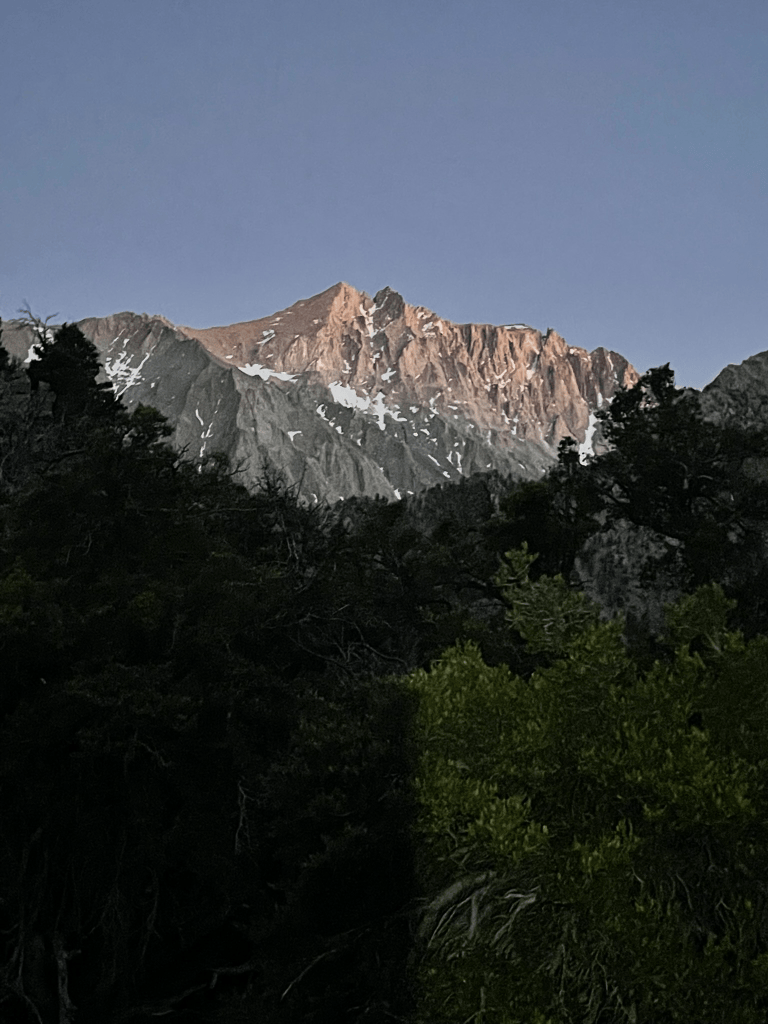
That night we both slept just outside of Independence. Trevor remarkably would return to work that afternoon while I took the day off to rest. My feet were in pain but I felt ready to tackle the next adventure on the following day. With Trevor gone I would now travel to Tuolumne meadows to meet my SF climbing partner Joe. We both planned on climbing a ton this summer and our next idea was to practice on some of the easiest Yosemite classics. After some debate we landed on an awesome climb: Tenaya Peak’s NW Buttress. This route is a classic 1500 ft 5.5 up a gradually steepening granite slab. We would need to move fast and opted to try and simul climb2 as much terrain as possible. We had never used this technique before but knew that we could always place an anchor to belay traditionally if necessary. Only a few moves along the route would likely feel like real climbing. That night I slept in Lee Vining as usual and felt ready for the next big adventure.
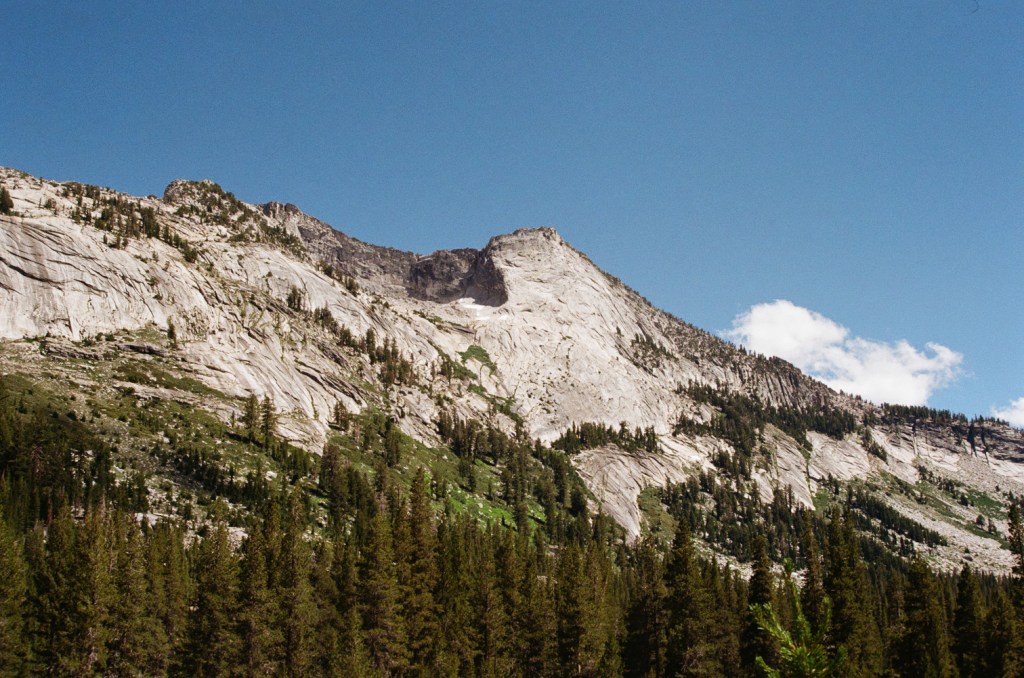
Unlike Williamson, Joe and I were able to start at a comfortable 8 am. We had a double rack of cams, a 70 meter rope, and two microtraxions3. Joining us at the trailhead were two other groups of climbers who were also about to practice simul climbing. We intentionally left the trailhead just a few minutes before either of them and began the short approach to the buttress. The real start to the route is relatively uncertain. We had a topo4, but mountain project comments claimed it was pretty useless. Instead we solo up some easy class 3 slabs before finding a nice ledge to rope up. In front of us the route was foreshortened. What looked like a couple pitches of climbing was really more than a 1000 ft of granite. Neither of us were too worried about this fact and Joe began to lead the first simul block5. Progress was extremely quick and I felt great romping up the easy terrain. Sadly I forgot my radio, which meant that Joe and I would occasionally have to shout to each other across a full rope length. In contrast, the other two groups provided me some company as they occasionally caught up.
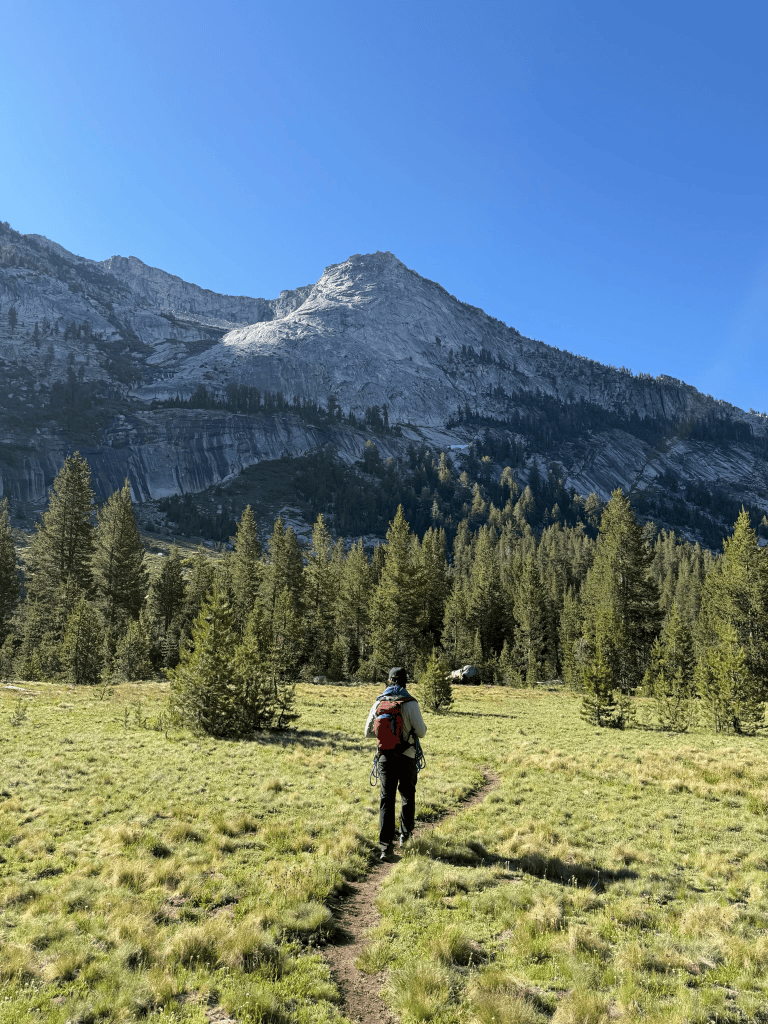
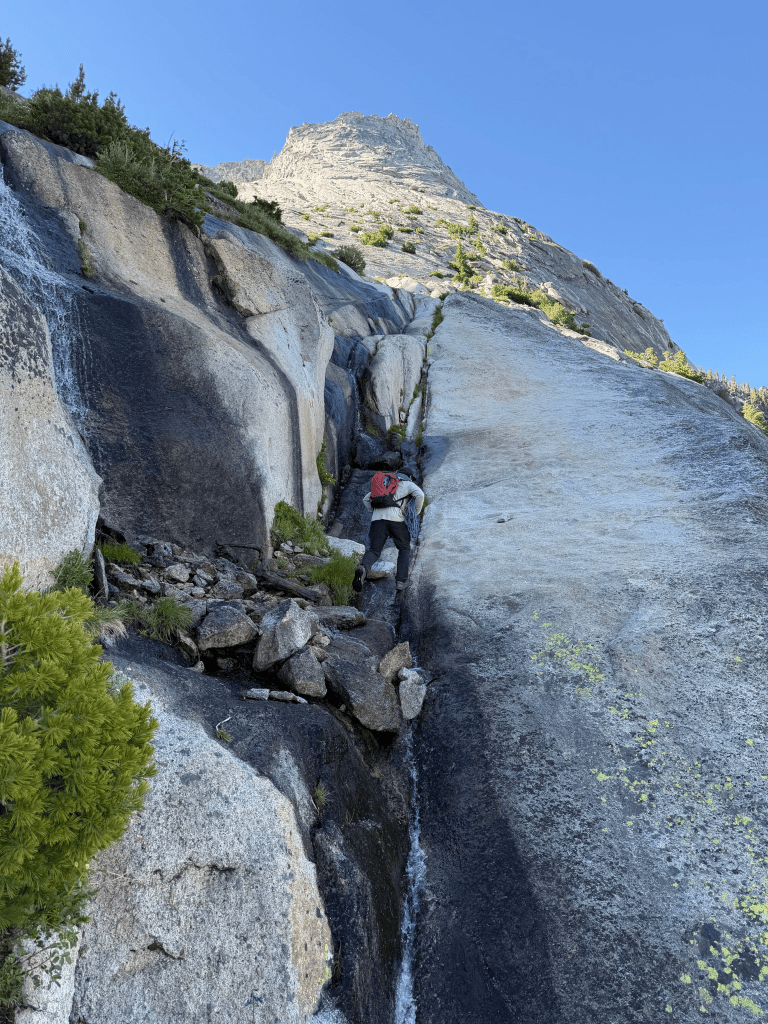
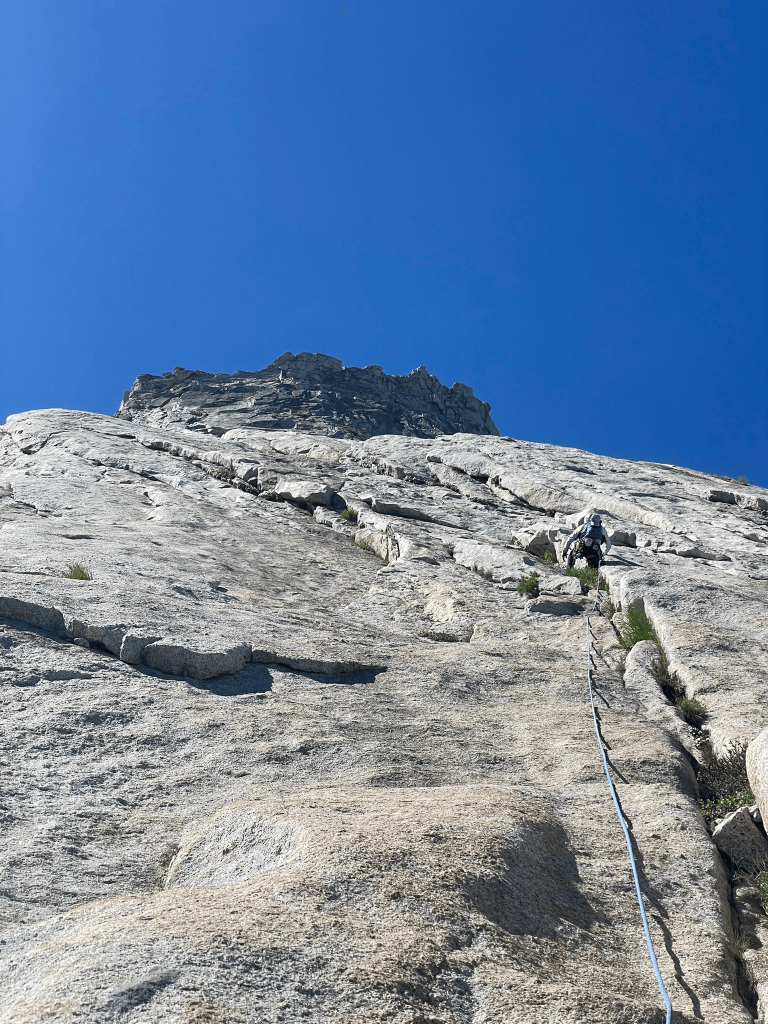
For the last third of the route I took the lead. After so much chill terrain I figured it would be a quick finish. But almost immediately in front of me was the crux of the route. The buttress gradually steepened towards its peak and I found myself searching for small feet while making an awkward, delicate traverse. Technically I was still on lead belay6 and manage to pull the moves without too much of an issue. After this point I placed a microtraxion and felt much better. There were some occasional moves that I could consider 5th class, but for the most part the entire climb felt pretty easy with climbing shoes on. I still would probably not solo this terrain without practicing more. Shortly after I arrived at a massive ledge and could knew the summit was super close. I belayed Joe up to avoid some rope drag and we did the last 100 ft or so as a mini single pitch to end the day. The two other groups joined us after a few minutes and we chatted a bit more about the descent ahead. Thankfully we got great beta and it would be a fairly easy hike down slabs to the Lake below.
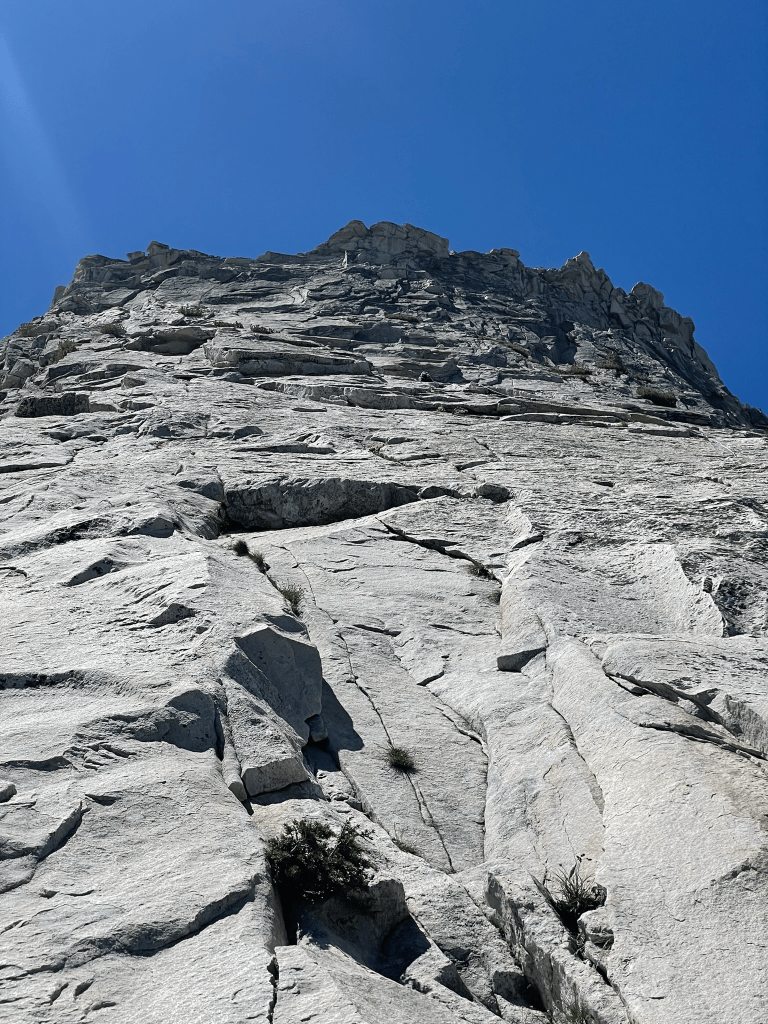
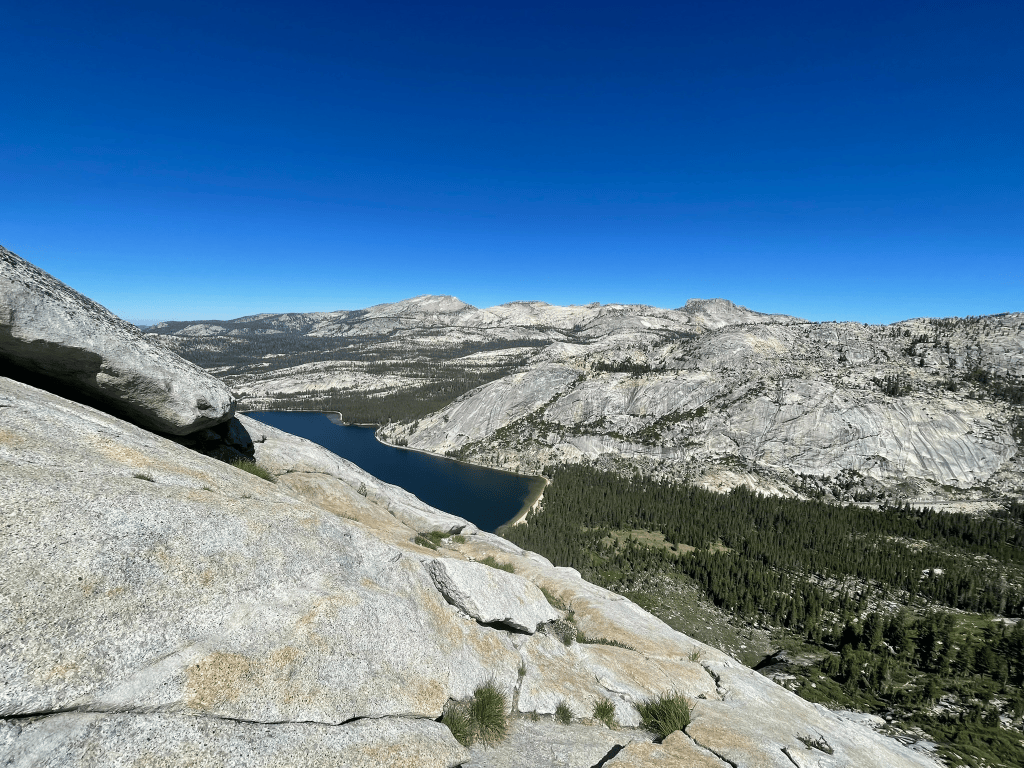
Car to car, Joe and I managed to climb the route in just over six hours. For our first time simul climbing I felt like we had a great success. Outside of one or two cruxy moves, the entire route felt well without our comfort zone. As a reward, we spent the rest of the afternoon swimming and sunbathing at the glorious Tenaya Lake beach. Joe was around for one more day and we then chatted for a while at the cars for where to go next. We both felt like we could try some harder routes, but Yosemite is quite intimidating. Even the easiest routes in the valley were quite stout and scary for the grade. We would have to bring our A game to make it out clean. That night we decided to attempt two 5.6 routes in the valley and began our drive to the trailhead.
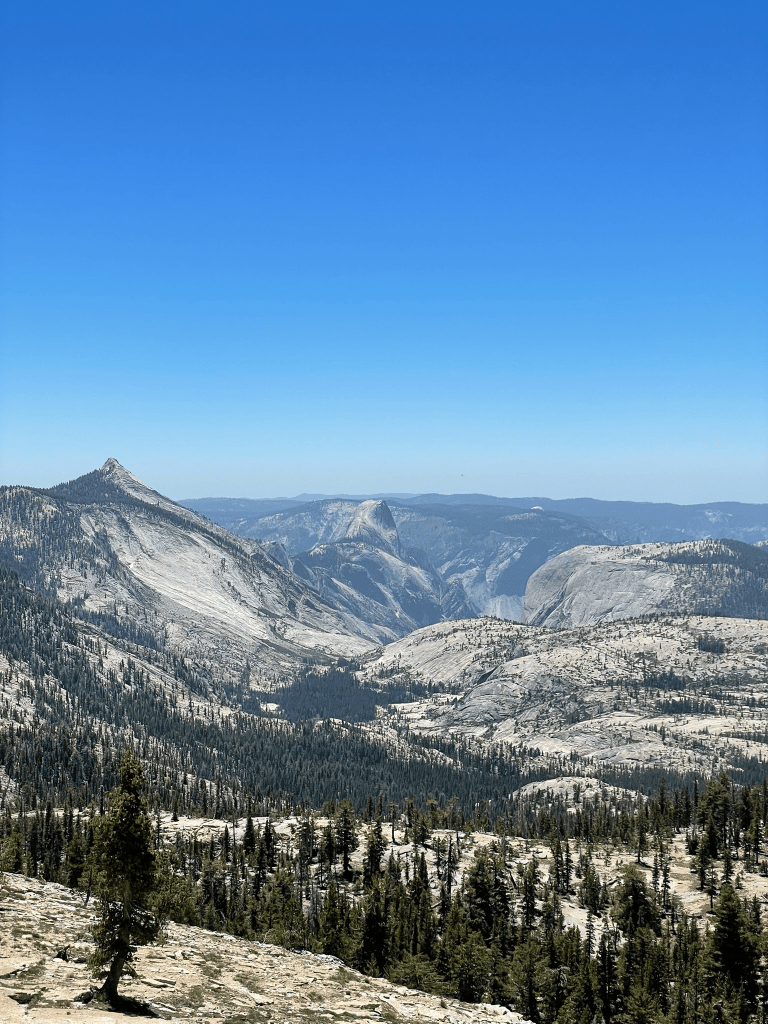
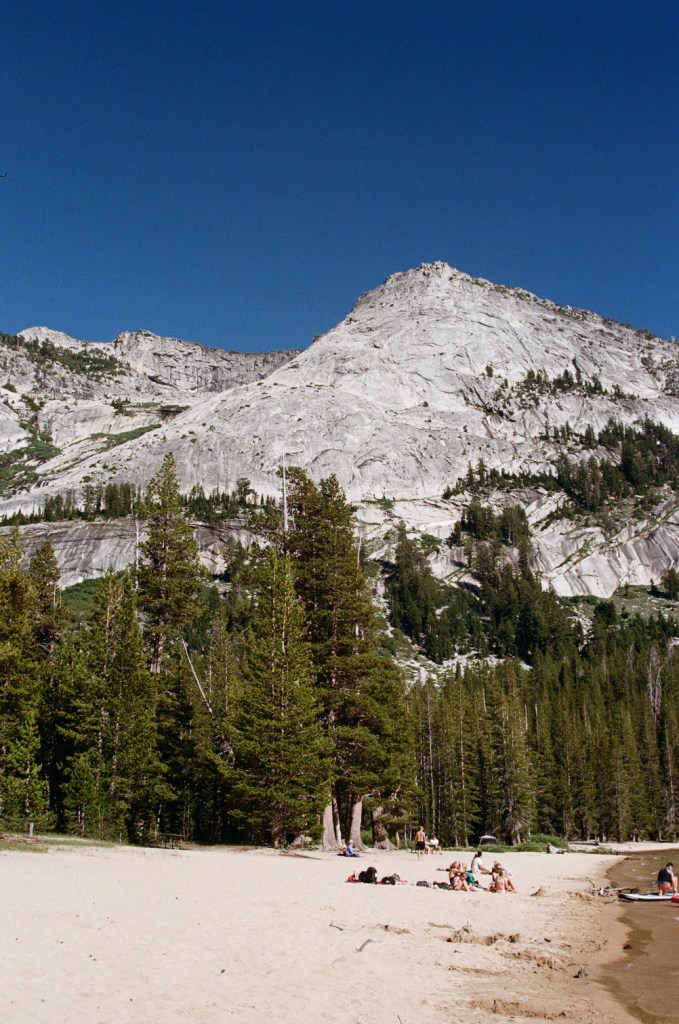
Early the next morning, Joe and I woke up at the Curry Village parking lot. Our first objective for the day was as 3 pitch 5.6 on the Glacier Point Apron called “The Grack”. Despite its low angle, it was considered a classic hand & finger crack7. I had felt pretty good after the previous day and opted to climb the crux pitches up high. We got to the base around 8 am and could already feel the sun pounding on us from above. Joe led the first pitch without too much issue and it was my turn on the sharp end. Some beta from mountain project said we could link rest of the route with a 70 meter rope8. At the time I thought this would be a great idea and could safe some time in the intense heat. This was the case for the first half and I was met with glorious hand cracks for about 100 ft. For 5.6 it still felt pretty intense on my end. Gradually the cracks became smaller and I found myself high above Joe in harder terrain. I knew I could make it up but was starting to feel more nervous. Then all of the sudden I realized the crack I was climbing turned back into smooth granite. I only had a couple of big cams and a rack of nuts left. Joe called out and said I had just about ran out of rope. The last belay ledge in sight was still another 20 ft or so ahead. I thought I heard a rattlesnake. It took me a second to regain composure and not panic.
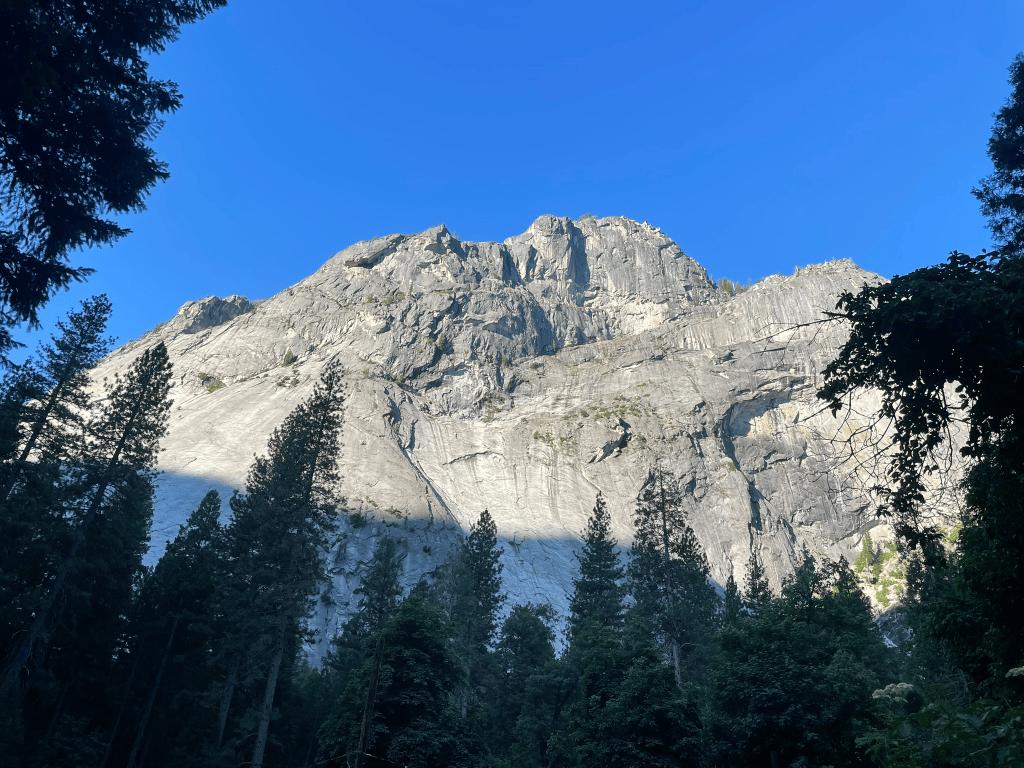
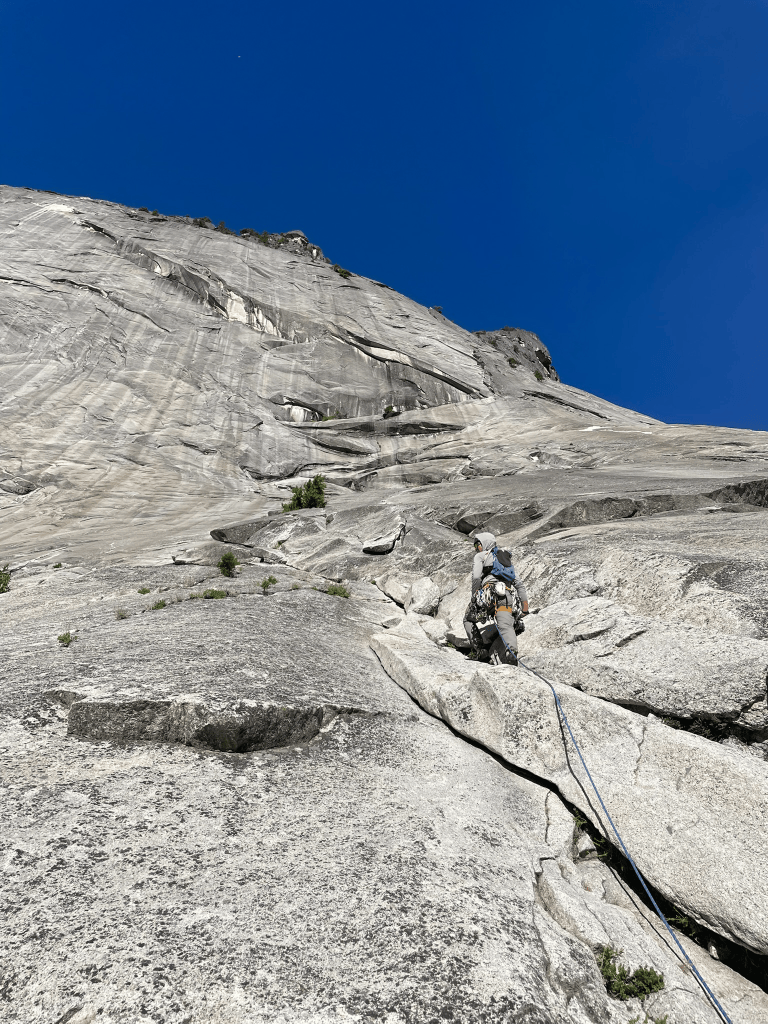
As any good trad leader should, I took a minute and re-evaluated my situation. There were no snakes nearby. I could place a small nut near by awkward stance at the end of the crack. I planned my next few foot placements on the friction slab. I waited for the right moment and committed to the climb. Before I knew it I had finally made it to the ledge. A wave of relief came over me and I immediately took it all in. Making a gear belay was tough but eventually I got Joe back on top rope. I was especially excited to see what he would think of the route from the opposite perspective. Of course he was spooked by the thin cracks and slab towards the end, which validated my nerves on the ascent. Now tired, we began our set of rappels back down the climb and walked back towards the cars. I felt much more exhausted that I was expecting. The combination of the days before and the spooky lead had me feeling wiped. What I really needed was food and before I knew it we were eating pizza back at the village.
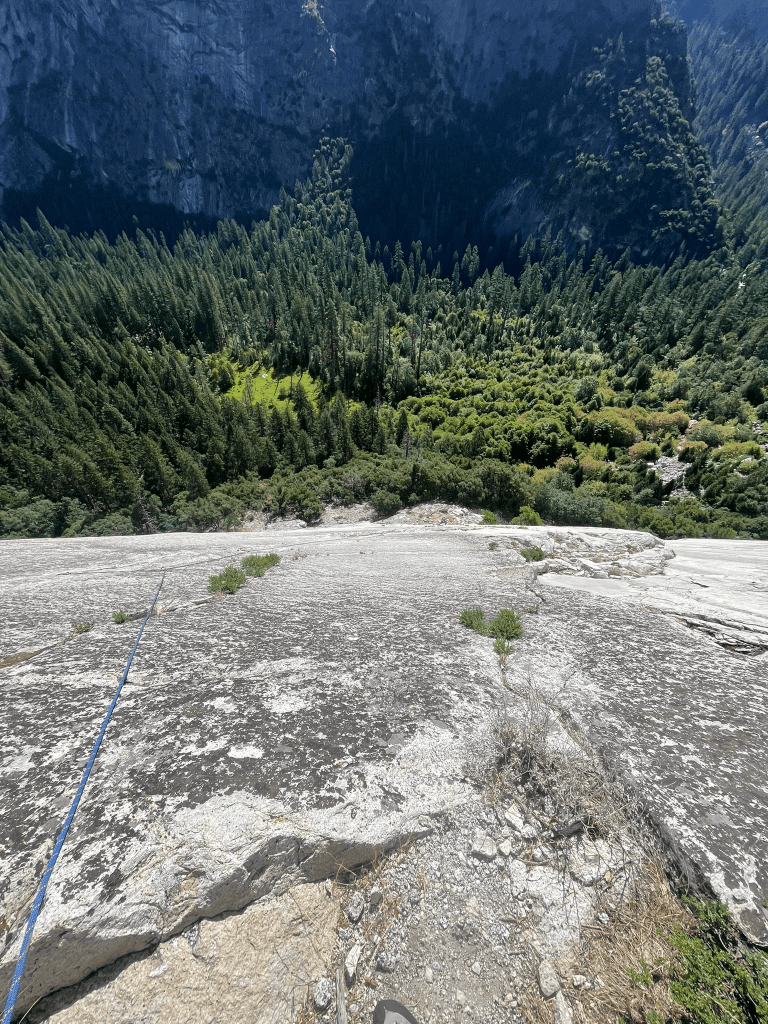
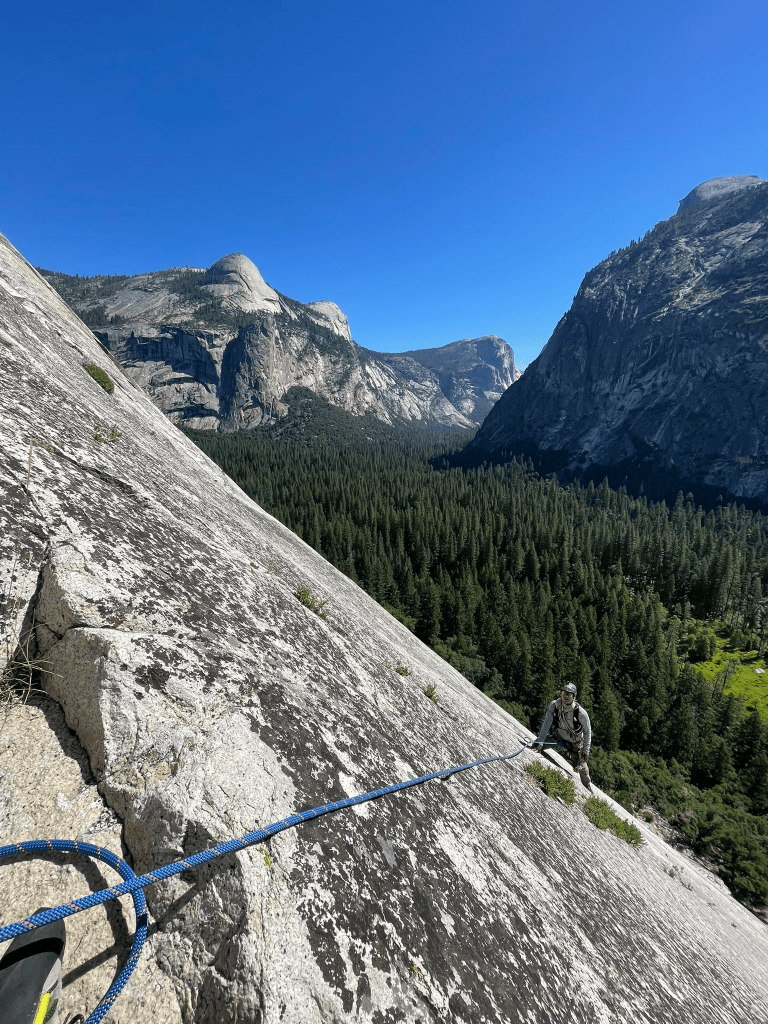
I devoured the pizza in record time and felt massively recharged. It was still pretty early in the afternoon at this point and we were ready for the 2nd objective of the day: “Munginella”. This was another 3 pitch 5.6 in the valley and one that I had been eyeing for multiple years. Its location in the five open books was somewhat shaded and would make for a great outing while crowds were low. This time we would pitch out the entire route. Joe would take 1 & 3 while I took on the easier 2nd pitch. Like most Yosemite terrain, the approach was non-intuitive and took longer than we expected. By the time we reached the base, my stomach was in full panic after the huge pizza. Joe suffered through my constant belches and made it up the first pitch with relative ease. I was next and took one last look at the topo before stepping off the belay. After a couple easy moves I then was out of luck. I must have gone too far to the right and soon enough I was at another blank section of friction slab. I mustered up the same courage from before and stepped off to several steps of steep nothing-ness. Thankfully there was one overhanging crack following a delicate stance and I managed to protect myself with a 0.3 cam. Despite my relief I still felt off route and suffered through awkward ledges with bad rope drag9.
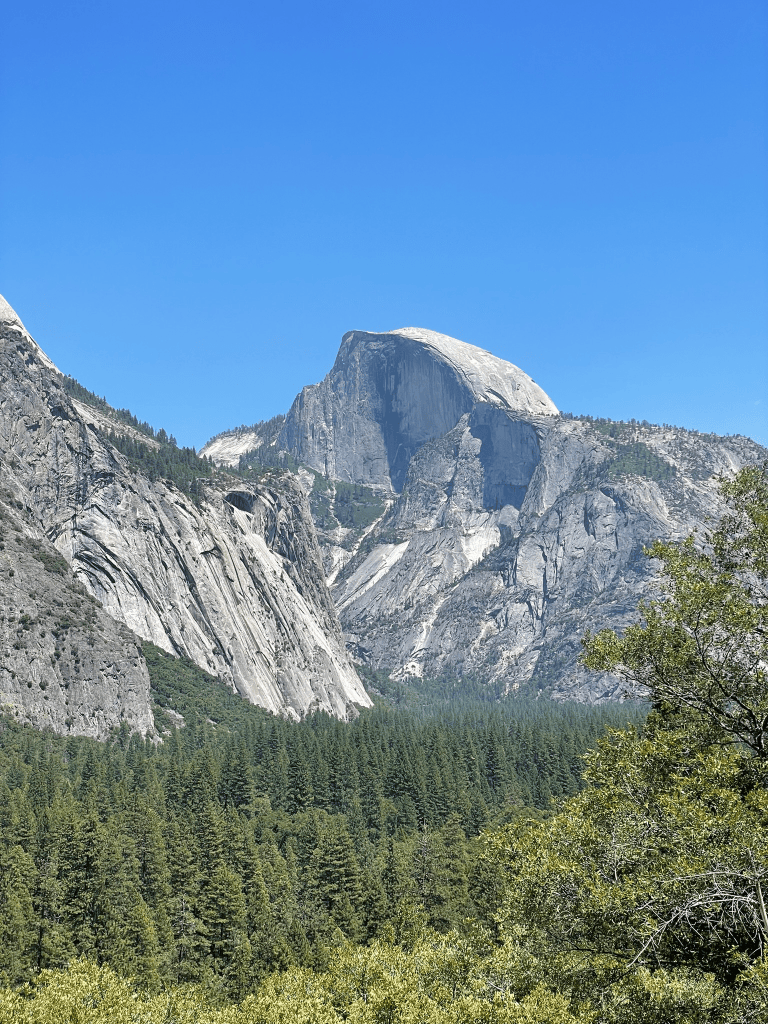
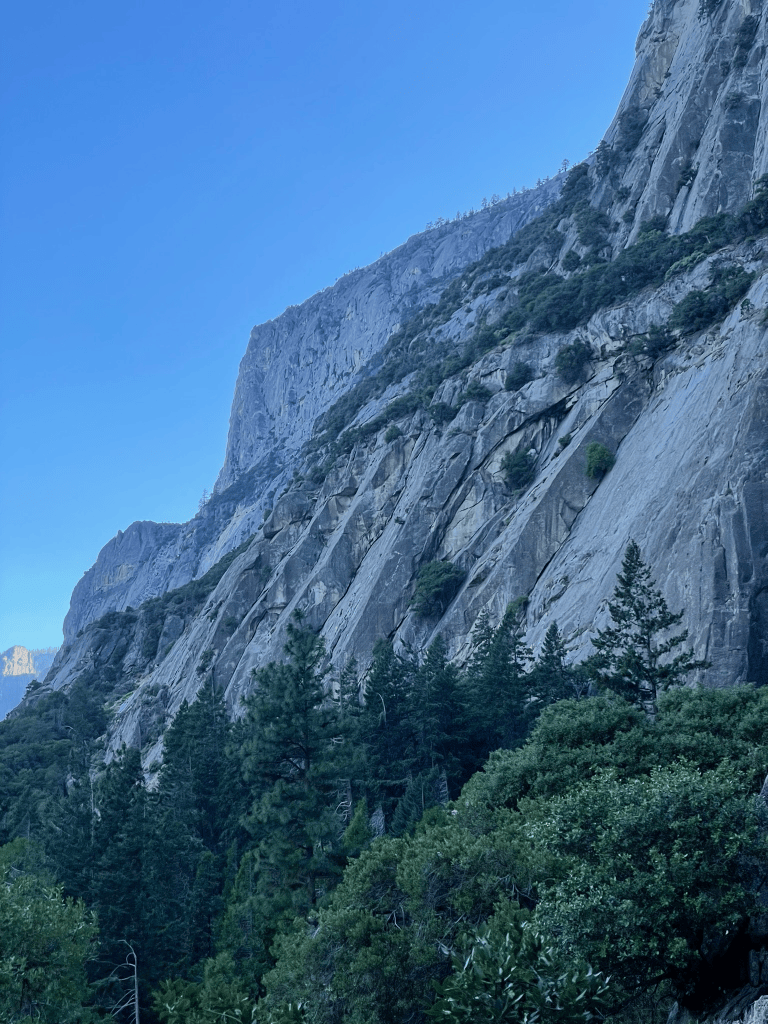
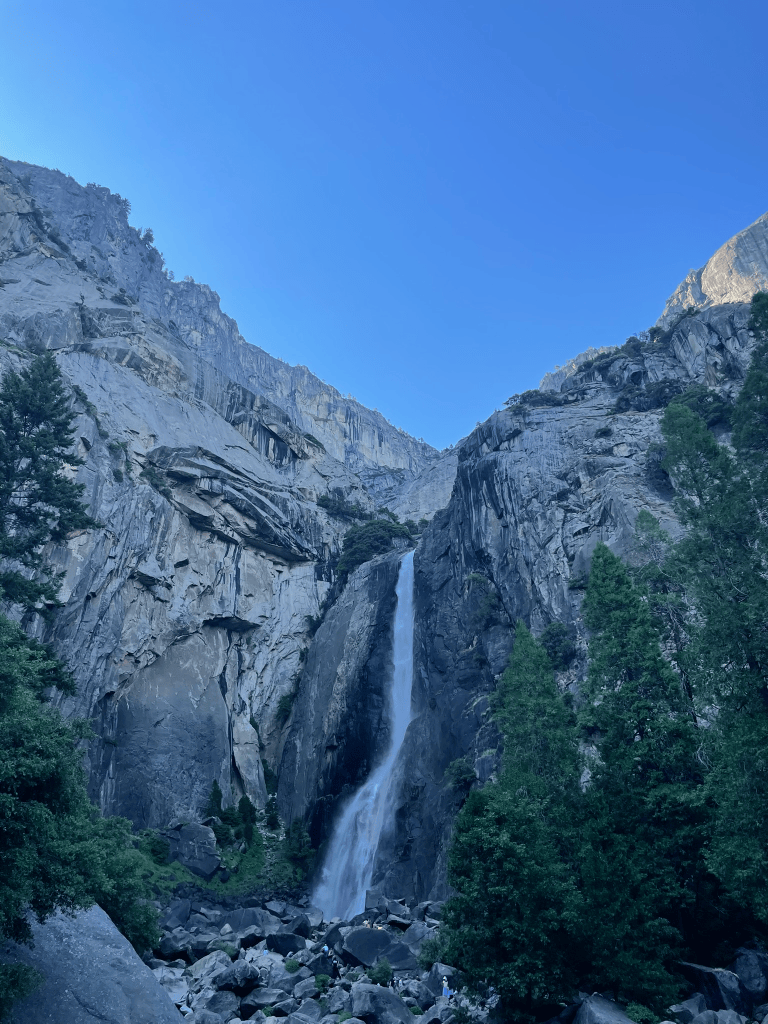
Finally I made it to the top of pitch 2, but I felt like I definitely climbed the wrong way. Belaying Joe on top rope was a full body endeavor and I had to heave the rope up on a tiny ledge. Despite the fumble, Joe took the lead once again and made a quick romp up the ‘crux’ third pitch. The route was a blast otherwise and I would love to repeat it one day in better style. For now we descended a beautiful hanging ledge with spectacular views of the whole valley below. I now felt much better than before and we both opted to celebrate the day with a plunge into Lower Yosemite Falls. The cold water after a blisteringly hot day felt incredible. We were feeling on top of the world and it still felt like there was time in the day for something more.
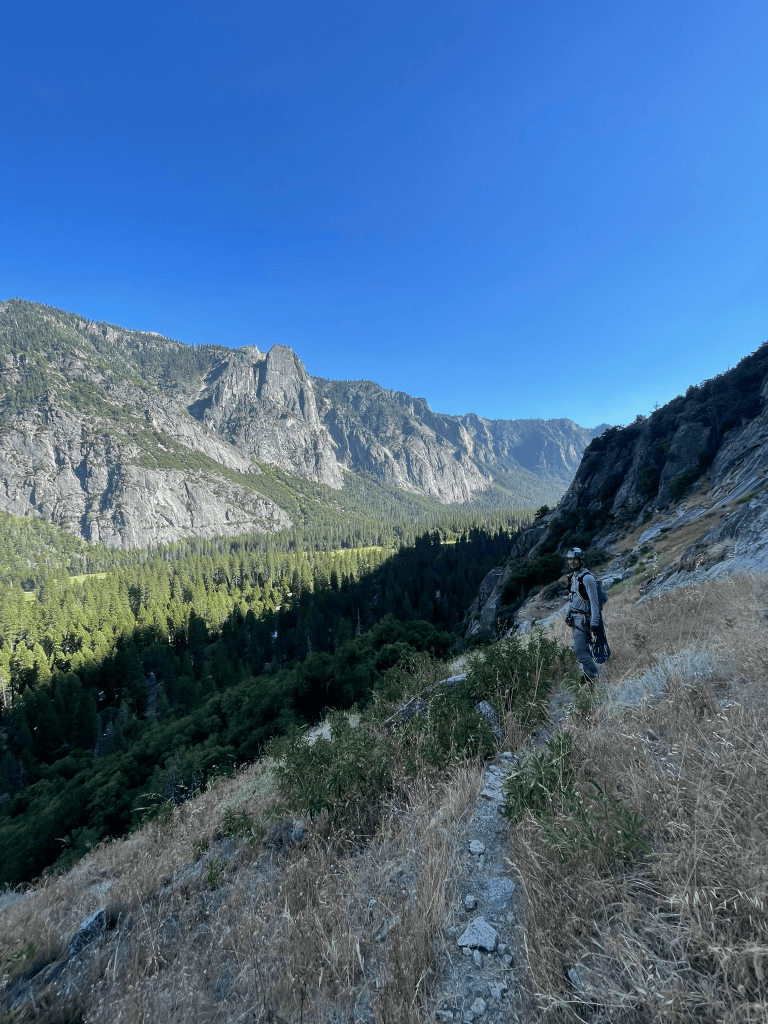
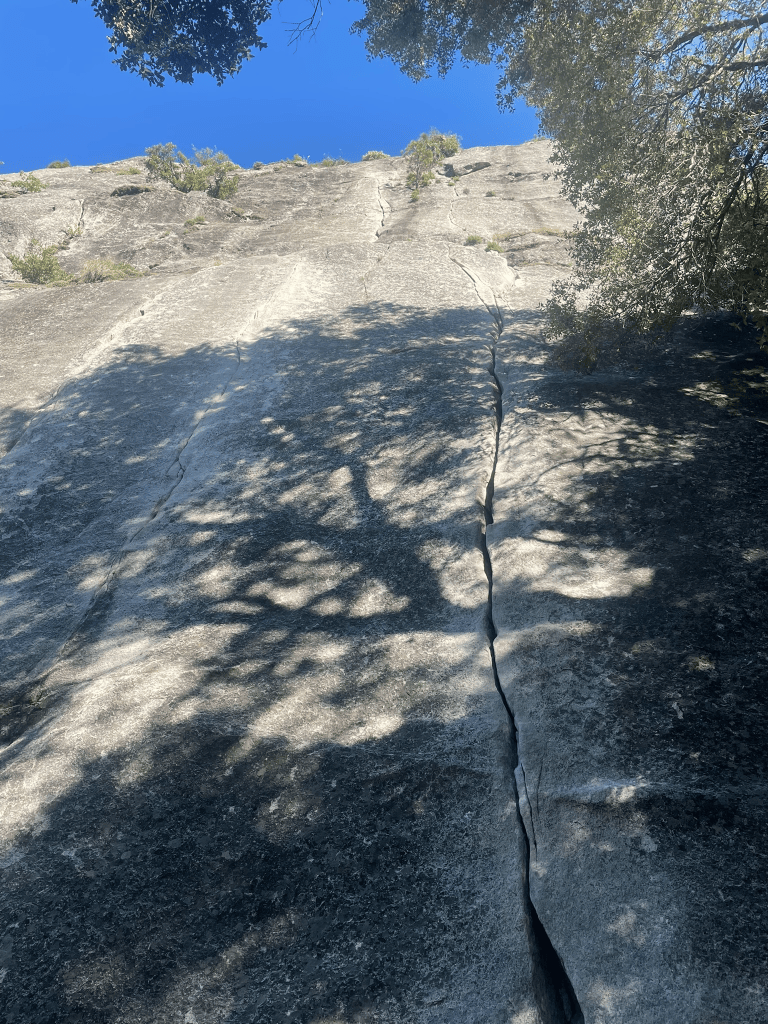
We still had our gear with us and decided we had just enough light to make it up the easy 3 pitch 5.5 nearby: “Sunnyside Bench”. Joe lead the first pitch as usual and I opted to take on the rest. The route started right next to the falls and began with a mellow chimney. Pitch two was great fun and I opted for a more secure but slightly harder crack with great exposure. By the time I got to the top I was surprised to see another climber on route. I quickly made an anchor, pulled Joe up, and then realized he had hiked up in search of partners. On one hand it was a blessing because he would descent first (showing us the way). On the other it was getting dark and we knew it we would likely be rappelling after the sun was down. We worked together to make it down the route but it turned out to be pretty messy. Our new friend Mike fumbled a few times and the anchors for each rappel were pretty low quality. For our trouble, Mike gave us some snacks before departing. Next our plan would be to wait for the bus back to Curry Village. Unluckily it was nearly 10 pm and the bus never came. Instead we got a hold of Mike for an emergency rescue back to our cars. What a crazy day.
The next morning Joe would depart but I would have one more partner joining me for a third round of climbing. My friend Shyvonne and I had been eyeing Crystal Crag for the longest time. It was a classic 5.6 in mammoth with a relatively short approach, a mini alpine summit, and a mend bending section of building sized quartz crystals to climb. But Shyvonne would not get in until Friday, the following day. So I took the opportunity and hit up Mike for one last classic climb in the valley. We opted for Jam Crack, a 2 pitch 5.9 that he offered to lead. I was particularly excited to follow on harder terrain that normally is out of reach for me. For Mike it turned out to be pretty burly. He took a whip on the crux pitch and opted to aid the rest with his PAS10. To my surprise I followed after and just barely managed to send the pitch clean (which is much easier than leading). Mike then set up some top ropes to climb on his own and I set off again for Tuolumne. Before settling in for the night I had one last thing on my mind. Shyvonne also wanted to see if we could find any snow slopes to ski after our mammoth trip. Of course I had to see if this would be possible while encroaching on July. So I took a nap at the Tuolumne store and then set off for the Saddlebag trailhead near Mt. Conness.
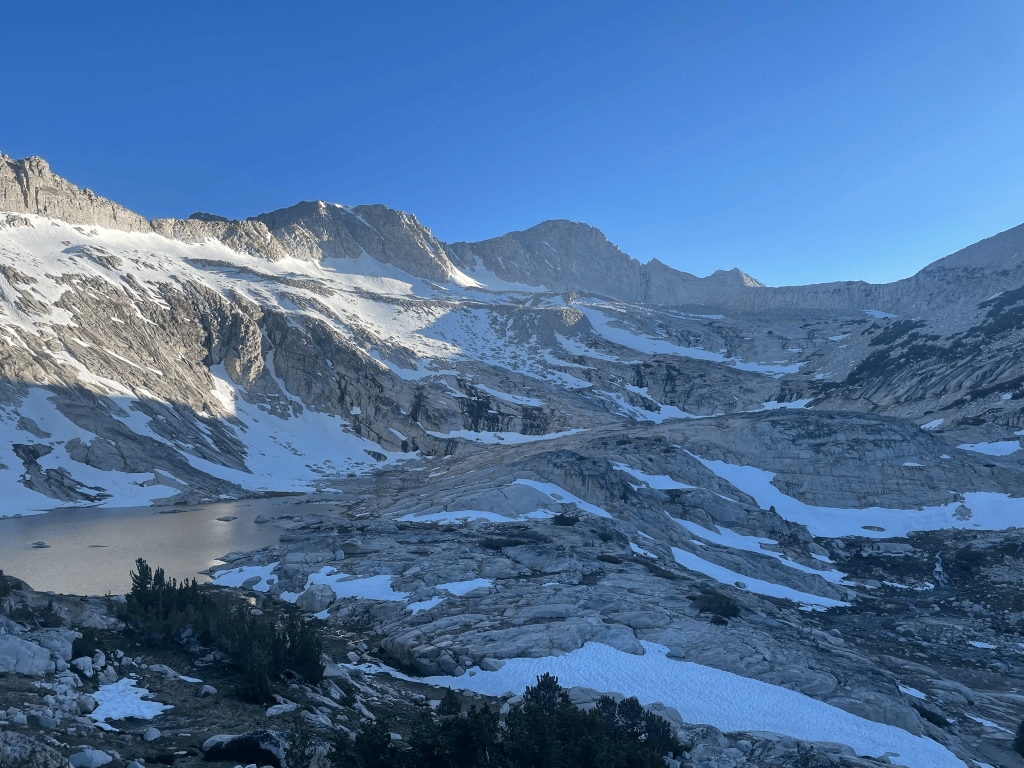
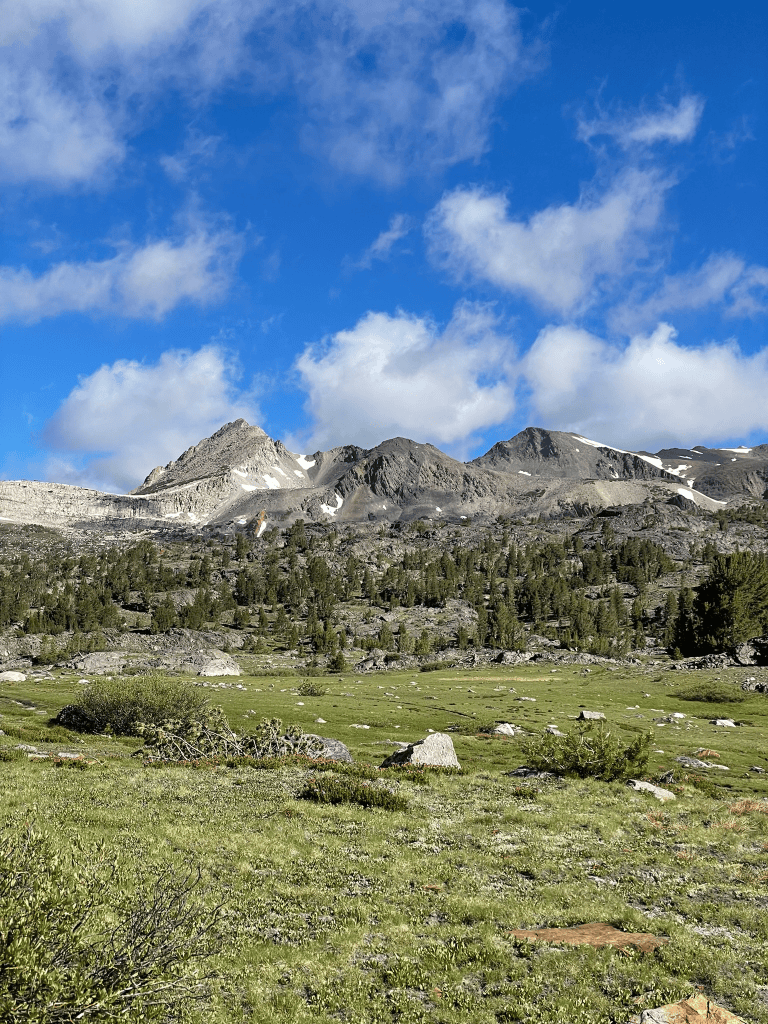
Some friends of mine tried climbing this mountain the previous week but claimed there was ‘too much snow’ on the approach. That was enough for me to head out in my trail runners right before the sun went down. It was only a few miles out and I ran through some incredibly beautiful terrain on the way there. Eventually I climbed some 3rd class terrain and found myself in a giant basin in front of Mt. Conness’s Northeast Face. A giant snowfield sat in front of a Lake and I knew it would go. Saddlebag Lake’s trailhead was at 10,000 ft and this snowfield was likely one of the best summer ski zones in the Sierra at the time. Finally after making it back to the trailhead I headed off to Lee Vining for the night. To my surprise, it just happened to be one of the many Thursdays where the local Mobile Mart station was hosting a summer concert. I had already thought that this random gas station at the end of Tioga Pass was a fantastic campground. To see three hundred people gathered for a fun night of live music in the middle of nowhere sealed the deal. The Lee Vining Mobile Mart was know my favorite hidden gem of the Eastern Sierra’s rural neighborhood.
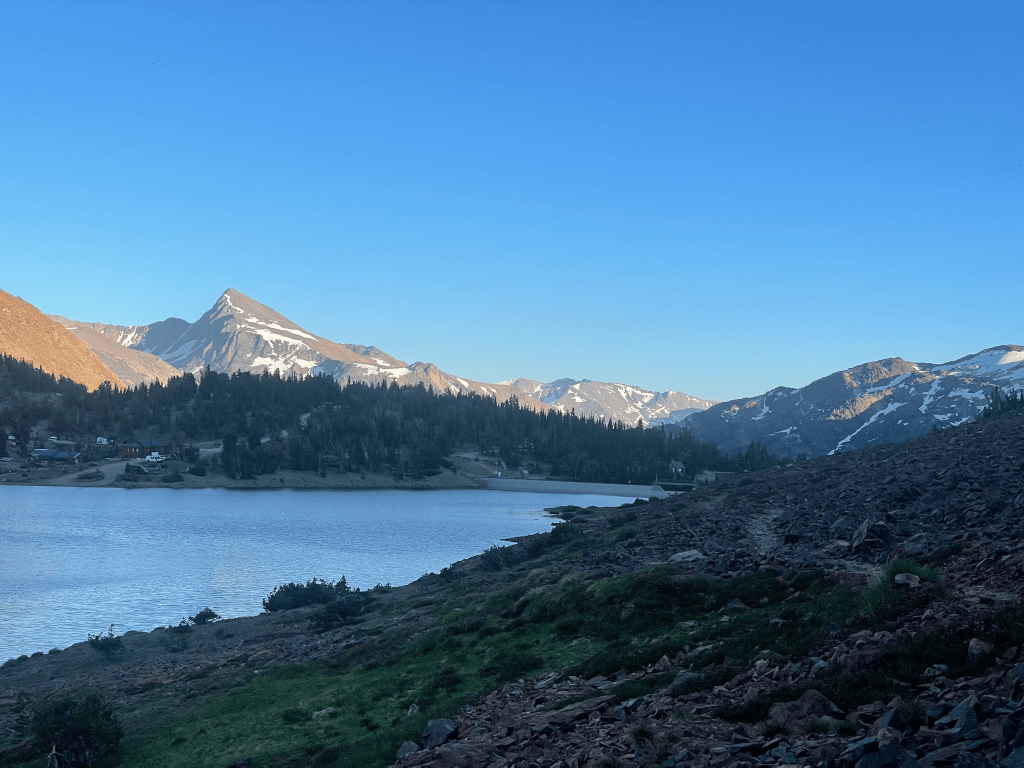
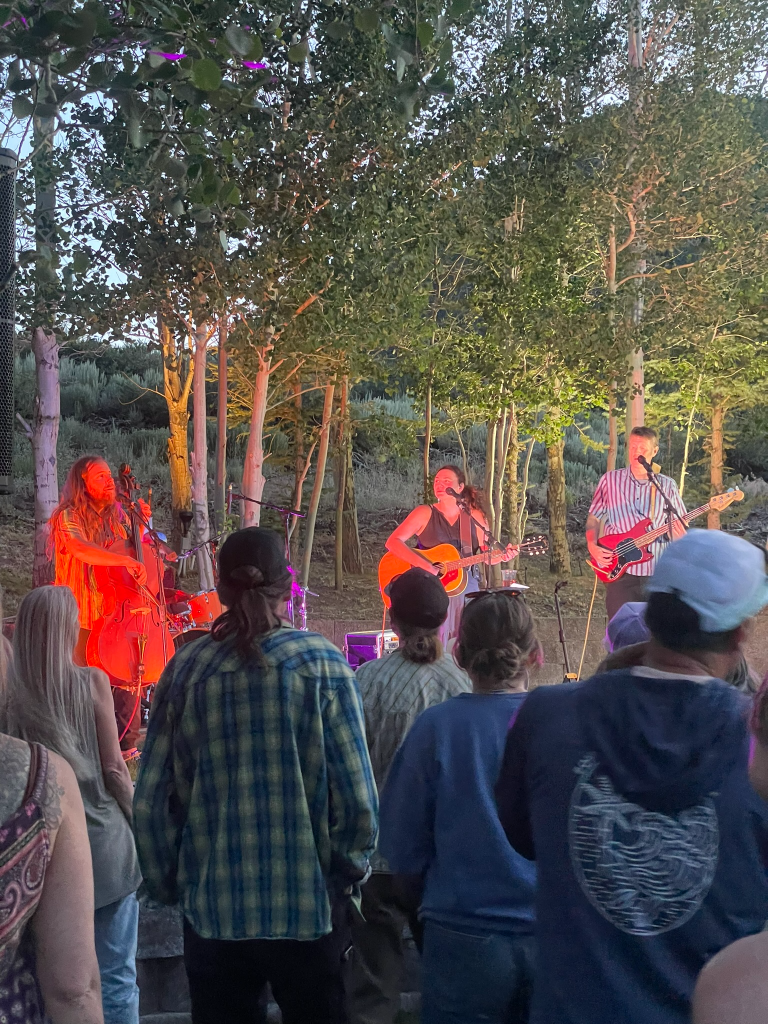
Shyvonne arrived quite late that night and we got up early once more for the day ahead. This time we would be traveling south towards Mammoth Lakes. Crystal Crag was a 1000 ft or so rock pinnacle that towered above beautiful Lakes below. I had always seen it from the resort and I was incredibly excited to finally climb its famous North Arete. Our approach was short compared to any true alpine route in the Sierra but still took two hours or so. By the time we made it to the base the weather was not looking ideal. I had only brought a sun hoodie due to the warm temps in the week prior. Wind was ripping and I was already cold before we even started climbing. I was up first and luckily felt like the route was much easier than the 5.6 I experienced in the valley. After making an anchor I huddled for warmth and set Shyvonne up for pitch 2. She did a great job on lead, but both of us knew the gear was sparse. Shortly after it was my turn again and I knew I could make it up to the ridgeline. This section of rock was one of the coolest I have experienced climbing (sadly I did not get photos). For about 50 ft, the only rock on route were giant, white, and opaque quartz crystals. It wasn’t the best quality ever but the novelty of climbing on these crystals was unlike anything else I’ve seen. This section can’t really be seen from far and it felt like we had come across a truly unique gem that most people cannot experience in their climbing careers.
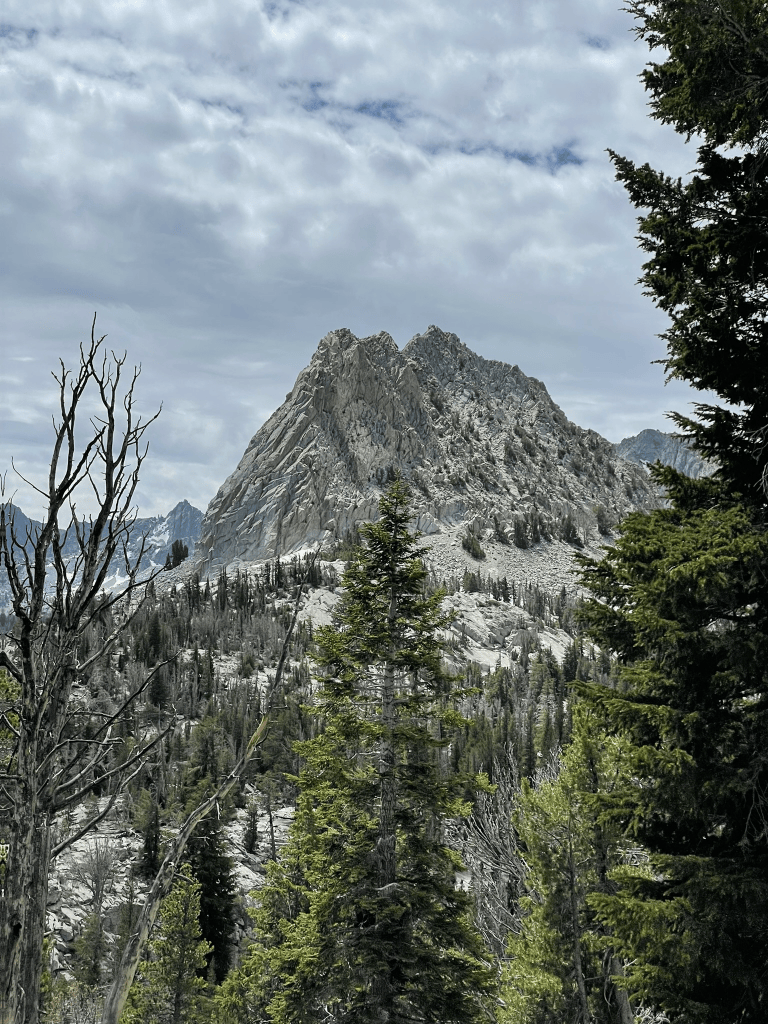
After pulling Shyvonne up this section we snapped back into our route ahead. We had made it to the top of the ridge but there was a ton of traversing left on sketchy fourth class terrain. We opted to simul climb this portion but we should have just dropped the rope entirely. For what felt like 500-1000 ft we traversed without placing much gear. We faced a number of towers with short sections of downclimbing. We got blasted with wind the whole time. As we were reaching the true summit I was quickly loosing mental steam. The descent was not straightforward either and I hate the feeling of exposure and uncertainty for this long. Thankfully Shyvonne did a great job with routefinding towards the end. We made it to the summit block and steadily climbed down. Eventually we were back on the trail and I could relax a bit. I was still very cold and just wanted to make it back to the car. Crystal Crag had been quite the incredible experience despite the adventurous exit.
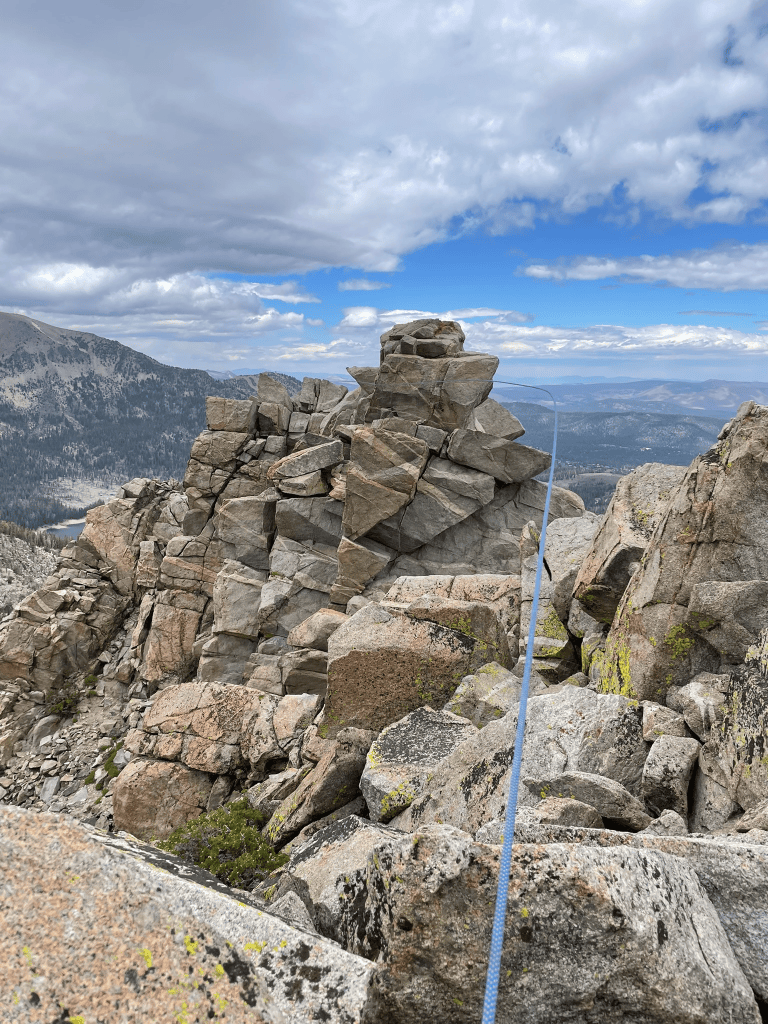
That night we discussed our ambitious ski plans on Mt. Conness. We shared dinner at Mammoth Brewing and even drove out to the Hilltop Hot Springs. Drinking an IPA after a hard day in a natural Eastern Sierra spring has got to be one of the best settings for a beer I can imagine. This whole week had been crazy. Capping it off with a backcountry ski day would be the perfect end. And so we started off early for the final time that next morning. Shyvonne had bought us a matching set of jorts and jests11 to match the ridiculousness of the day’s outing. We were greeted with a perfect bluebird day in contrast to Crystal Crag previously. Making our way up with boots and skis made for a much slower approach but at least the scenery was pretty amazing. Eventually we made it to the snowfield I had scoped a few days prior. We ate some snacks and transitioned at the base of a beautiful alpine lake. Above us was a large bowl filled with massive suncups12. It gradually steepened and had some options for steep chutes up high. Shyvonne was only here for the mellow apron but I was excited to ski as much as possible.
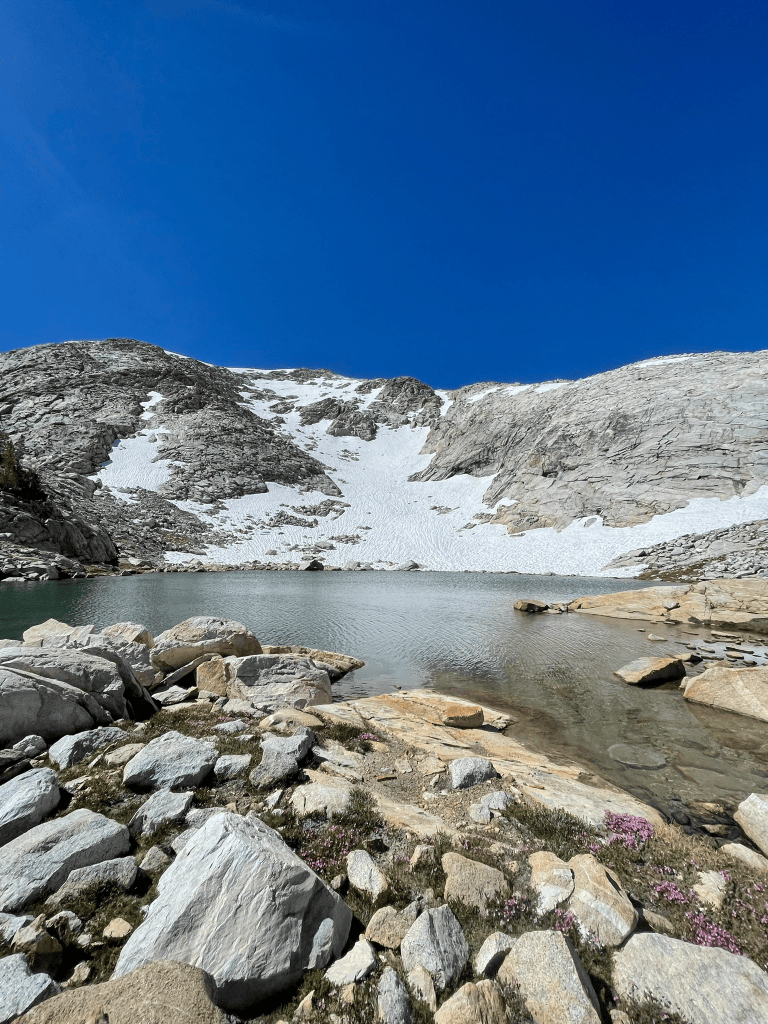
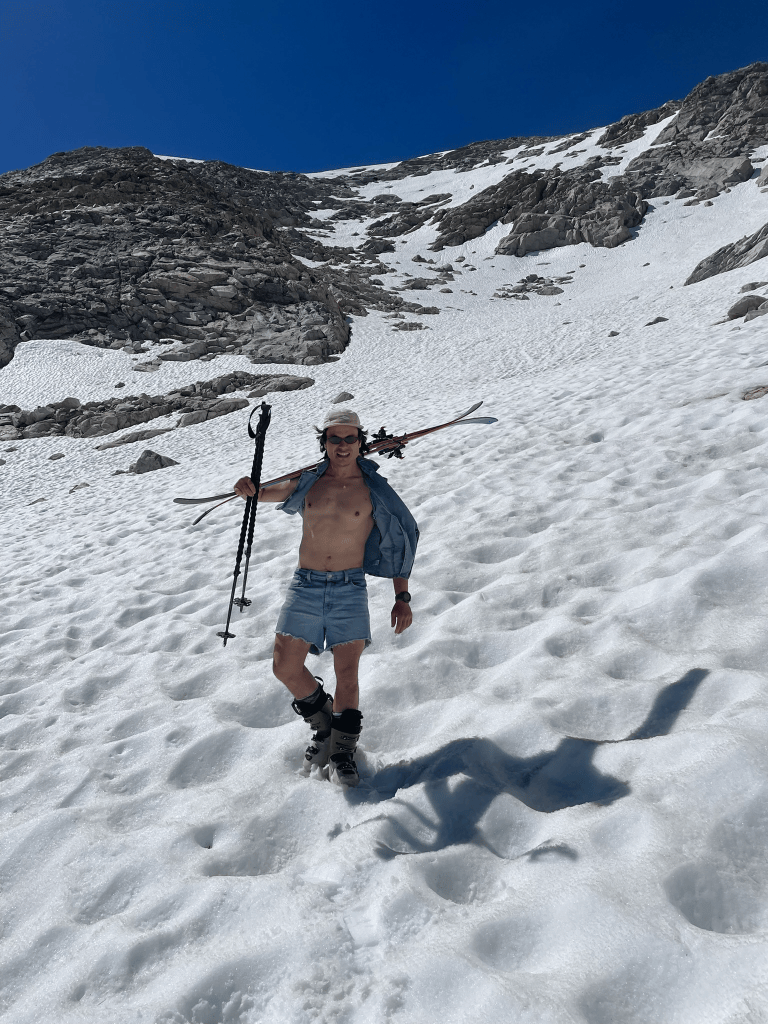
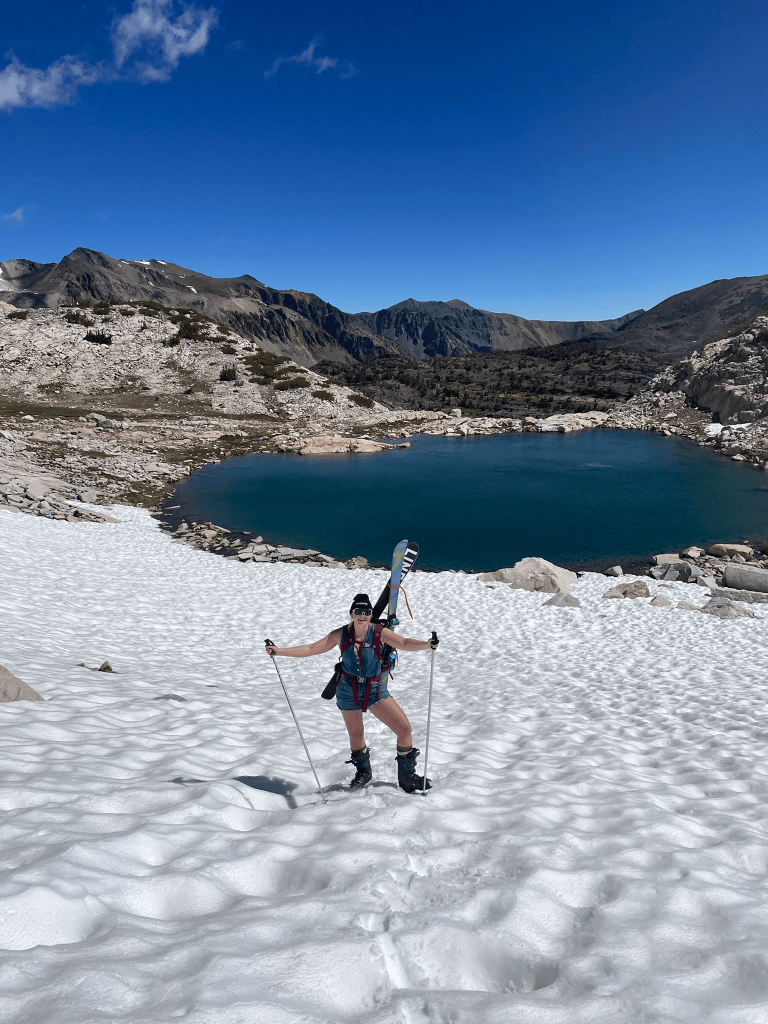
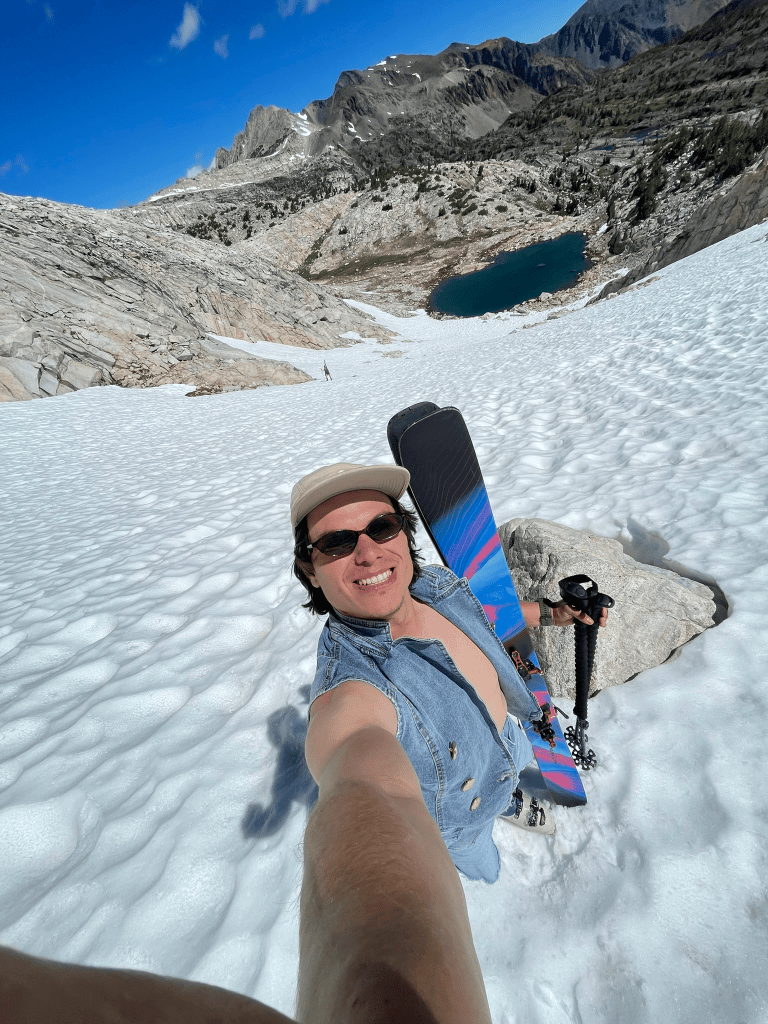
Our first lap was a bit rocky. Shyvonne had some experience as a ski instructor back at a small resort in Virginia. It also happened to be her first time in the backcountry and with giant suncups. Despite this she made it down slowly and managed to link some great turns. While she took a break I sped up the slope in search of the random steep chutes up high. To my surprise the chute cruxes were very thin and steep. Suncups went away at this slope angle and I at least knew I could make it down with quality corn. In classic backcountry fashion, putting on my skis may all my nerves disappear. I took a few turns down and eyed the crux. I wanted to ski it in good style. After a moment I took off and pointed my skis to the fall line. I passed the crux and started screaming in glory. The apron was all icing and I made some big arching turns back to the lake. As much as I love climbing, this moment made me remember that skiing is so much more fun. I just had to make one more lap up the chute.
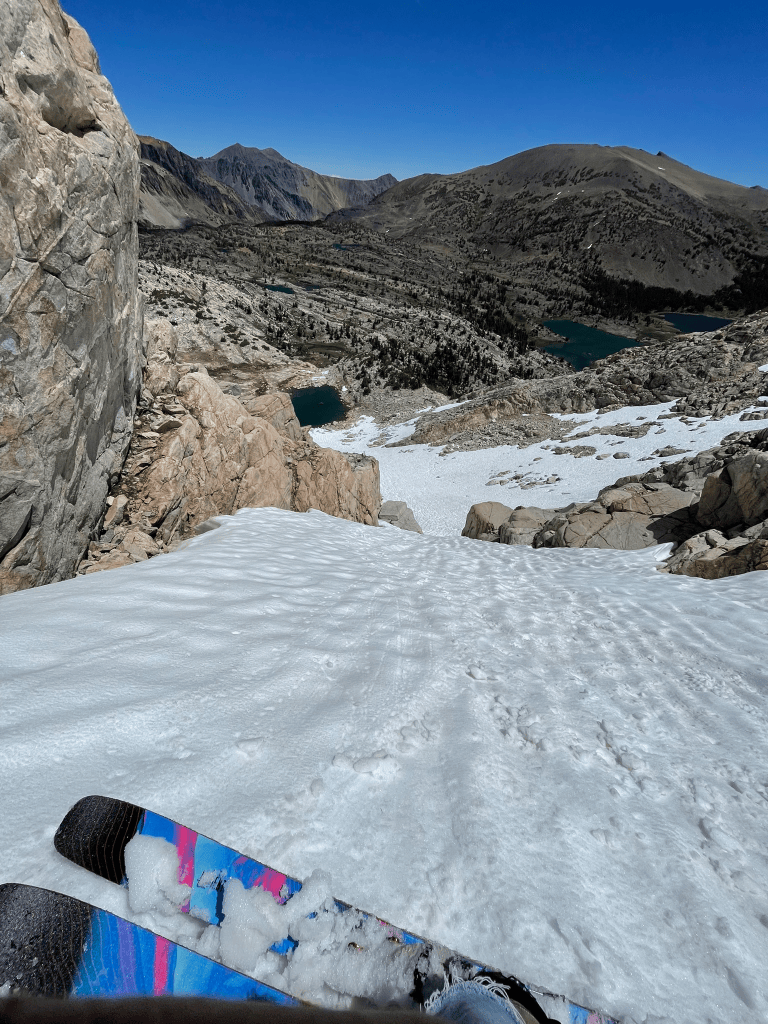
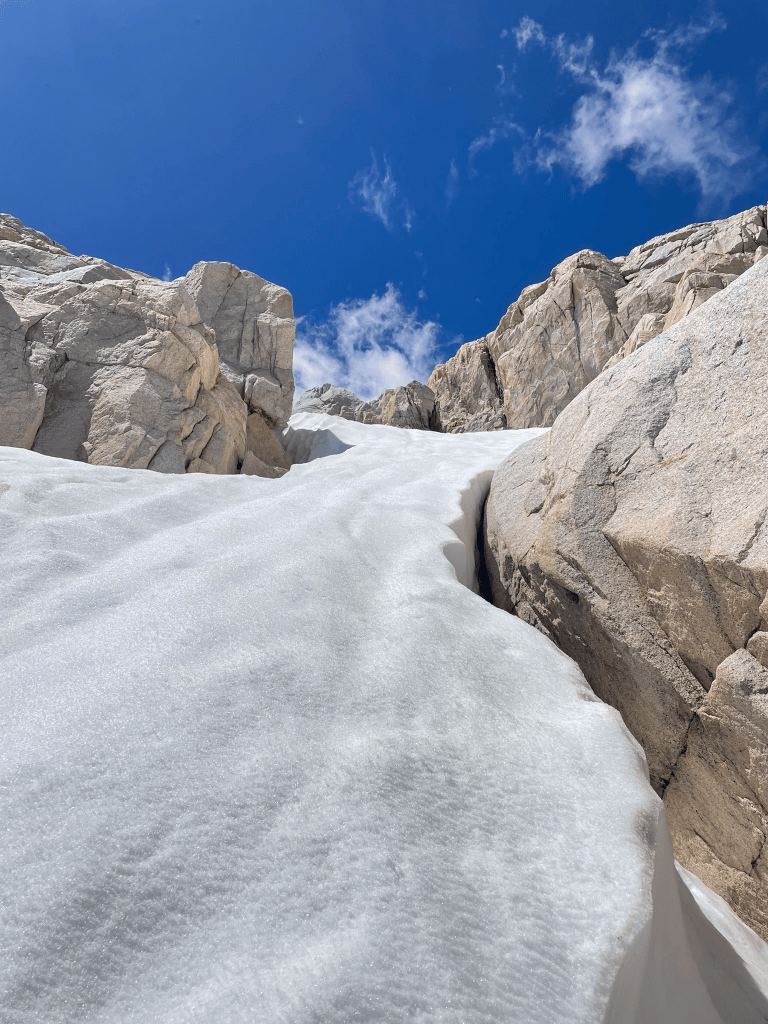
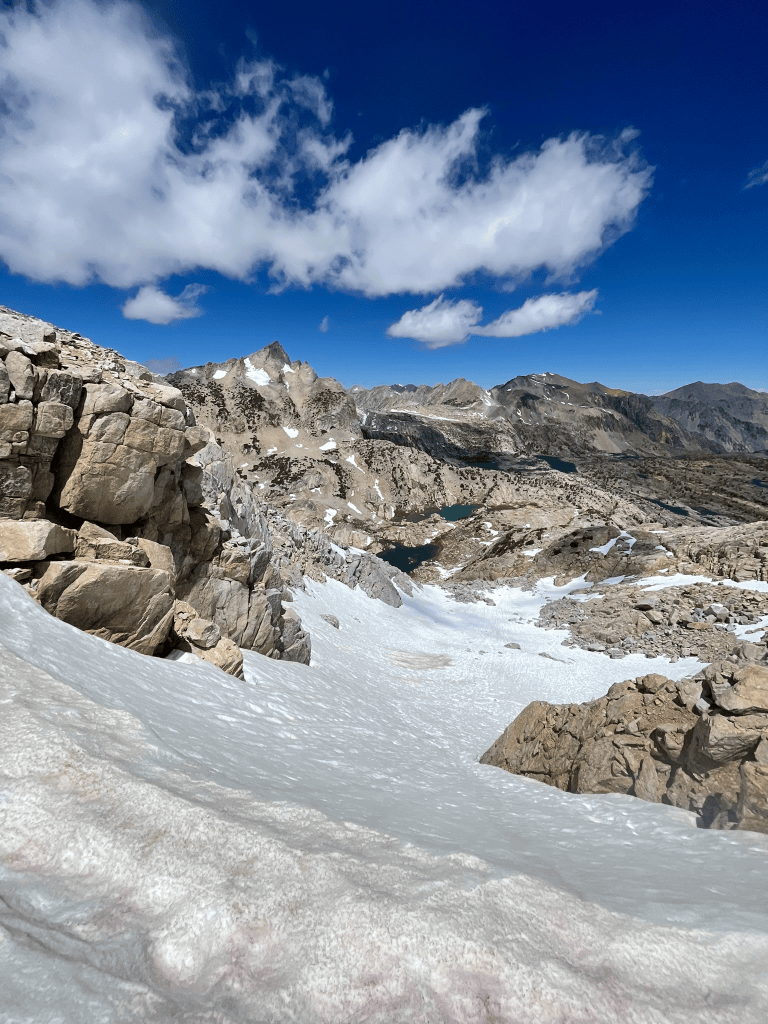
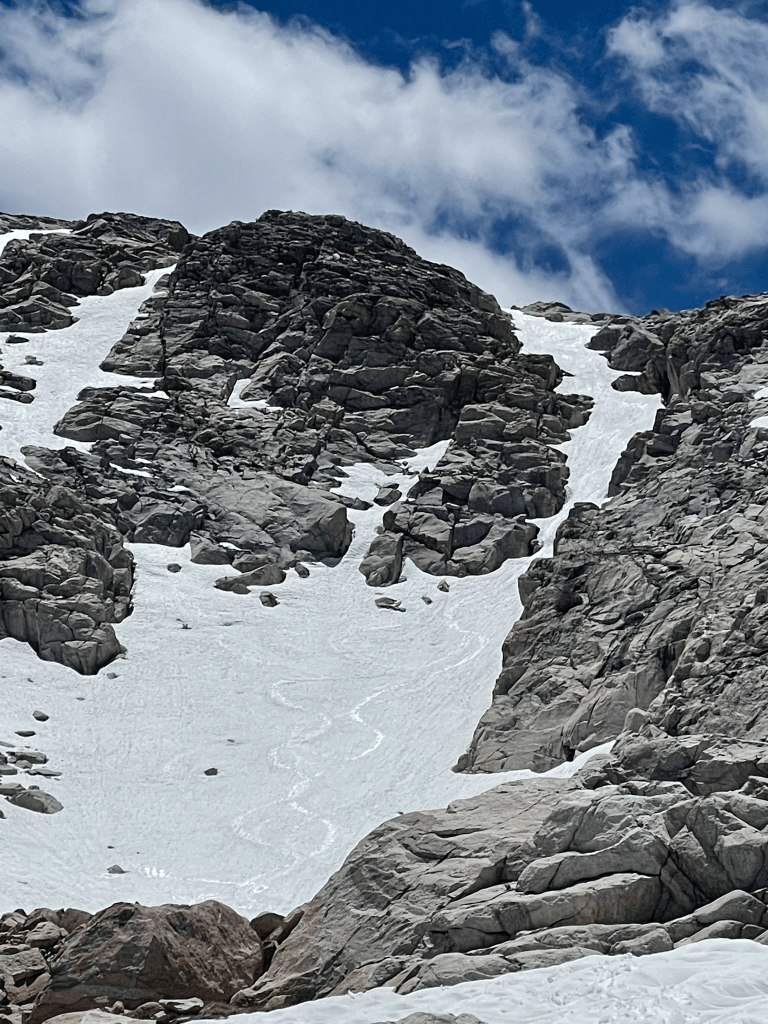
I took everything unnecessary out of my pack and sprinted up the chute once more. After the first col there was a second headwall looming behind. I felt like I was trail running at this point and raced up to the next ridgeline. I didn’t want to make Shyvonne wait any longer than necessary. Once I reached the top I blasted some music for what would be my last turns of the year. Both ridgelines made for great skiing despite the summer snow. I screamed past the chute crux once more and made it down to the Lake. Shyvonne was now ready for one last party lap and I obliged. This time around she felt a little more comfortable and it was a great end to the session. I felt incredibly content with the week during out hike out. It had been day after day of pushing my limits as a climber, an endurance athlete, and a friend. I faced many tests of adversity and came out a better person for it. My hope moving forward is that I can continue to grow and experience a few more weeks like this in my lifetime.
- Triple 14er Article ↩︎
- “Simultaneous Climbing” – A climbing technique to move fast on easy terrain ↩︎
- “Microtraxion” – A one way device that helps to catch a fall when simul climbing. ↩︎
- “Topo” – Climbing map ↩︎
- “Simul Block” – Equivalent to a very long pitch, between 300-500 ft ↩︎
- “Lead Belay” – Not simul climbing yet, still a traditional climbing technique ↩︎
- Hand and finger cracks refer to different sizes of cracks within granite climbing routes ↩︎
- Linking the rest of the route would mean combining pitches 2 & 3 of “The Grack” ↩︎
- “Rope Drag” – Lots of friction in the rope is generated when taking a non-straight path up a route ↩︎
- Aiding with a PAS is a way of climbing a short section of rock by pulling on gear with one’s “personal anchor system” attached directly to their harness ↩︎
- “Jest” – Jean vest ↩︎
- “Suncups” – large indentations in summer snowpacks due to rapid melting ↩︎

