I started my backcountry skiing and climbing journey nearly two and a half years ago now with effectively no training or experience. I was definitely a good skier, but was coming off a very demanding job and was completely out of shape. My first real tour was barely 2000 feet in very mellow Utah terrain and it still kicked my ass. I got slightly better as the season progressed into the spring, but I still didn’t really ‘train’ to get better. Later that year I moved to San Fransisco for a new job and had it in my mind to really step up my game when it came to fitness. My philosophy was to start very casually and just figure out what worked for me to stay committed & excited to the journey. Luckily for me, I had much more time on my hand at this point and was ready to lay a great foundation for bigger goals ahead. The next year I slowly improved month over month, progressing steadily in milage and speed over a diverse set of cardio focused activities. SF lended itself mainly to biking, cycling, swimming, climbing, and ski touring, all of which I loved to trade off between the weeks and seasons. By the time fall of 2025 came along, I was ready to step it into high gear in preparation for the ski season ahead.
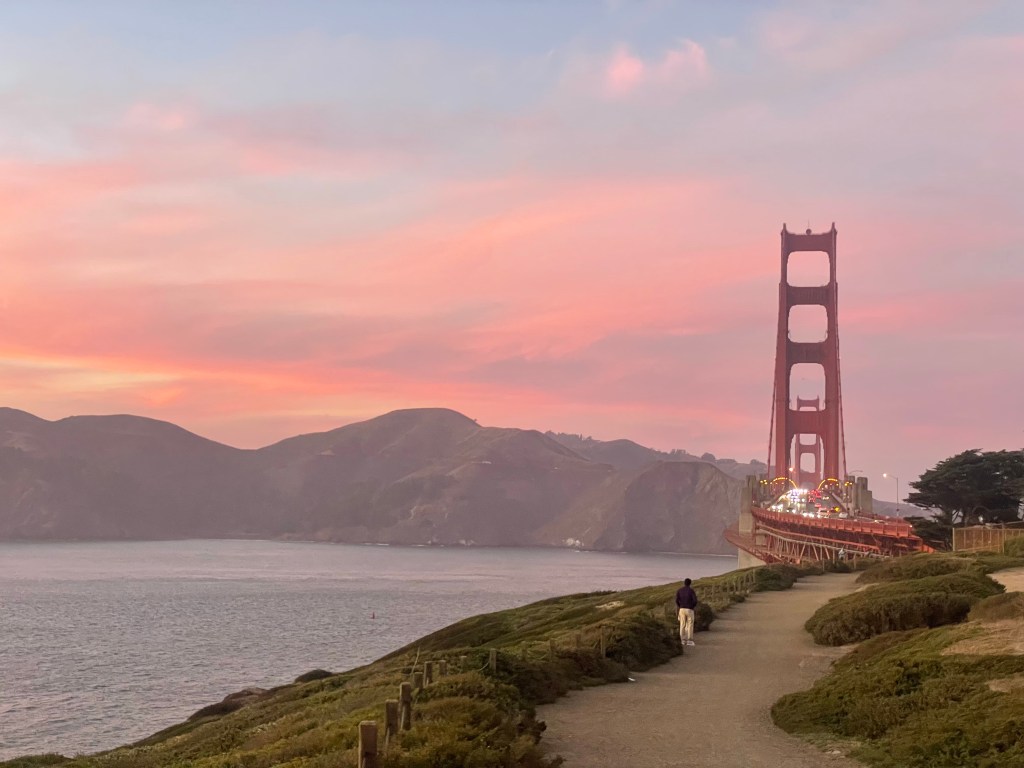
This fall I started off some more dedicated training by reading through Steve Johnson’s guide to mountain endurance sports titled the “Uphill Athlete”. This book was intended for trail runners, backcountry skiers, and generally all sports that traveled on foot through mountains. It began from a foundation of describing metabolic processes utilized while running over a long period of time. This science guided the rest of the book which explained what sort of training is most effective to improve one’s aerobic capacity and why. My takeaway is that endurance sports are almost always a function of an athlete’s aerobic threshold. This threshold is the limit of metabolism that fuels on oxygen and stored body fat (which is aerobic due to the use of oxygen). Improving this threshold allows a higher power output for a given duration and requires intentional training described in the book for improvement. I distilled this down to that fact that running at a lower heart rate for longer periods of time was the most efficient training I could pursue. Instead of running for 3-5 miles at 80% or so effort, I really needed to be running double the distance at half the effort.
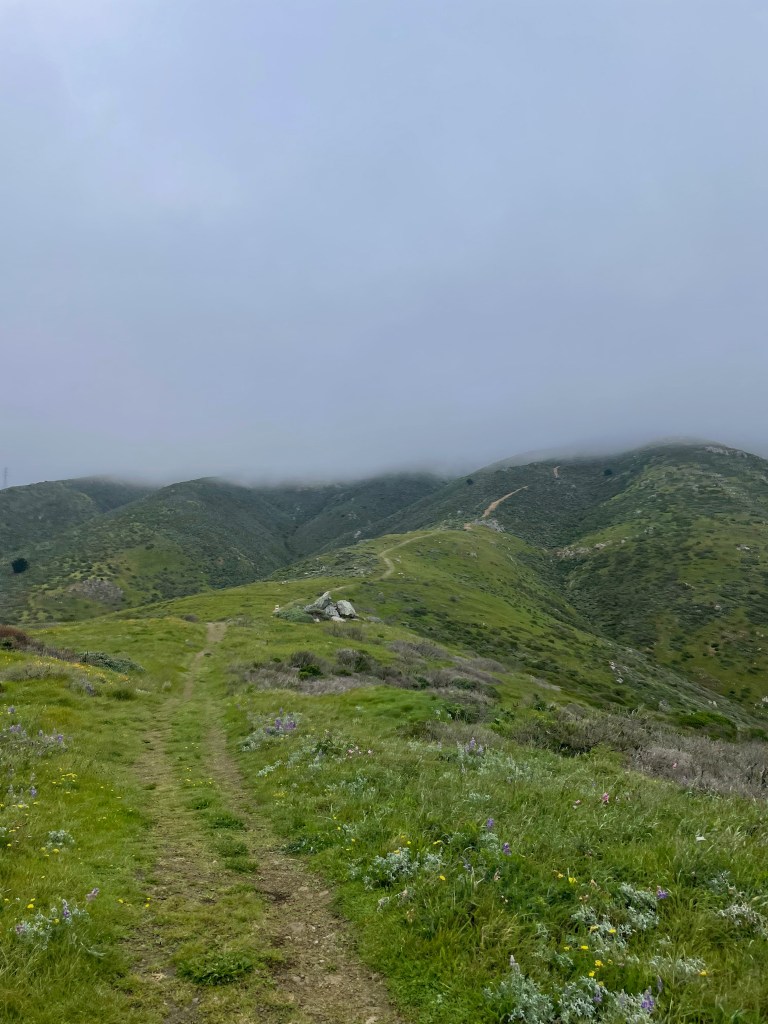
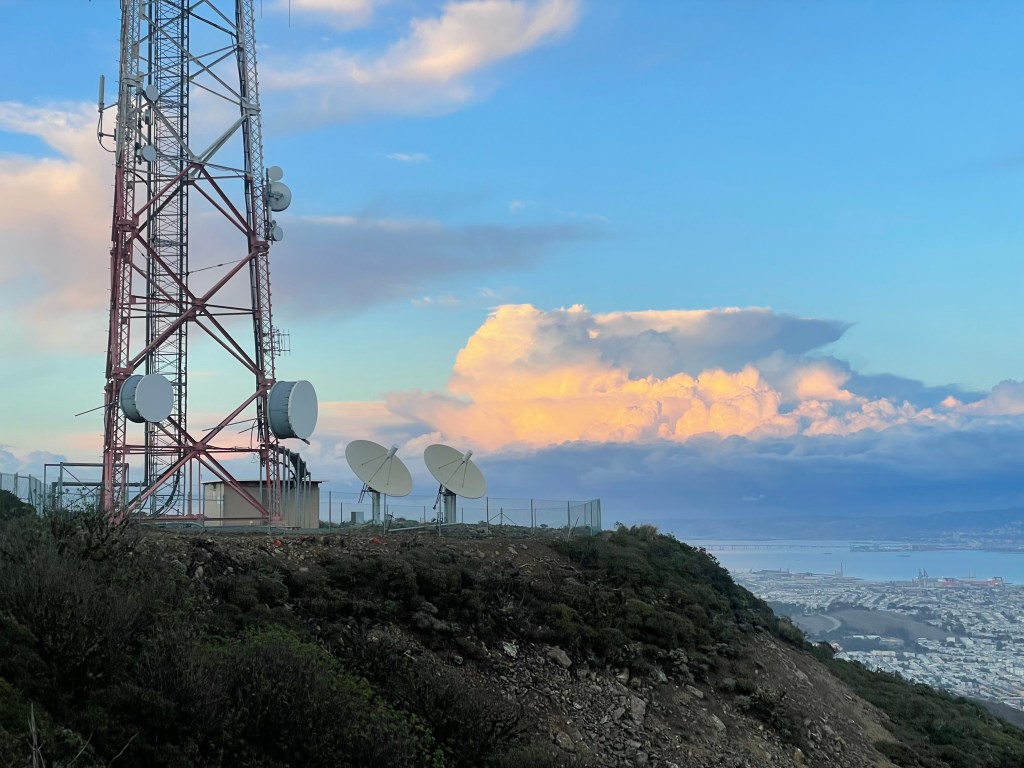
My first attempt at this was to start running up San Bruno’s ridge line after work. This was a ~8.5 mile route with about 1500 ft of gain and I could start and finish at my office right around sunset. I used to run a lot of hills when I was on my high school’s cross country team, but I’ve never really ‘trail run’ in this capacity. The route started with 2 miles of relatively flat road that served as a good warmup. Then at the first trailhead I would start up ‘sign hill’, a mini foothill of San Bruno that had the words “South San Francisco” in Hollywood style lettering. It was steep but quick, probably 400 feet or so of climbing before I was back on the road for a quick descent towards San Bruno proper. The 2nd trailhead started at a large buttress that was approximately in the center of the large ridge making up San Bruno. From this trailhead to the ridge line was approximately 800 more feet of vertical over 1 mile of terrain. It was steep, rocky, and somewhat loose in sections. Later I would learn that the top times of this trail segment at 10:30 min/mile pace, which for me was absolutely ludicrous. For my first attempt, I probably was close to 18-20 min/mile pace and felt pretty smoked at the top of the ridge.
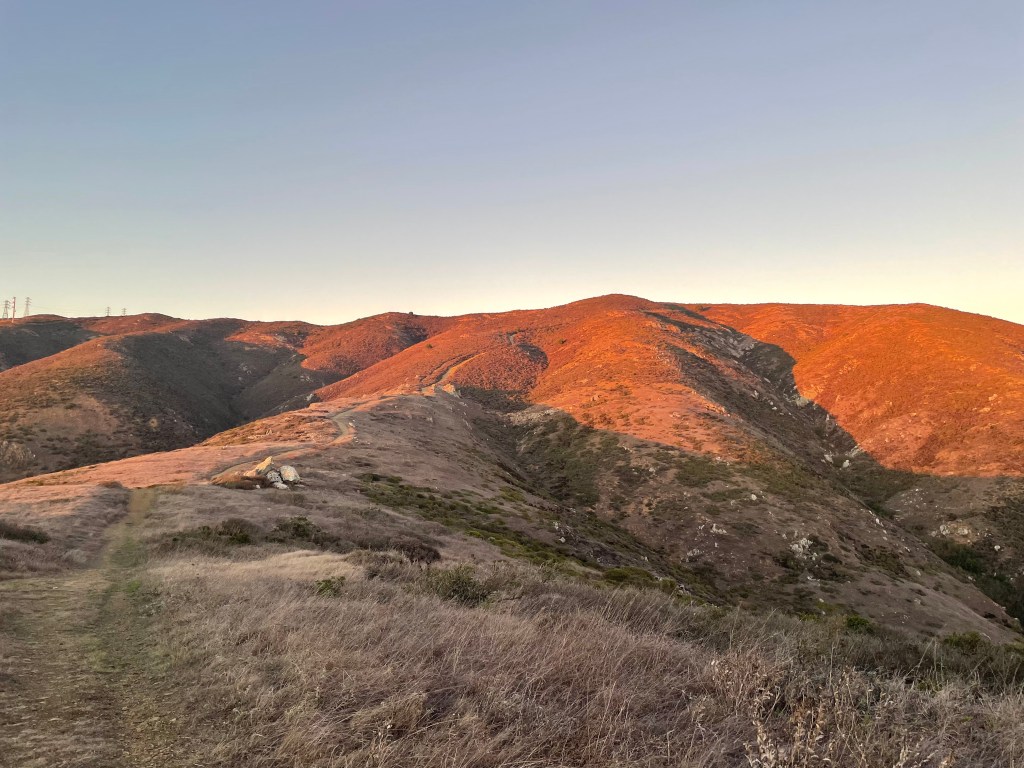
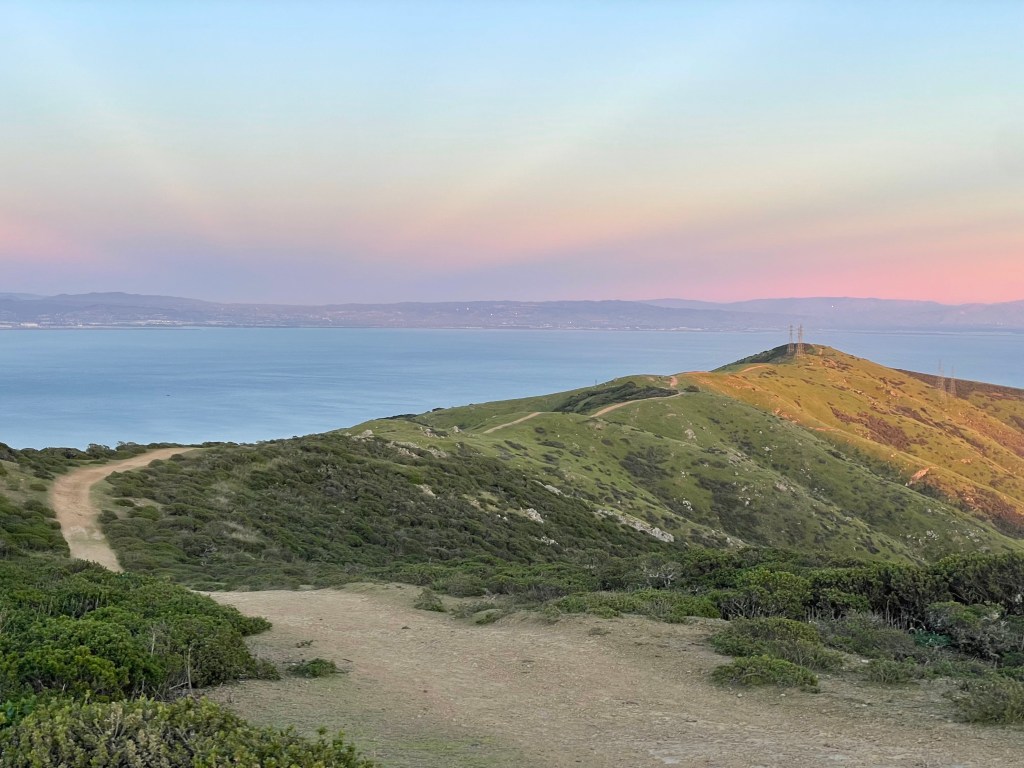
Once I got to the top, I would typically run East towards the lower half of the ridge line. The summit was in the opposite direction, but would extend my run by more than 2 miles and didn’t make for a great loop. The other half was still an awesome run along the ridge. For about a mile and a half I was running about a thousand feet above the peninsula and could see a panoramic view of San Francisco, the Pacific Ocean, the East Bay, and Santa Cruz mountains all at once. For most of my runs in the evenings this view would be enhanced by the sunset and make for a pretty special ambiance. At the end of the ridge was a steep downhill that made it’s way into a small suburb near the city. I’d then take this back another 2 miles to work to end the loop. What I liked the most about this trail was the diversity of flat running, steep uphills & descents, and crazy ridge line views. Quickly this became my weekly or biweekly workout routine and before I knew it my times dropped quickly. From October in 2025 to March of 2026, I ran this route and a few variations maybe a dozen or so times. My first attempt finished the loop in 93 minutes (11:09 min/mile) while my most recent finish was 76 minutes (9:17 min/mile). Really I owe the huge drop in time to staying consistent and pursing workouts that I genuinely find fun week to week.
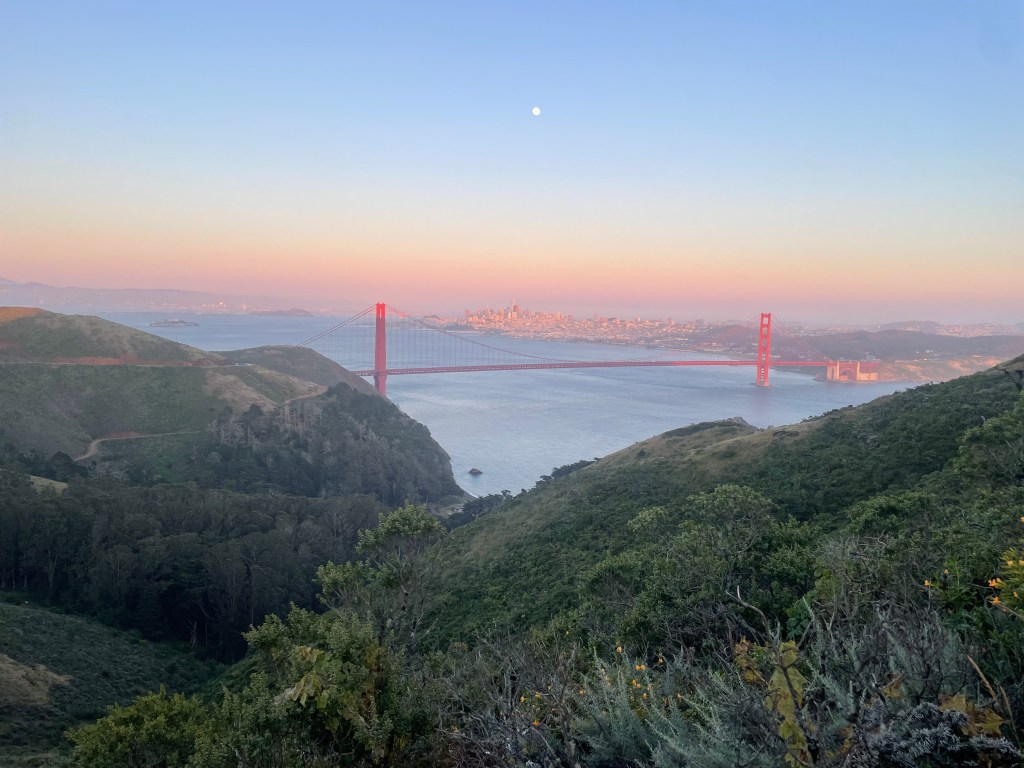
Although San Bruno was probably my favorite workout week to week, I also began finding others that were similarly inspiring. In particular, I turned to one of SF’s most popular endurance sports: cycling. From my apartment near the golden gate park, the opportunity for fun cycling loops in and outside of the city were endless. Within about an hour I could ride my bike through the 3 parks in the city’s NW corner or visit ocean beach and then climb up to twin peaks. I could also go north and cross the golden gate bridge to access some of the most scenic rides in the area. Most popular was Hawk Hill, which provided an efficient climb up the closest coastal hill with a great view of the city. I could extend or linkup anyone of these loops for more vert or more mileage depending on how much time and energy I had at that moment. Best of all was the community surrounding these loops. Given the easy access and local popularity, I frequently found people willing to ride before or after work. To me any workout with friends was effectively free in terms of mental effort and activation energy. I had no excuse not to join in on a group ride if I had the time available. So before I knew it I was consistently riding between 20-40 miles a week and boosting my volume of cardio workouts.
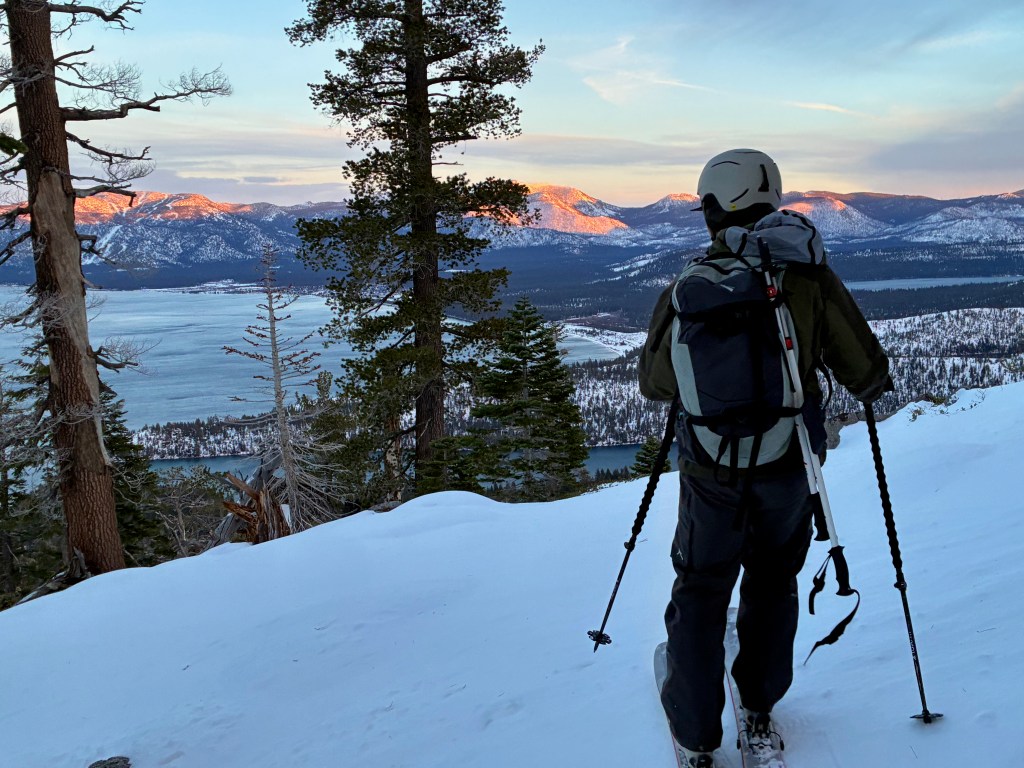
By the start of the ski season I began to really feel the cumulative effects of consistent endurance training. Easy tours around the West side of Lake Tahoe like Jake’s or Tallac turned from challenging and half day efforts into quick and efficient outings. With a fast partner I could make it up two thousand vertical feet in just over an hour or so depending on how good the skin track was. One weekend in January was a great example of this payoff. I joined with a friend Ray, who I had met earlier in the fall from a mutual friend. We both wanted to get out to Tahoe for a weekend of fast paced touring to explore more of the West Lake area. On Saturday we drove out early in the morning and made it to Jake’s by about 10:30 am. The snowpack was pretty brutal at this point, so the skin track was pretty much just bulletproof the whole way up. Despite this we quickly ascended and descended the mountain in about 2.5 hours, stopping only to take in the views periodically. We weren’t racing up in any capacity, just looking to get up and down quickly so we could make it back to the resort with our friends.
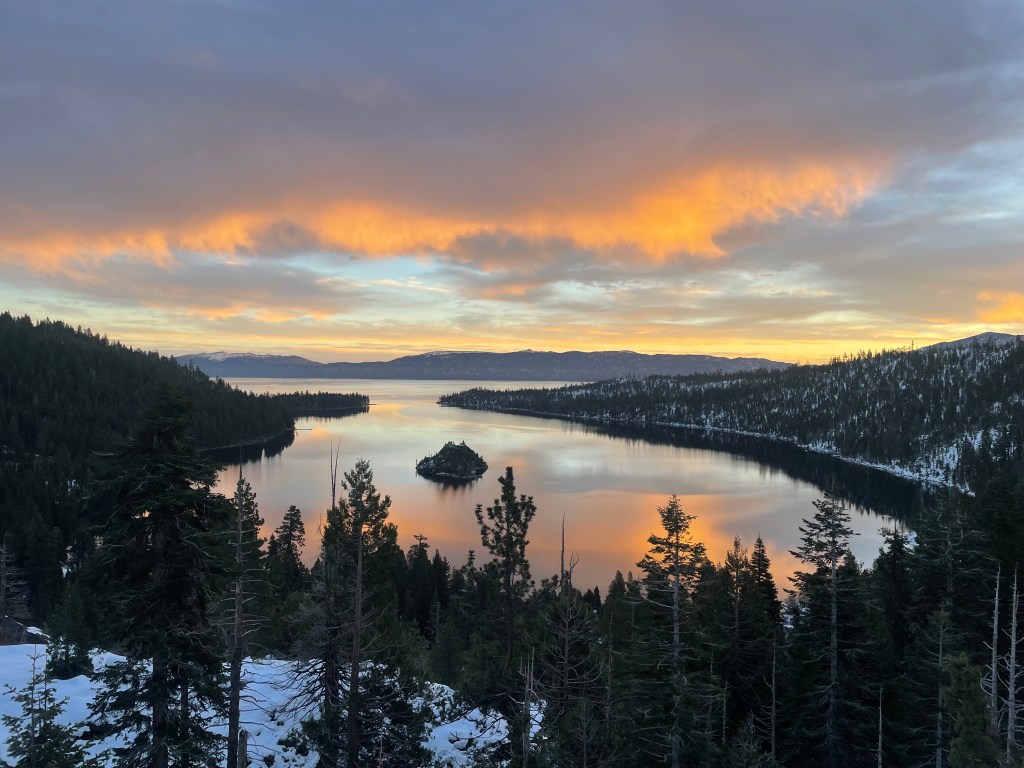
By pure coincidence, we made it to the resort by about 2:30 and ran into a mutual friend who was an olympian freestyle mogul skier. After a fast tour up Jakes, we immediately joined her group’s ‘power hour’ down Chute 75. In true olympian fashion, this entailed lapping Chute 75 (a steep mogul run down KT-22) as fast as possible until the mountain closed. They were already on lap 3 at the time and we joined in for bonus laps of fun. Turns out my legs quickly turned to mush as we blitzed down the moguls in about 5 mins each time. By 4:00 Ray and I had put down 8 laps and I was desperate for a beer and slice of pizza at Chamois. Later we finished the night at a friend’s airbnb hot tub and immediately began scheming what was next for Sunday. So then we woke up early, rushed to the Tallac trailhead, and blitzed up the mountain in what would be record time for me by far. The skin track was pretty straightforward and there even was a bit of soft snow waiting for us at the top of the NE bowl. This made for a surprisingly great descent and we both got some soft turns in down the big gully we came up. Luckily there was snow all the way to the car and we managed to finish the nearly 4000 ft round trip in under 4 hours. We weren’t really going for time, but just had the stamina for a fast round trip and it felt great. Wrapping up early even allowed for a visit to my favorite pizza joint (Mountain Slice) in Tahoe City before our exit back to the city before the evening.
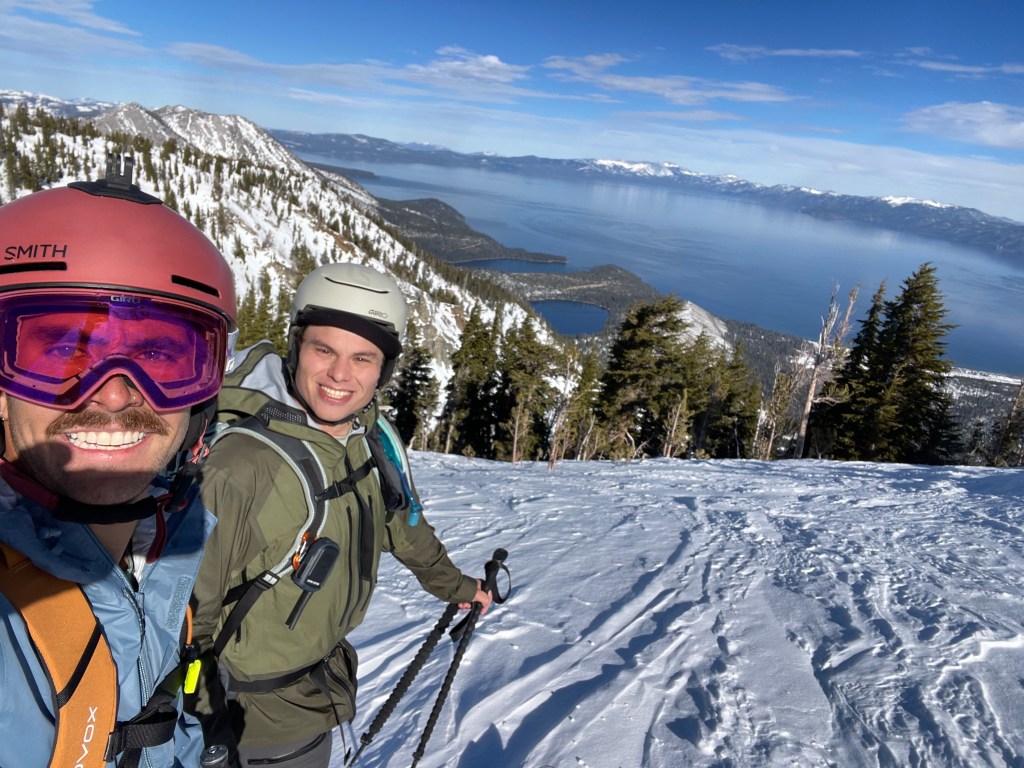
As the season progressed I continued to find more payoffs from my journey to improved fitness. While traveling to Utah and Japan, my buddy Hokaj and I would consistently be able to access bigger terrain or ski more laps than otherwise possible a year before. I felt less fatigued in general and was able to dial in my fueling strategy to maximize performance. I also got much more comfortable with what gear to choose and how to use it most efficiently during transitions or while eating. However, skiing wasn’t my only ambition. The more I improved my endurance capacity, the more I wanted to challenge myself with bigger and faster outings. Goals that seemed impossibly far away began to feel more tangible by the week. One of these impossible goals was a multisport endurance challenge based out of Jackson, WY. This local rite of passage was ironically named the ‘Jackson Picnic’ to match the underground and casual vibe of the seriously crazy local scene. The challenge started at the center of town with a bike ride to Jenny Lake, approximately 20 miles or so along mostly flat terrain. You’d then need to swim across the ~1.5 mile lake to access a trailhead towards the Grand Teton. After a casual 22 mile round trip up the steep, boulder filled, and extraordinarily technical Grand Teton summit (a 5.4 solo), you’d need to reverse the loop and make it back to town. If you lined up conditions right, you’d also need to finish the loop in under 24 hours in order to make it to the Million Dollar Cowboy Bar before closing. I was not about to risk my life to solo this challenge, but I figured I could test my physical capacity with a backyard challenge of my own.
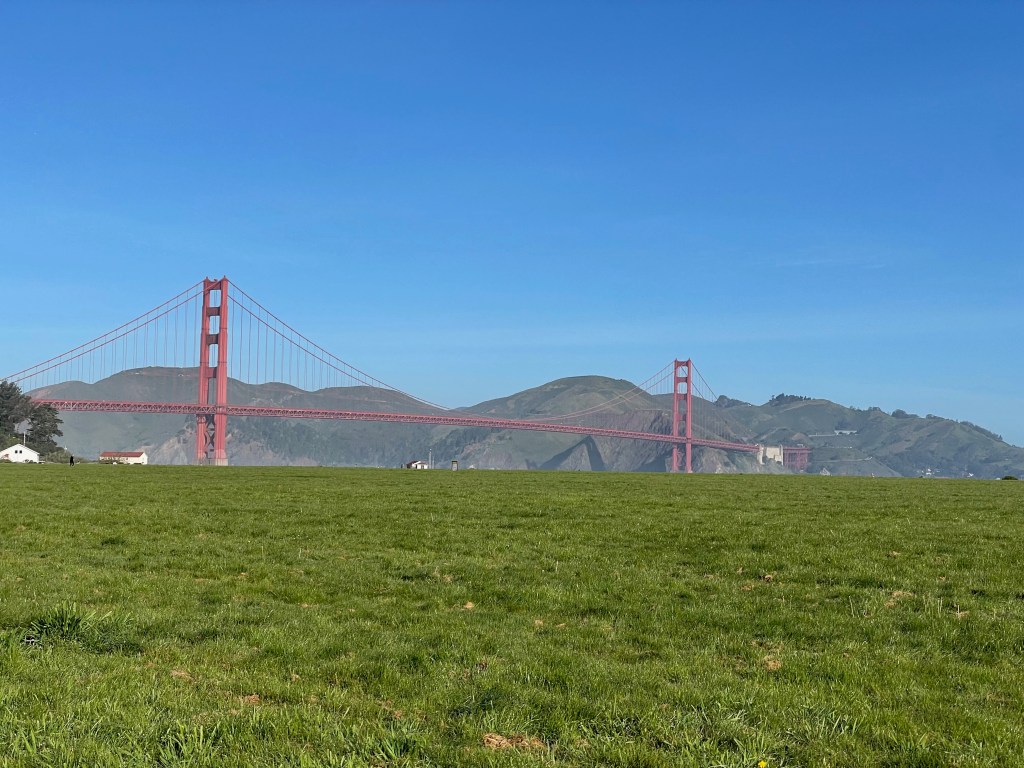
Originally my plan was to invite a few friends to join me on my version of the ‘SF Picnic’. We’d aim to complete a similar physical challenge to the Jackson version, while hitting the iconic destinations around SF’s training grounds. But it turns out that most of my friends hated the idea and lining up a group trip quickly became out of reach. So while the ski season was still subpar in March, I set off solo on a random Sunday to finish the goal I set for myself earlier in the Fall. I started off from my apartment near the golden gate park on bike towards Aquatic Cove for the first leg of the journey. I carried a backpack with a wetsuit, towel, and swimming gear so that I could stash my bike at the cove and start off with a swim. I ended up doing two laps in the cove or about 2600 yards (~1.5 miles) in pretty freezing cold water. I then tossed the gear in a bush and headed off on my bike towards Mt. Tam in the Marin Headlands. This bike loop was a bit over 50 miles and finished with about 5000 ft or so of vert at the top of the East peak. I even did a mini trail run to the real summit just to make the experience feel more like the real picnic. The bike took the longest time by far, but I just made sure to constantly fuel up and take things pretty slow. For the most part the whole trip felt pretty type 1 and I was listening to podcasts and music the whole time.
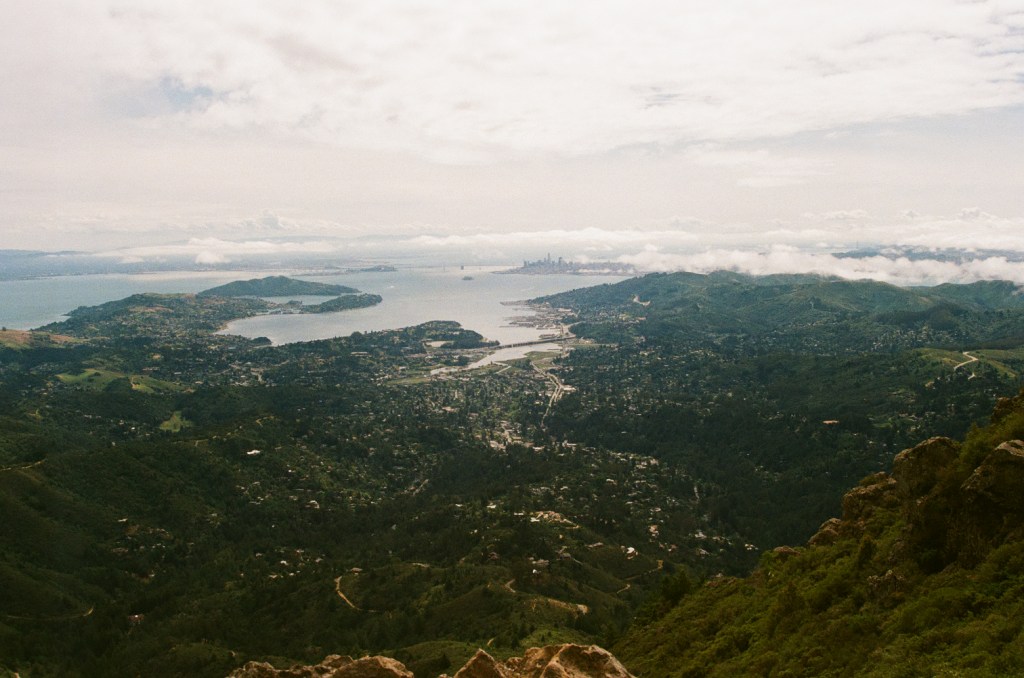
Before I knew it I was back at Aquatic Cove to pick up my gear and head back to the Golden Gate Park. There I stashed the bike at my house, changed into running shoes, and began the final leg of my journey. I started off through the park and towards Ocean Beach, beginning a classic bike loop to Twin Peaks on foot. I was jogging relatively slow and was certainly feeling the accumulation of the day at this point. Despite this I knew I wanted to finish strong and did my best to hold pace through the Great Highway and towards the SF Zoo next to Merced Lake. Once I got there I knew the rest of the loop was almost completely uphill. My pace slowed a little bit as I trudged up the hill towards Twin Peaks. Miles 6-10 were the hardest for me and I had to constantly remind myself that I only had about an hour left of my 8+ hour day. At my transition I had chugged quite a lot of water but for now I only carried a few energy gummies to finish off the day. By the time I reached the summit of Twin Peaks I was pretty ecstatic. All I had left was about 2 miles of downhill to my apartment. This went by pretty fast and my legs were almost completely toast when I finally made it to the finish of my 13.1 mile loop (+1000 ft or so). The day ended and wound up being just a bit more than a half ironman worth of swimming, biking, and running. (2600 yards in 58:52, 62.05 miles with 5489 ft in 5:09:26, and 13.16 miles with 1175 ft in 2:29:22). It wasn’t the fastest time ever, but I also didn’t really train for this challenge specifically. It was a great testament to my training to date but wasn’t my end goal in any sense. Really I’m most proud of the fact that I had developed a system of training for myself that has consistently pushed me to do bigger and better outings. Fitness doesn’t just grant capacity for larger objectives, it provides a crucial safety margin in case a schedule in the mountains goes awry. I am much more confident cruising through an approach if I don’t need to worry about granting myself extra time for excessive pacing. With that in mind I don’t really have a particular end in sight for training. In line with legendary Alpinist Vitaliy Musiyenko, I’m hoping to be as fit as my current lifestyle allows such that when the opportunity arrives I can jump right off the couch and into the next badass objective that comes my way.

