Category: Uncategorized

  • How to not fall – SoCal Climbing

    How to not fall – SoCal Climbing

    In a shocking turn of events, my roommate (Trevor) and I decided to pivot to climbing as our weekend career post ski season. This was a purely functional endeavor at first; we were looking to climb mountains in the summer when ice & snow were mostly out of the picture. In its place was generally rock, which requires either a lack of fear or a large step increase in technical ability to protect oneself while climbing. So following the natural progression, Trevor and I picked up bouldering at a local gym in LA and quickly learned that we were bad at climbing anything above a V2. Despite this, we set an ambitious goal to climb some 5th class terrain in the high alpine a mere 4 month away (start: ~april, goal: end of july). In order for this to work, we approached this in our typical engineering fashion. First we planned out some ambitious climbing classes targeting specific technical skill sets: one for lead climbing, one anchor construction, one for trad gear placements. Next we planned some ways to ‘trial’ out our recently learned technical skills: one high vertical alpine climb, one outdoor lead, one outdoor trad multipitch. And finally we scheduled a regular ‘meeting’ to check in with progress and ensure things we planned were actually happening. At this point in April, we were feeling simultaneously stoked for the adventures ahead and incredibly stupid for the amount of high consequence technical skillsets and milestones that stood in our way. Oh at we were both working too much at this time 👍.
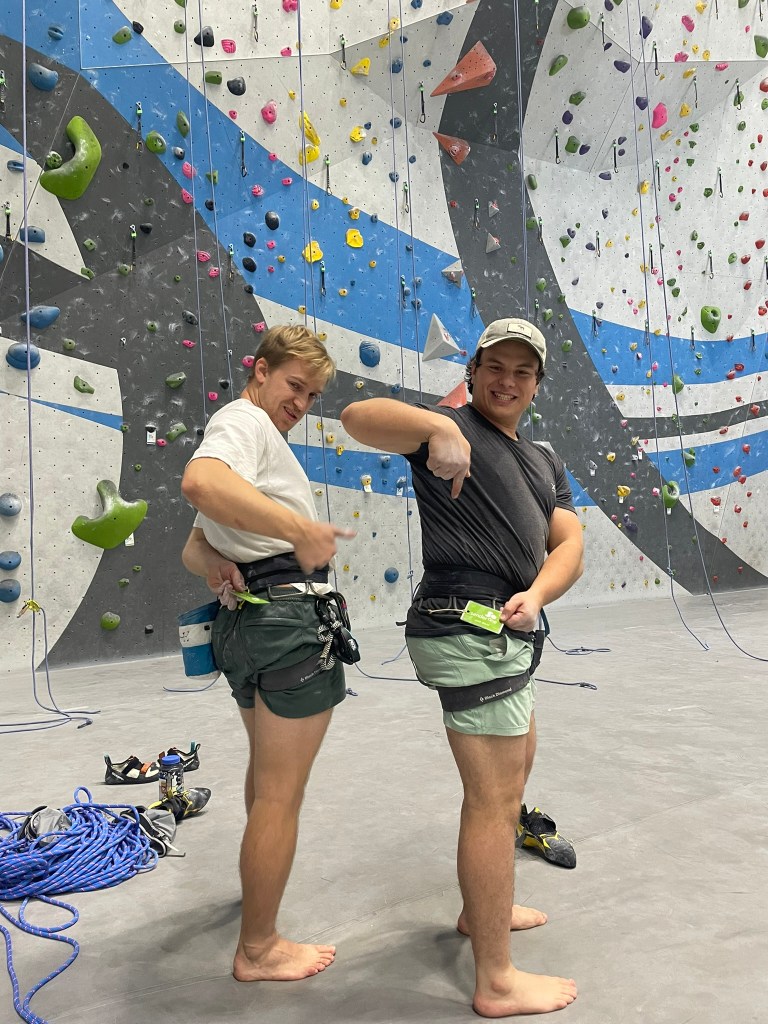
    Step 1: Two max’s get their lead cert (Footage of Trevor lost)

    First up on our list was lead climbing indoors. This required some basic top rope skills (should be able to climb around 5.11) and familiarity with lead gear like carabiners and belay devices. Although I had climbed top rope in the past, both Trevor and I were just about at the threshold for failing this class outright from the beginning. Climbing 5.11a was out of the question and we focused on getting in as much practice as we could: maybe 2 times a week. Passing the test required the execution of a 5.10a lead climb and lead belay, something we both felt would be doable only with a real in-person class. Given our limited weekend ability, the only time we could both attend this turned out to be one day after our trip to Oregon to climb Mt. Hood (another post on this webpage). So after our summit and red-eye flight back to LA, Trevor and I headed to the gym for our 5 hour lead class that next morning. It turned out to be a great time despite our possibly poor preparation. Our instructor and other climbing partners were super accommodating and our climbing skills were not that bad. Both of us could actually lead and lead belay each other on the easiest 5.10a of the gym by the end of the class. Both of us were monumentally terrified of the experience too, but we knew that some mock lead practice would probably solidify our skills enough to pass the indoor test within a few weeks. The only problem was our anchor and trad classes: they were planned for the following weekend and at the time seemed like a crazy way to proceed.
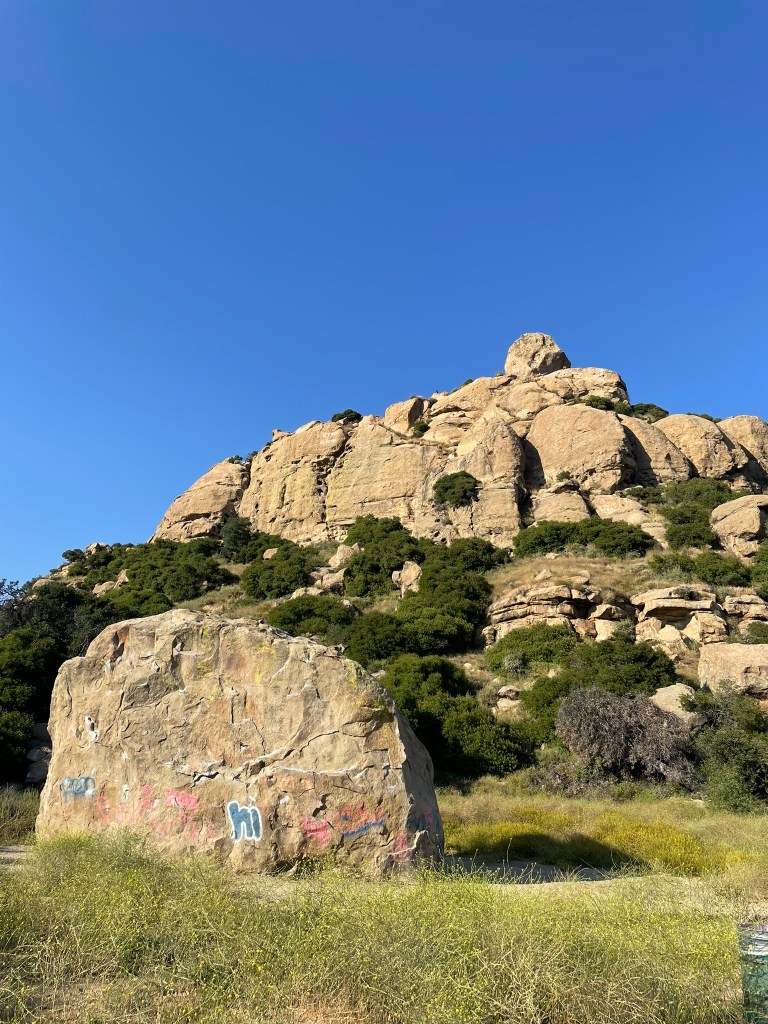
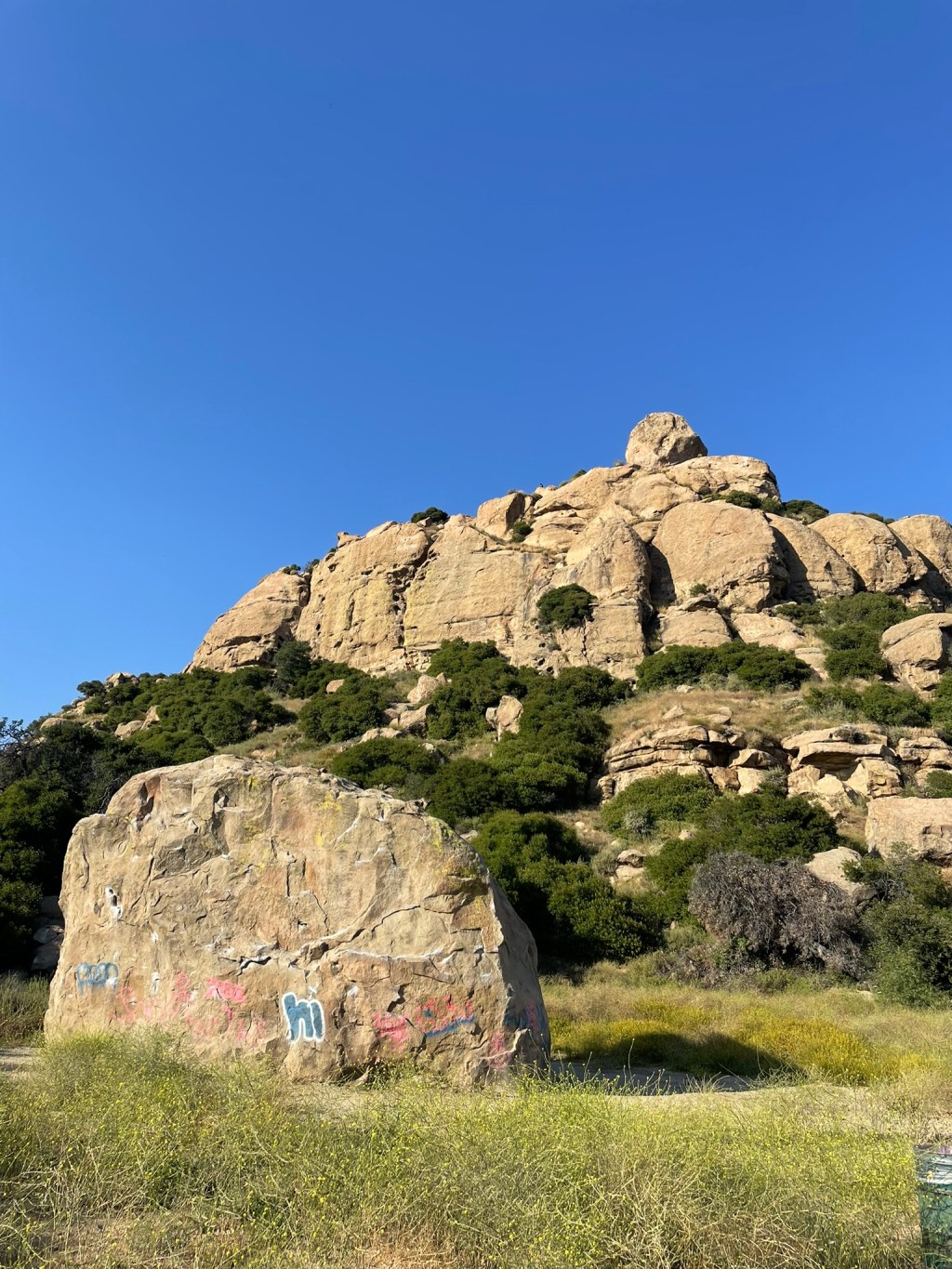
    Stoney Point: training ground for anchor building and a historical climbing landmark

    After an alarmingly quick week and two measly weekday climbing sessions, Trevor and I found ourselves driving to Stoney Point for our first of two full day courses on traditional climbing. Stoney Point is a pretty cool location to climb. Not because of the nearby traffic noises or distasteful graffiti, but because it was the birthplaces of American climbing to some degree. This group of sandstone rocks was ‘discovered’ in the 1930s by SoCal locals in the Sierra Club as a potential crag. A few decades later, legends like Royal Robbins and Yvon Chouinard got their start at Stoney Point along with many others who would go on to define California’s climbing history. I couldn’t help but start to feel some parallel’s to our own climbing journey. Even though we had no where near the same lifestyle or bravery it must have taken to develop new climbing techniques in unknown areas, our plan was still bold in its own way and was physically in the same place. Adding to this feeling was an excitement from the crazy amount of information learned in the first day. Traditional climbing revolved around the management of rope and anchors. Rope and anchors revolved around the understanding and implementation of knots. The functionality of these in union seemed endless and took some of the fear away from our lack of experience in the moment. Throughout the next day we continued to practice anchor and knot techniques, but with the addition of cams, nuts, and hexes to interface with rock cleanly. Ultimately the class aimed to convey a series of concepts that the govern traditional climbing system. Real rock is extremely diverse and requires similarly diverse ways to accommodate natural features for adequate protection. The goal in any case is to build an anchor that is ‘bomber’ (you trust with your life), belay from this anchor to start climbing, and continually place temporary gear to catch potential falls. Each pitch (a rope’s length) is finished with another anchor to get your partner up the same route while they clean all the gear which was just placed on the way up. Now that both you and I know how to climb, we are both ready for practice in consequential terrain (not legally binding).
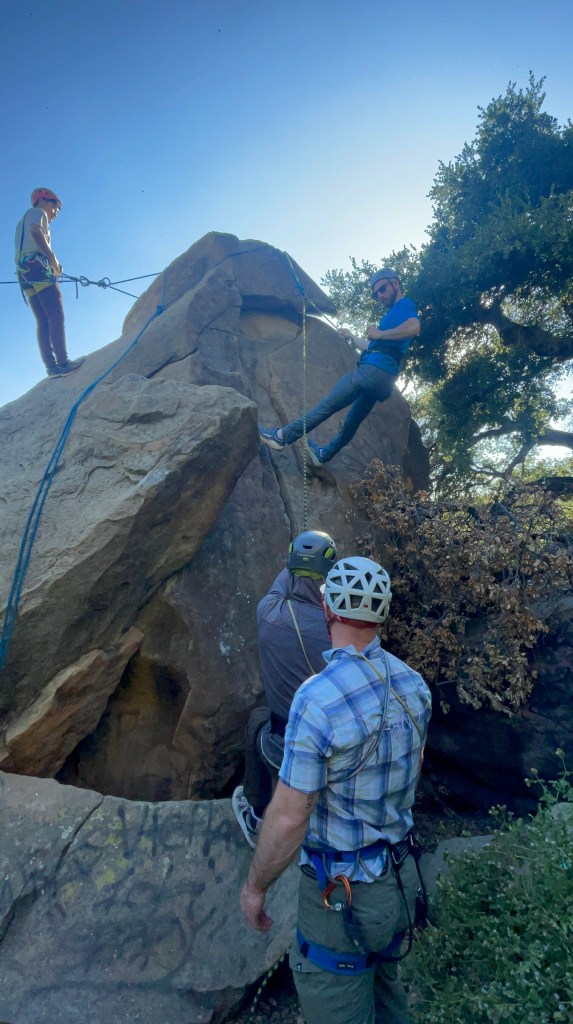
    Some rescue practice with SAANO adventures at stoney point

    After our first weekend crash course, Trevor and I headed back outdoors to test our knowledge on some truly beginner terrain. While searching for some good trad routes near LA, I came across an large granite spire called Tahquitz rock right outside of San Jacinto. To my surprise, this rock shared Stoney Point’s incredible history and was also one of the first few crags that developed free climbing. Starting in 1936 with a route called “The Trough”, started a movement from the Sierra Club to push the boundaries of free climbing into grades like 5.8. Even the Yosemite decimal system used to define grades like 5.8 was initially developed at Tahquitz rock (and later popularized in Yosemite). In a fitting nature, The Trough was the route that stuck out to me the most. It’s route-finding was incredibly straightforward, it was only three pitches, and it was graded 5.4 (or 5.0 according to the Sierra Club’s initial grading). Similar to Stoney Point, climbing this route first also seemed like an homage to the history and pioneers of free climbing itself in the sense that we were truly starting from the bottom of what is possible.
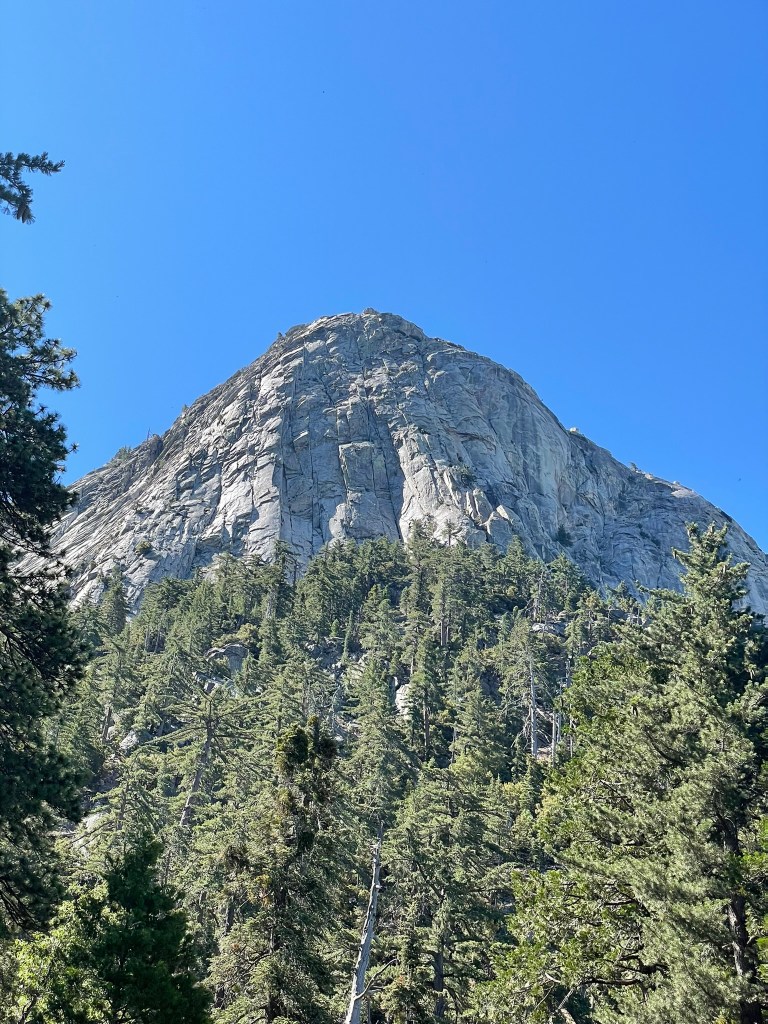
    Tahquitz Rock: A beautiful granite spire and our multipitch training zone

    Getting to Tahquitz is an easy ~2 hour drive from LA and starts near a town called Idyllwild planted right in the center of the valley behind San Jacinto. The landscape is beautiful and filled with giant redwood trees that sit below both Tahquitz and Suicide rock. Tahquitz is about 800 ft tall and looks like the head of a spear jutting up from the hillside. Below it sits a trailhead and a steep ~mile and a half hike up some sporty switchbacks. Trevor and I brought about 10 cams ranging from 0.4 – 3, a set of nuts, 10 alpine draws, and a handful of anchor building materials, some of which were purchased last minute at the shop in town. Once we got to the base of the route we decided to do a “practice pitch” in the approach just to make sure our systems were dialed. Shortly after, I began on the sharp end of the rope and made my way onto my first lead on gear for pitch 1. Climbing was relatively straightforward and mostly contained a series of gullies & chimneys to a small ledge. Getting to the ledge required a few steps on a friction slab, which was a little spooky. Otherwise it made for a great introduction and I quickly built a gear anchor on the ledge. Once Trevor joined me, it was high turn to lead and pitch 2 above us seemed like similar climbing. Unfortunately we didn’t bring any radios, so I sat at the belay station waiting for Trevor to make progress without knowing what he was about to encounter. Nothing went wrong, but it took about an hour or so for him to make it to the end of pitch 2 and make a slung anchor around a tree. I followed after and only came across one issue – a stuck #3 cam (RIP).
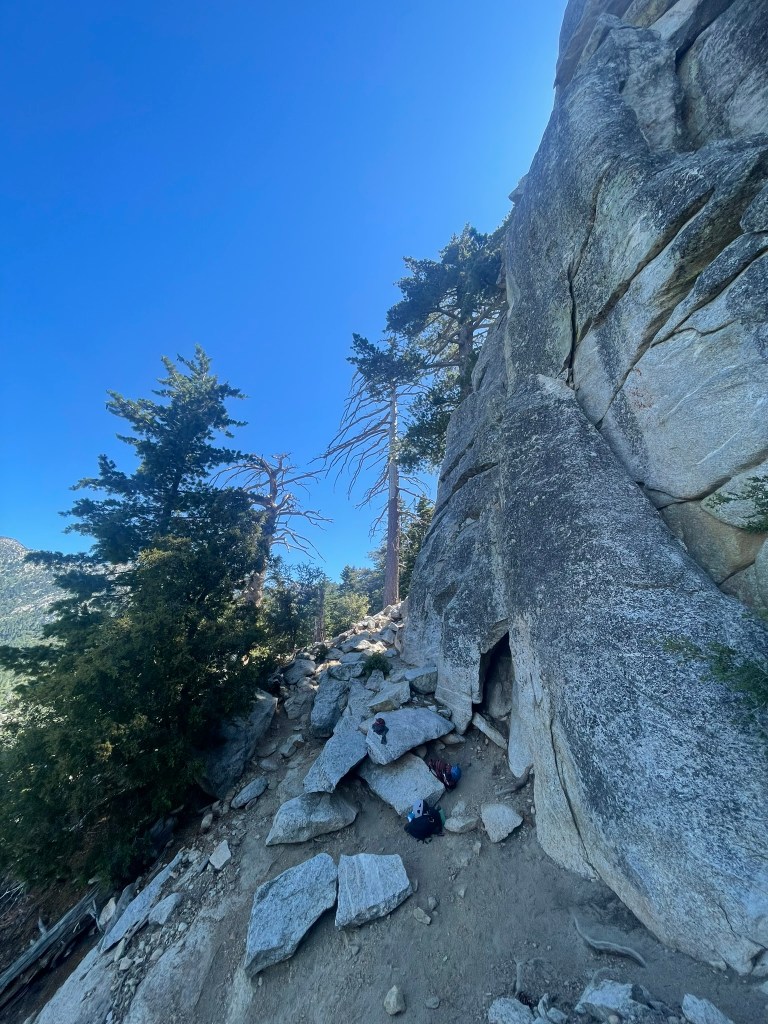
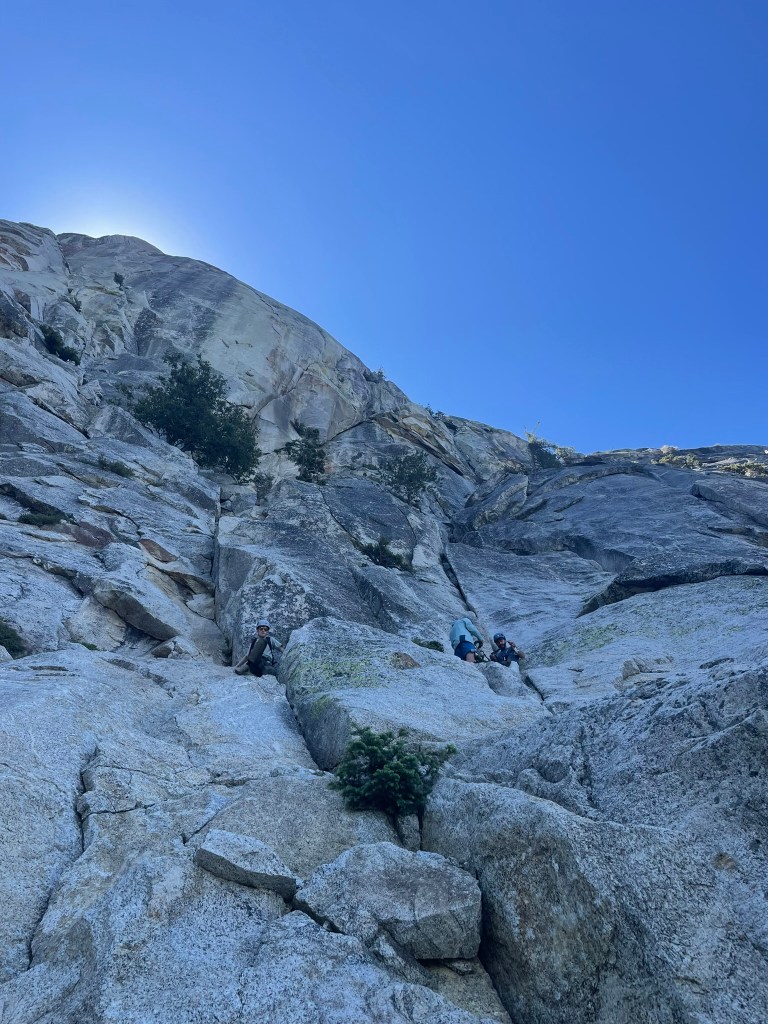
    Lunch rock!
    Climbers next to the Trough

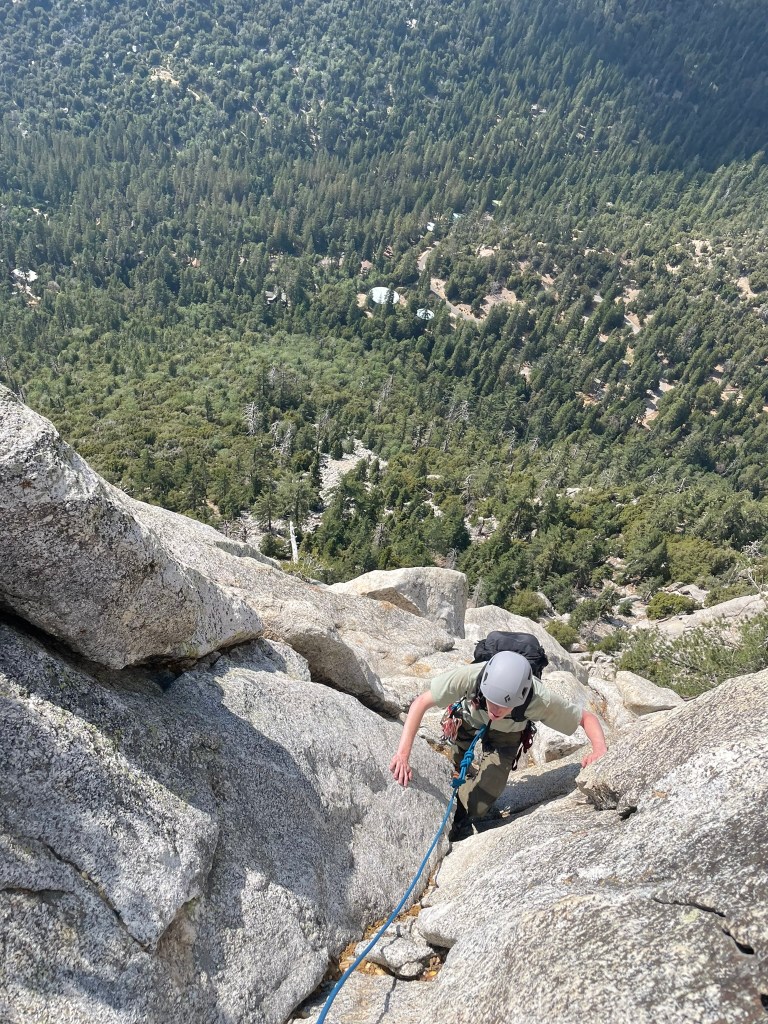
    At the start of pitch 3, I was back again and feeling super psyched to lead. Below me was some crazy exposure for someone who had never climbed more than a rope’s length, but I felt like the climbing was well within my reach. Above me were some chimneys and dihedrals that were all pretty mild and I new my next anchor would be a slung tree. There was only one move in this pitch that spooked me. I placed some gear right before it, but still felt a little insecure stemming up a chimney with very few holds. It made we question whether we could climb any higher of a grade, but I still made it through without much of an issue. Getting to the top of the pitch was awesome and I practiced making the next anchor a comfortable hanging position. Technically I could have raced right to the peak, but figured I would take it easy and add in one more pitch. At this point Trevor came up and we both felt great, but also were out of water. I volunteered to quickly lead the next pitch to save some time and before I knew it we were at the peak. Since we were doing this in the first week of July, temps were in the 80s and we felt it. The descent was fairly not going to take us that long, but we were exhausted from the mental aspect of climbing and the relatively long period of time we were out there. Starting down the route was a small chimney and some friction slabs at a relatively low angle – probably 4th class terrain. We worked our way through with another group that had just summitted and then made our way back to the trail on the front side of the rock.
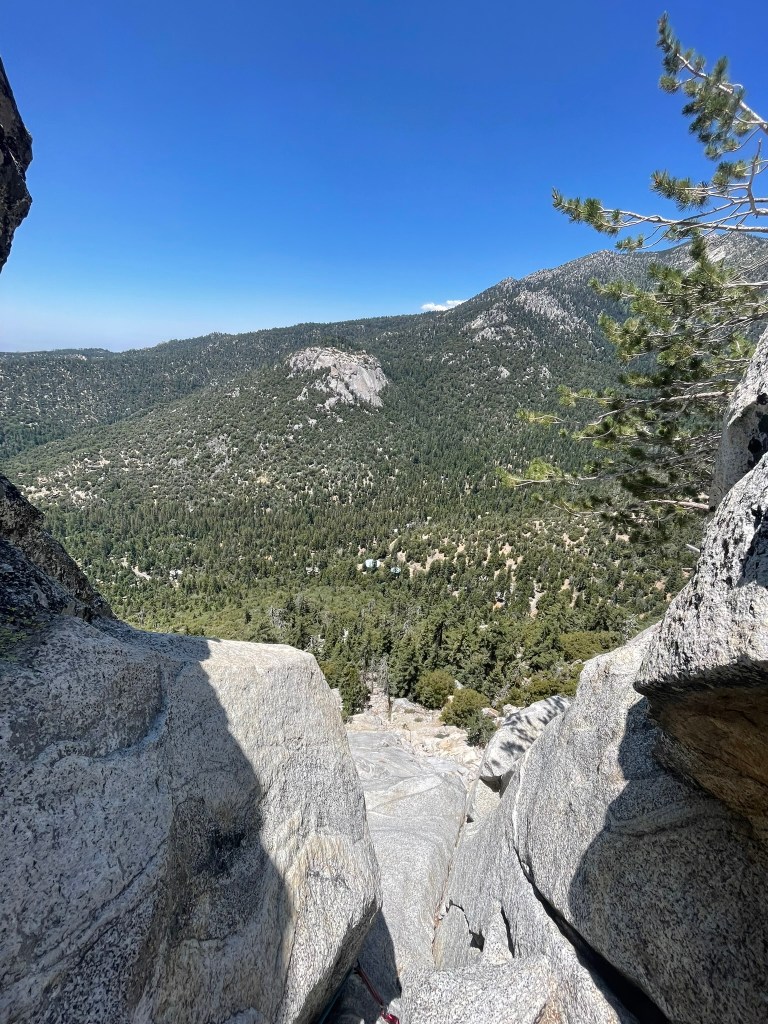
    View from the P2 belay
    Trevor following up P3
    The peak of Tahquitz rock

    At this point we were feeling super dehydrated and just wanted to make it back to the car. This made the descent fell way longer than it actually was and by the time we finally made it down we felt unbelievably thirsty. Despite this, we did actually make it through our first multipitch route unscathed and it was a blast. Climbing relatively easy terrain on stellar rock and with massive exposure below is such a great experience and made me want to come back for more routes right away. But first, we headed in town for some glorious Italian food to celebrate. I couldn’t help but drink as much water as I possibly could as we ate and chatted about the adventure of the day. Later that summer, we’d go for our alpine objective. It was the same grade, but would really test our new found skills and navigation in consequential terrain. Learning how to climb is really a career effort, starting it at Stoney Point and Tahquitz felt pretty special. After this first experience I am incredibly excited for that journey.
  • Strike Mission – Mt. Hood

    Strike Mission – Mt. Hood

    It’s hard to believe you can still ski in the early summer, but its even crazier to believe June can provide 5000 ft of quality snow. My first taste of summer skiing came from a trip to Mt. Hood, known for a variety of glaciers covering its 360 deg volcanic prominence in Northern Oregon. The mountain is part of the Cascade range, which spans from California to British Columbia and has dozens of volcanos reaching into the high alpine. Hood is an incredibly popular destination for both mountaineers and skiers due to its two south facing resorts and vicinity to Portland. Our plan was to make a quick weekend trip up to the mountain to summit and ski as much of its vertical as we could.

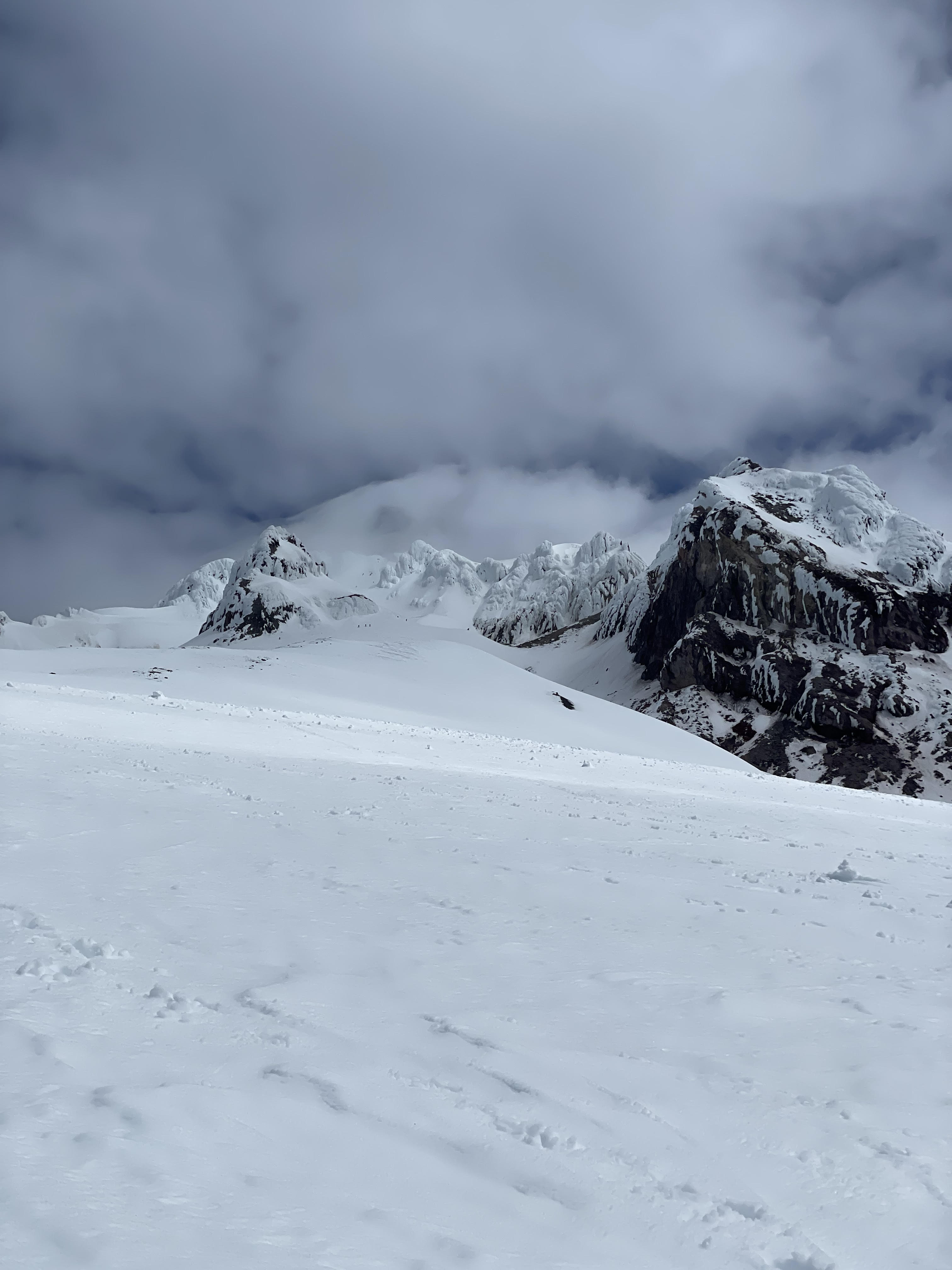
    Mt. Hood summit viewed from the Palmer snowfield.

    I flew out on a Friday morning directly from a work trip in Texas to Portland, Oregon to kick off the trip. My roommate Trevor met me there, having picked up some rental skis, crampons, and boots at a local mountaineering shop. Shortly after we blitzed to Hood River, a gem of a town next to the Columbia River Gorge and about an hour outside of the mountain. A mutual work friend of ours had bought a house with a fantastic view of the river and Mt. Adams nearby, which served as our brief headquarters before the early start on Saturday. The town itself was an outdoor sports mecca, with big mountain sports and wind surfing as the focal point. But for now, we only had time for a cruise into town for pizza to fuel up and carbo-load. We’d have just over an hour to snooze before nearly 5500 ft of elevation over just 3.5 miles of travel the next morning. As you would expect with a volcano, our route was a straight line from Timberline resort to the summit headwall and gradually increased in slope through the entire ascent. Weather and snowpack was forecasting well, so fitness and timing would be the crux of the summit.

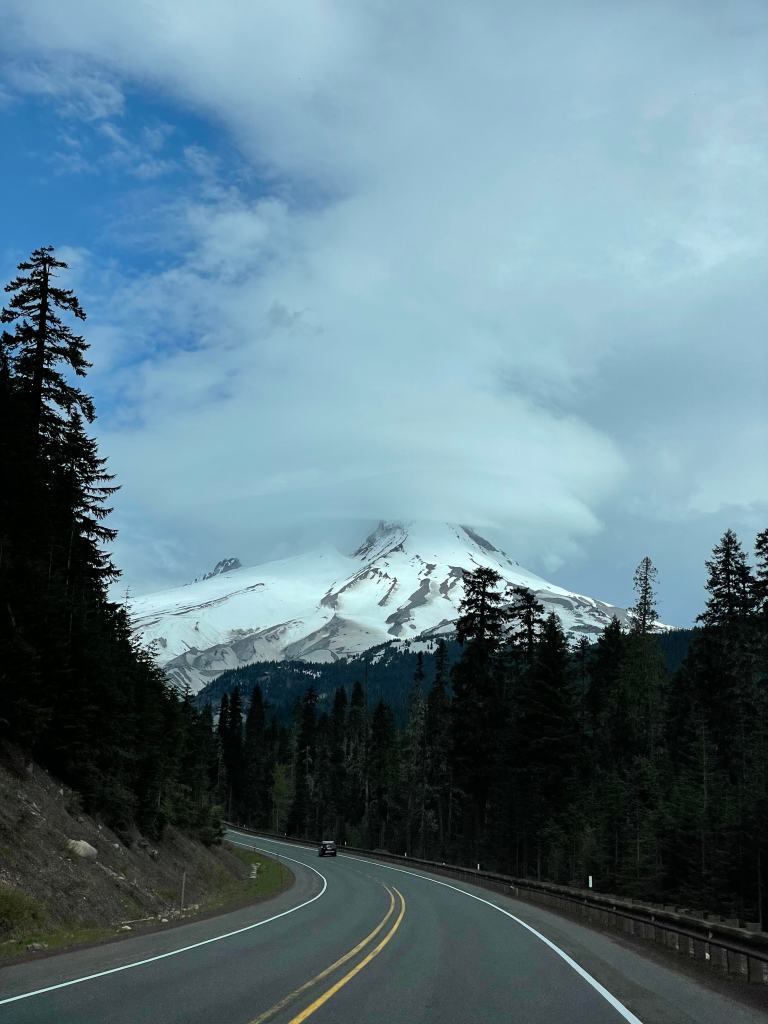
    View while leaving Mt. Hood, with lenticular clouds engulfing the summit.

    The Ascent

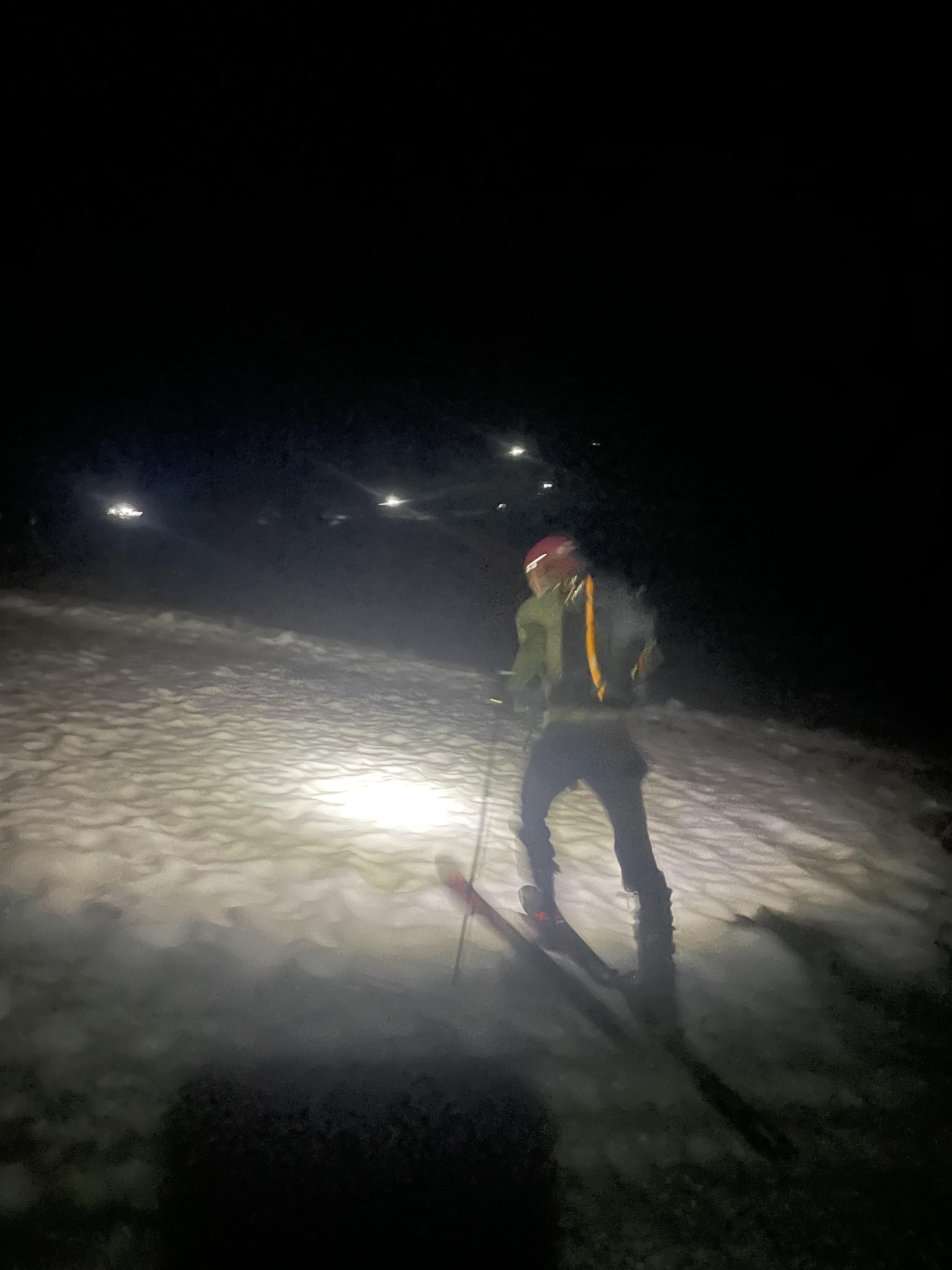
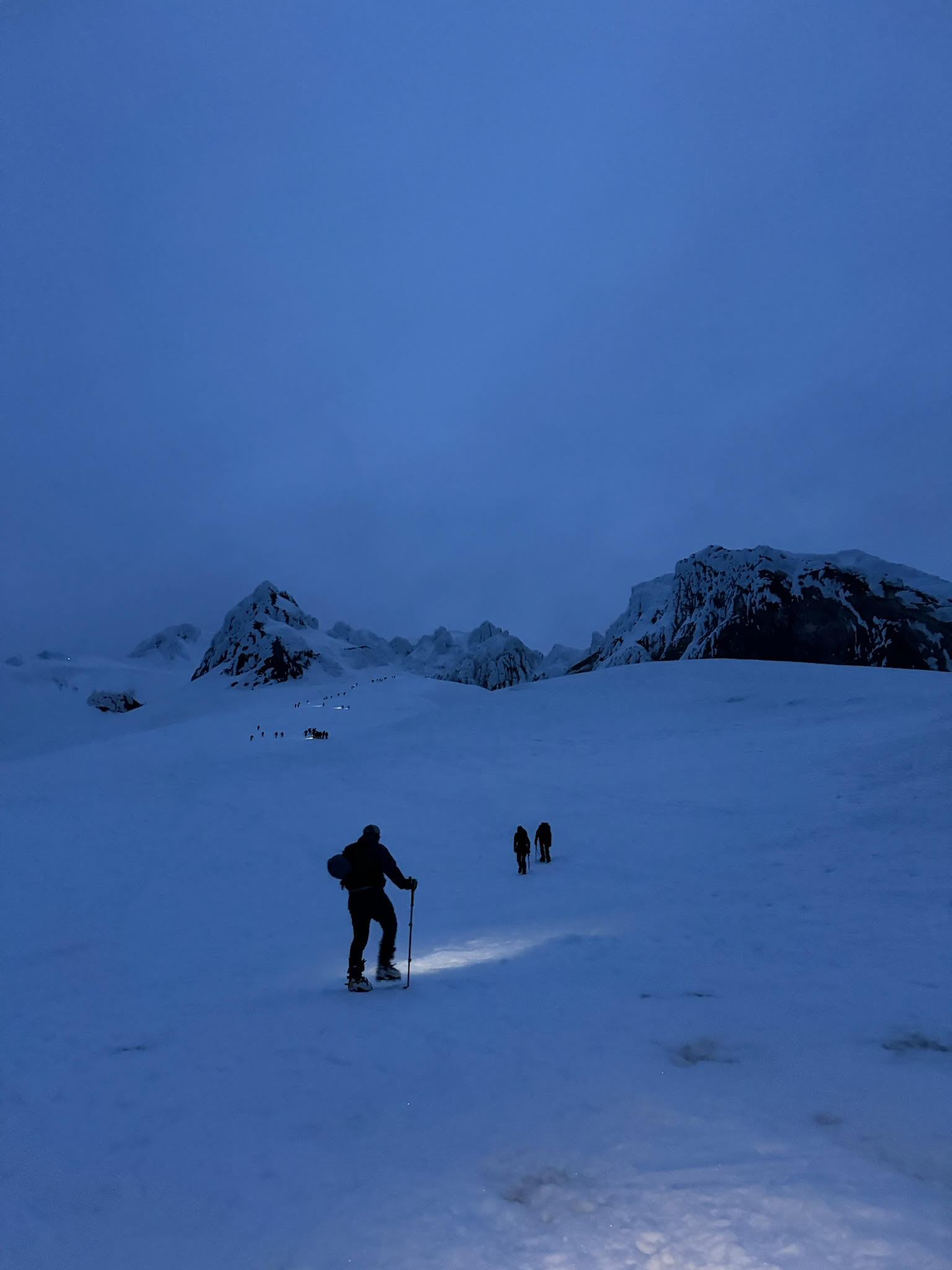
    Alarms rang at midnight and we awoke in a haze before quickly grabbing some coffee. There was little left to pack, so we rushed in the car and headed about an hour south towards Mt. Hood’s Timberline resort. What surprised me most was the amount of snow on the way to the parking lot. Car height snow banks cover the shoulders of the road well before we arrived and the lot itself was carved into the base of the snowpack. As palpable as the snow was the crowds, which consisted of about a dozen other groups prepping for the climb at 1 am. It was clear we were going to be accompanied by many other parties that morning, but at least it served as a signal we had good conditions for a summit push. About 20 mins after arriving to the lot we headed off on our skins, also marking Trevor’s first uphill tour. Conditions were as expected: nearly bulletproof snow crust clearly from an midnight freeze. For the first 1500 ft or so we made great pace, especially for a beginner uphill skier. But after a while, the slope angle gradually increased, requiring some more careful foot placement and the use of our ski crampons. Eventually kick turns were necessary and Trevor felt reasonably uncomfortable moving forward on skis. Luckily we were nearly at the top of the Palmer lift, serving as an easy ledge for transitioning to boots and a good spot for stashing skis.

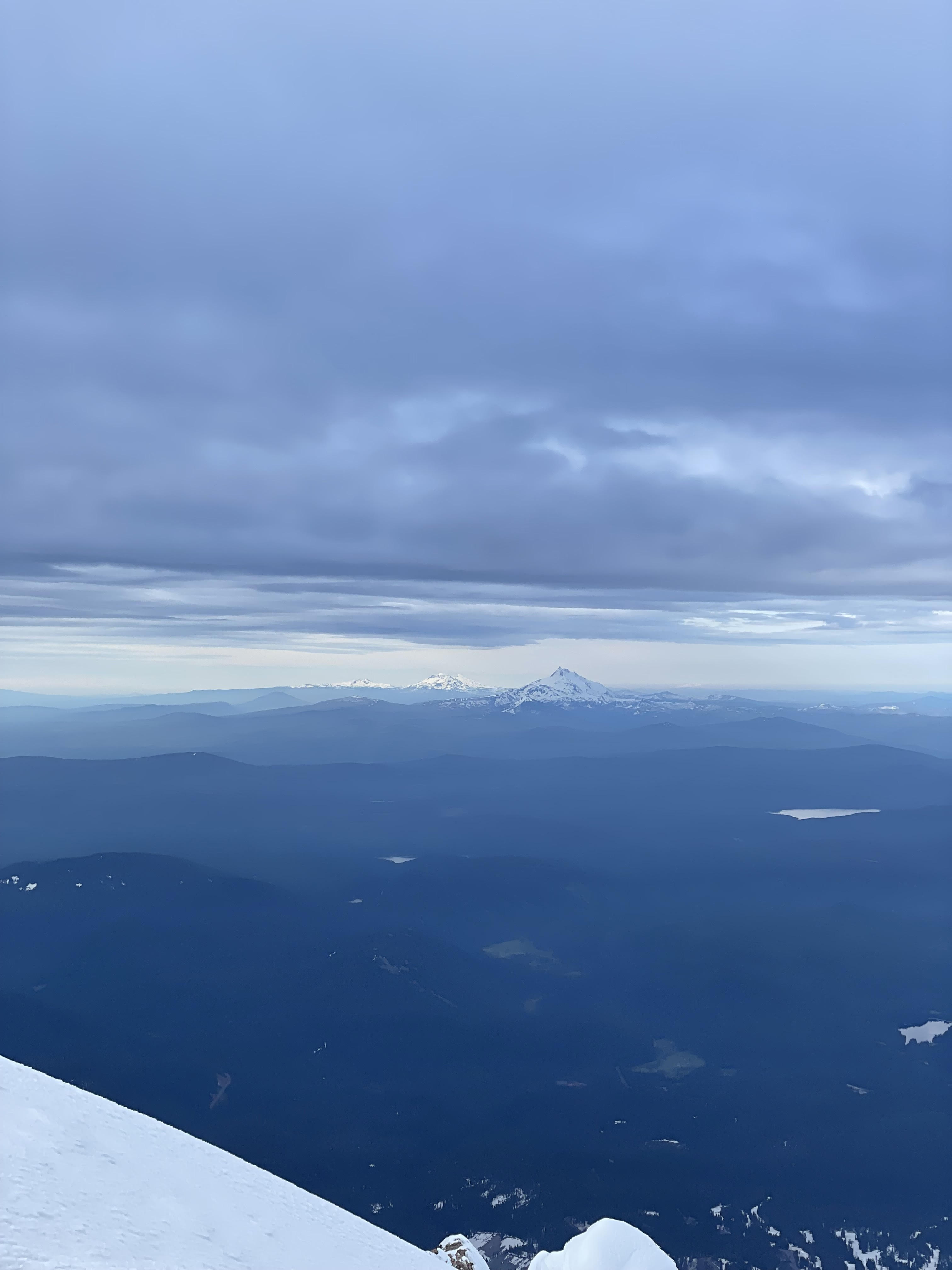
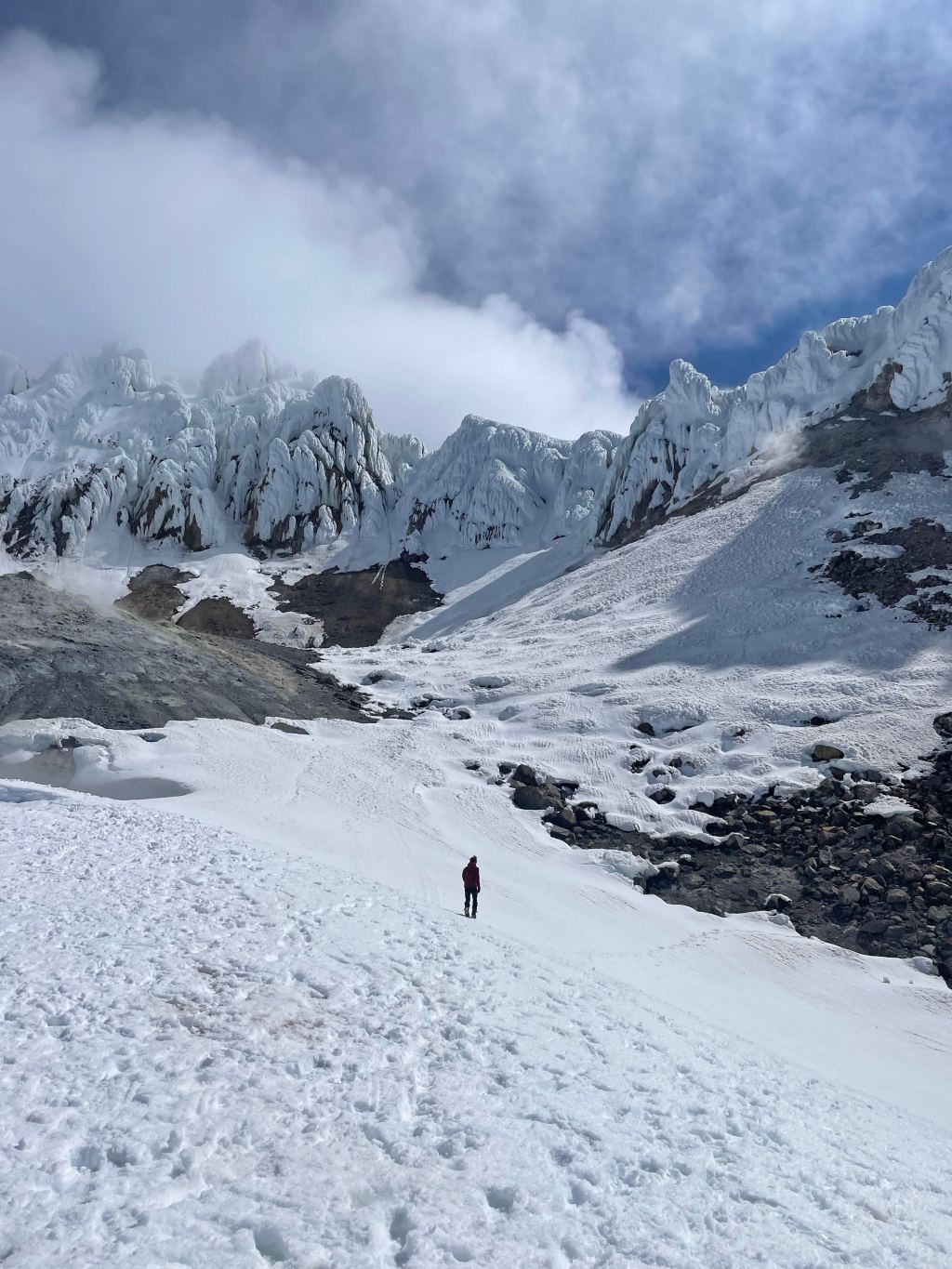
    Despite being at the top of the Timberline resort, we still had nearly 3000 ft to the summit. About two-thirds of this vertical was a moderate boot pack up the Palmer snowfield to reach ‘Devil’s Kitchen’, a basin of volcanic fumaroles staged below the imposing summit headwall. Hiking this portion of the mountain was a slog. Trevor and I made relatively slow progress compared to the lower uphill touring. Several times we stopped for water and snacks, each time giving us some expectedly great energy boosts. It was during this portion of the hike that the first light of the morning illuminated the surrounding landscape. To our south was Mt. Jefferson and the Three Sisters: two sets of prominent volcanos along Mt. Hood’s same range. The view was incredible and helped us push to about 4000 ft at the basin of Devil’s Kitchen. There we brought out our ice axes and fueled up once more in preparation for the steep headwall climb. For many reasons, this was the most physically demanding and risky portion of the day. It was only about 6 am in the morning, but any warming from the sun could rapidly melt the rime ice coated pillars of Mt. Hood’s summit. While climbing this could manifest in heavy icefall, an objective hazard that could lead to serious consequences while climbing the steep snow. Adding to this risk, the several dozen other parties joining our ascent were raining more small chunks of ice and snow to the climbers below. Our best chance at success would be to push ourselves to climb quickly and reduce the duration of exposure as much as possible.

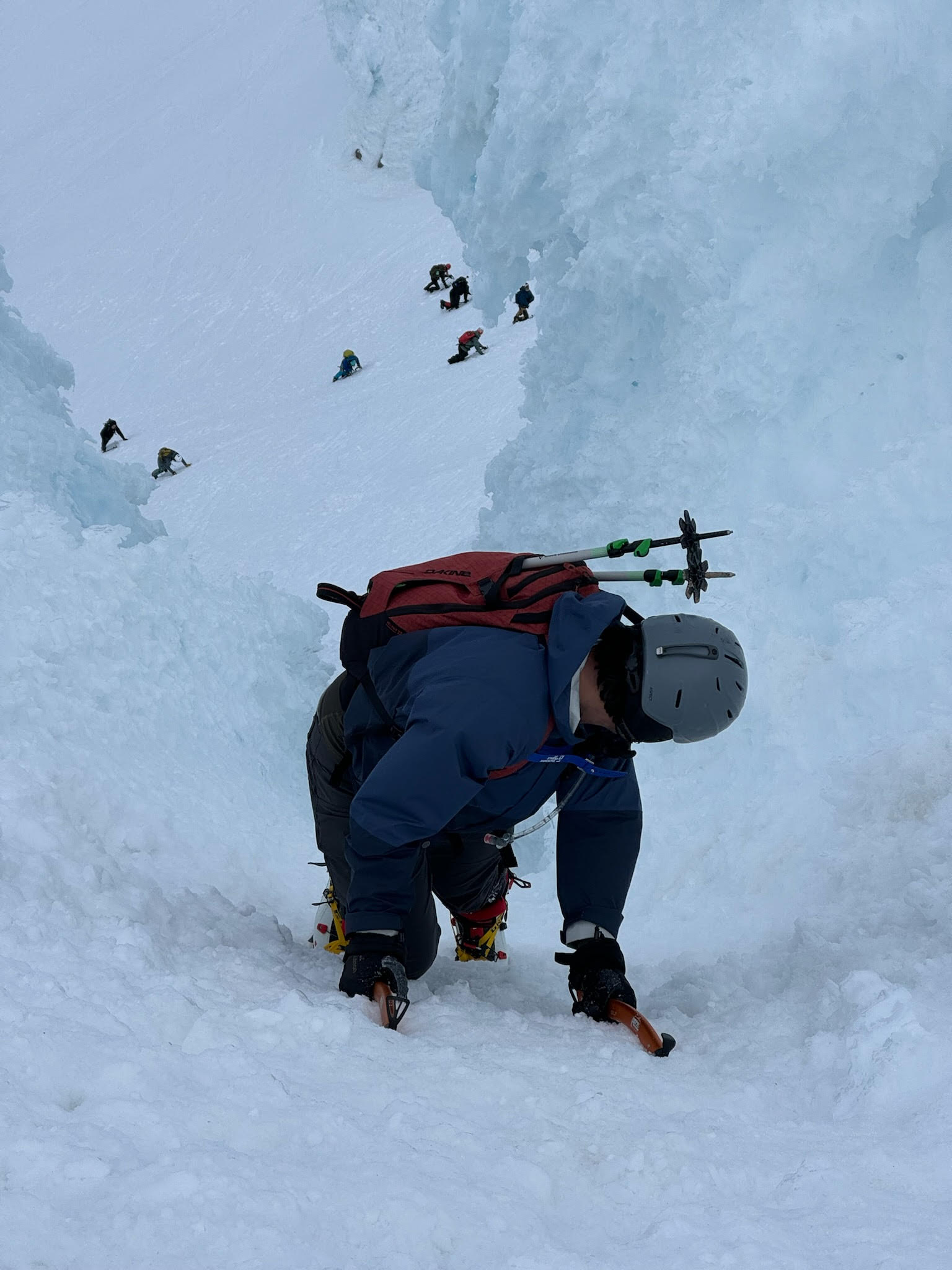
    Climbing the ~40-50 deg headwall was incredibly demanding. Each step was equivalent to climbing a ladder with rungs spaced far apart, except this was the final 1000 ft of a 5500 ft day. Progress was incredibly slow, but we knew we couldn’t delay. Crowds made everything harder due to the falling ice and bottlenecked topout. We chose to climb the ‘Old Chute’, a wide open and steep clearing that lead up to a ridgeline near the summit. Another route called the ‘Pearly Gates’ was our original intention and was significantly less crowded, but had a large and open Bergschrund blocking its entrance like a moat before a castle. The concession of the Old Chute still worked out for us and we finally made it to the summit right before 8 am. The view was incredible and revealed more volcanos looming to the north in Washington. Below us was a sea of clouds, adding to the incredible prominence of Mt. Hood to the Oregon floor thousands of feet below. We could only spend a few minutes there due to the lingering sun warming, so we quickly made our way back towards the chute. Instead of the wide open clearing we climbed up, we chose to downclimb an adjacent rime ice tunnel to its right. This section was slightly less crowded but was incredibly steep. Progress was slow and intimidating, going any faster would create more risk but moving slow was tiring and tedious. Despite the increasing fatigue we continued consistently and eventually made it back to a rocky ledge below the headwall. I waited about 20 mins or so and fueled up before Trevor joined me, which made for a great feeling of relief having survived the most intense exposure of the mountain.

    The Descent

    Thankfully the remaining descent was much better than the headwall. A few hours of sun baking had made much of the hardpacked snow soft and easy for travel. The first 2000 ft or so we were able to take off our crampons and glissade down the mountain. We passed another several dozen parties still making their way up while craving on our asses down the gradual slope. Finally we found our stashed skis near the top of the now active Palmer lift. I was feeling incredibly tired, but also had a rush of emotions having only 2000 ft to go on skis. Turns felt unbelievably difficult and I had to stop many times while I made my way through the resort. The whole time I found it crazy to believe just how much vertical gain we had made in just a short distance. Nearly three full sized ski lifts spanned less than half of the mountain’s alpine terrain. Nearing the bottom of these lifts was our car waiting in the lot and making it there finally was an amazing feeling. We made it through the climb with little hiccups and felt like we had really pushed ourselves physically. As we took off our gear, the mountain was lit up well in the now afternoon light and we could see gigantic lenticular clouds stuck at the peak above. The view was even better as we drove back, ironically being the first time we saw the peak during daylight. The next stop was the airport back to LA, marking the end of our brief Oregon vacation. Mt. Hood was an incredible climb and one that I will definitely mark for a repeat, maybe even to ski from the summit!

  • Getting in the Rhythm – Wasatch/Ogden Skiing

    Getting in the Rhythm – Wasatch/Ogden Skiing

    After a great month of spring corn skiing in April, May of 2024 brought out one more sneaky storm to fill out Utah’s backcountry terrain. Luckily for me, I had already planned a visit to Salt Lake City for a long weekend with the hope of exploring what the Wasatch and Ogden backcountry had to offer. Joining me on the trip was Ian Hokaj and Devin McCabe, the three of us making a group of inexperienced backcountry ski newbs. We had the goal of getting some ski tour volume under our belt while also making the most of the weekend’s great weather and recent snowfall. Despite high warming & generally low tide making for pretty tame avalanche conditions, the ~18″ of snow that fell earlier in the week made for some high consequence wind and storm slabs in the high apline. This manifested in a tragic accident, with three skiers triggering a slide on Lone Peak. All three members were buried and two did not survive, making for an incredibly difficult week for the utah ski community. This morbid atmosphere made us acutely aware of the ‘wicked’ nature of winter backcountry travel and set us on a mission to make the most out of a deliberately conservative hit list.

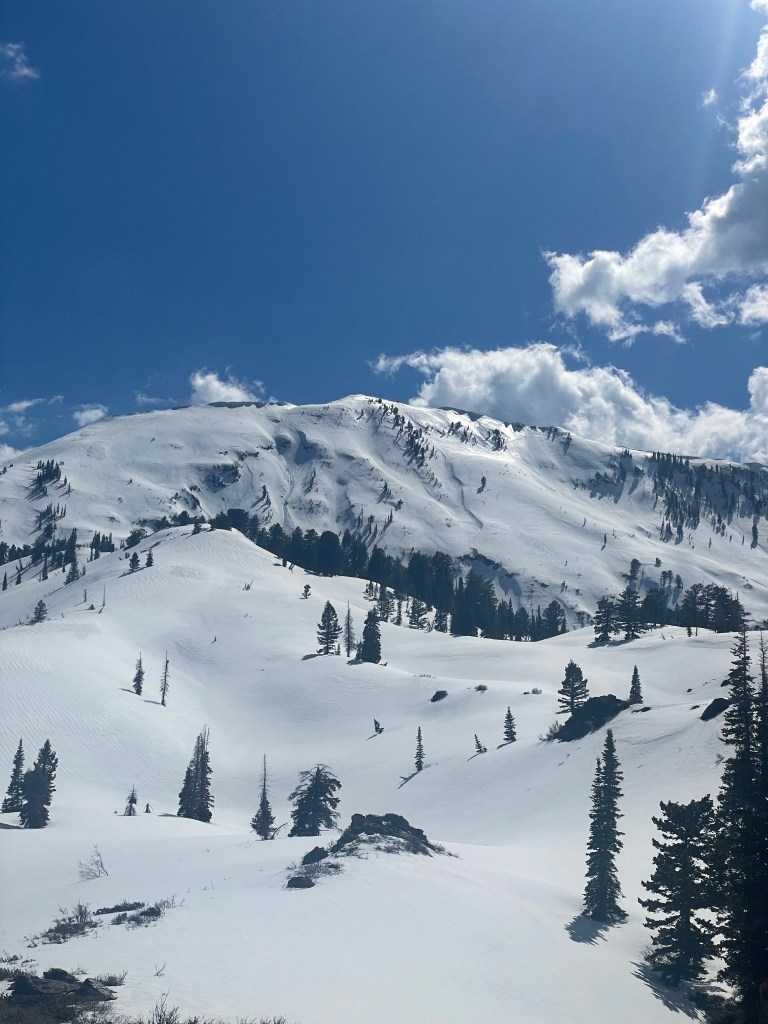
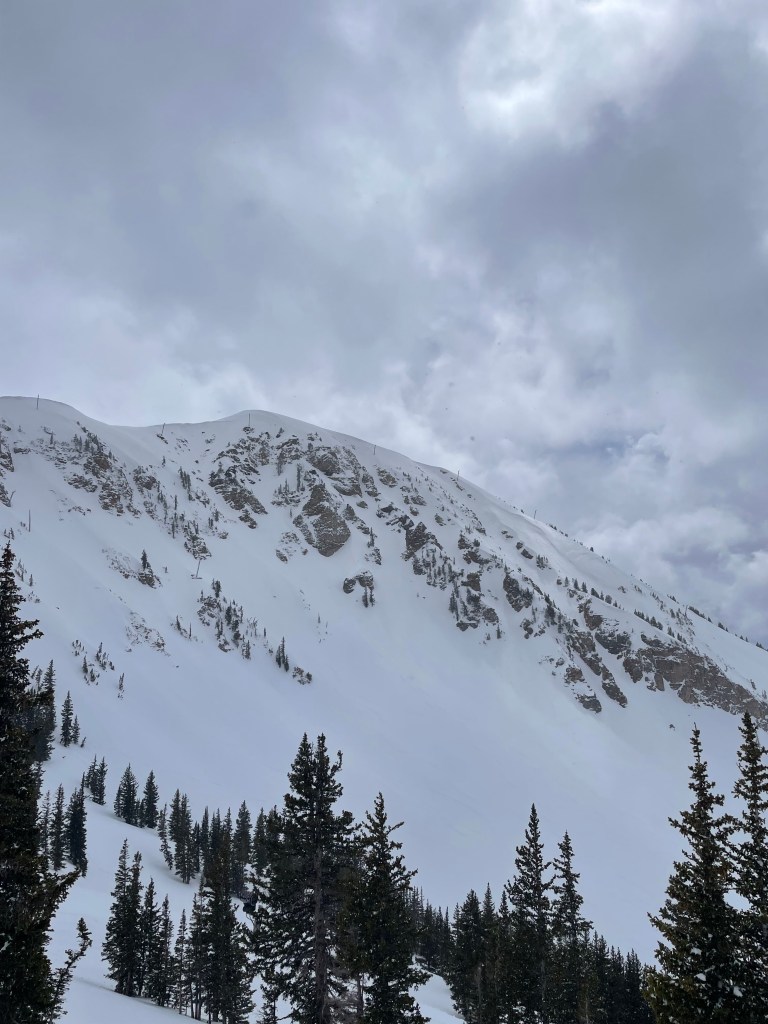
    View of Ben Lomond from Cutler Ridge, many wet slides had been triggered in the week prior.

    As soon as we set foot in Utah, stoke for a great weekend flooded back in. Friday was our first full day and we chose to tour some classic & simple terrain in the cottonwoods. First up was USA bowl across from Solitude and Brighton, which was a repeat for Ian and a pretty tame option in most conditions. Devin also had the privilege of making this his first tour with alpine touring bindings as opposed to bipedal locomotion in ‘alpine’ hokkas. A short hour and a half later we found ourselves on the top of the bowl, probably wishing we were there slightly earlier in the morning. After a quick carb replenishment (one Coors lite), we made a dozen turns in some dense spring snow and then quickly made our way back to the car. The day’s skiing was more about getting our bearings together and not getting in an avalanche, so we brushed off the snow as a one-off and headed to Alta across the canyon for another lap. This time our tour was joined by a few other locals scattered around and felt like we were getting in the swing of things. Off in the distance was an enticing view of main chute on Mt. Baldy, but we held ourselves together and focused just getting to the top of the lift. A speedy carb replenishment later had us ready for the descent and this time we were pleasantly surprised by some less-wet turns for the first half of the run. Overall we were feeling good and ready to scope out some new terrain for the rest of the weekend.

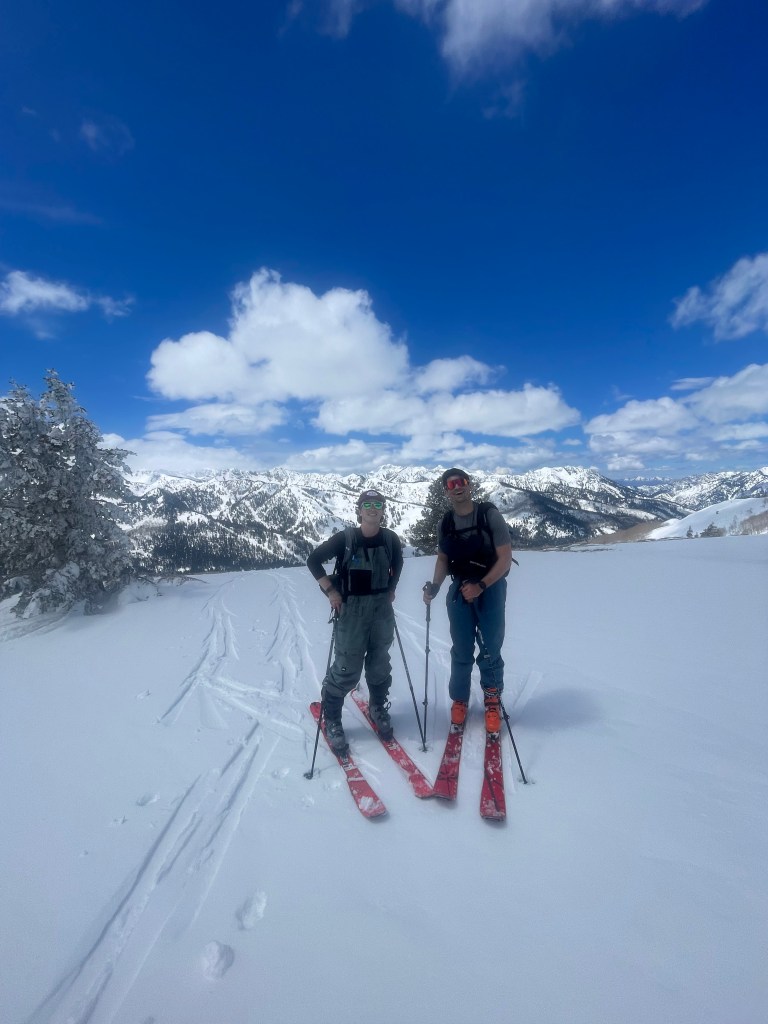
    Ian and Devin at the top of USA bowl
    View of Mt. Baldy from the Collin’s chair

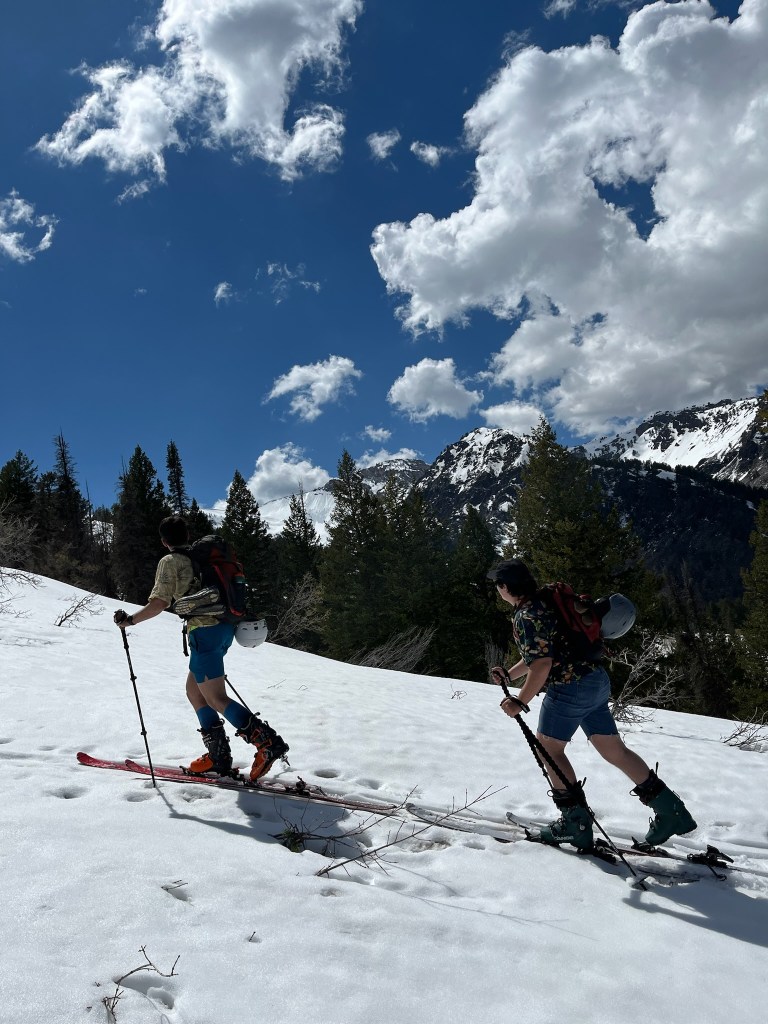
    Friday’s definitive success put us in the mood for a night out in the town, but we still had our minds set on adventuring out to a new area come Saturday morning. In particular, Ian scoped out a mellow ridge hike on Ben Lomond Mountain lining Ogden Valley. Despite a hilariously late start, we knew we could still get a decent hike in a ridge that was all low angle and most likely void of any other kooks like us. Our kit that day consisted of cutoff jeans, Hawaiian shirts, and a speaker that was unreasonably large for some reason. Despite the ridiculousness of the day & gear, our hike was a complete blast. The terrain felt very safe, our speaker was tastefully motivating, and our carbs were nearing replenishment. All of us felt great in terms of pace too, which made for a super efficient tour to few hundred feet above the treeline. In front of us were some spectacular headwalls & spicy chutes far in the distance. Huge wet slides lined this steeper area and we new from the region’s guidebook that this area has a not-so-fun history of burials. Having little time and no desire to test those waters, we enjoyed an incredibly clear day on the top of Cutler Ridge. Skiing down was not to shabby either and soon enough we found our way back to the initial bushwhack and trailhead. To cap off the energy from the day, we took a dip in surprisingly refreshing Pineview Reservoir & a visit to the “oldest bar west of the Mississippi” name The Shooting Star Saloon. Although turns out there could not compare to resort skiing in any sense,

    “Benny and the Jorts” – Ian and I skining up Cutler Ridge on Ben Lomond

    With one more day of skiing ahead of us, we spent Saturday night feverishly deliberating on what to do next. In front of us was a typical guidebook for the greater Wasatch range, but also a skinny blue book called the “Chuting Gallery”. Of course none of the lines within the gallery’s list were safe, within our capabilities, or good skiing with the current conditions, but we were feeling good and I had my eyes glued on the Wolverine Cirque chutes. These lines were clearly a bad idea to ski, but were also positioned right behind Brighton resort and perfectly close to the super mellow Wolverine Bowl. Our debate session lasted a tad longer and we finalized on this region with an early start for the next morning. After all, Sunday also happened to be nearly Solitude’s closing day, which would be a no-brainer for an end to the weekend post tour. So come morning, we began skinning up the Millie lift line and towards Mt. Wolverine. The first half of the tour was straightforward and make for a quick pace. Soon we arrived at the top of the lift and began to stare at the Millie summit boot pack – our first real avalanche risk of the trip. Since Ian & Devin had never taken an AIARE course (oof), we decided to practice a rescue on some flat ground. I buried my pack, made some fake dig sites, and then let both Ian & Devin go find & un-dig it on their own. Thankfully it went pretty smoothly and set a good tone for the rest of the bookpack to the summit.

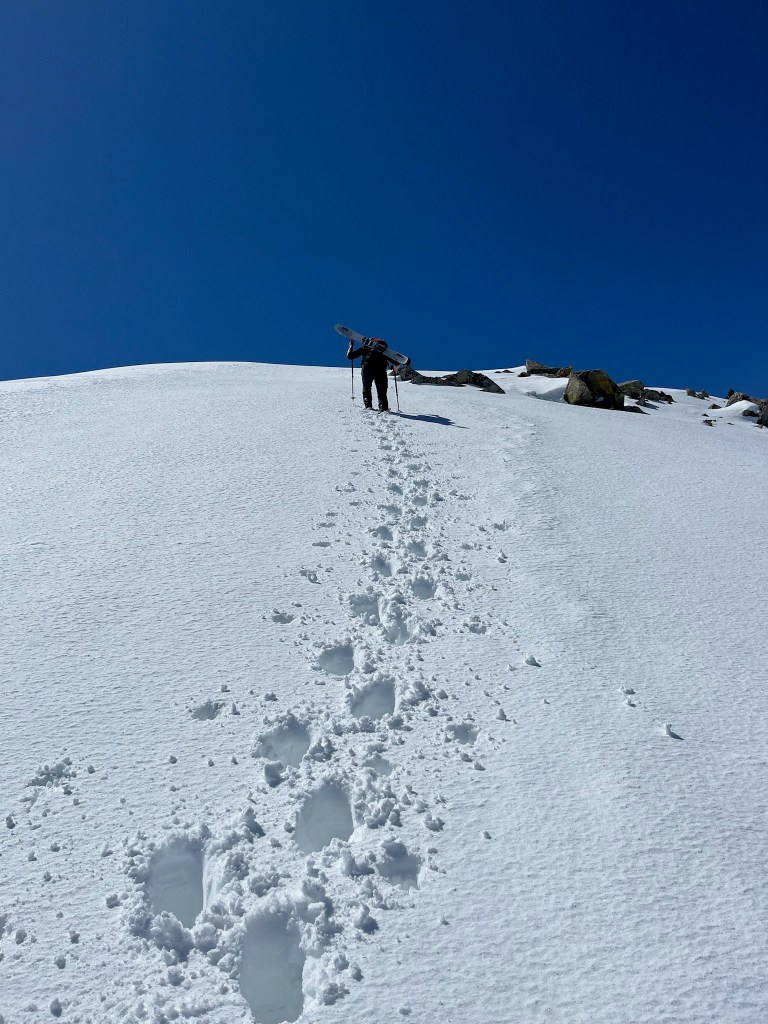
    Setting a bootpack up to the summit of Mt. Millicent

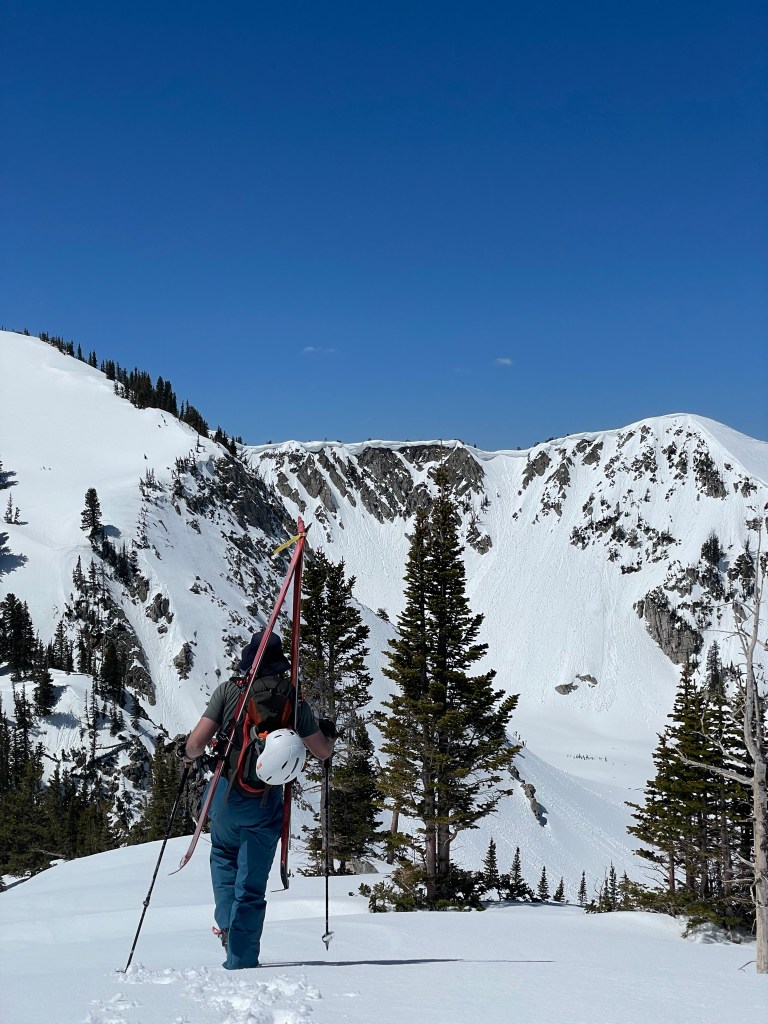
    Climbing Mt. Millie is super easy when there is a boot pack set and lifts are running, but something eerie persists when the slope is clean and no one else is around. While we charged ahead, both Ian & Devin had some second thoughts about the exposure of the steep slope. Realistically the snowpack was consolidated, cold, and at low risk of sliding given our position at the apex of the ridgeline. But that didn’t stop the us from feeling like we were on the edge, as most steep ridges tend to do. It didn’t take long until we finished out the hike and stood atop Mt. Millicent with a fantastic view of Mt. Wolverine, Patsey Marley, and the spectacular terrain on all sides of the cirque between them. Immediately it was clear from the hike we just came from and the school bus sizes cornices overhanging steep and narrow chutes that the cirque was not in for skiing. Instead we’d take the mellow 25 ish deg bowl to the north off Wolverine’s peak. To get there, we made a relatively each skin across the ridgeline and onto our 2nd summit of the day. From Mt. Wolverine, the entirety of Little Cottonwood Canyon is on display and it makes for a spectacular viewing point. We stood atop feeling accomplished and excited for the upcoming descent, having made a clear progression in the complexity of terrain we just crossed.

    Ian walking towards Mt. Wolverine with the cirque in full view
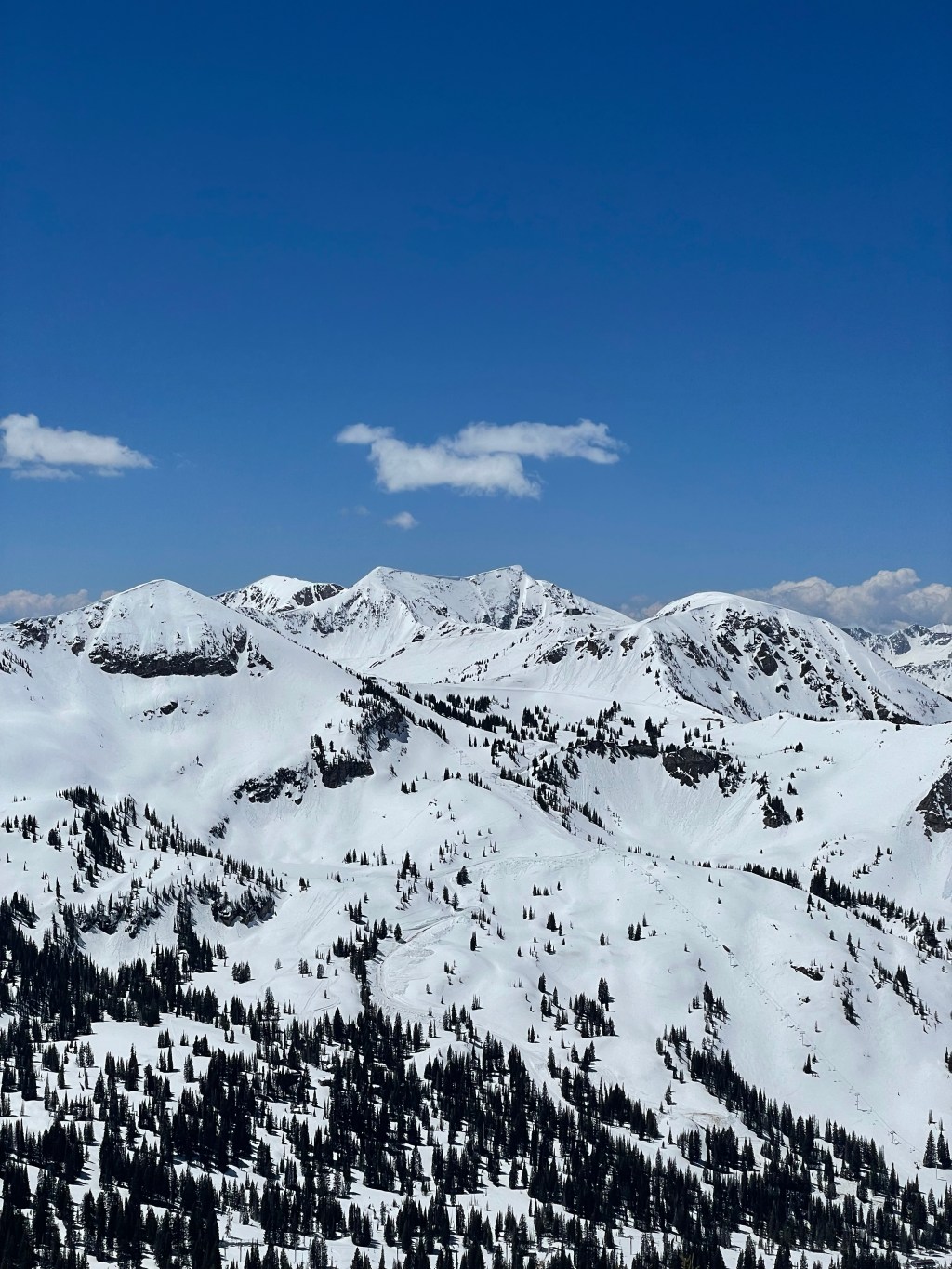
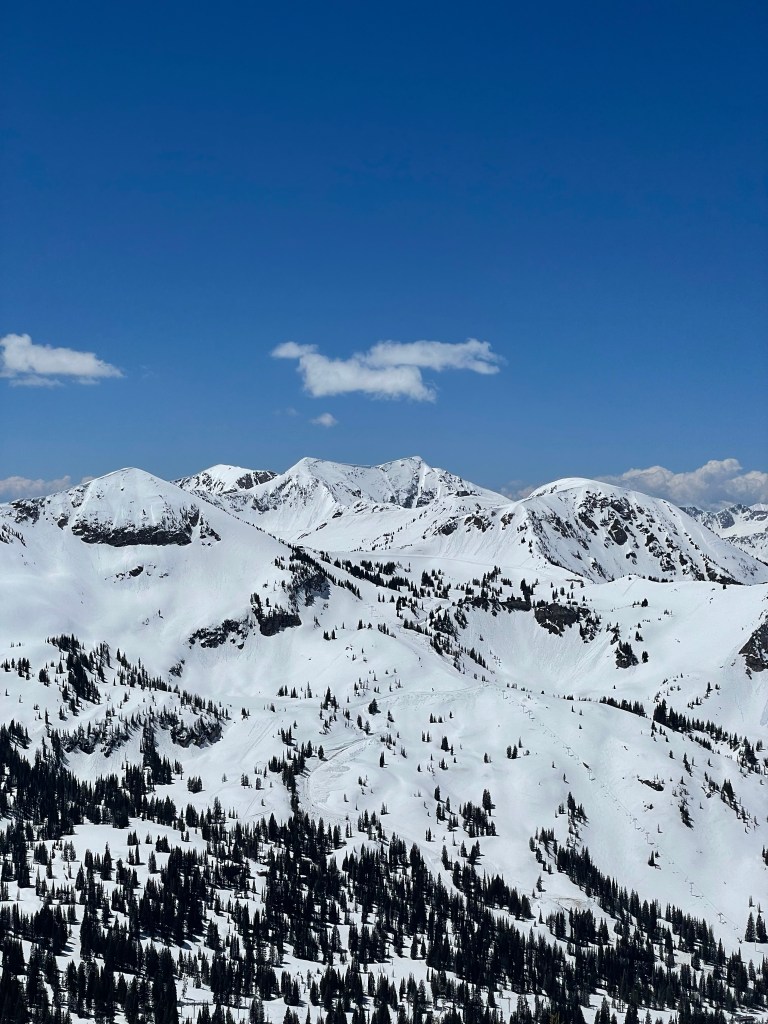
    View of LIttle Cottonwood Canyon from the summit of Mt. Wolverine

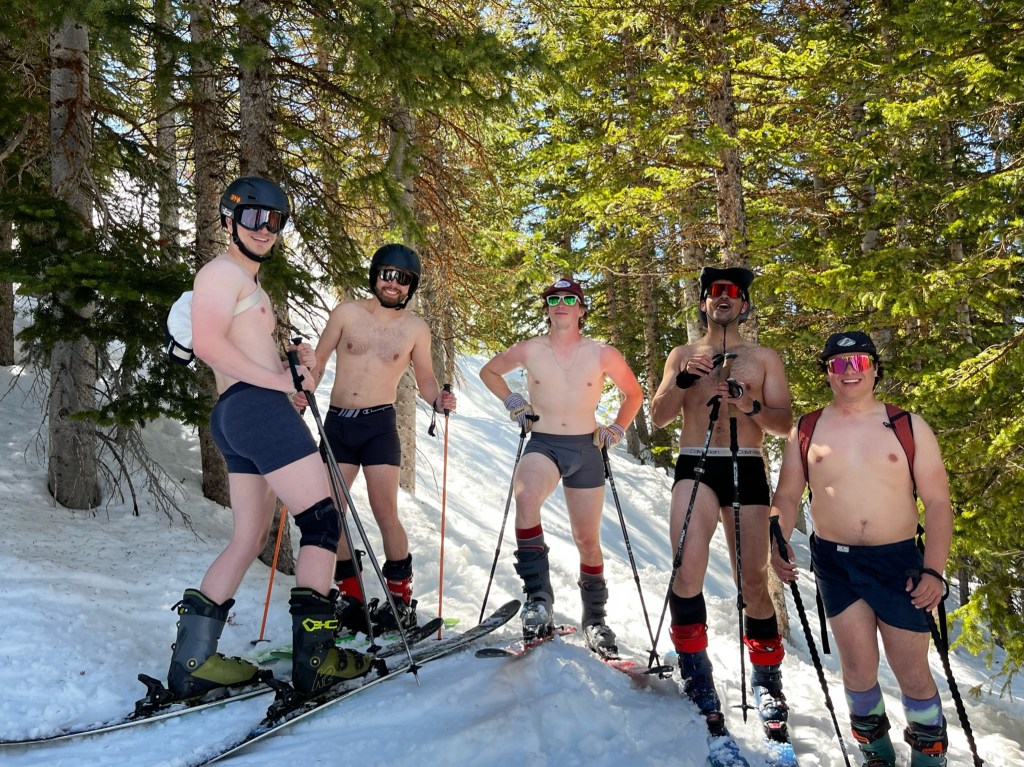
    Skiing down was a bit lackluster. Even though we had the whole mountain to ourselves, the snow had soaked up the sun and we were struggling to carry speed in the wet conditions of late spring. After the main bowl, we traversed through a lake plateau and over a small ridge to get back to the resort. Skiing out into Brighton felt amazing and we were all immensely tired from the big morning. While getting to the parking lot, we shared a few beers and then got ready to meet up with some local friends for some victory laps at Solitude closing day. Similar to the day before, we dawned our hand cut jorts and ridiculous Hawaiian T shirts for party lap after party lap in bounds. Ending the day with an underwear lap for good measure, we found our way back to the lodge and celebrated a great weekend of mediocre spring touring as our introduction to the Wasatch.

    Undie lap for the closing day of Solitude