Author: max

  • How to not fall – SoCal Climbing

    How to not fall – SoCal Climbing

    In a shocking turn of events, my roommate (Trevor) and I decided to pivot to climbing as our weekend career post ski season. This was a purely functional endeavor at first; we were looking to climb mountains in the summer when ice & snow were mostly out of the picture. In its place was generally rock, which requires either a lack of fear or a large step increase in technical ability to protect oneself while climbing. So following the natural progression, Trevor and I picked up bouldering at a local gym in LA and quickly learned that we were bad at climbing anything above a V2. Despite this, we set an ambitious goal to climb some 5th class terrain in the high alpine a mere 4 month away (start: ~april, goal: end of july). In order for this to work, we approached this in our typical engineering fashion. First we planned out some ambitious climbing classes targeting specific technical skill sets: one for lead climbing, one anchor construction, one for trad gear placements. Next we planned some ways to ‘trial’ out our recently learned technical skills: one high vertical alpine climb, one outdoor lead, one outdoor trad multipitch. And finally we scheduled a regular ‘meeting’ to check in with progress and ensure things we planned were actually happening. At this point in April, we were feeling simultaneously stoked for the adventures ahead and incredibly stupid for the amount of high consequence technical skillsets and milestones that stood in our way. Oh at we were both working too much at this time 👍.
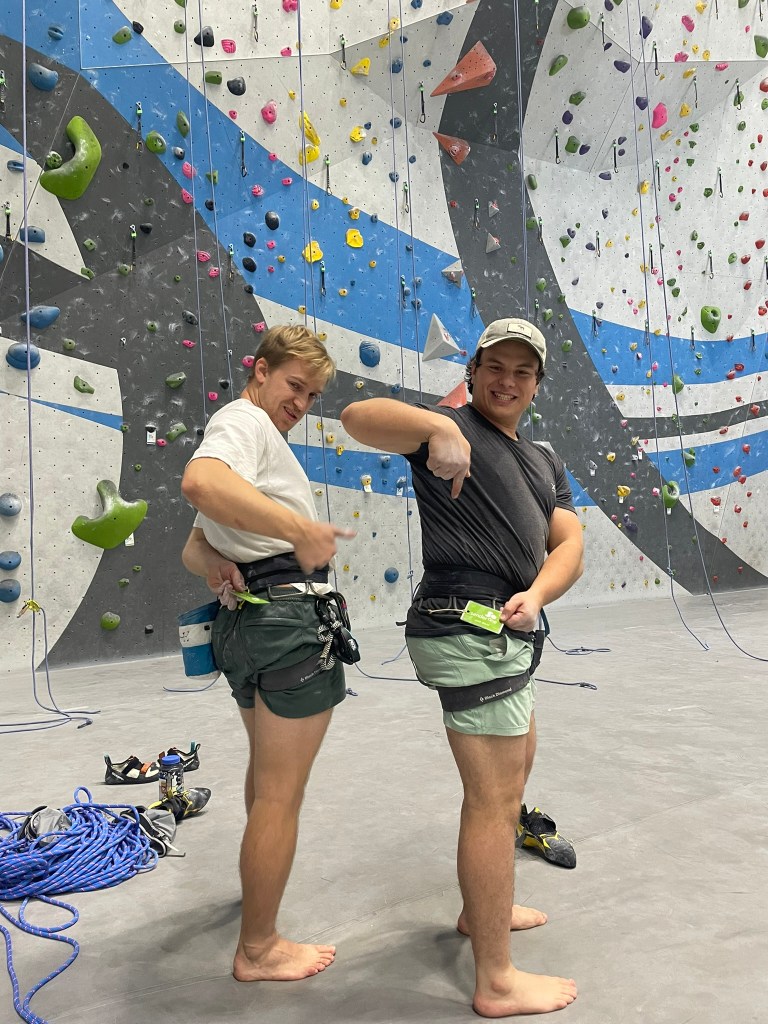
    Step 1: Two max’s get their lead cert (Footage of Trevor lost)

    First up on our list was lead climbing indoors. This required some basic top rope skills (should be able to climb around 5.11) and familiarity with lead gear like carabiners and belay devices. Although I had climbed top rope in the past, both Trevor and I were just about at the threshold for failing this class outright from the beginning. Climbing 5.11a was out of the question and we focused on getting in as much practice as we could: maybe 2 times a week. Passing the test required the execution of a 5.10a lead climb and lead belay, something we both felt would be doable only with a real in-person class. Given our limited weekend ability, the only time we could both attend this turned out to be one day after our trip to Oregon to climb Mt. Hood (another post on this webpage). So after our summit and red-eye flight back to LA, Trevor and I headed to the gym for our 5 hour lead class that next morning. It turned out to be a great time despite our possibly poor preparation. Our instructor and other climbing partners were super accommodating and our climbing skills were not that bad. Both of us could actually lead and lead belay each other on the easiest 5.10a of the gym by the end of the class. Both of us were monumentally terrified of the experience too, but we knew that some mock lead practice would probably solidify our skills enough to pass the indoor test within a few weeks. The only problem was our anchor and trad classes: they were planned for the following weekend and at the time seemed like a crazy way to proceed.
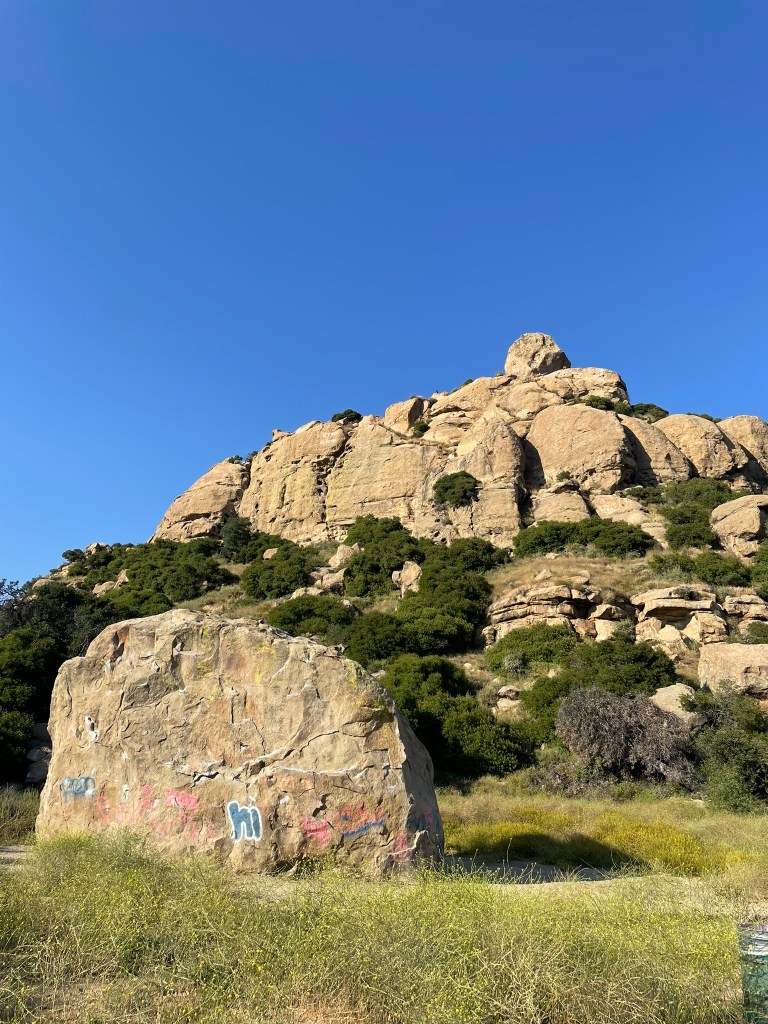
    Stoney Point: training ground for anchor building and a historical climbing landmark

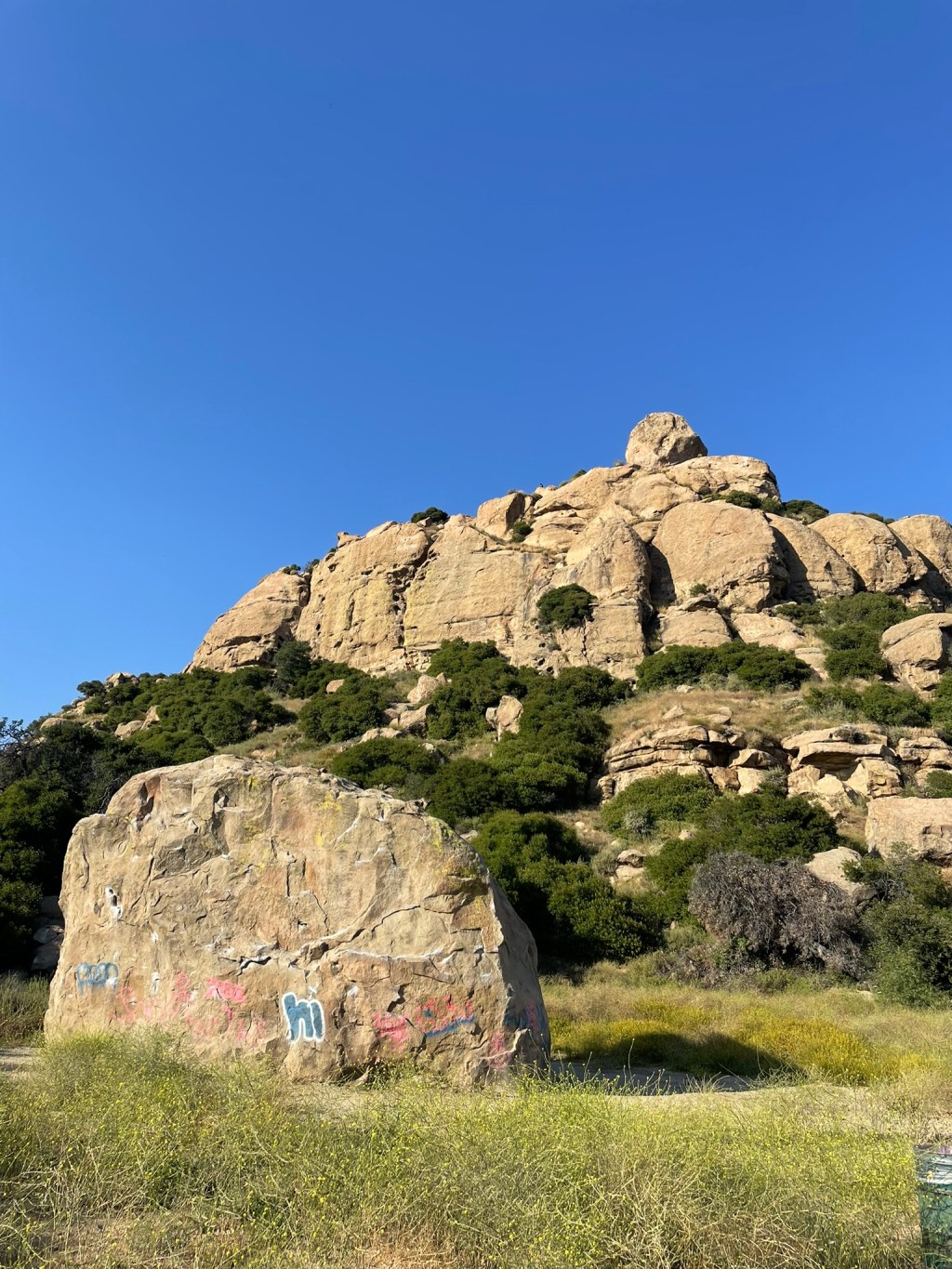
    After an alarmingly quick week and two measly weekday climbing sessions, Trevor and I found ourselves driving to Stoney Point for our first of two full day courses on traditional climbing. Stoney Point is a pretty cool location to climb. Not because of the nearby traffic noises or distasteful graffiti, but because it was the birthplaces of American climbing to some degree. This group of sandstone rocks was ‘discovered’ in the 1930s by SoCal locals in the Sierra Club as a potential crag. A few decades later, legends like Royal Robbins and Yvon Chouinard got their start at Stoney Point along with many others who would go on to define California’s climbing history. I couldn’t help but start to feel some parallel’s to our own climbing journey. Even though we had no where near the same lifestyle or bravery it must have taken to develop new climbing techniques in unknown areas, our plan was still bold in its own way and was physically in the same place. Adding to this feeling was an excitement from the crazy amount of information learned in the first day. Traditional climbing revolved around the management of rope and anchors. Rope and anchors revolved around the understanding and implementation of knots. The functionality of these in union seemed endless and took some of the fear away from our lack of experience in the moment. Throughout the next day we continued to practice anchor and knot techniques, but with the addition of cams, nuts, and hexes to interface with rock cleanly. Ultimately the class aimed to convey a series of concepts that the govern traditional climbing system. Real rock is extremely diverse and requires similarly diverse ways to accommodate natural features for adequate protection. The goal in any case is to build an anchor that is ‘bomber’ (you trust with your life), belay from this anchor to start climbing, and continually place temporary gear to catch potential falls. Each pitch (a rope’s length) is finished with another anchor to get your partner up the same route while they clean all the gear which was just placed on the way up. Now that both you and I know how to climb, we are both ready for practice in consequential terrain (not legally binding).
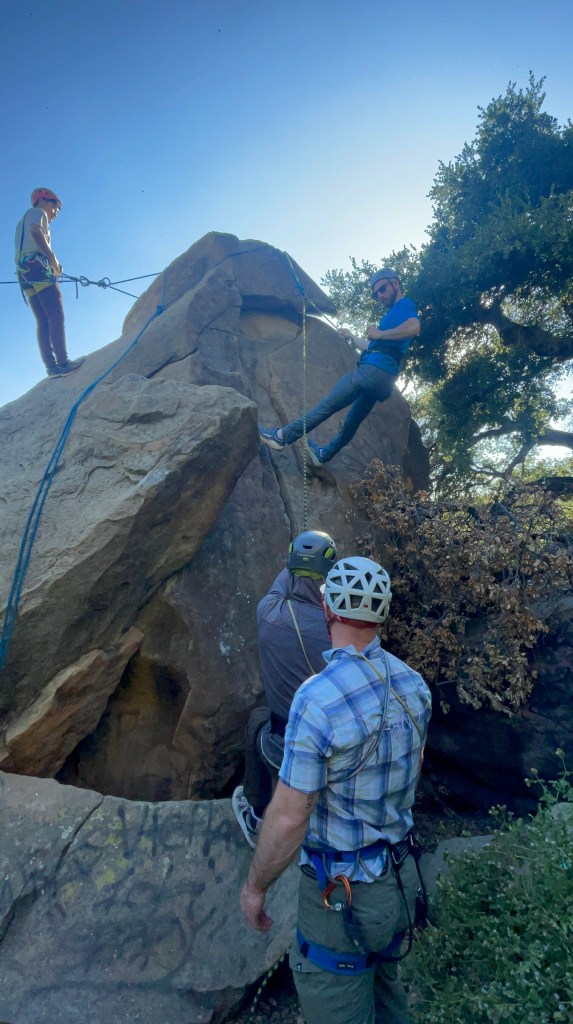
    Some rescue practice with SAANO adventures at stoney point

    After our first weekend crash course, Trevor and I headed back outdoors to test our knowledge on some truly beginner terrain. While searching for some good trad routes near LA, I came across an large granite spire called Tahquitz rock right outside of San Jacinto. To my surprise, this rock shared Stoney Point’s incredible history and was also one of the first few crags that developed free climbing. Starting in 1936 with a route called “The Trough”, started a movement from the Sierra Club to push the boundaries of free climbing into grades like 5.8. Even the Yosemite decimal system used to define grades like 5.8 was initially developed at Tahquitz rock (and later popularized in Yosemite). In a fitting nature, The Trough was the route that stuck out to me the most. It’s route-finding was incredibly straightforward, it was only three pitches, and it was graded 5.4 (or 5.0 according to the Sierra Club’s initial grading). Similar to Stoney Point, climbing this route first also seemed like an homage to the history and pioneers of free climbing itself in the sense that we were truly starting from the bottom of what is possible.
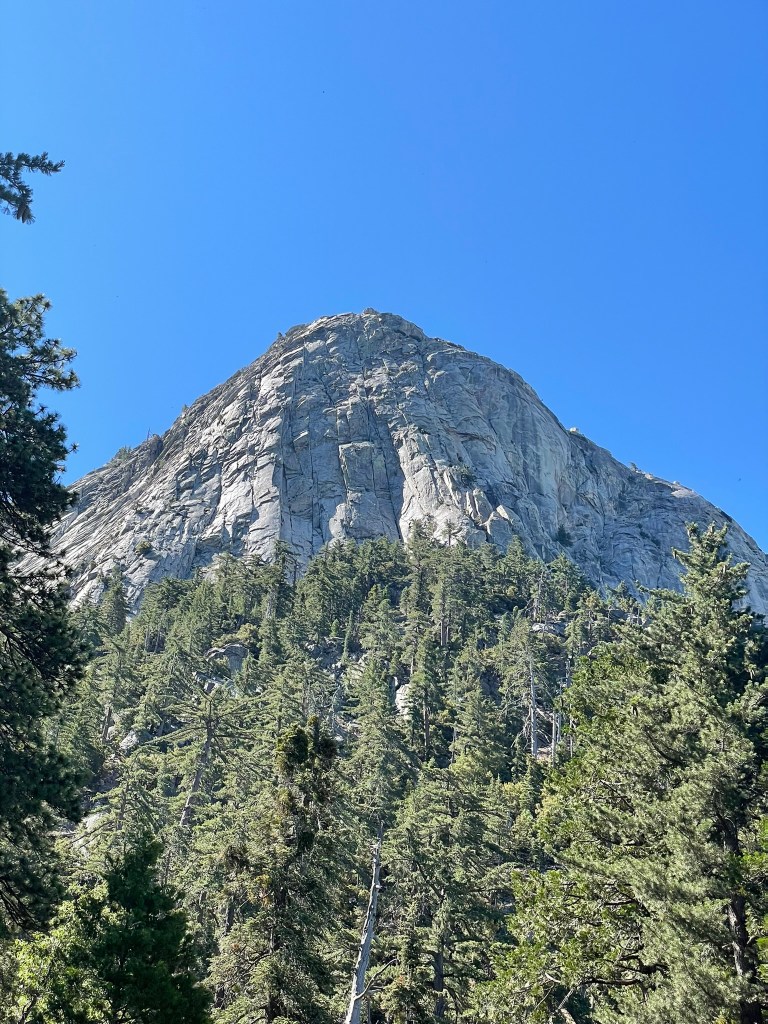
    Tahquitz Rock: A beautiful granite spire and our multipitch training zone

    Getting to Tahquitz is an easy ~2 hour drive from LA and starts near a town called Idyllwild planted right in the center of the valley behind San Jacinto. The landscape is beautiful and filled with giant redwood trees that sit below both Tahquitz and Suicide rock. Tahquitz is about 800 ft tall and looks like the head of a spear jutting up from the hillside. Below it sits a trailhead and a steep ~mile and a half hike up some sporty switchbacks. Trevor and I brought about 10 cams ranging from 0.4 – 3, a set of nuts, 10 alpine draws, and a handful of anchor building materials, some of which were purchased last minute at the shop in town. Once we got to the base of the route we decided to do a “practice pitch” in the approach just to make sure our systems were dialed. Shortly after, I began on the sharp end of the rope and made my way onto my first lead on gear for pitch 1. Climbing was relatively straightforward and mostly contained a series of gullies & chimneys to a small ledge. Getting to the ledge required a few steps on a friction slab, which was a little spooky. Otherwise it made for a great introduction and I quickly built a gear anchor on the ledge. Once Trevor joined me, it was high turn to lead and pitch 2 above us seemed like similar climbing. Unfortunately we didn’t bring any radios, so I sat at the belay station waiting for Trevor to make progress without knowing what he was about to encounter. Nothing went wrong, but it took about an hour or so for him to make it to the end of pitch 2 and make a slung anchor around a tree. I followed after and only came across one issue – a stuck #3 cam (RIP).
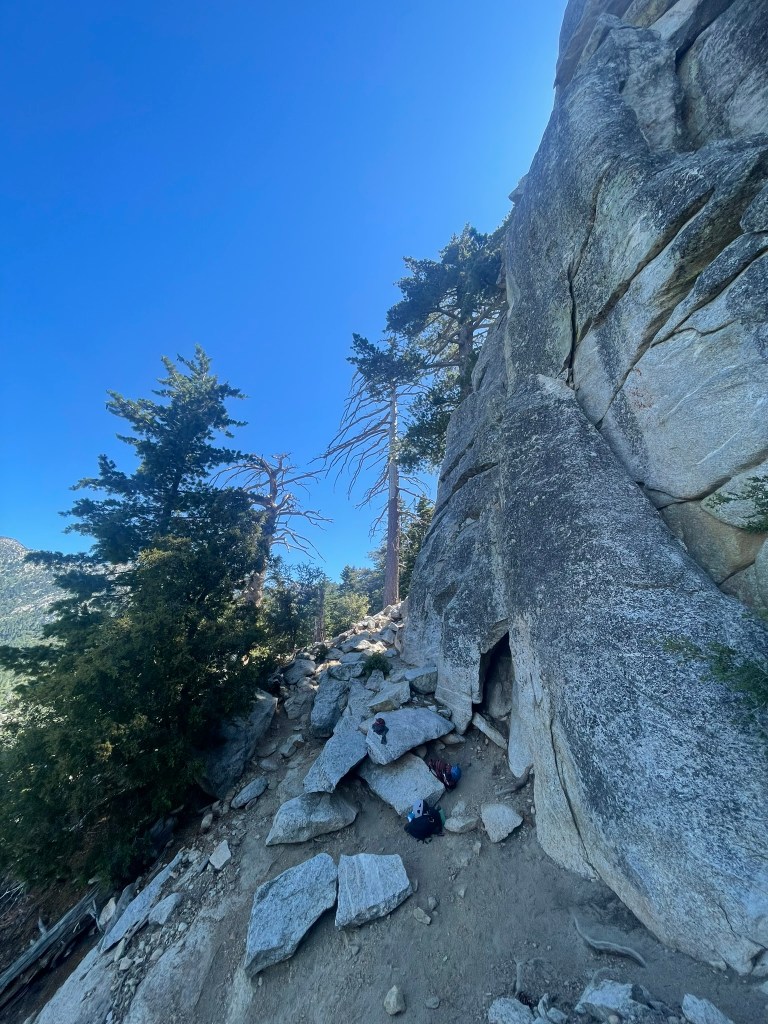
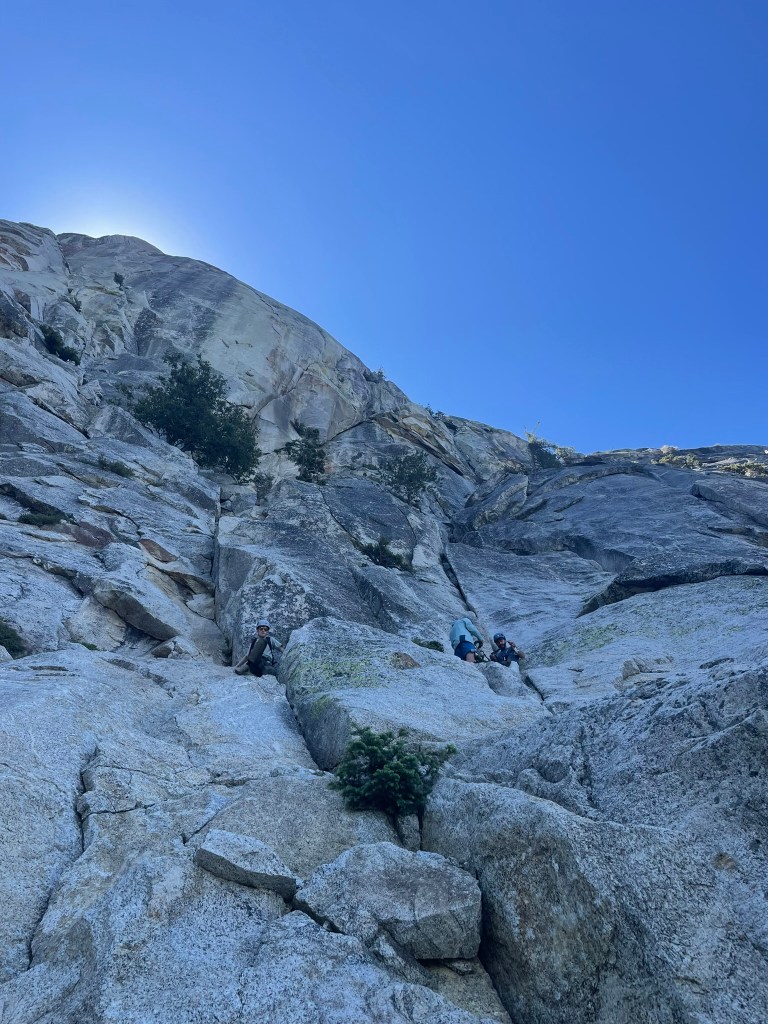
    Lunch rock!
    Climbers next to the Trough

    At the start of pitch 3, I was back again and feeling super psyched to lead. Below me was some crazy exposure for someone who had never climbed more than a rope’s length, but I felt like the climbing was well within my reach. Above me were some chimneys and dihedrals that were all pretty mild and I new my next anchor would be a slung tree. There was only one move in this pitch that spooked me. I placed some gear right before it, but still felt a little insecure stemming up a chimney with very few holds. It made we question whether we could climb any higher of a grade, but I still made it through without much of an issue. Getting to the top of the pitch was awesome and I practiced making the next anchor a comfortable hanging position. Technically I could have raced right to the peak, but figured I would take it easy and add in one more pitch. At this point Trevor came up and we both felt great, but also were out of water. I volunteered to quickly lead the next pitch to save some time and before I knew it we were at the peak. Since we were doing this in the first week of July, temps were in the 80s and we felt it. The descent was fairly not going to take us that long, but we were exhausted from the mental aspect of climbing and the relatively long period of time we were out there. Starting down the route was a small chimney and some friction slabs at a relatively low angle – probably 4th class terrain. We worked our way through with another group that had just summitted and then made our way back to the trail on the front side of the rock.
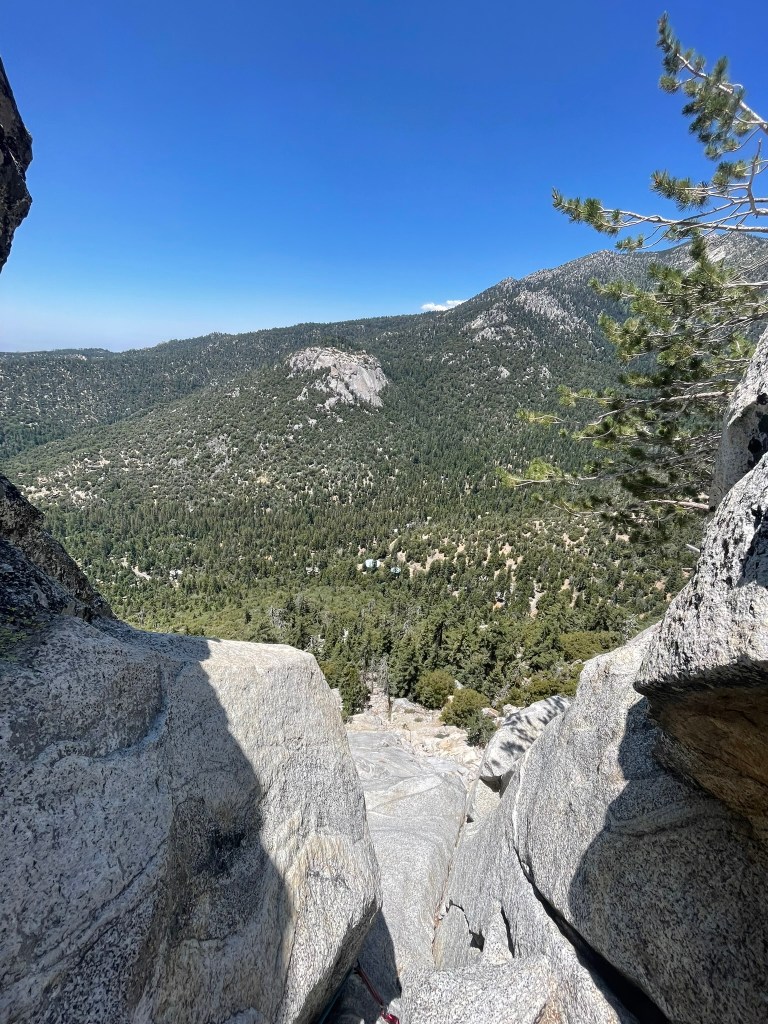
    View from the P2 belay
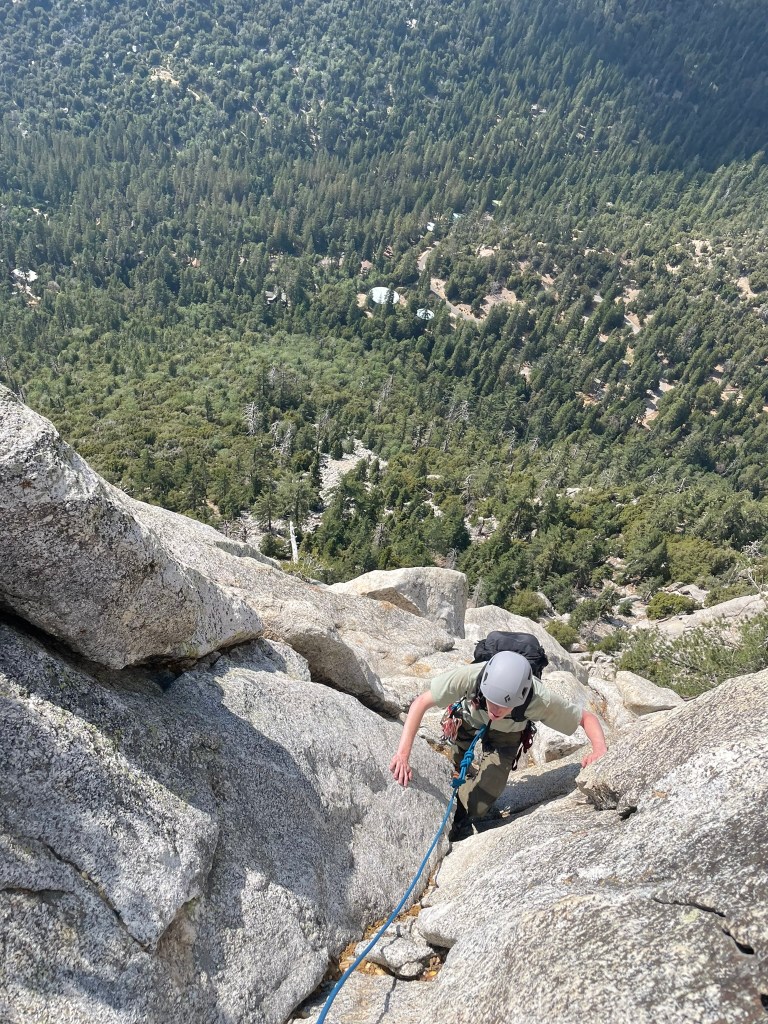
    Trevor following up P3
    The peak of Tahquitz rock

    At this point we were feeling super dehydrated and just wanted to make it back to the car. This made the descent fell way longer than it actually was and by the time we finally made it down we felt unbelievably thirsty. Despite this, we did actually make it through our first multipitch route unscathed and it was a blast. Climbing relatively easy terrain on stellar rock and with massive exposure below is such a great experience and made me want to come back for more routes right away. But first, we headed in town for some glorious Italian food to celebrate. I couldn’t help but drink as much water as I possibly could as we ate and chatted about the adventure of the day. Later that summer, we’d go for our alpine objective. It was the same grade, but would really test our new found skills and navigation in consequential terrain. Learning how to climb is really a career effort, starting it at Stoney Point and Tahquitz felt pretty special. After this first experience I am incredibly excited for that journey.
  • Strike Mission – Mt. Hood

    Strike Mission – Mt. Hood

    It’s hard to believe you can still ski in the early summer, but its even crazier to believe June can provide 5000 ft of quality snow. My first taste of summer skiing came from a trip to Mt. Hood, known for a variety of glaciers covering its 360 deg volcanic prominence in Northern Oregon. The mountain is part of the Cascade range, which spans from California to British Columbia and has dozens of volcanos reaching into the high alpine. Hood is an incredibly popular destination for both mountaineers and skiers due to its two south facing resorts and vicinity to Portland. Our plan was to make a quick weekend trip up to the mountain to summit and ski as much of its vertical as we could.

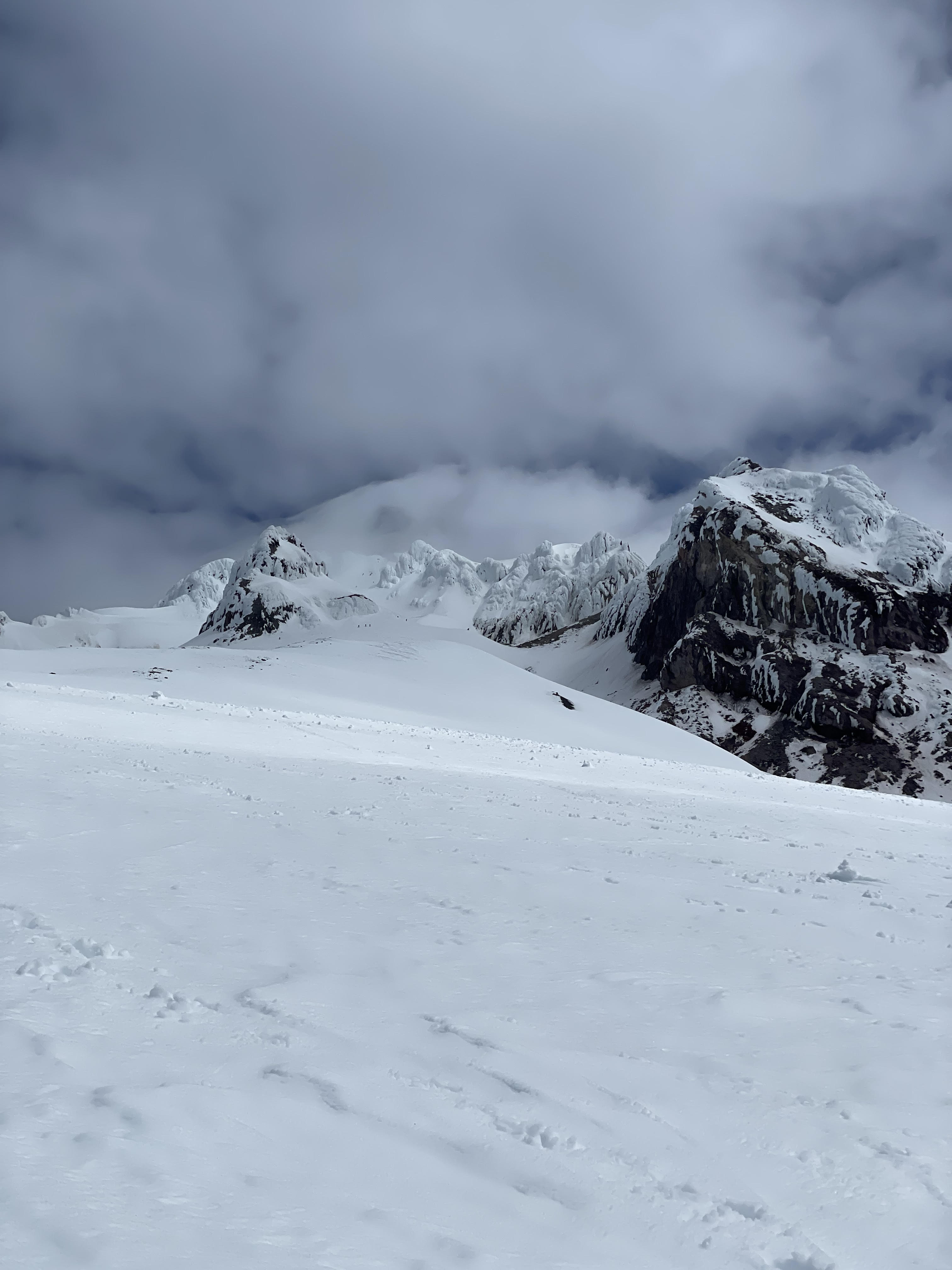
    Mt. Hood summit viewed from the Palmer snowfield.

    I flew out on a Friday morning directly from a work trip in Texas to Portland, Oregon to kick off the trip. My roommate Trevor met me there, having picked up some rental skis, crampons, and boots at a local mountaineering shop. Shortly after we blitzed to Hood River, a gem of a town next to the Columbia River Gorge and about an hour outside of the mountain. A mutual work friend of ours had bought a house with a fantastic view of the river and Mt. Adams nearby, which served as our brief headquarters before the early start on Saturday. The town itself was an outdoor sports mecca, with big mountain sports and wind surfing as the focal point. But for now, we only had time for a cruise into town for pizza to fuel up and carbo-load. We’d have just over an hour to snooze before nearly 5500 ft of elevation over just 3.5 miles of travel the next morning. As you would expect with a volcano, our route was a straight line from Timberline resort to the summit headwall and gradually increased in slope through the entire ascent. Weather and snowpack was forecasting well, so fitness and timing would be the crux of the summit.

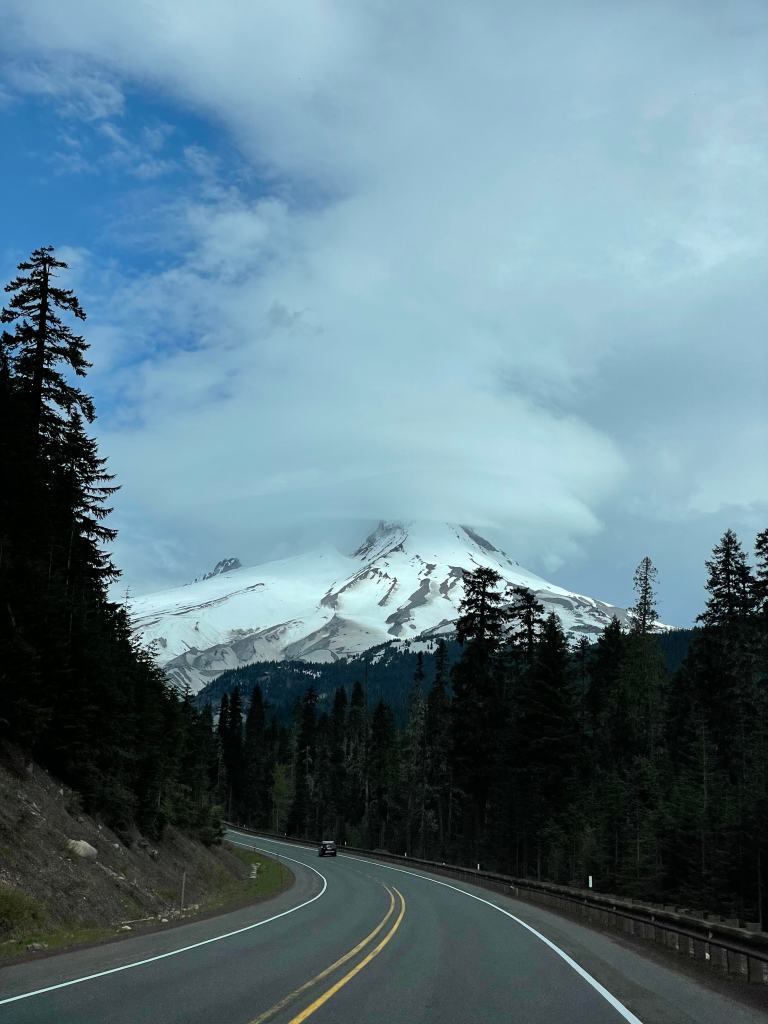
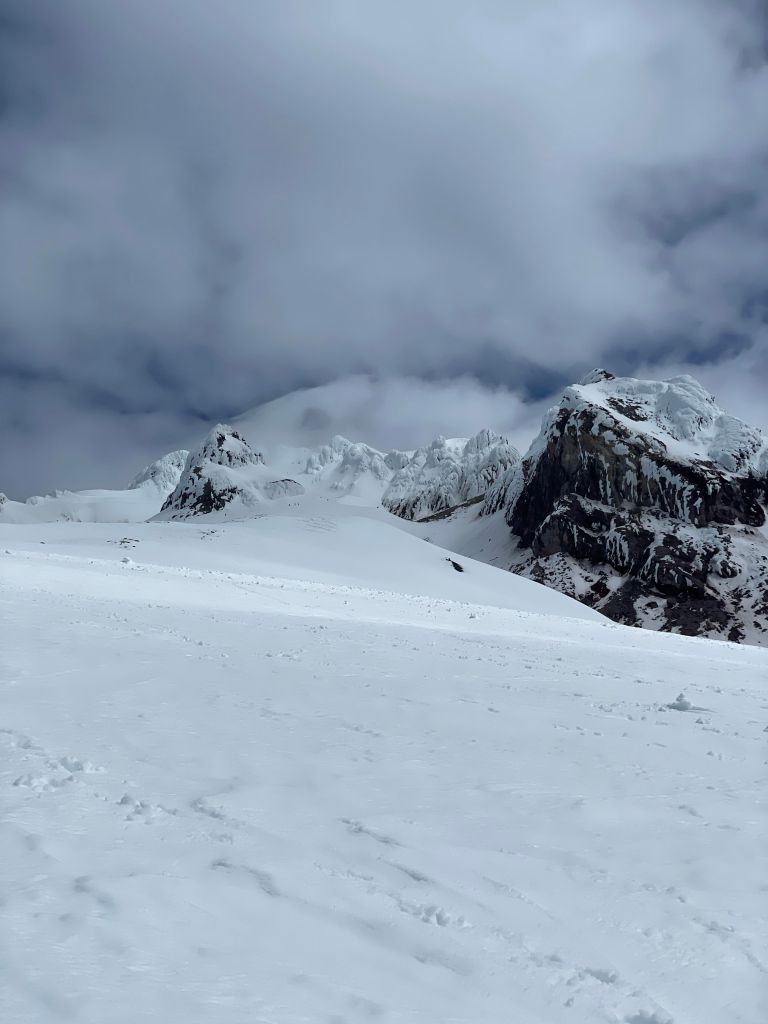
    View while leaving Mt. Hood, with lenticular clouds engulfing the summit.

    The Ascent

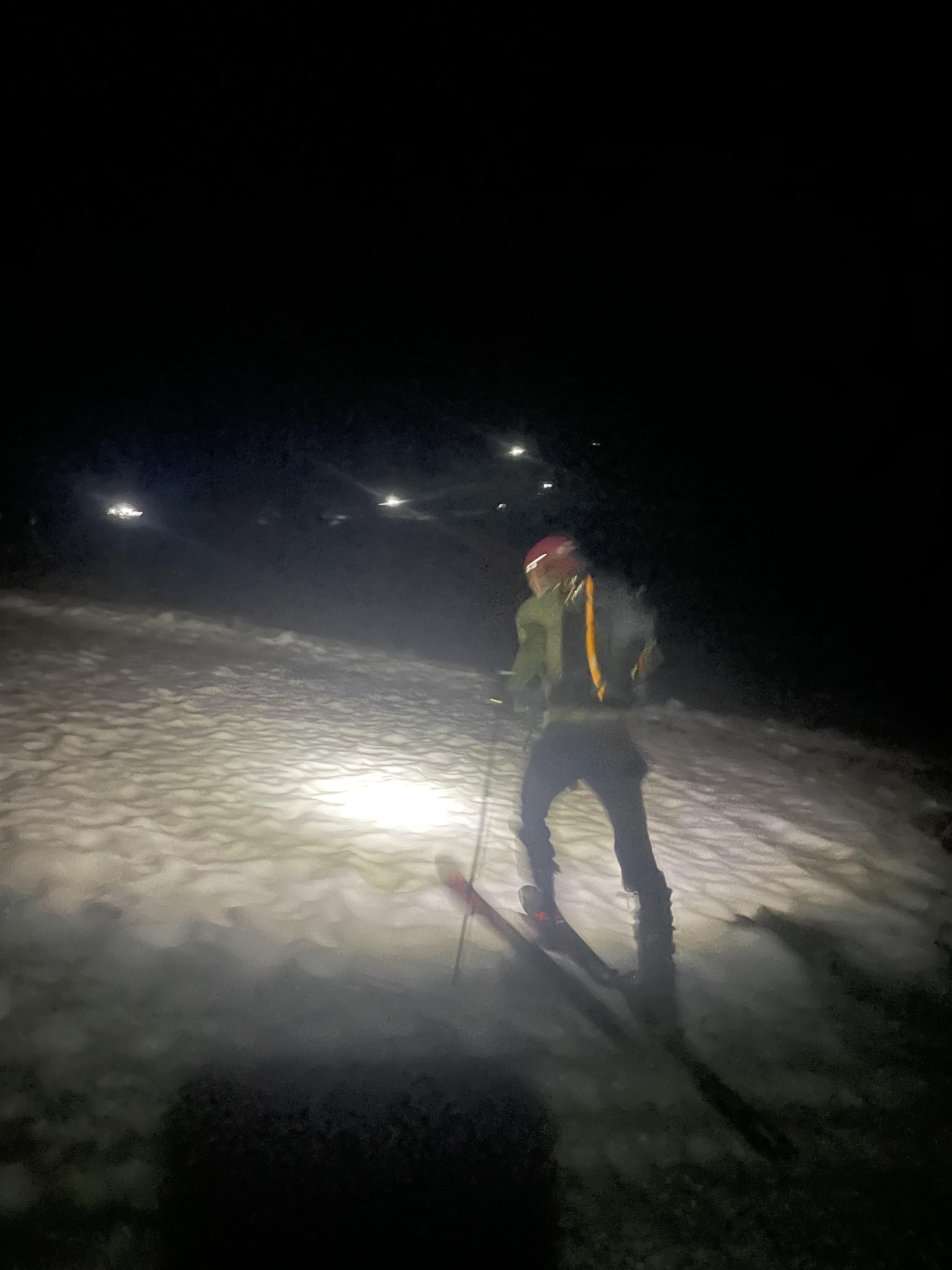
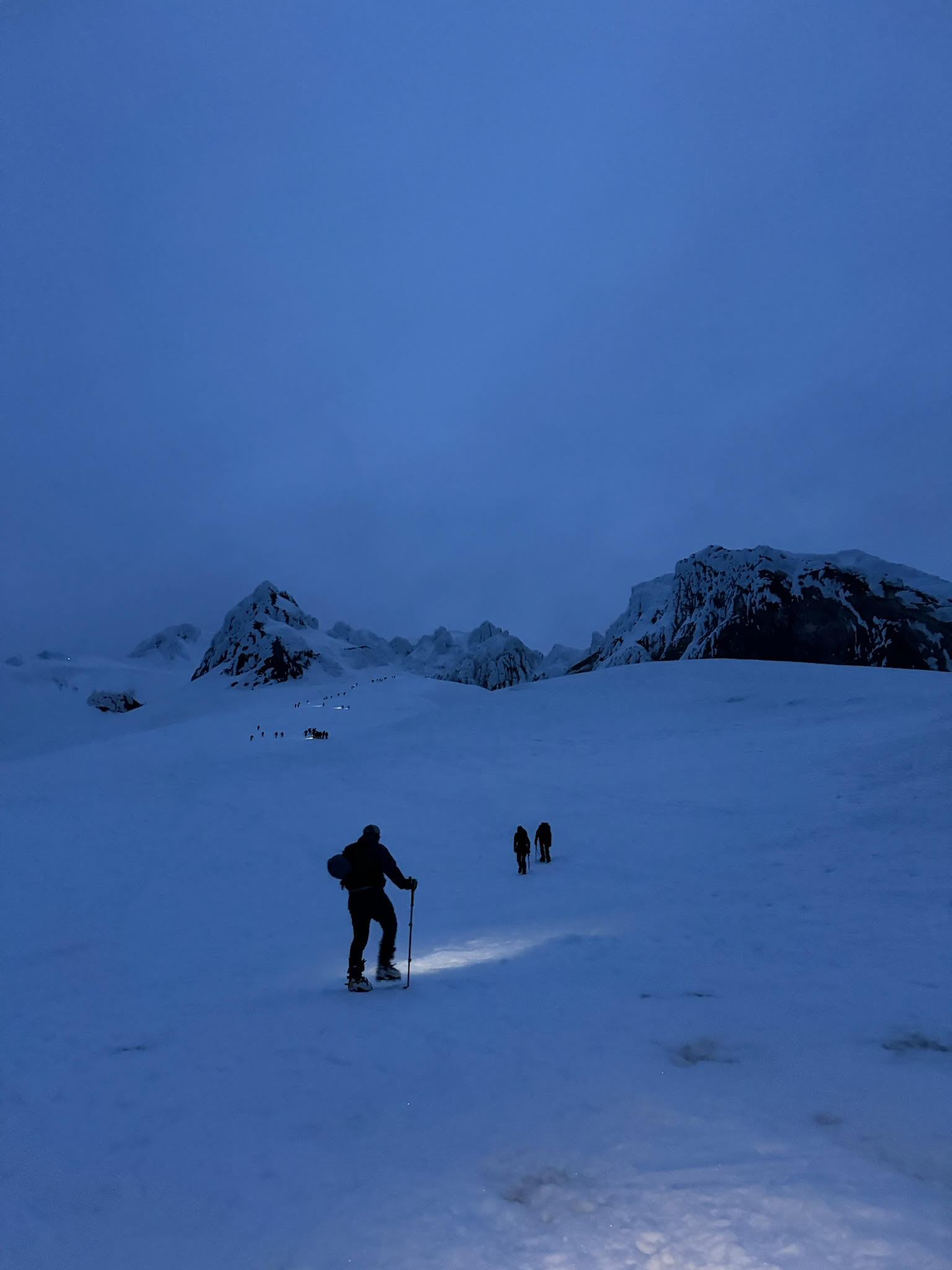
    Alarms rang at midnight and we awoke in a haze before quickly grabbing some coffee. There was little left to pack, so we rushed in the car and headed about an hour south towards Mt. Hood’s Timberline resort. What surprised me most was the amount of snow on the way to the parking lot. Car height snow banks cover the shoulders of the road well before we arrived and the lot itself was carved into the base of the snowpack. As palpable as the snow was the crowds, which consisted of about a dozen other groups prepping for the climb at 1 am. It was clear we were going to be accompanied by many other parties that morning, but at least it served as a signal we had good conditions for a summit push. About 20 mins after arriving to the lot we headed off on our skins, also marking Trevor’s first uphill tour. Conditions were as expected: nearly bulletproof snow crust clearly from an midnight freeze. For the first 1500 ft or so we made great pace, especially for a beginner uphill skier. But after a while, the slope angle gradually increased, requiring some more careful foot placement and the use of our ski crampons. Eventually kick turns were necessary and Trevor felt reasonably uncomfortable moving forward on skis. Luckily we were nearly at the top of the Palmer lift, serving as an easy ledge for transitioning to boots and a good spot for stashing skis.

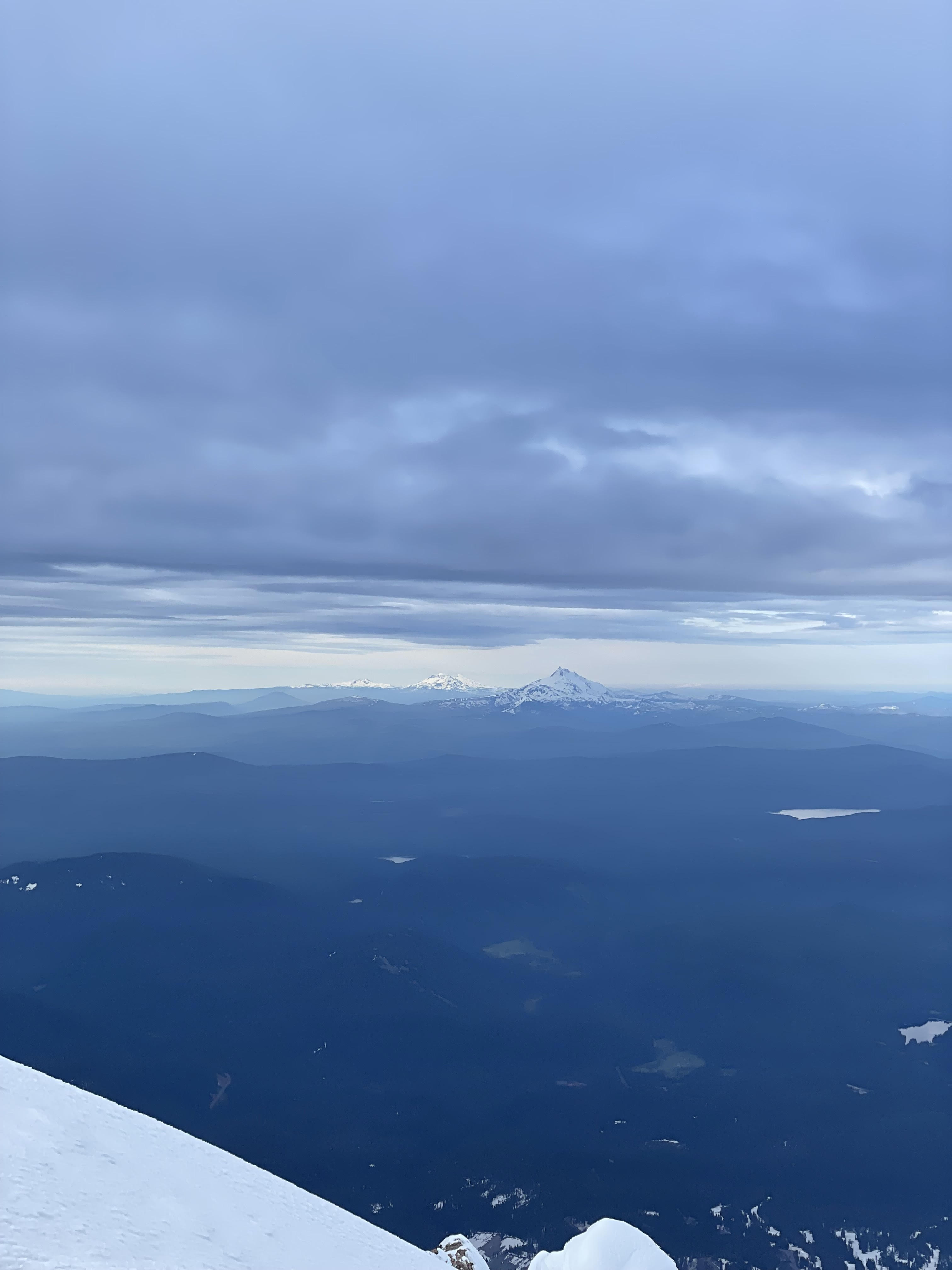
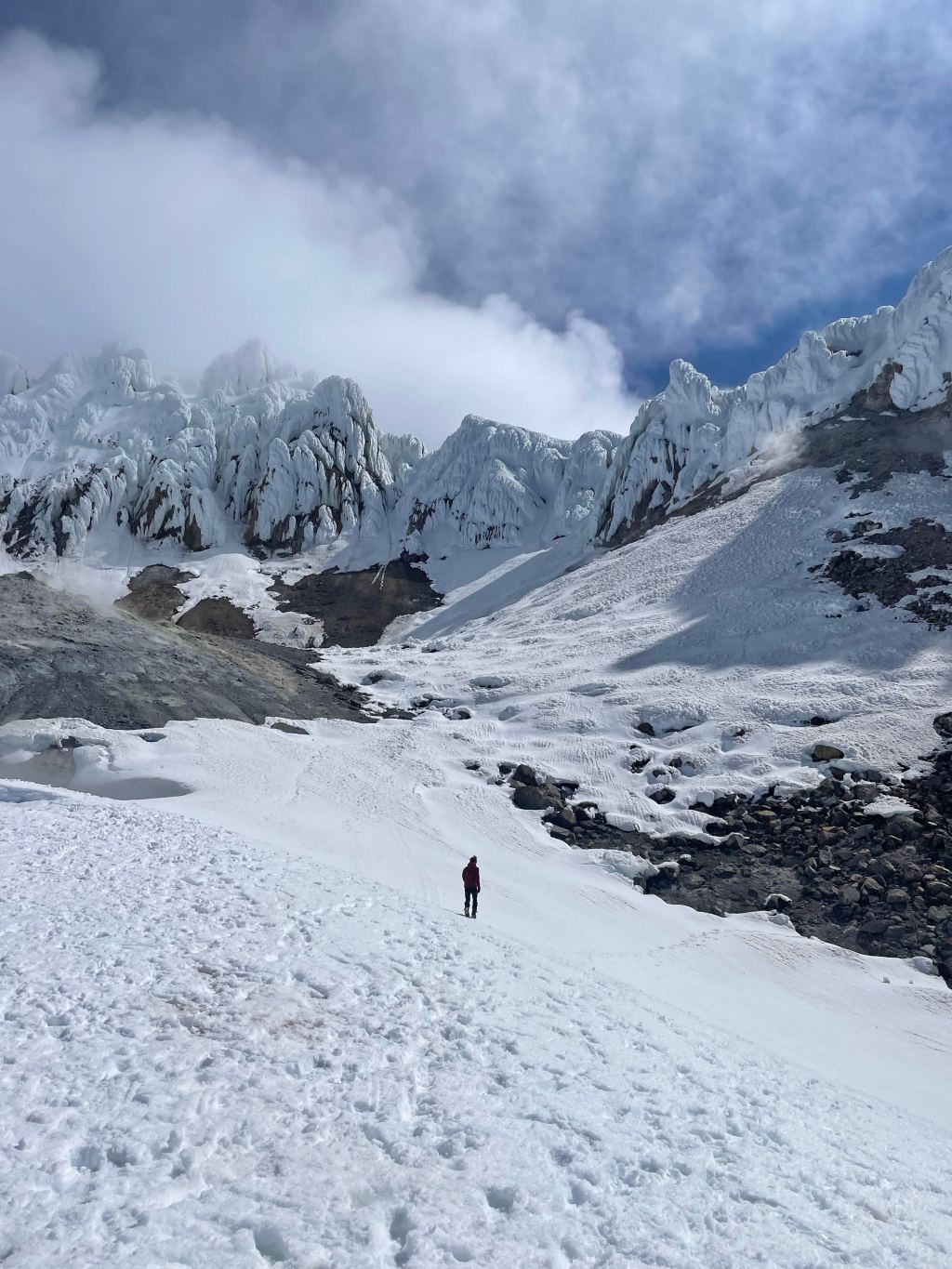
    Despite being at the top of the Timberline resort, we still had nearly 3000 ft to the summit. About two-thirds of this vertical was a moderate boot pack up the Palmer snowfield to reach ‘Devil’s Kitchen’, a basin of volcanic fumaroles staged below the imposing summit headwall. Hiking this portion of the mountain was a slog. Trevor and I made relatively slow progress compared to the lower uphill touring. Several times we stopped for water and snacks, each time giving us some expectedly great energy boosts. It was during this portion of the hike that the first light of the morning illuminated the surrounding landscape. To our south was Mt. Jefferson and the Three Sisters: two sets of prominent volcanos along Mt. Hood’s same range. The view was incredible and helped us push to about 4000 ft at the basin of Devil’s Kitchen. There we brought out our ice axes and fueled up once more in preparation for the steep headwall climb. For many reasons, this was the most physically demanding and risky portion of the day. It was only about 6 am in the morning, but any warming from the sun could rapidly melt the rime ice coated pillars of Mt. Hood’s summit. While climbing this could manifest in heavy icefall, an objective hazard that could lead to serious consequences while climbing the steep snow. Adding to this risk, the several dozen other parties joining our ascent were raining more small chunks of ice and snow to the climbers below. Our best chance at success would be to push ourselves to climb quickly and reduce the duration of exposure as much as possible.

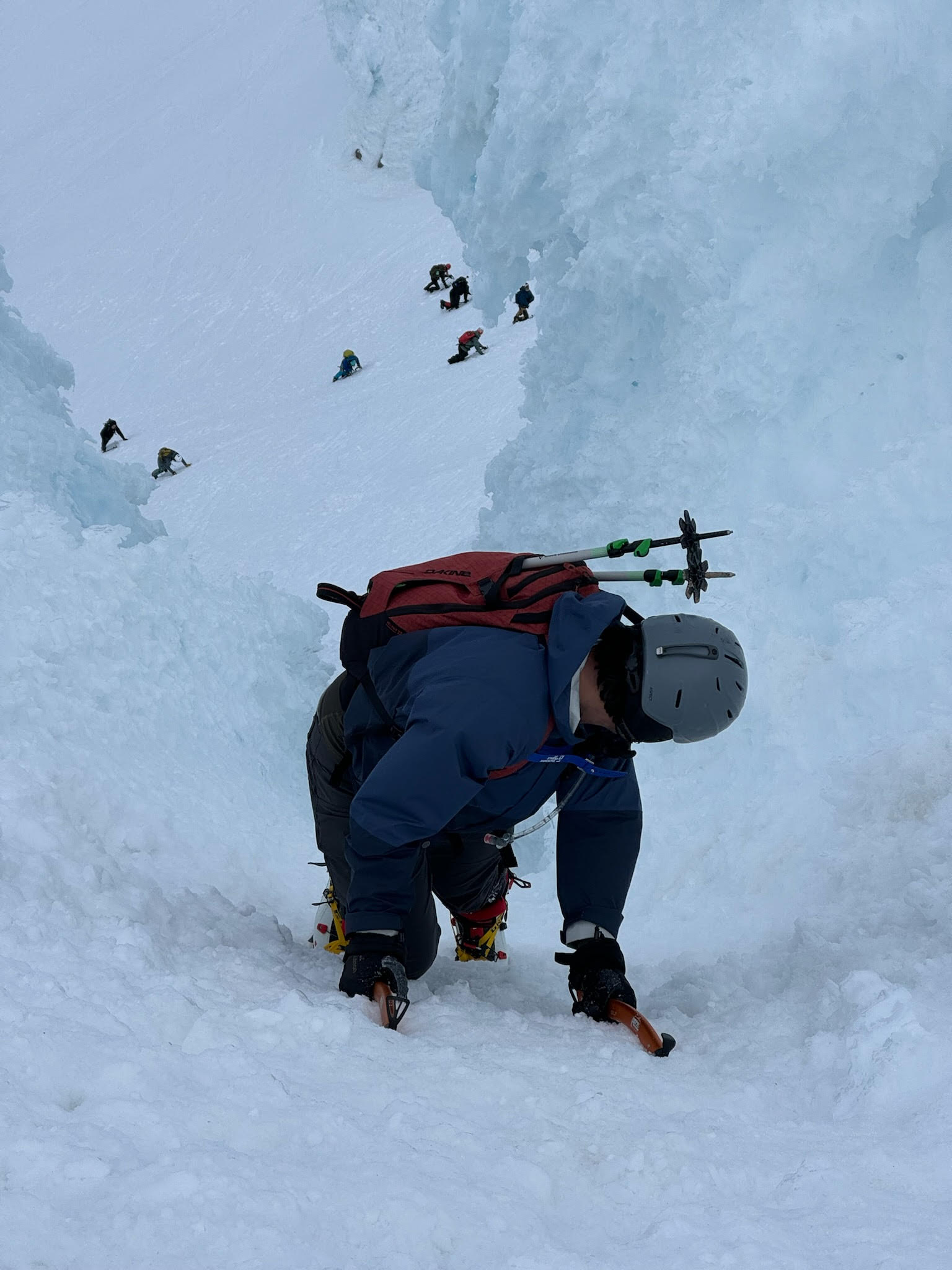
    Climbing the ~40-50 deg headwall was incredibly demanding. Each step was equivalent to climbing a ladder with rungs spaced far apart, except this was the final 1000 ft of a 5500 ft day. Progress was incredibly slow, but we knew we couldn’t delay. Crowds made everything harder due to the falling ice and bottlenecked topout. We chose to climb the ‘Old Chute’, a wide open and steep clearing that lead up to a ridgeline near the summit. Another route called the ‘Pearly Gates’ was our original intention and was significantly less crowded, but had a large and open Bergschrund blocking its entrance like a moat before a castle. The concession of the Old Chute still worked out for us and we finally made it to the summit right before 8 am. The view was incredible and revealed more volcanos looming to the north in Washington. Below us was a sea of clouds, adding to the incredible prominence of Mt. Hood to the Oregon floor thousands of feet below. We could only spend a few minutes there due to the lingering sun warming, so we quickly made our way back towards the chute. Instead of the wide open clearing we climbed up, we chose to downclimb an adjacent rime ice tunnel to its right. This section was slightly less crowded but was incredibly steep. Progress was slow and intimidating, going any faster would create more risk but moving slow was tiring and tedious. Despite the increasing fatigue we continued consistently and eventually made it back to a rocky ledge below the headwall. I waited about 20 mins or so and fueled up before Trevor joined me, which made for a great feeling of relief having survived the most intense exposure of the mountain.

    The Descent

    Thankfully the remaining descent was much better than the headwall. A few hours of sun baking had made much of the hardpacked snow soft and easy for travel. The first 2000 ft or so we were able to take off our crampons and glissade down the mountain. We passed another several dozen parties still making their way up while craving on our asses down the gradual slope. Finally we found our stashed skis near the top of the now active Palmer lift. I was feeling incredibly tired, but also had a rush of emotions having only 2000 ft to go on skis. Turns felt unbelievably difficult and I had to stop many times while I made my way through the resort. The whole time I found it crazy to believe just how much vertical gain we had made in just a short distance. Nearly three full sized ski lifts spanned less than half of the mountain’s alpine terrain. Nearing the bottom of these lifts was our car waiting in the lot and making it there finally was an amazing feeling. We made it through the climb with little hiccups and felt like we had really pushed ourselves physically. As we took off our gear, the mountain was lit up well in the now afternoon light and we could see gigantic lenticular clouds stuck at the peak above. The view was even better as we drove back, ironically being the first time we saw the peak during daylight. The next stop was the airport back to LA, marking the end of our brief Oregon vacation. Mt. Hood was an incredible climb and one that I will definitely mark for a repeat, maybe even to ski from the summit!

  • Getting in the Rhythm – Wasatch/Ogden Skiing

    Getting in the Rhythm – Wasatch/Ogden Skiing

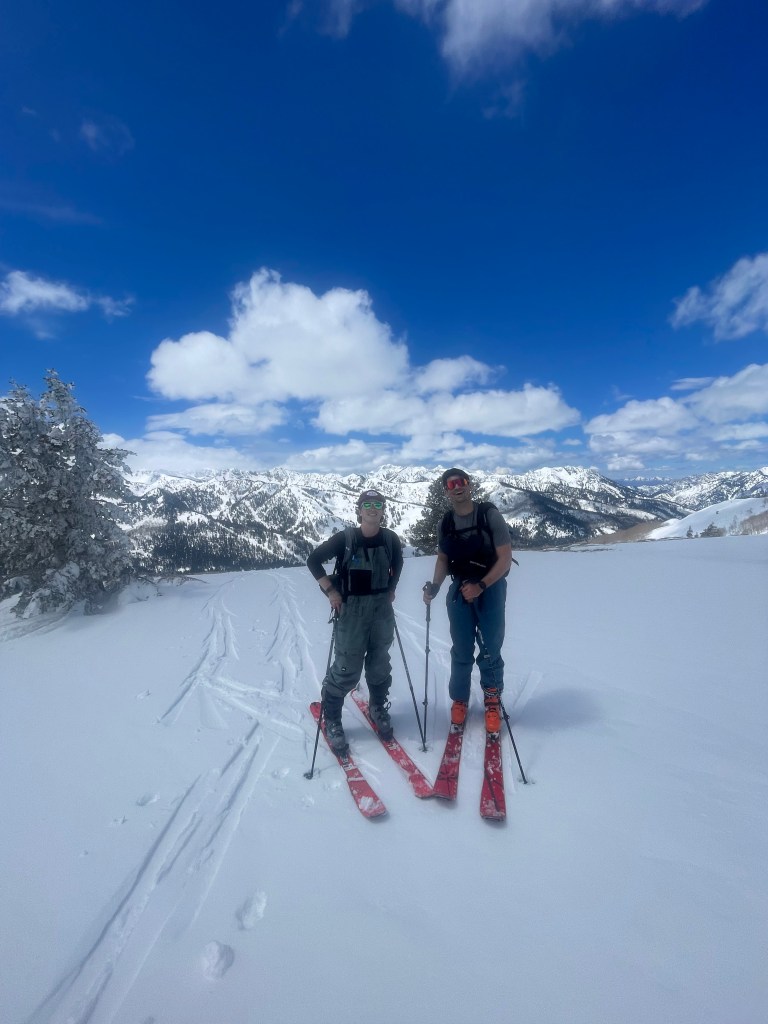
    After a great month of spring corn skiing in April, May of 2024 brought out one more sneaky storm to fill out Utah’s backcountry terrain. Luckily for me, I had already planned a visit to Salt Lake City for a long weekend with the hope of exploring what the Wasatch and Ogden backcountry had to offer. Joining me on the trip was Ian Hokaj and Devin McCabe, the three of us making a group of inexperienced backcountry ski newbs. We had the goal of getting some ski tour volume under our belt while also making the most of the weekend’s great weather and recent snowfall. Despite high warming & generally low tide making for pretty tame avalanche conditions, the ~18″ of snow that fell earlier in the week made for some high consequence wind and storm slabs in the high apline. This manifested in a tragic accident, with three skiers triggering a slide on Lone Peak. All three members were buried and two did not survive, making for an incredibly difficult week for the utah ski community. This morbid atmosphere made us acutely aware of the ‘wicked’ nature of winter backcountry travel and set us on a mission to make the most out of a deliberately conservative hit list.

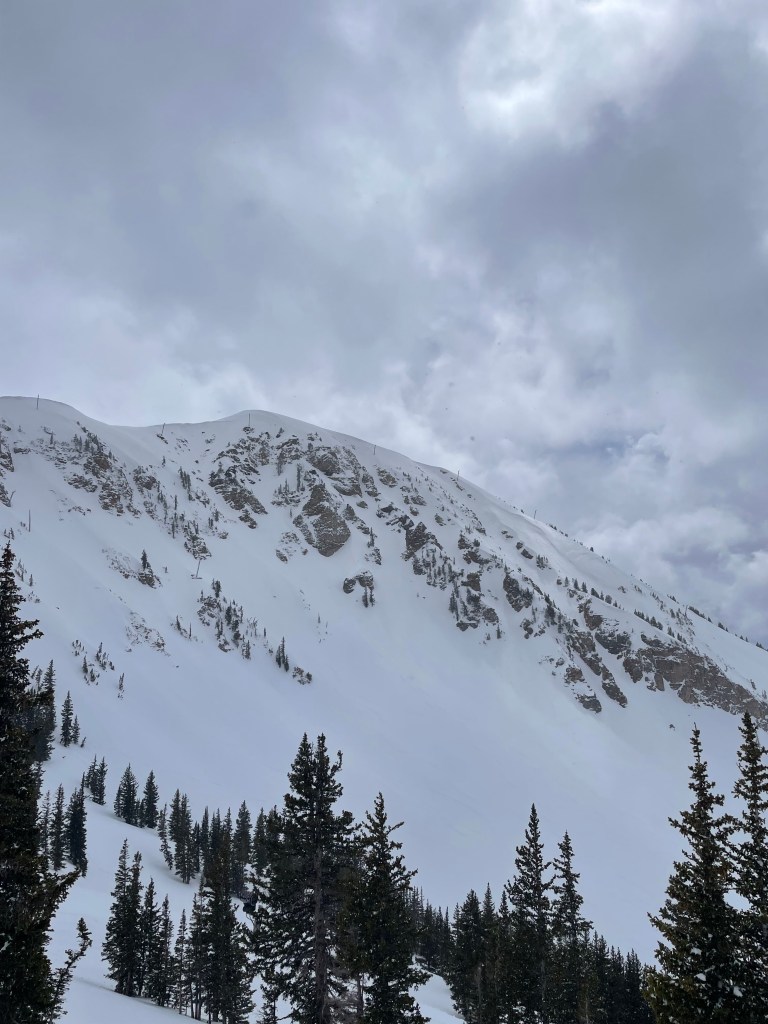
    View of Ben Lomond from Cutler Ridge, many wet slides had been triggered in the week prior.

    As soon as we set foot in Utah, stoke for a great weekend flooded back in. Friday was our first full day and we chose to tour some classic & simple terrain in the cottonwoods. First up was USA bowl across from Solitude and Brighton, which was a repeat for Ian and a pretty tame option in most conditions. Devin also had the privilege of making this his first tour with alpine touring bindings as opposed to bipedal locomotion in ‘alpine’ hokkas. A short hour and a half later we found ourselves on the top of the bowl, probably wishing we were there slightly earlier in the morning. After a quick carb replenishment (one Coors lite), we made a dozen turns in some dense spring snow and then quickly made our way back to the car. The day’s skiing was more about getting our bearings together and not getting in an avalanche, so we brushed off the snow as a one-off and headed to Alta across the canyon for another lap. This time our tour was joined by a few other locals scattered around and felt like we were getting in the swing of things. Off in the distance was an enticing view of main chute on Mt. Baldy, but we held ourselves together and focused just getting to the top of the lift. A speedy carb replenishment later had us ready for the descent and this time we were pleasantly surprised by some less-wet turns for the first half of the run. Overall we were feeling good and ready to scope out some new terrain for the rest of the weekend.

    Ian and Devin at the top of USA bowl
    View of Mt. Baldy from the Collin’s chair

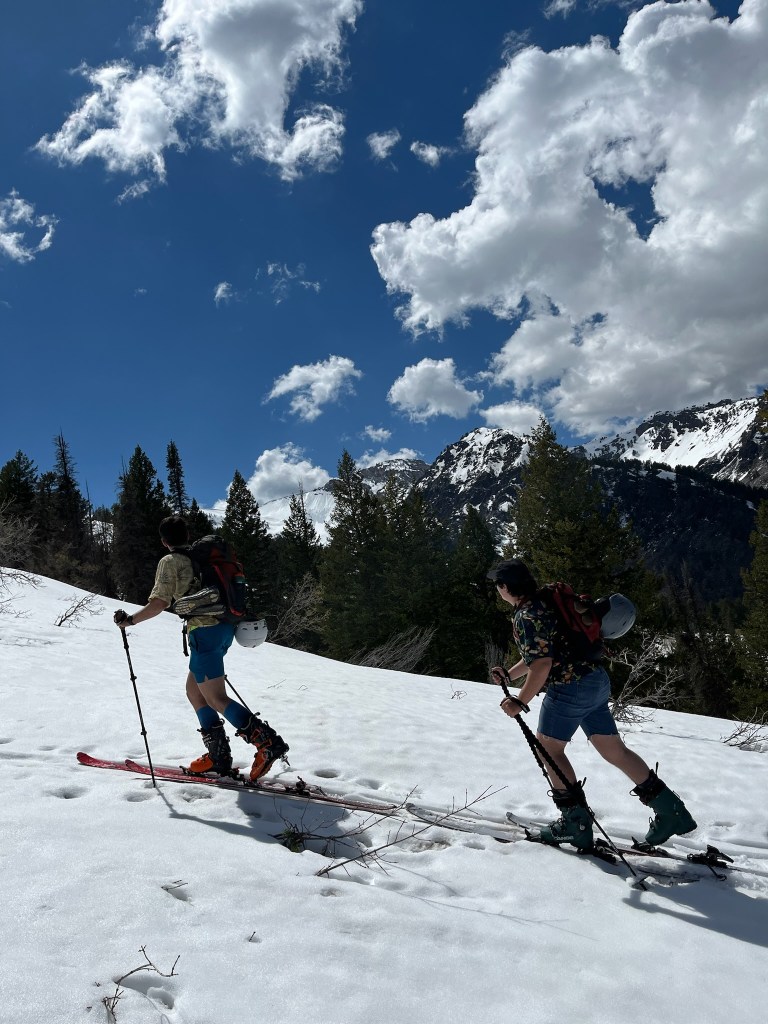
    Friday’s definitive success put us in the mood for a night out in the town, but we still had our minds set on adventuring out to a new area come Saturday morning. In particular, Ian scoped out a mellow ridge hike on Ben Lomond Mountain lining Ogden Valley. Despite a hilariously late start, we knew we could still get a decent hike in a ridge that was all low angle and most likely void of any other kooks like us. Our kit that day consisted of cutoff jeans, Hawaiian shirts, and a speaker that was unreasonably large for some reason. Despite the ridiculousness of the day & gear, our hike was a complete blast. The terrain felt very safe, our speaker was tastefully motivating, and our carbs were nearing replenishment. All of us felt great in terms of pace too, which made for a super efficient tour to few hundred feet above the treeline. In front of us were some spectacular headwalls & spicy chutes far in the distance. Huge wet slides lined this steeper area and we new from the region’s guidebook that this area has a not-so-fun history of burials. Having little time and no desire to test those waters, we enjoyed an incredibly clear day on the top of Cutler Ridge. Skiing down was not to shabby either and soon enough we found our way back to the initial bushwhack and trailhead. To cap off the energy from the day, we took a dip in surprisingly refreshing Pineview Reservoir & a visit to the “oldest bar west of the Mississippi” name The Shooting Star Saloon. Although turns out there could not compare to resort skiing in any sense,

    “Benny and the Jorts” – Ian and I skining up Cutler Ridge on Ben Lomond

    With one more day of skiing ahead of us, we spent Saturday night feverishly deliberating on what to do next. In front of us was a typical guidebook for the greater Wasatch range, but also a skinny blue book called the “Chuting Gallery”. Of course none of the lines within the gallery’s list were safe, within our capabilities, or good skiing with the current conditions, but we were feeling good and I had my eyes glued on the Wolverine Cirque chutes. These lines were clearly a bad idea to ski, but were also positioned right behind Brighton resort and perfectly close to the super mellow Wolverine Bowl. Our debate session lasted a tad longer and we finalized on this region with an early start for the next morning. After all, Sunday also happened to be nearly Solitude’s closing day, which would be a no-brainer for an end to the weekend post tour. So come morning, we began skinning up the Millie lift line and towards Mt. Wolverine. The first half of the tour was straightforward and make for a quick pace. Soon we arrived at the top of the lift and began to stare at the Millie summit boot pack – our first real avalanche risk of the trip. Since Ian & Devin had never taken an AIARE course (oof), we decided to practice a rescue on some flat ground. I buried my pack, made some fake dig sites, and then let both Ian & Devin go find & un-dig it on their own. Thankfully it went pretty smoothly and set a good tone for the rest of the bookpack to the summit.

    Setting a bootpack up to the summit of Mt. Millicent

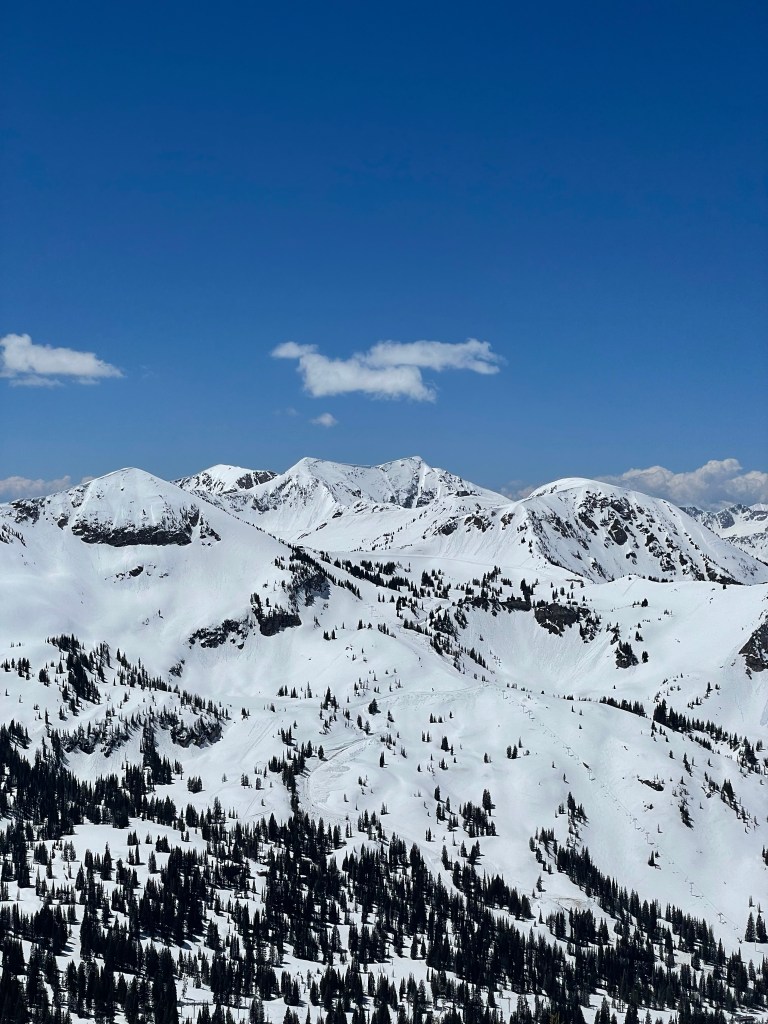
    Climbing Mt. Millie is super easy when there is a boot pack set and lifts are running, but something eerie persists when the slope is clean and no one else is around. While we charged ahead, both Ian & Devin had some second thoughts about the exposure of the steep slope. Realistically the snowpack was consolidated, cold, and at low risk of sliding given our position at the apex of the ridgeline. But that didn’t stop the us from feeling like we were on the edge, as most steep ridges tend to do. It didn’t take long until we finished out the hike and stood atop Mt. Millicent with a fantastic view of Mt. Wolverine, Patsey Marley, and the spectacular terrain on all sides of the cirque between them. Immediately it was clear from the hike we just came from and the school bus sizes cornices overhanging steep and narrow chutes that the cirque was not in for skiing. Instead we’d take the mellow 25 ish deg bowl to the north off Wolverine’s peak. To get there, we made a relatively each skin across the ridgeline and onto our 2nd summit of the day. From Mt. Wolverine, the entirety of Little Cottonwood Canyon is on display and it makes for a spectacular viewing point. We stood atop feeling accomplished and excited for the upcoming descent, having made a clear progression in the complexity of terrain we just crossed.

    Ian walking towards Mt. Wolverine with the cirque in full view
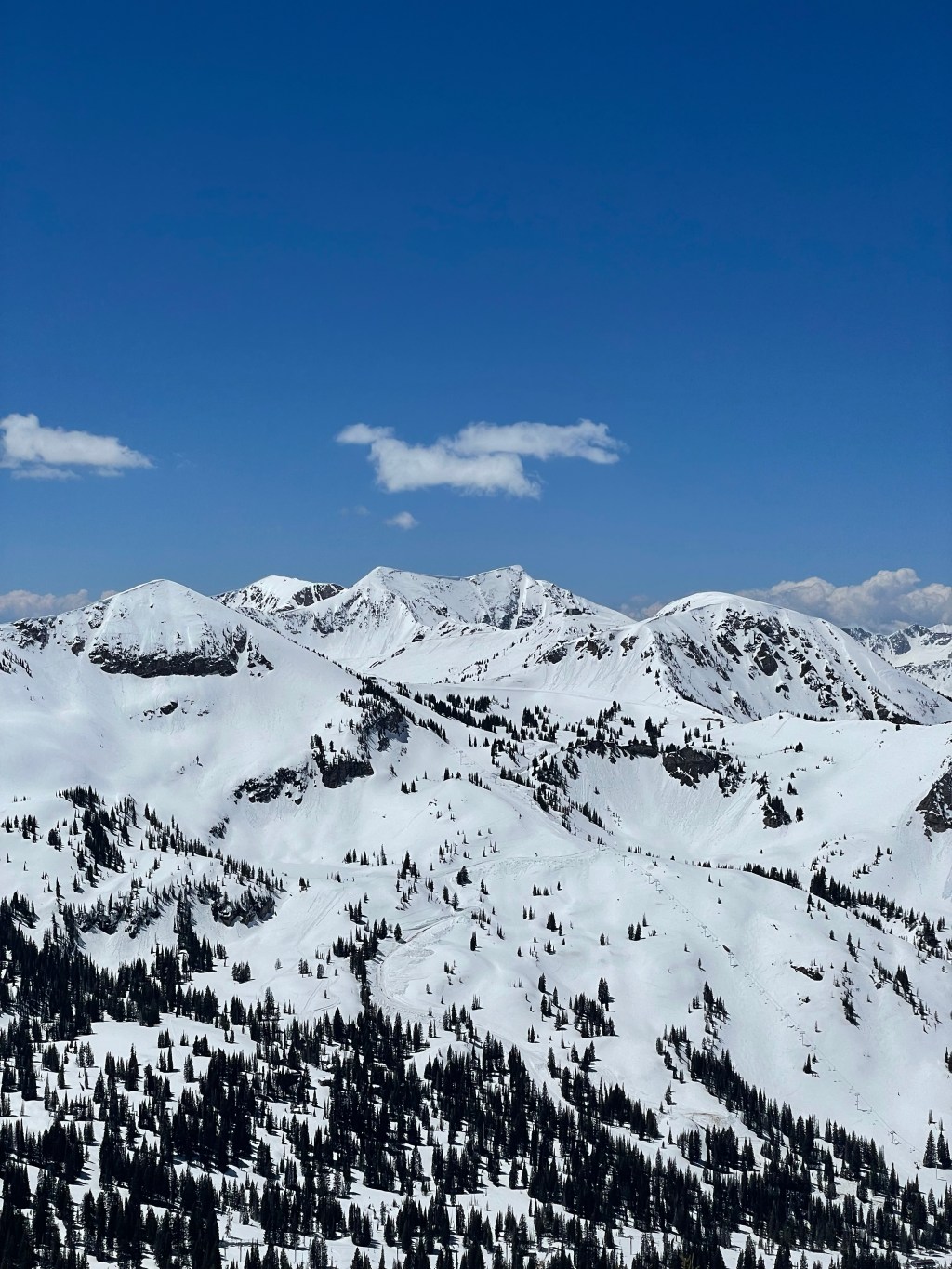
    View of LIttle Cottonwood Canyon from the summit of Mt. Wolverine

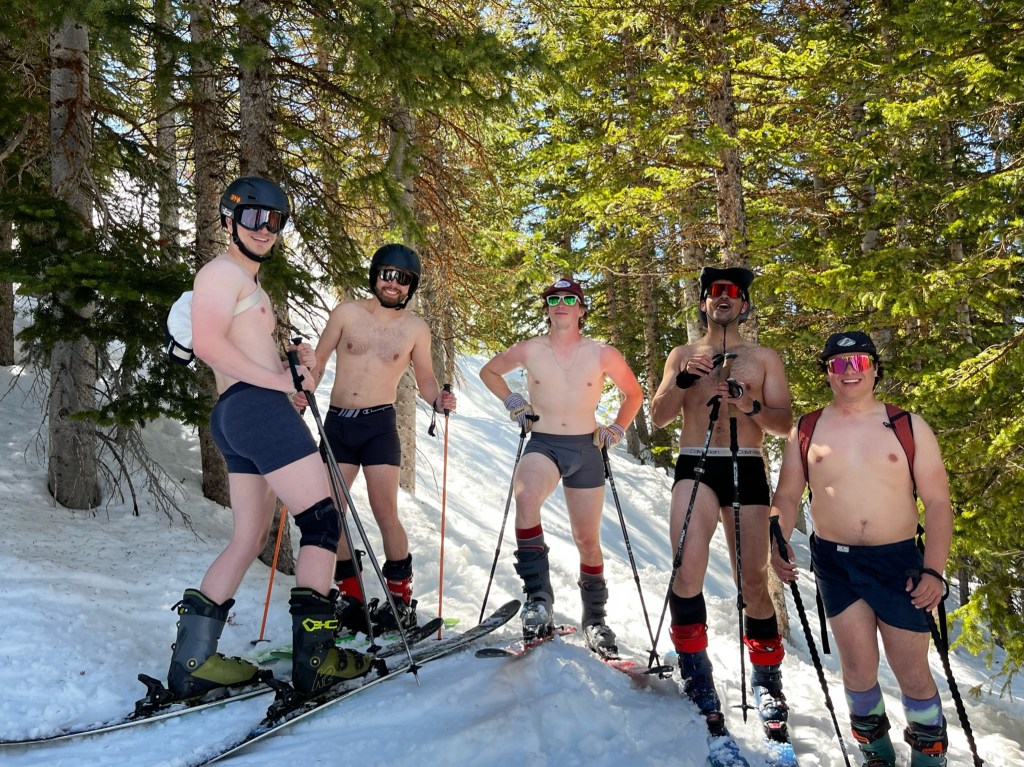
    Skiing down was a bit lackluster. Even though we had the whole mountain to ourselves, the snow had soaked up the sun and we were struggling to carry speed in the wet conditions of late spring. After the main bowl, we traversed through a lake plateau and over a small ridge to get back to the resort. Skiing out into Brighton felt amazing and we were all immensely tired from the big morning. While getting to the parking lot, we shared a few beers and then got ready to meet up with some local friends for some victory laps at Solitude closing day. Similar to the day before, we dawned our hand cut jorts and ridiculous Hawaiian T shirts for party lap after party lap in bounds. Ending the day with an underwear lap for good measure, we found our way back to the lodge and celebrated a great weekend of mediocre spring touring as our introduction to the Wasatch.

    Undie lap for the closing day of Solitude
  • Risks and Rewards – Tuckerman Ravine

    Risks and Rewards – Tuckerman Ravine

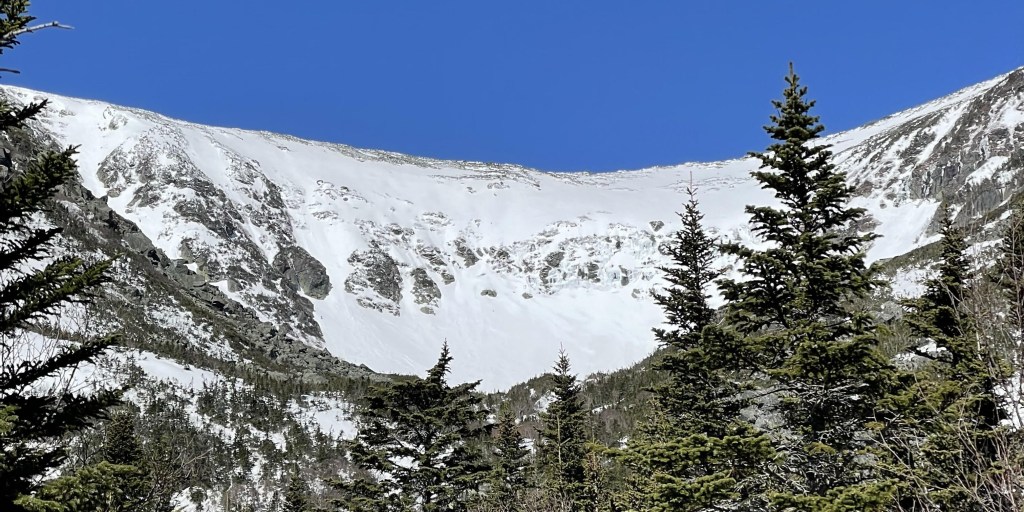
    Ever since I’ve heard about Tuckerman Ravine and its renowned spring skiing I’ve wanted to plan a trip out to the White Mountains. Photos of its steep and exposed headwall look nothing like typical east coast glade and tree-cut skiing I was used to. A successful spring excursion and descent of the ravine seemed like a right of passage for those growing up in the area. Despite trying on several occasions, I was never able to get an outing out of the planning stage while I attended college relatively nearby in college. Unexpectedly an opportunity arose nearly 3 years after graduating when a spring reunion coincided with a great Friday opportunity to complete the Mt. Washington trek. Soon enough I flew out to Boston and made my way up to a friend’s cabin in nearby Franconia, NH.

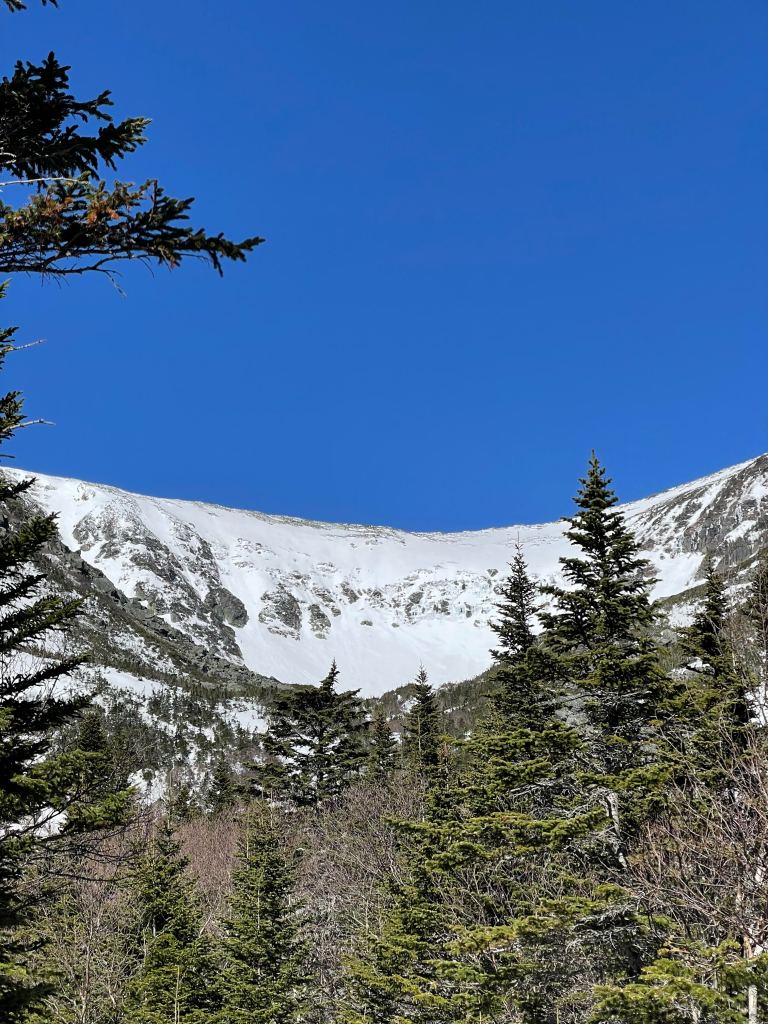
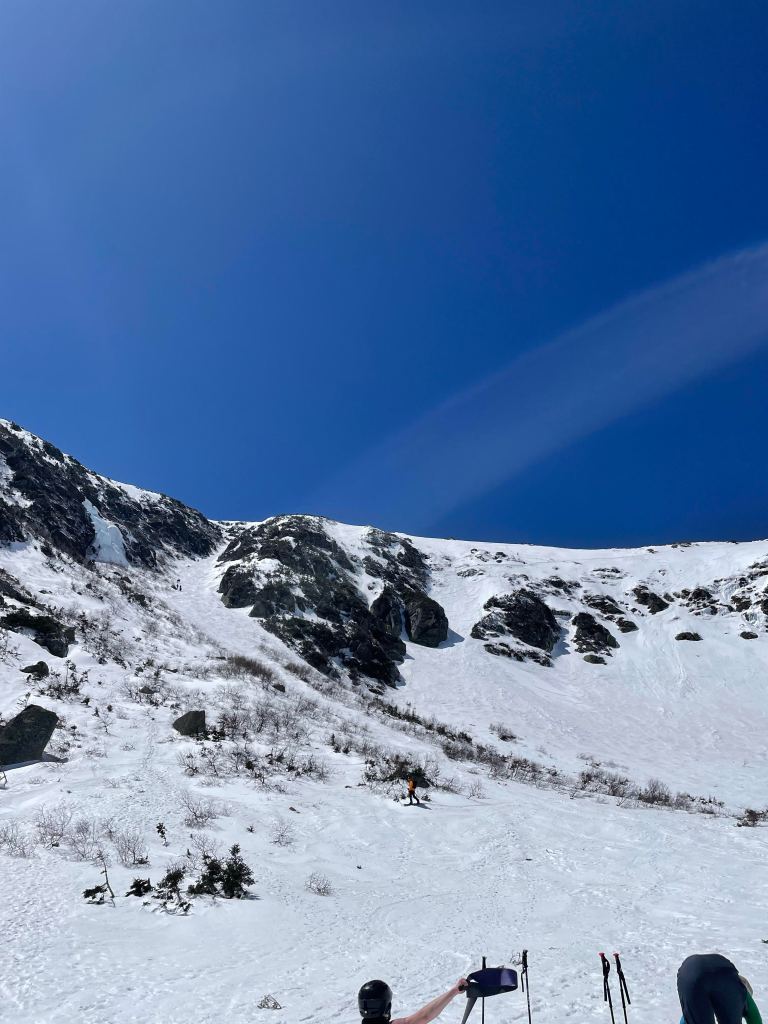
    Tuckerman Ravine viewed from Pinkham’s Notch, April 26th, 2024

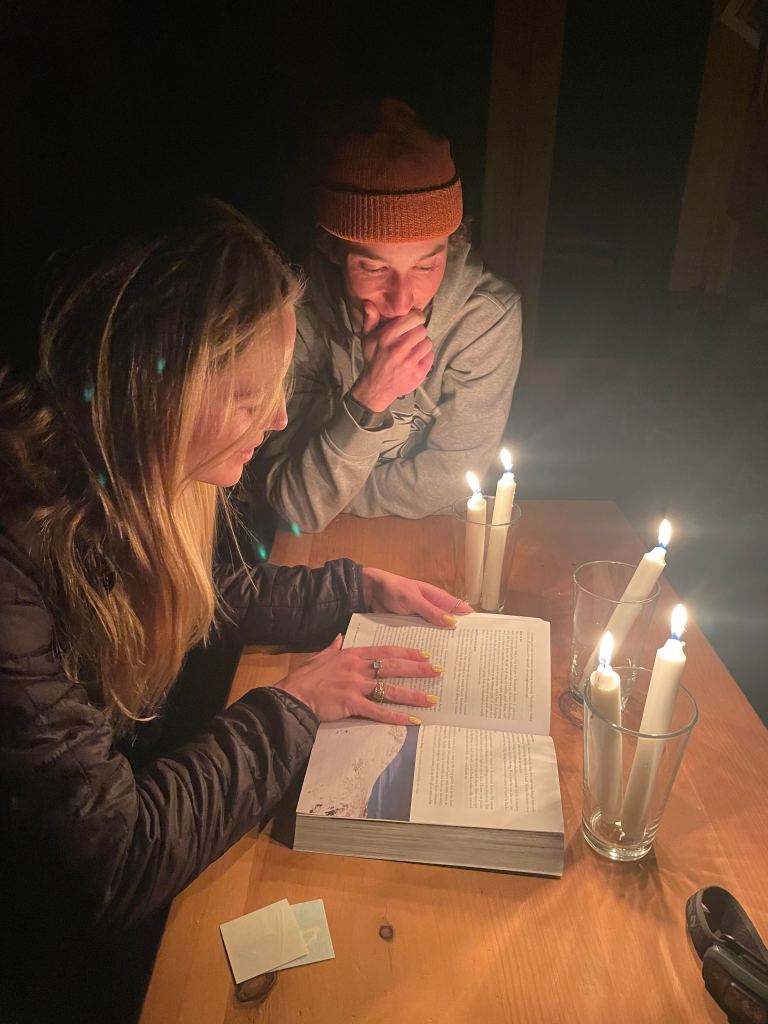
    It was at the cabin that my friends and I started scoping out our lines in more detail with the help of “Best Backcountry Skiing in the Northeast: 50 Classic Ski and Snowboard Tours in New England and New York” by David Goodman. We figured the slope angles boasting 55+ deg headwall lines were quite sandbagged, but it put some fear into our minds while we still could enjoy the comfort of the cabin. This was the first time I would be putting myself into a true “no-fall zone” as most of the headwall required skiing above some massive cliff bands. At the time I knew my friends had skied the ravine once before, so I figured they could take some pressure out of the potentially terrifying descent. What I didn’t know at the time was that they both didn’t climb and ski the headwall itself, making our upcoming trek new terrain for us all.

    Power outages are no excuse for a lack of research

    Mt. Washington is most famous for its extreme Winter weather and highest peak of the American Northeast. Its not until the spring season that its two approach headwalls make for some fantastic ski descents. On April 26th, the three of us made our way from the Pinkham Notch trailhead to the base of Tuckerman’s Ravine. Starting off around 8 in the morning, we first hiked about a mile with skis on our back before transitioning into skins. Another mile or two went by before we made it to a cabin near the base of the ravine, which was packed with other skiers hungry for spring turns. Grace and Devin had both skied here before, which made me feel pretty good about spotting some crazy lines on the bowl visible from the base cabin. Although these looked pretty doable from below, I knew that this headwall was no joke. Looking at the guidebook the night before, most of the prominent descent options were above 50 degrees and very exposed – a fall would likely send you over the center cliff bands and be fatal. Knowing this should have been the first warning sign, none of us had arrest devices (an ice axe) and only myself had steel crampons. Grace had micro spikes and Devin had plain old ski boots, which are both wildly far from comfort when climbing 50+ degree snow.

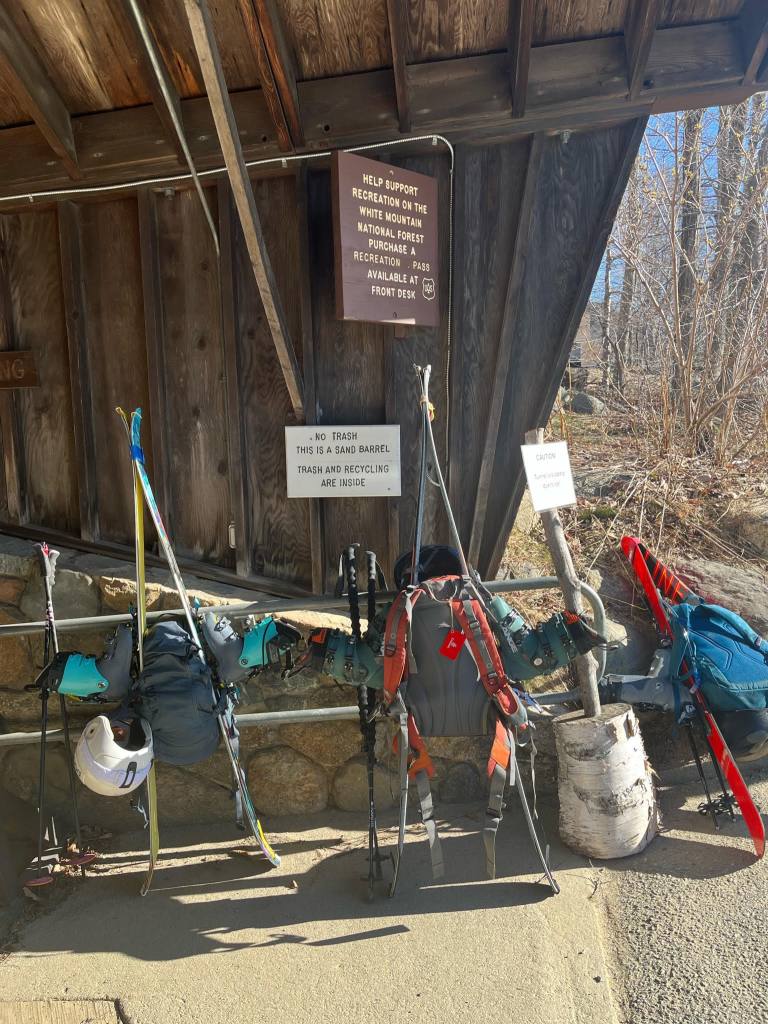
    Mandatory gear photo
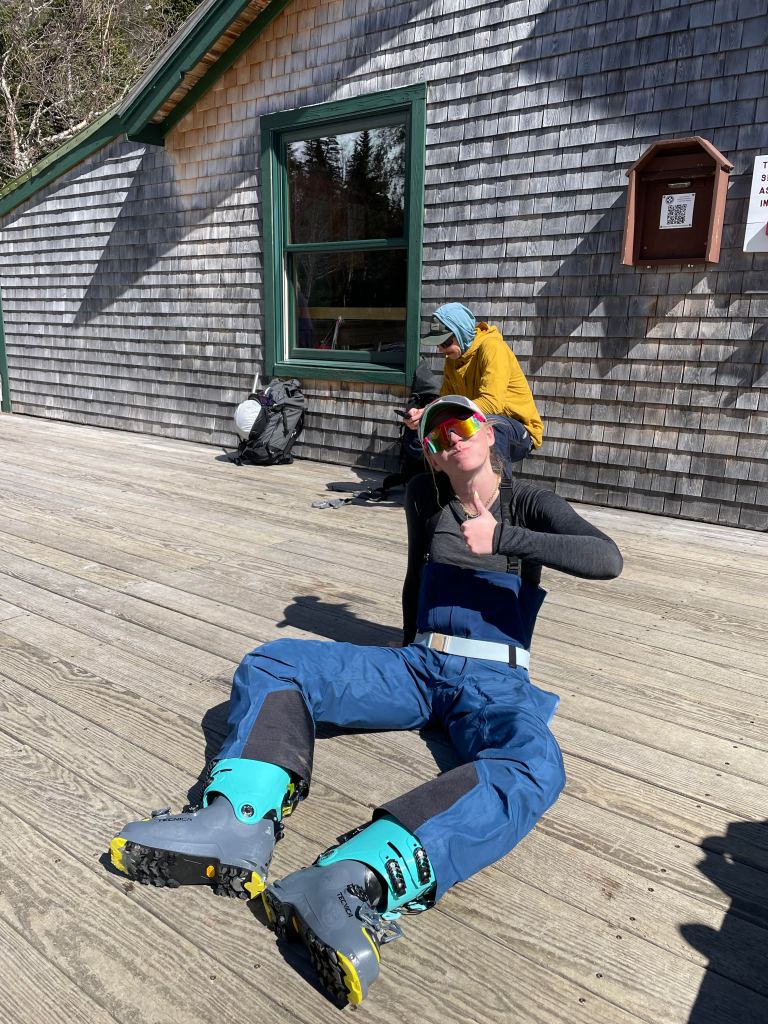
    Grace post hut refueling, ready to gain some vert

    Despite our lack of preparedness, we were super pumped up to begin our climb and knew we could turn around if things got hairy. For our first ascent we chose to climb straight up “The Chute”, which was a well defined and classic descent on the left side of the headwall. Starting from flat bowl basin, the slope rose immediately to about 30-40 degrees as we booted to a resting point underneath the rocky chute choke. We could see the steep main ascent and planned our route along the mostly defined boot pack on our right. The bootpack then traversed across the chute and onto a perch before we reached the main ascent exposure for another check in. At that point, Grace and Devin had barely made it across, evident of their gear failing to work at this slope angle. While we had recognized the rest of the slope was only steeper and likely not doable, I had agreed to move forward and dig a larger bootpack with my steel crampons into the snow ahead. At that point, I had all but committed to the full ascent due to the risk downclimbing and slightly better gear. However, Grace and Devin were in pretty poor shape. Deciding to turn back around, they slowly made it back to our first resting point with only a small slip in arrestable terrain. I could just barely see them on my ascent, but knew we had narrowly avoided a potential slip in exposed terrain.

    View at the base of the headwall, with the Left Gully and the Chute most prominent

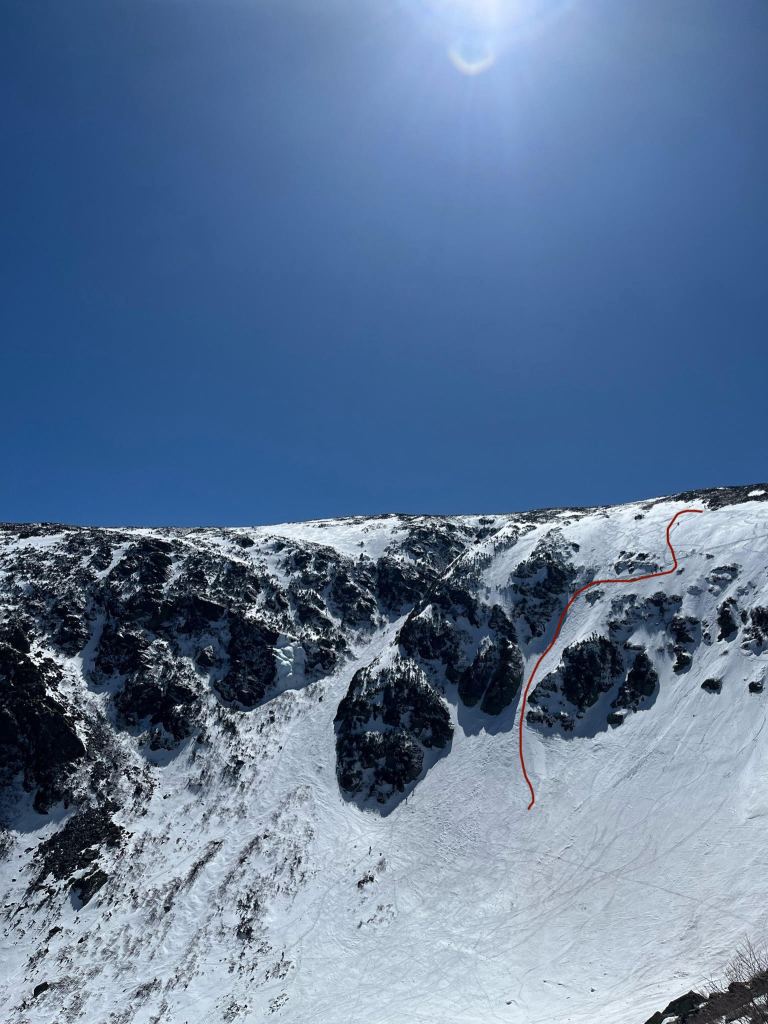
    Now climbing solo, I followed another climbing up the bootpack with increased apprehension. Falling at this point was not an option and I only had non-arrest ski poles and crampons to aid my ascent. Instinctively I knew the best way to continue was to stay calm and avoid panic. Loosing composure in that area would likely require a rescue and would only make my fear and risk worse. A healthy dose of adrenaline also helped, as I nearly sprinted my way up the steepest section of the headwall and into the rocky ridgeline ahead. The climber I had followed transitioned near me and gave me some reassurance that the ski descent would be possible, despite the incredibly intimidating rollover visible below. I gave myself probably 10 minutes at the top of the headwall to calm down, sip some water, and transition into my ski gear. The whole time I was on a relatively mellow slope prior to descending, but was on edge due to the strict no fall zone until I was about halfway down. Finally I began moving downhill on skis slowly, the whole time looking for tracks leading to the chute below. I was looking for a dogleg underneath a small cliff band, which traversed to the top of the line. Most of the way this was relatively mellow, but required one hefty turn at the steepest point and over the main headwall exposure. Inside I was terrified, but was able to keep my composure and move past the cliff band into the main portion of the chute. At this point I was incredibly relieved to make it past the no fall zone, but still had some crazy steep skiing ahead of me. I probably waited another five minutes or so to muster up courage before committing to the line. It was my first time experiencing sizable slough, small & loose avalanches that followed my turns across the chute. Despite this adding to the pressure, I made it down unscathed and felt incredible to have made it down the apron. At this point Grace and Devin had made it up to the top of “Left Gully”, a more mellow but still 40+ degree slope on the far left of the ravine. I sat by some rocks and watched their fast paced and mogul filled descent through the gully before meeting up with them at the crowded resting spot below.

    Ski descent of “The Chute” on the left side of the ravine headwall, upper dogleg is between 50 and 55 degrees

    Once we all made it down we celebrated the successful journey through the ravine. All of us had some great skiing despite the turnaround for Grace and Devin. I felt particularly glad to have kept my composure and executed some high consequence skiing. We drank some beers and made our way to the “Lobster Claw” for a last half lap and mellow bump skiing before our final transition on the way down. Overall the day was an absolute blast having skied with great conditions and weather. Stoke was high all around and we were able to witness some much better skiers than us rip lap after lap on the most technical ravine descents. Even our way down was great, the Sherburne trail was filled in for most of trip back to the trailhead (although we definitely met quite a few dirt batches on the way). When we finally made it down, we all felt completely spent and were excited to make our way back to Boston for the night.

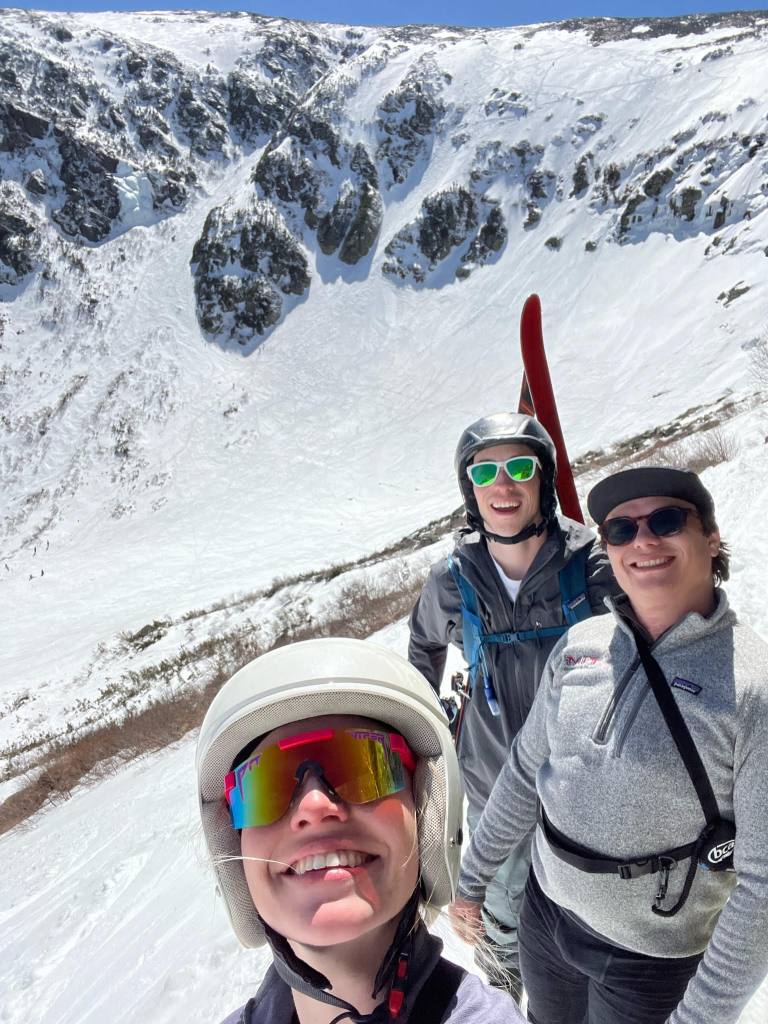
    Grace, Devin, and myself (from left to right) at the midway point of the “Lobster Claw” and overlooking the previous chute skiing of the day

    Tuckerman Ravine can be relatively low risk if climbed and skied correctly, but we learned a crucial lesson about planning and preparation for this go around. Any ascent above 35-40 degrees really requires crampons, and any ascent above exposure really requires an arrest device. Moving forward we all have invested in gear that will make our future travel more safe and now know to be more mindful of researching beta prior to packing our final gear for a trip. Normal backcountry risks did not feel high during our approach and ski descent due to the good weather, snow conditions, and trail popularity. But in this case it was the terrain itself that carried high consequences. Keeping a level head and stopping when necessary was what kept us safe that day.

  • An Introduction – Mt. San Antonio

    An Introduction – Mt. San Antonio

    Skiing and outdoor adventures have been a part of my life as long as I can remember. Growing up on a small lake on the east coast meant tons of winter ice skating and sledding, with weekend trips to our local Jersey ski resort for good measure. Since then I’ve slowly ventured into skiing and hiking bigger and bigger mountains, gaining a taste for more ambitious adventures. Now that I have a full time job, I have the money & desire to tackle some bigger challenges while having a blast skiing. This is also the purpose of the blog I’m writing now: to bring life to a journey of experiences in the mountains as I develop with them.

    Myself a few years ago at Aspen Highlands, about to ski the bowl

    So why ski mountaineering? From my perspective, this is one of the most exciting ways to elevate my love of resort skiing, while challenging myself to learn new skills, improve my physical fitness, and find others who share my passions. I’ve also been inspired by the incredible feats of ski mountaineers in the modern ski touring & cinematic era that people like Nicolai Schirmer, Cody Townsend, and many others have defined. Schirmer is the king of steep, fast, and technical ski mountaineering in the northern Norwegian fjorns and documents his adventures on a staggeringly high cadence on youtube. Townsend has a similarly impressive resume of skiing & mix of online content, but with an incredibly ambitious goal of completing the “50 Classic Ski Descents of North America”. This list defines fifty inspirational and daunting ski descents ranging from straightforward couloirs in California to seldom achieved expeditions to the tallest peaks in Canada & Alaska. The idea of combining challenging mountain ascents with the reward of epic ski descents is incredibly motivating and will hopefully provide me a life long journey with some cool people at my side.

    Polar Star Couloir, a particularly esthetic couloir from “Fifty Classic Ski Descents of North America” by Chris Davenport, Penn Newhard, and Art Burrows

    Round 1 – Scouting Mission

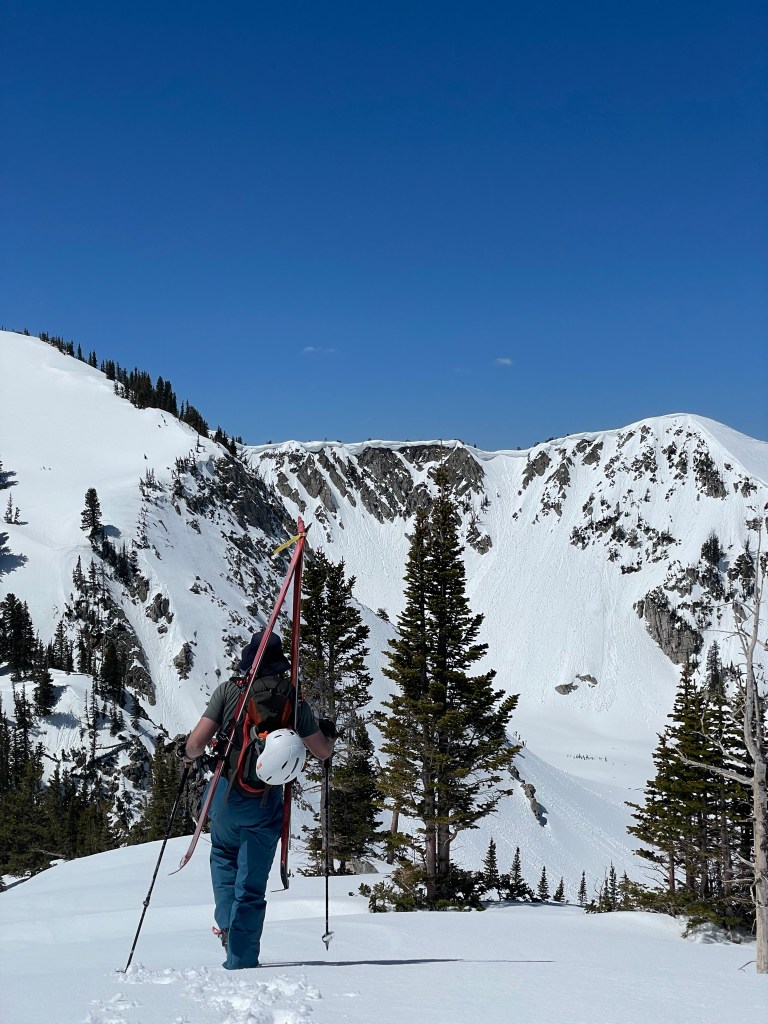
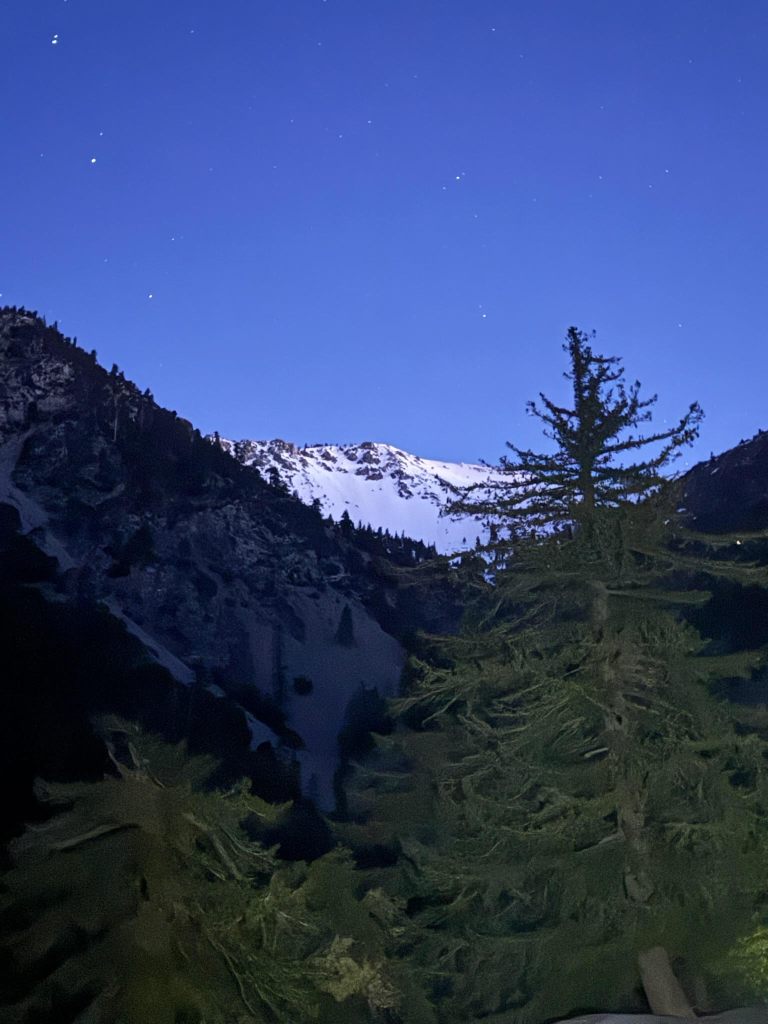
    This past spring was the start of my journey into the winter backcountry. I took an AIARE Level 1 course and toured a few times into simple terrain in the Wasatch range of Utah. However the first real trial run begun with Mt. San Antonio (aka. Mt. Baldy) in the Angeles National Forest of Southern California, a lot closer to my LA homebase. It’s a fairly straightforward hike, starting with a ~3 mile trail of switchbacks from Mt. Blady village to a small ski hut at the base of a headwall 800 vertical feet from the summit. On April 13th, 2024, my roommates and I set out on a ‘scouting mission’ to first summit the peak and then learn more about the potential to ski some of the fantastic couloirs within Baldy’s headwall. Slight wind & rain was predicted on that Saturday morning as we left the Redondo Beach house at 4 o’clock in the morning. The alpine start kept us crossing fingers for a better outlook and as the morning’s first light appeared on the slopes above it was clear that we’d lucked out with pristine clear conditions.

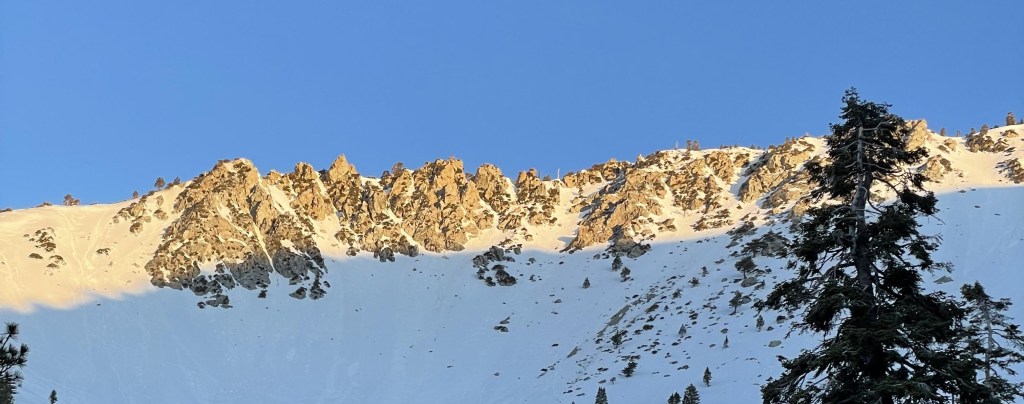
    Mt. Baldy’s headwall at the first sign of light in the morning

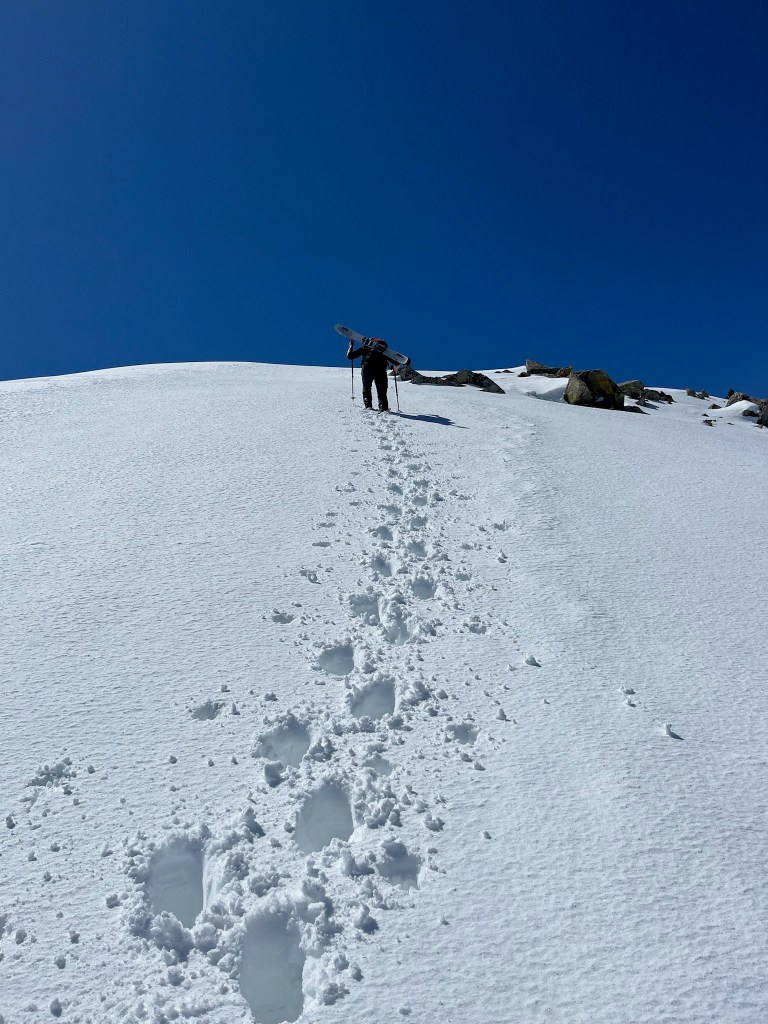
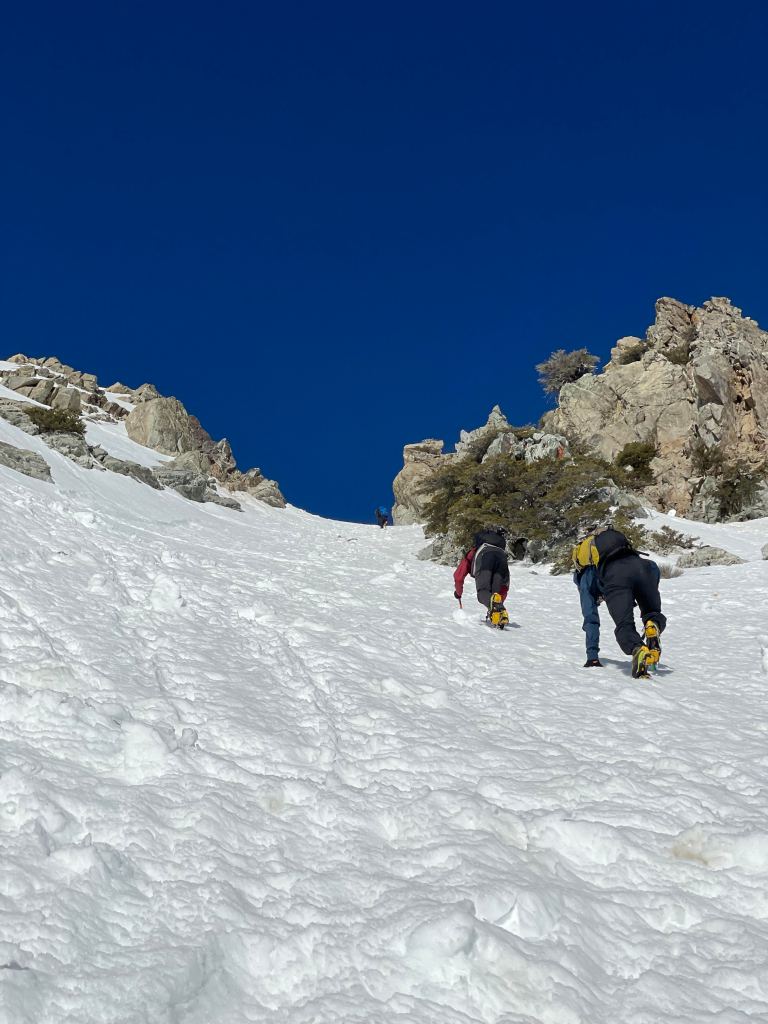
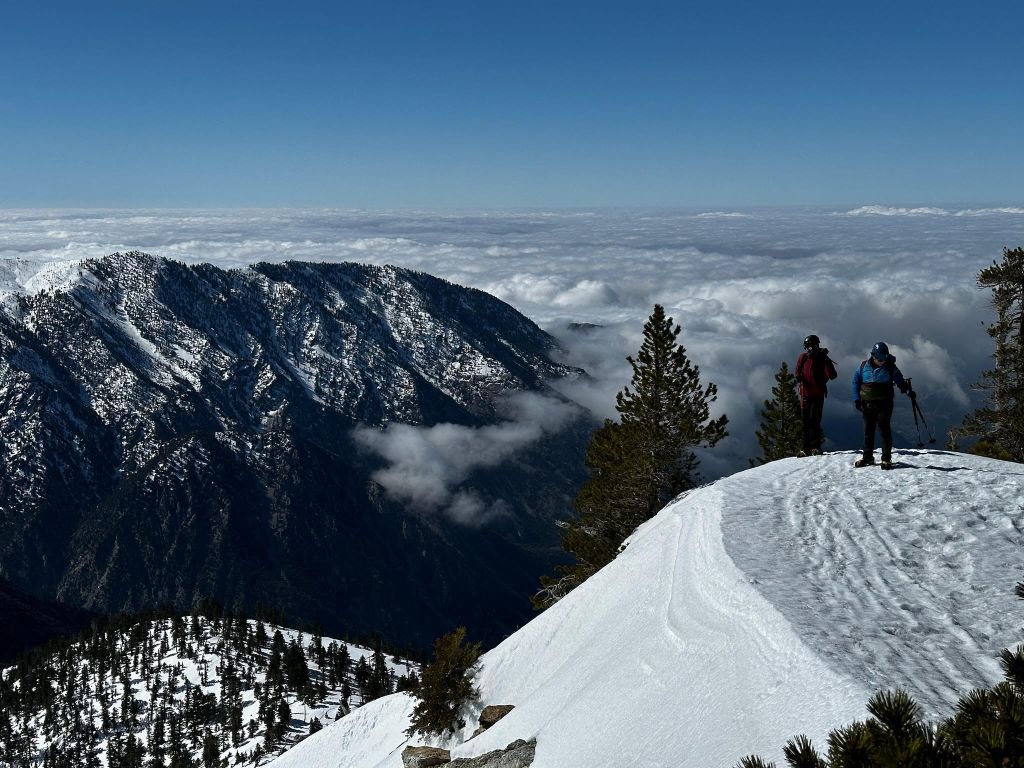
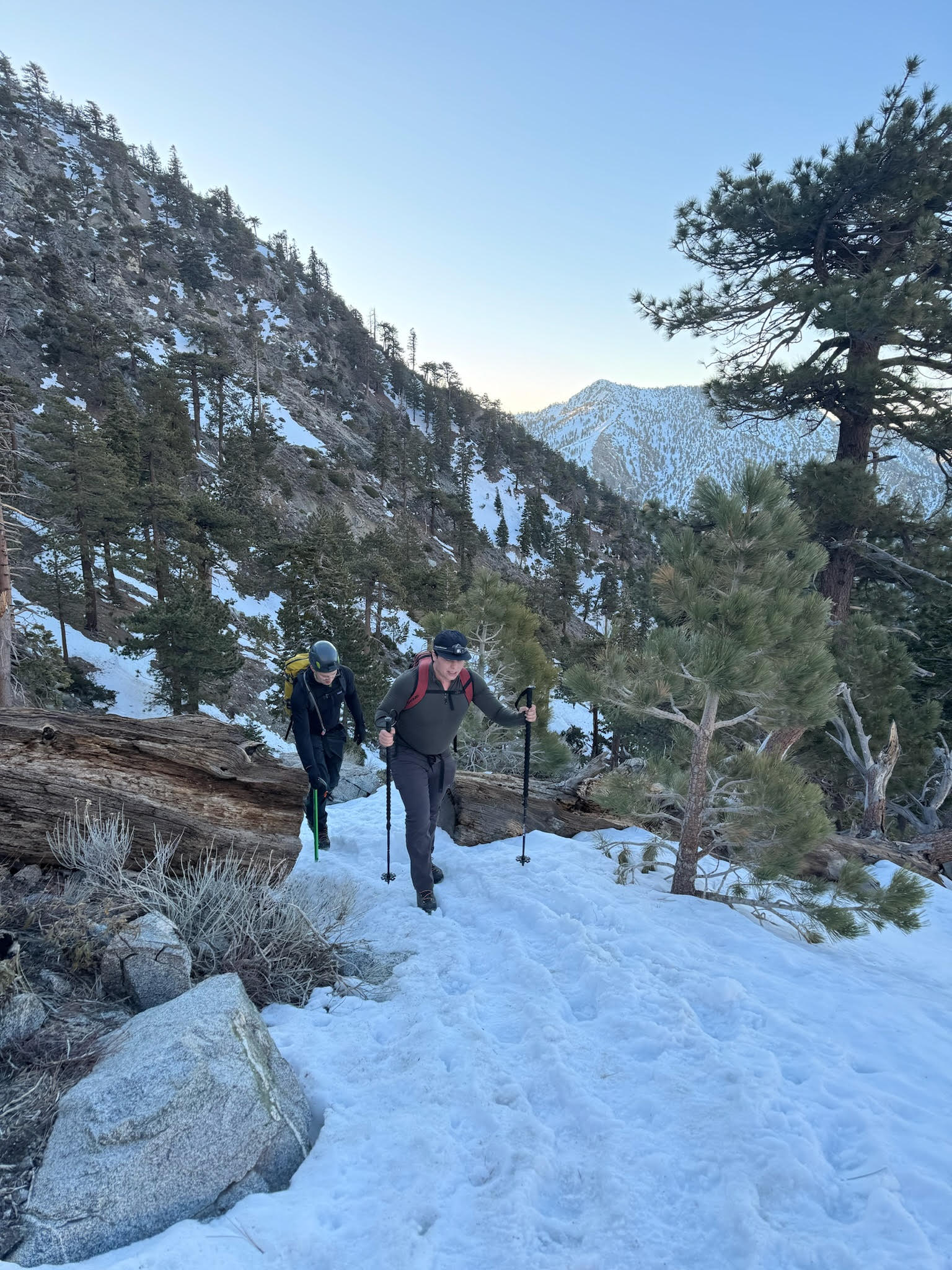
    While we took in the view, I quickly realized I was out of shape for a long approach with a moderately heavy pack for the day. Putting one foot in front of the other, we managed to make it to the ski hut by a quarter past 7. This gave us time to scope out the headwall ascent in more detail as we transitioned into crampons and took out our ice axes for their inaugural use. We eventually chose to climb up “Dosie’s Dare”, the Southmost couloir of the headwall. Slight southwest winds and a few hours of spring warming made for a daunting ascent, as small instances of rockfall plagued the climb. The three of us made sure to avoid the main rockfall trajectory, consistently scan for debris, and remind ourselves to avoid warming for successive attempts. Eventually we made it up the couloir, feeling tired but ready for the remaining few hundred feet to the summit. At this point I was exhausted and making slow steps, but still managed to make it to the peak about a minute or two behind my friends. The view was spectacular and presented a ~270 deg view of a sea of clouds in the valley below. After a brief pause, we glissaded our way down soft wet snow and down to the trailhead by about 1:30 in the afternoon. I was completely wiped out and found myself with a new appreciation for more demanding ascents of the mountaineers I find inspiring. Regardless, the adventure of the day was worth every step and had us itching for a repeat with skis.

    Trevor and Max making their way up
    Myself and Max at the top of the headwall

    Round 2 – Chute Skiing

    Exactly one week later, we set off for a repeat ascent of Mt. Baldy’s headwall. This time Trevor and I packed an alpine ski kit, marking Trevor’s first time in the backcountry on skis and my 4th. Starting off at the trailhead I was nervous for my physical fitness while my pack was probably 15 pounds heavier than our previous journey. But in the week leading up to this hike, I did significantly more preparation in the gym (last time it was close to zero to be fair). Getting to the ski hut took a while, but the views of the San Bernadino valley with a repeat cloud layer inversion were fantastic. Shortly after the first light hit the top of the Baldy headwall and we swiftly made it to the ski hut at around 7:30 in the morning.
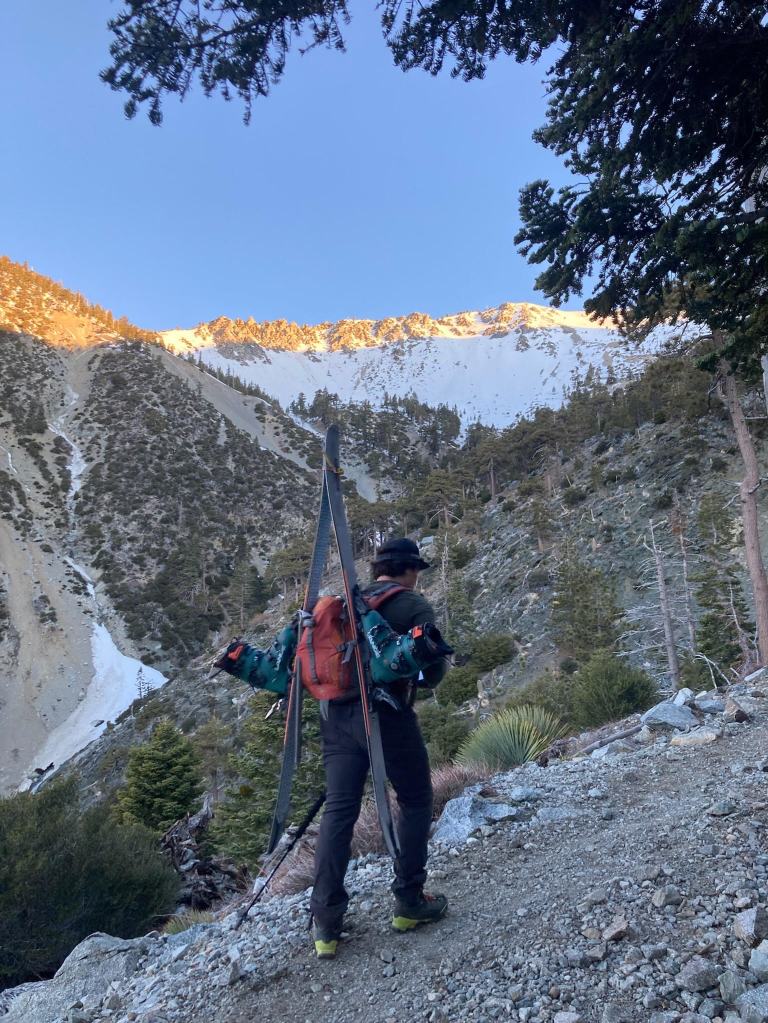
    Making my way up the trail with a view of the headwall chutes above
    A glorious view of the cloud layer below us in San Bernadino

    Matt and Trevor aimed to climb the Girly Man couloir, a narrow and steep classic of the headwall that made the most direct passage to the ridgeline marking our summit for the day. I was the only one in the group to have alpine touring bindings, so I took a stab at skinning up the larger open bowl to the left of the rocky headwall. While making some switchbacks up the slope, I was accompanied by a group of three slowly hiking with crampons and axes. While otherwise unnoteworthy, this was probably a signal I should have been booting along with them. Following some more sketchy kick turns and a near fall, I made my way over to a tree and transitioned into crampons. After another 30 mins and many groups passed, I made my way up to a larger triangular rock on the ridgeline where my group was waiting. Trevor and Matt had successfully climbed the couloir and seemed to have a blast doing so. Looking down the slope was quite intimidating, but it was also not on the table for a ski descent given its rock filled crux.
    Trevor topping out of the Girly Man Couloir, it’s a lot steeper than it looks!

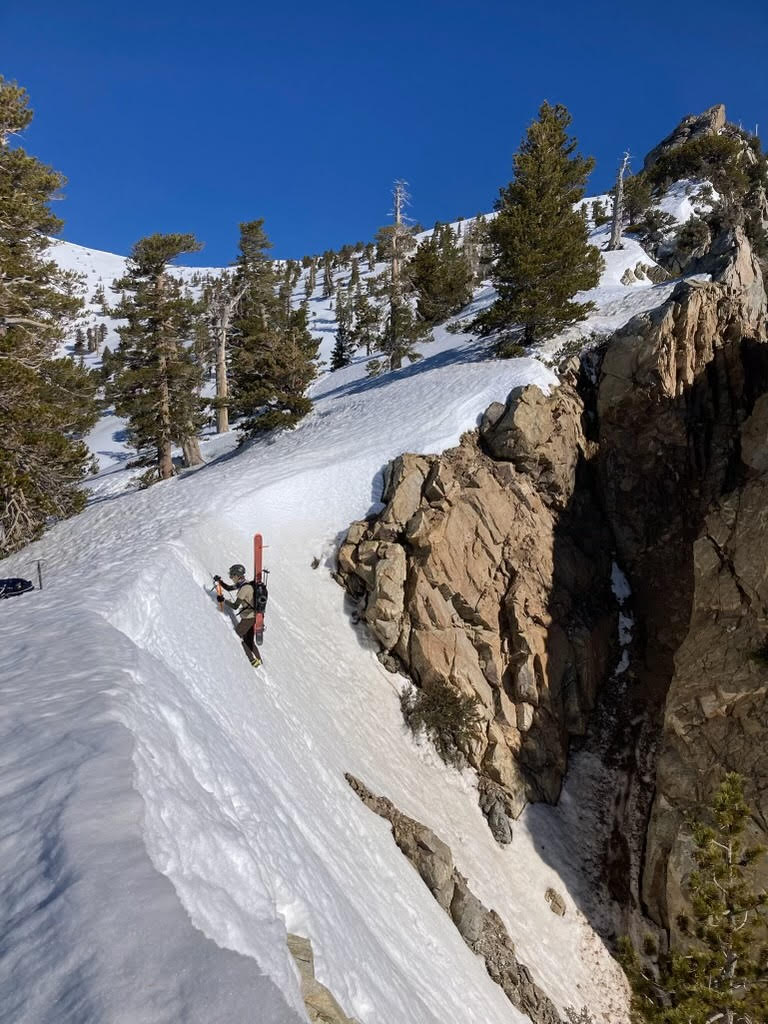
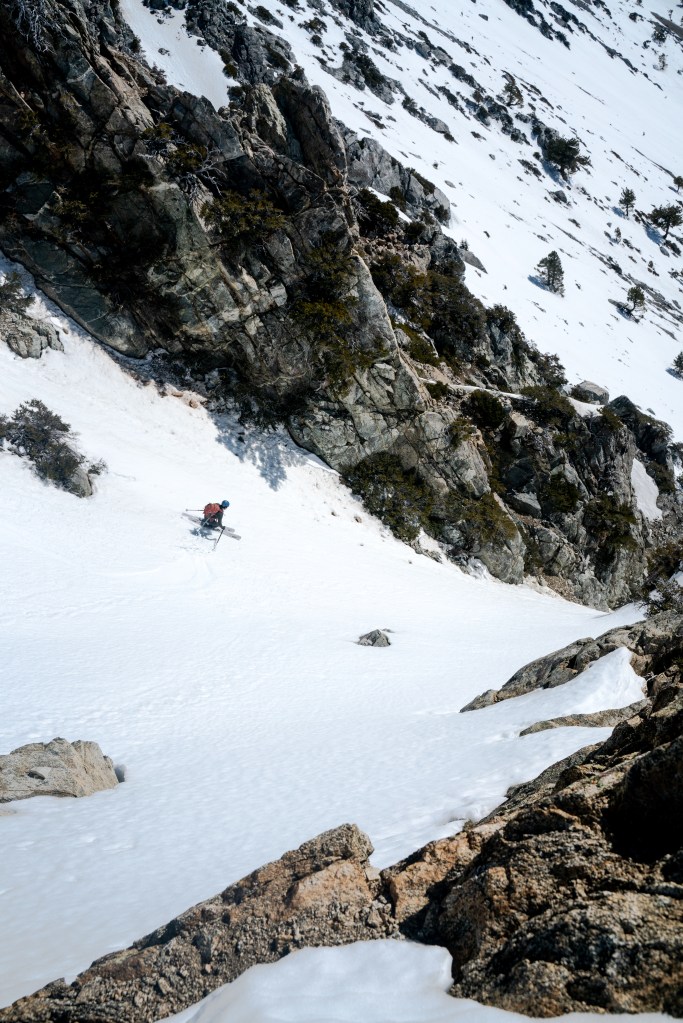
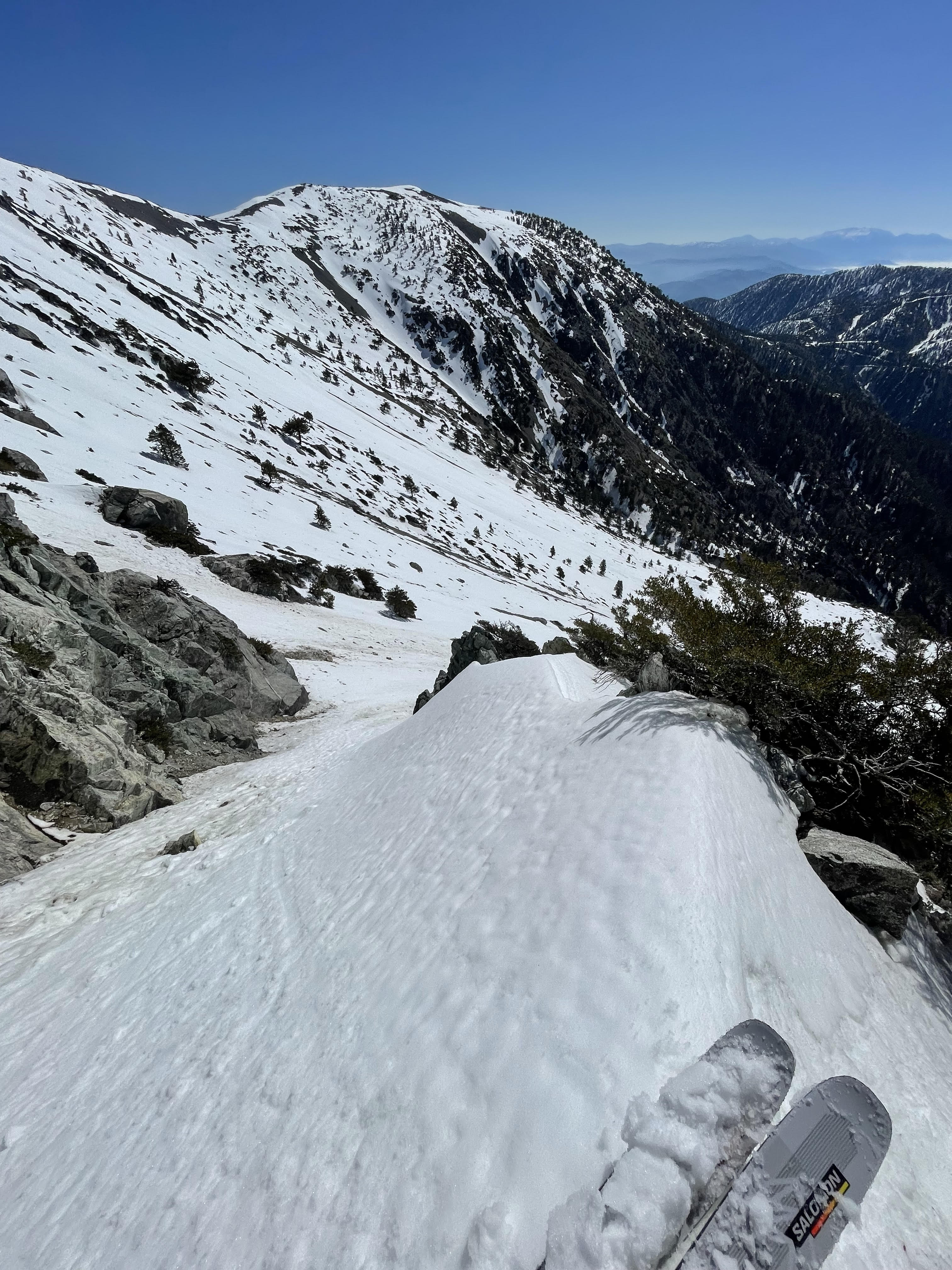
    Following some hydration and calories, we were ready to make our ski descent and I was particularly stoked for it. The chosen line was called the Hourglass Chute (also called the Shit Chute) and was one over from the Girly Man ascended by Matt and Trevor. Ironically, Matt did not pack his snowboard and Trevor was an intermediate skier. While Trevor opted for the more mellow bowl I had partially skinned, I was going solo down the chute. Upon inspection, the upper snowfield was near perfect: prime corn snow, untouched, and a 40 ish degree slope. The first 10 turns were awesome and it was clear this chute was the perfect selection for the day. I was pumped with adrenaline as I approached the crux at the bottom of the snowfield and the center of the hourglass. At this point, the lactic acid in my legs from the vertical experienced throughout the day had fully caught up to me. Not wanting to risk any falls, I made a few careful hop turns and side steps through the narrow and steep choke. Soon after I was nested on a safe perch immediately after and decided to take a brief break. After that point was a short runout and right turn into the longer bowl apron. Linking a few turns at a time, I made it down the slope feeling sore but full of excitement. The only hiccup was some rockfall behind me that motivated my quick descent to a break point in the rocks below. While I waited for Matt and Trevor, I realized that I skipped my meeting spot (a small bush at the chute exit) and caused them a brief panic before we finally met up at the ski hut. Trevor had his own descent adventure while navigating his first backcountry ski down the Baldy bowl. He took a single tumble, but otherwise made some good turns visible from Matt & I at the exit. Matt on the other hand repeated our glissading adventure from the week prior.

    Myself on the hourglass chute descent, April 20th, 2024

    The ski hut post descent was a great time for a break and chat with other skiers as our stoke was still high from the riskiest part of the day. We packed up after another refuel and headed down the ~2.5 mile descent feeling great but sore. The car felt incredibly far away and I was particularly slow moving and tired as I made the final few steps. Despite the soreness, I was incredible happy with our two part quest to ski the headwall. Both ascents felt like exactly the right difficulty to test our endurance and technical skills while navigating the ski mountaineering landscape. Onto the next trip!

    Some bonus footage!