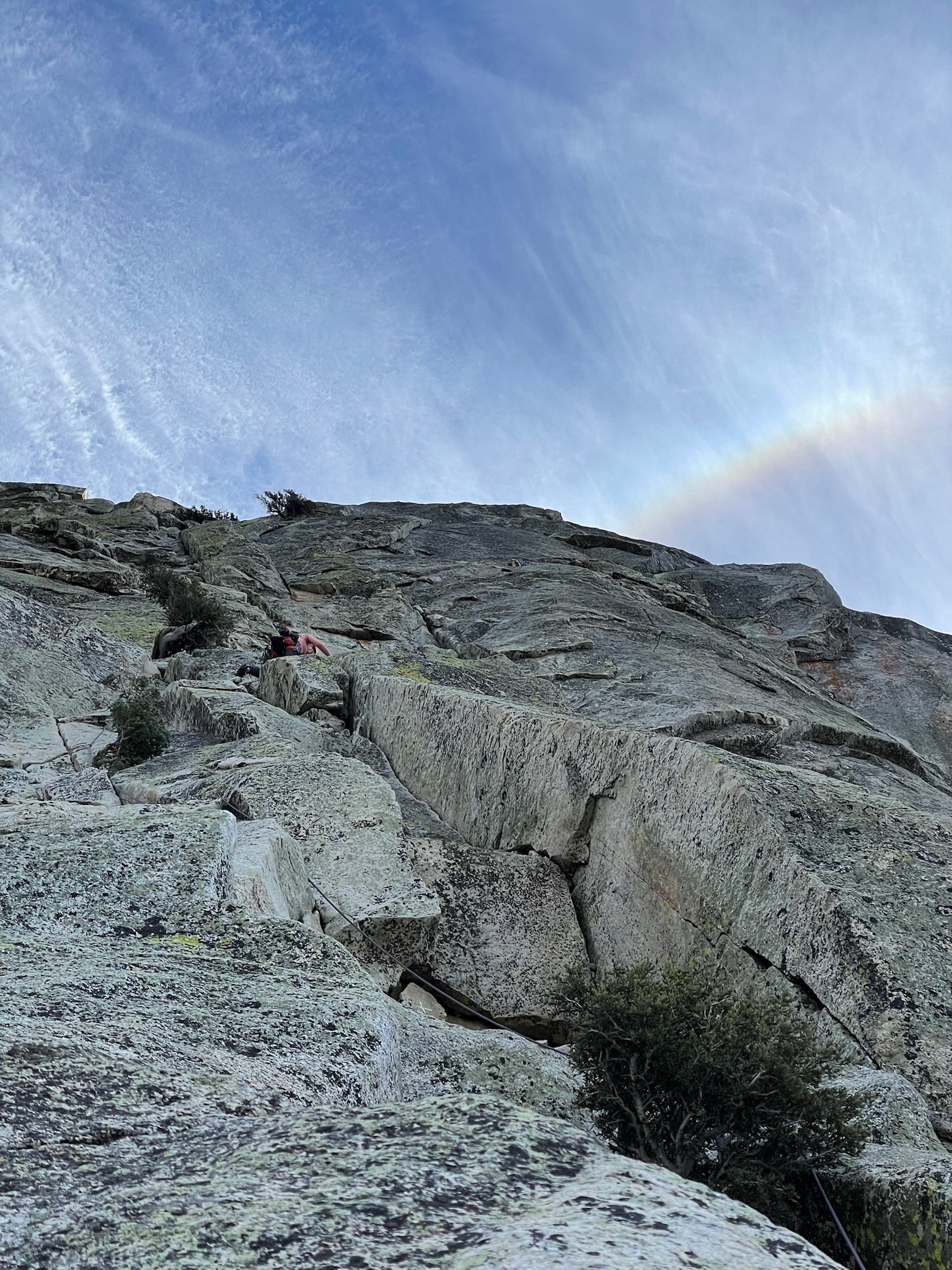
After some initial success with multipitch climbing, Trevor and I set out to get more practice out in Tahquitz. The best part of this crag is its abundant and high quality moderate routes – and by moderate I really mean the easiest it gets. As true beginners we set out on trying to climb the remaining two routes rated 5.4, starting with White Maiden’s Walkway. This was the benchmark 5.1 in the original list of climbing grades for Tahquitz and navigated its way through the easiest path up the center (Maiden) buttress of the spire. Although it was rated 5.4 it was a step up from our first climb on the Trough, which was shorter and technically easier. Plus WMW had a psychological crux on pitch 4 – an exposed section called the ‘doubtful corner’ which required a committing step over to a ledge without any great handholds. Little did we know at the time the real crux would be route finding along the ~800 ft buttress, which had plenty of good looking sections that climbed much harder than 5.4. Despite this, we both thought this was a great next objective and were pumped to make it back to Tahquitz for our third multipitch climb.
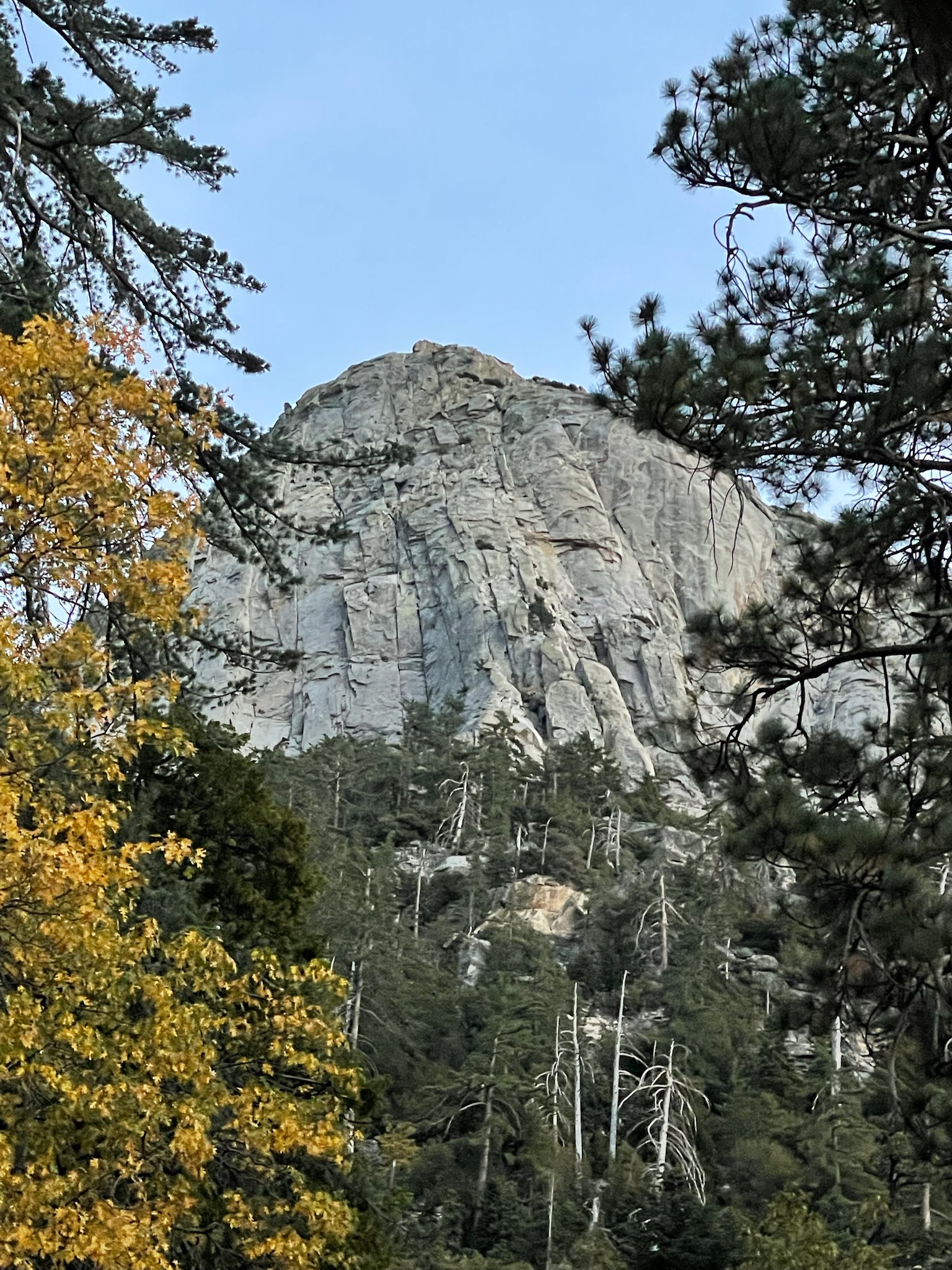
On the drive over, Trevor and I scrubbed all beta that we could on WMW through mountain project, the local guidebook, trip reports, and videos online. Despite there being a ton of information, there was no clear consensus on where this climb even started. Of the topo’s listed in mountain project, two of them showed different entrances and one was described as having a couple 5.6 moves. But soon we were at the trailhead and figured it would be more clear at the base of the rock. The trail felt quicker this time, even though its always pretty steep and long. After lunch rock, we traversed over to the Maiden Buttress and saw another group at what looked like the start of the route. We were pretty certain this was the 5.6 entrance and heard that the group in front of us were aiming to take a slightly more direct variation of WMW rated at 5.7. We figured it would be nice to have a group to follow for the most part and got setup at the base. Trevor began the first block, with the idea that I would take over the lead for pitches 3&4 (the cruxes) while Trevor got some practice on 1&2. Despite the first pitch overall being super easy climbing, the initial 5.6 moves were pretty difficult and committing. There were no real handholds and two small foot placements high up requiring an awkward mantle right off the deck. Trevor made it past this section and sped up to the first ledge pretty quickly – a great lead.
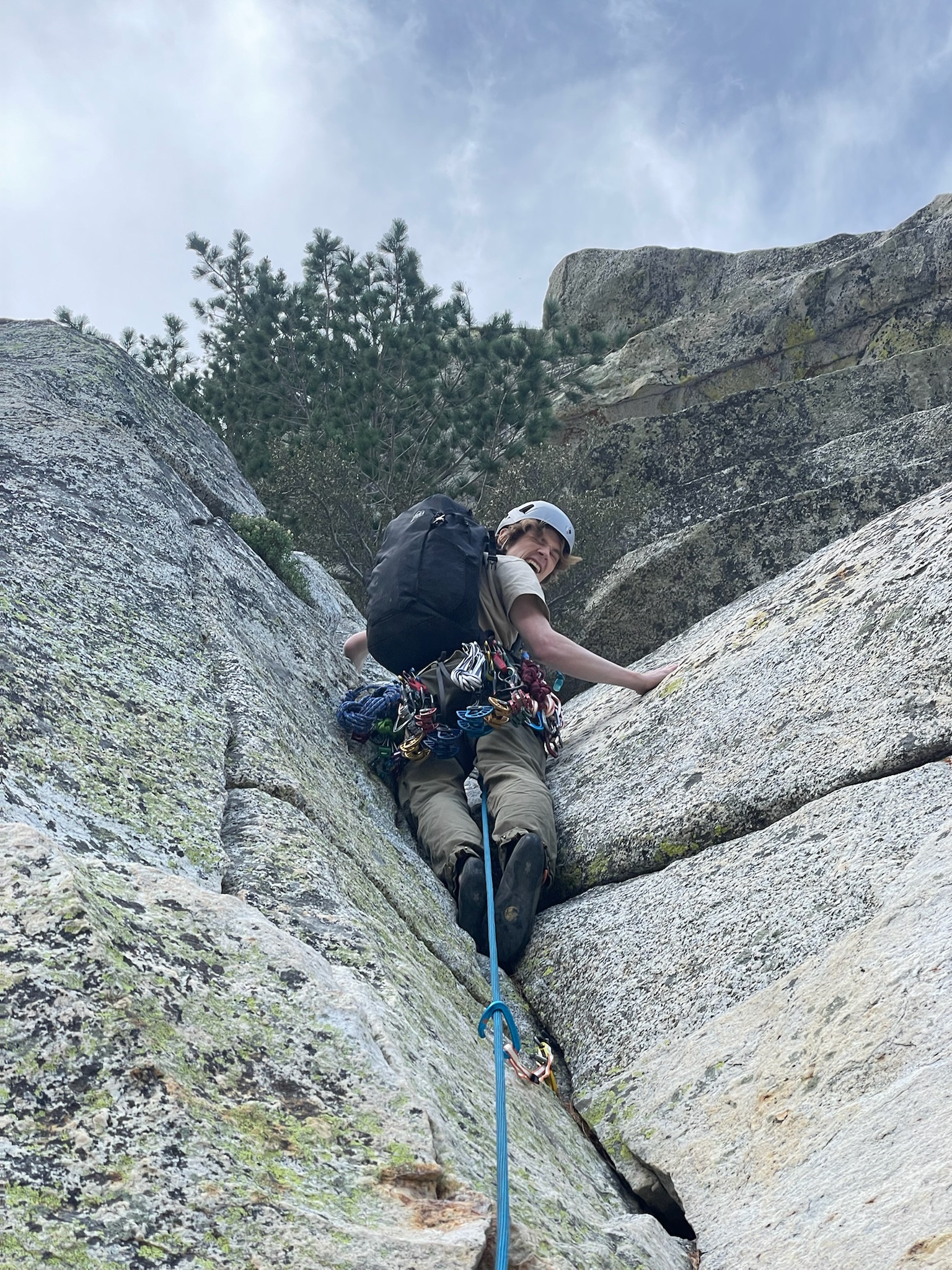
Next up was pitch 2, a similarly moderate pitch with one step over section that seemed a bit cruxy from the topo. Trevor began onwards and quickly made it out of my sight. But after this point things got a bit tricky and I began to wait it out at the belay. Soon after another group joined us, a couple with a newer follower who wound up being great belay companions. While we waited there, it was clear that there were some route finding issues ahead. Trevor was not confident where the step over was and became pretty intimidated by the more direct 5.7 route that seemed like the more obvious path ahead. To add to this, a single cam placed at the start at the route combined with the step over lead to a high amount of rope drag. A little over an hour passed and Trevor made it to the end of pitch 2 at another big rock ledge. At this point I was getting pretty nervous for the remaining leads and did a pretty poor job at following the line. When I finally got to the belay, I was not feeling good about the next pitch and I knew Trevor got a bit spooked from the previous lead. Given the time of day, uncertainty in the route, and general bad vibes, I made the call to bail for real and come back another time. Luckily for us, the group behind us also decided to bail (hopefully not from our influence) and had left a great bail anchor at pitch 1. We rapped down and only had one issue with ropes getting caught in bushes that unfortunately required some solo-ing to retrieve. Despite the failed effort, I felt really good about our decisions that day (sans the rope retrieval). It was important to me to recognize when to bail and to follow through with bad feelings in consequential terrain. Our ego’s took a hit not finishing a truly beginner route, but who cares? Really it just gave us motivation to get it the next time and saved us from a long day or potential epic.
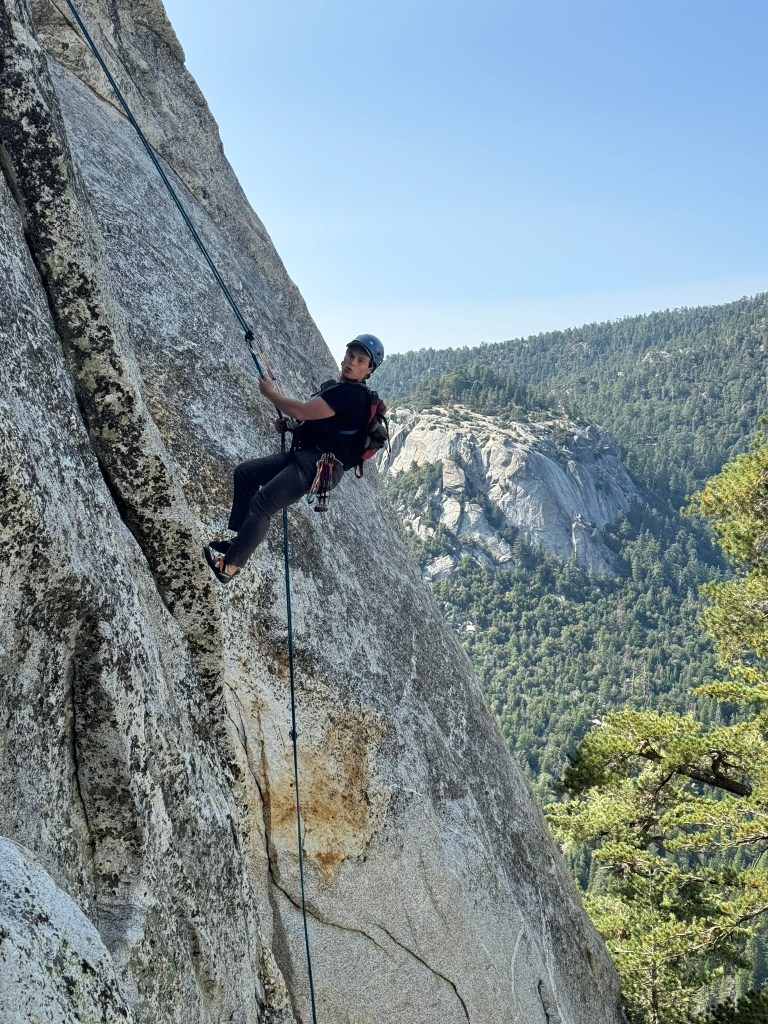
And before we knew it, Trevor and I were back at Tahquitz a few months later. This time we both did a lot more research on route finding and even drew a notebook topo to help memorize the line. I had been climbing a lot more too and felt generally more confident that we could pull it off this go around. We arrived early at the trailhead after buying some small cams at the local shop and blitzed up the approach. We planned the same lead block strategy and Trevor sped back up pitch 1 to the belay station. When we arrived, we let another group pass ahead of us, figuring that it would be nice to follow for the remaining pitches and ensure we had the best chance at good route finding. Despite loosing a bit of time while this group passed, pitch 2 felt way better than before. I found the step over and it felt super clean all the way up to the belay. The group ahead of us lead on to pitch 3, and we hung out for a little bit on the large rock platform. I felt ready for the next two steeper pitches, but was still pretty nervous for what was ahead.
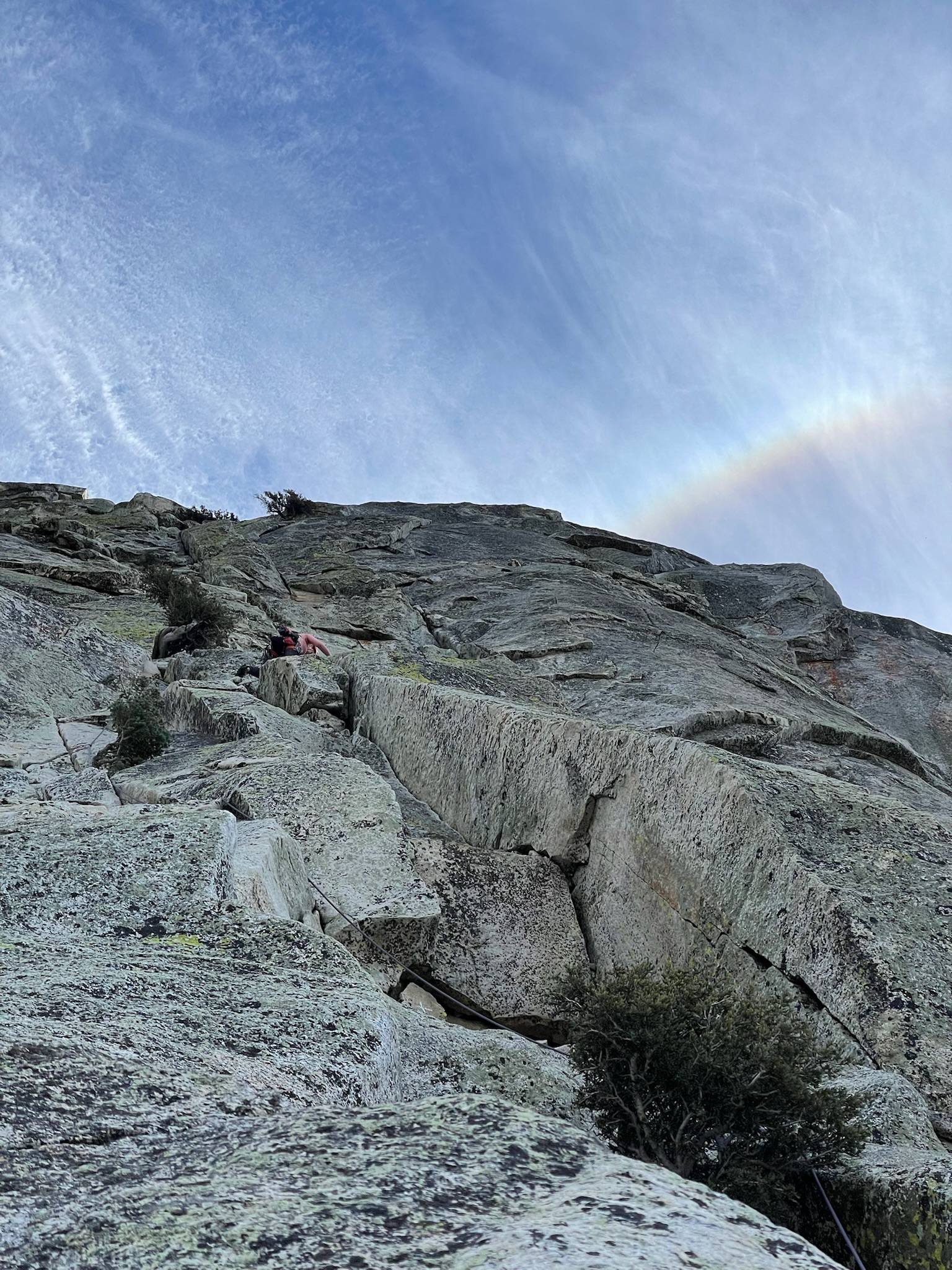
Turns out I had nothing to worry about, pitch 3 was spectacular. There were great placements for gear and good handholds despite a relatively steep slope and way more exposure than before. Near the end there was a mini exposed corner with a hidden glory jug that made for a great finish. The belay at the top was bushy and crowded with the next group, but I was glad to get a breather before the doubtful corner looming on pitch 4. Trevor sped up and after a few minutes of waiting we were ready to rip again. The pitch started off with a protected chimney that progressively became narrower until it ended at a tiny ledge. After this point, there was a single crack for a blue C4 cam and no more hand holds. Instead the ledge rounded a corner and required an exposed step over to another large ledge incut about 2 feet into the slope. The step over itself looms over the base of the route about 300 feet below. I stood over the edge patentiently and calmed myself down. Next I carefully placed my right foot at the left most point of the ledge, allowing my left foot to slowly round the corner and find a smear on the wall across. There were no real handholds, so I carefully lowered by left hand until I had one or two fingers at the next ledge. As soon as I leaned over enough to feel secure I committed to the move and it went as smooth as it could have. I pulled myself up past a tree on the same ledge and took a huge sigh of relief. Standing there was one of the coolest moments I’ve had climbing. It was a moment of pure flow where I met and executed a challenge I felt matched my ability at the time. I looked down at the exposure and the view of San Jacinto ahead feeling on top of the world and pumped to finish the rest of the climb. The last bit of pitch 4 was effecitvely fourth class and a good fun. Trevor followed and made it through the corner with no problems – having used the tree on the ledge for some additional support.
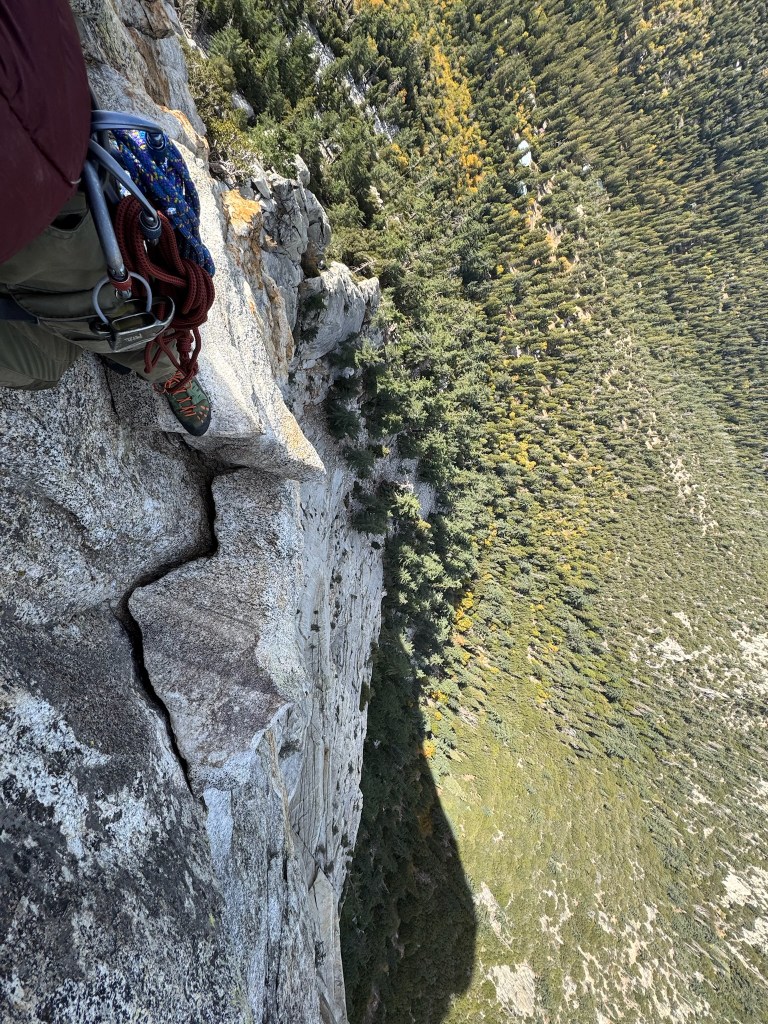
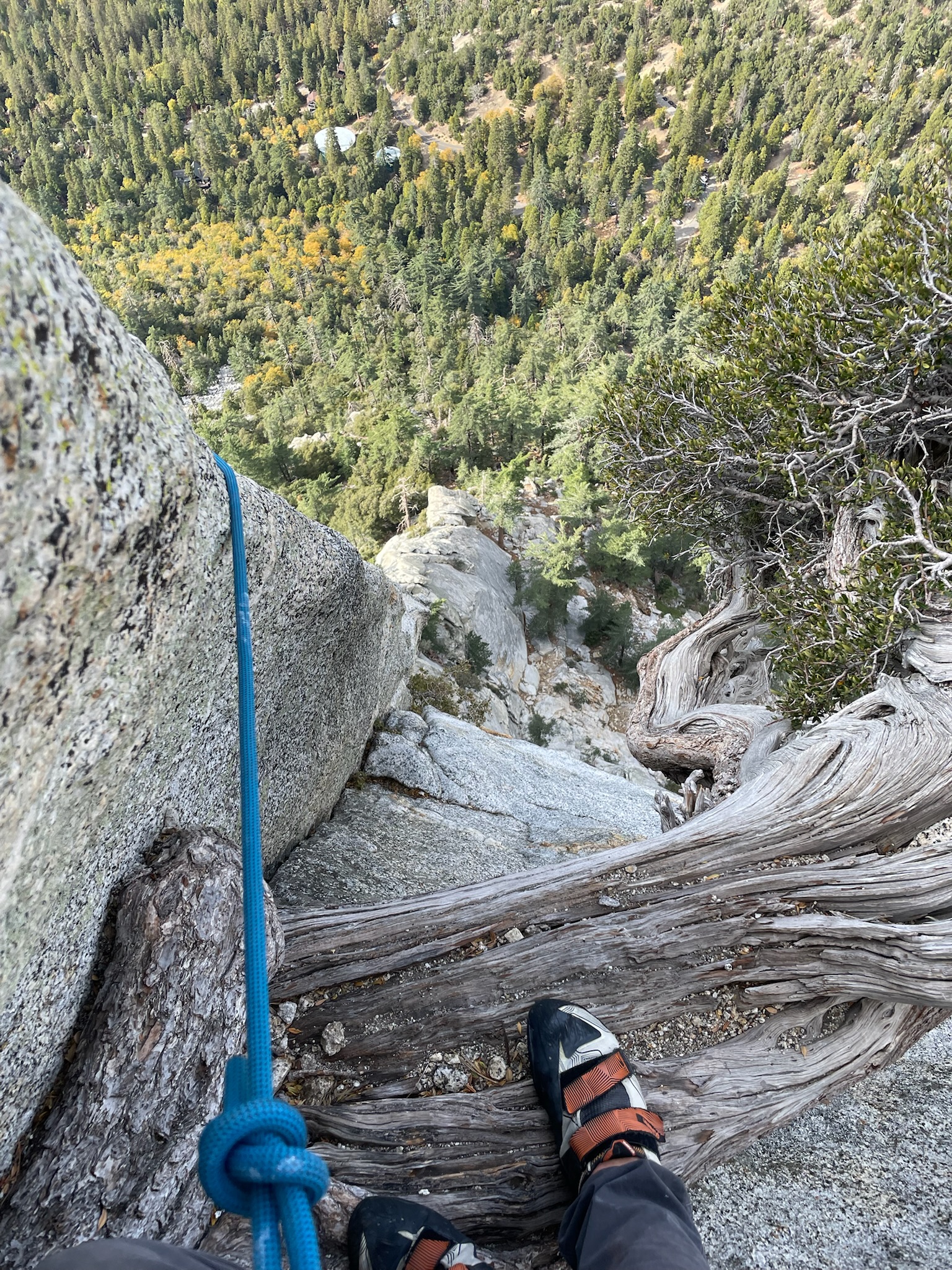
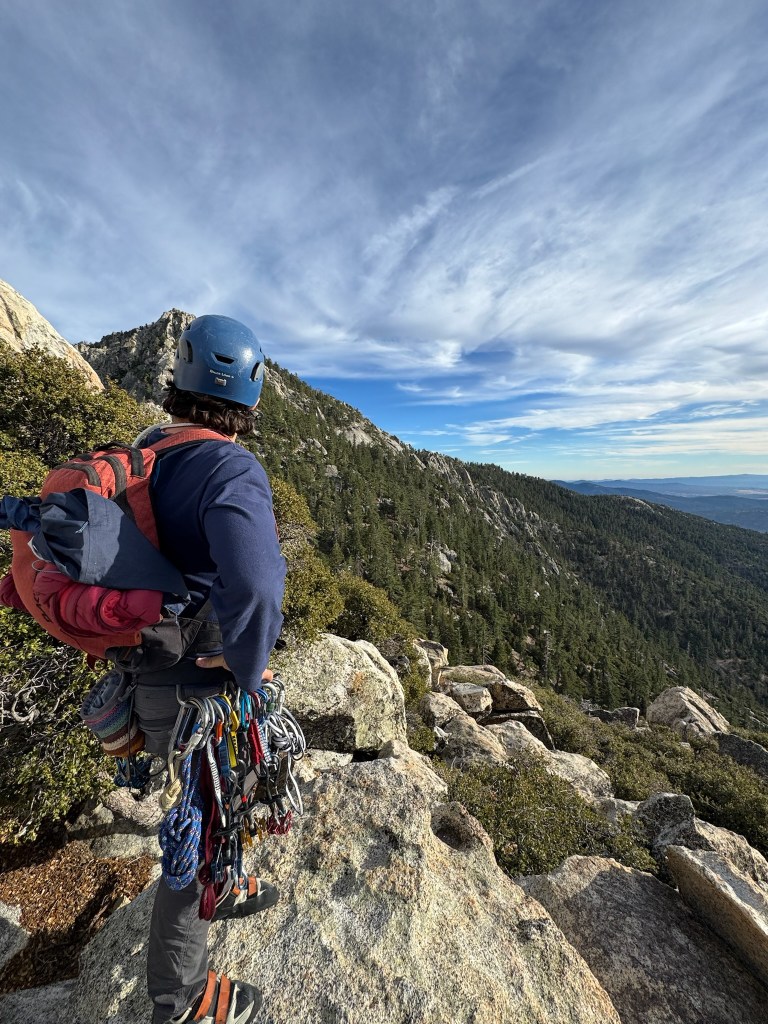
I lead pitch 5 and followed closely to the group ahead of us. Most of the route was super easy except for the final ledge which traversed to the right of the summit. I chose to wrap around the ledges and up some juggy handholds, which felt easy but had poor pro and high exposure. I managed to place a small cam anyway and mantled up the final ledge and onto some low angled slopes to the finish. At this point I had expected one more pitch and was surpised we had managed to link some of the last few pitches together. This led to a great surpise for Trevor as he followed up the last pitch and up the the belay. I was incredibly pysched to had made it to the top given our previous bail and the clear step up in difficulty for this route. Not only that, but I had felt our climb was the smoothest we had done yet on both ends. Trevor’s P1&2 leads were way faster than previously and I did not feel overly uncomfortable at any point along the climb. The doubtful corner is a super cool lead and the whole route is definitely a classic moderate of the crag. The way down on the friction pitch went smoothy and we spent the whole time discussing where and how much pizza we were about to consume. Overall this experience made me much more confident in progressing in traditional multipitch climbing and stoked to continue progressing with more climbing in the future.

 Max's Blog