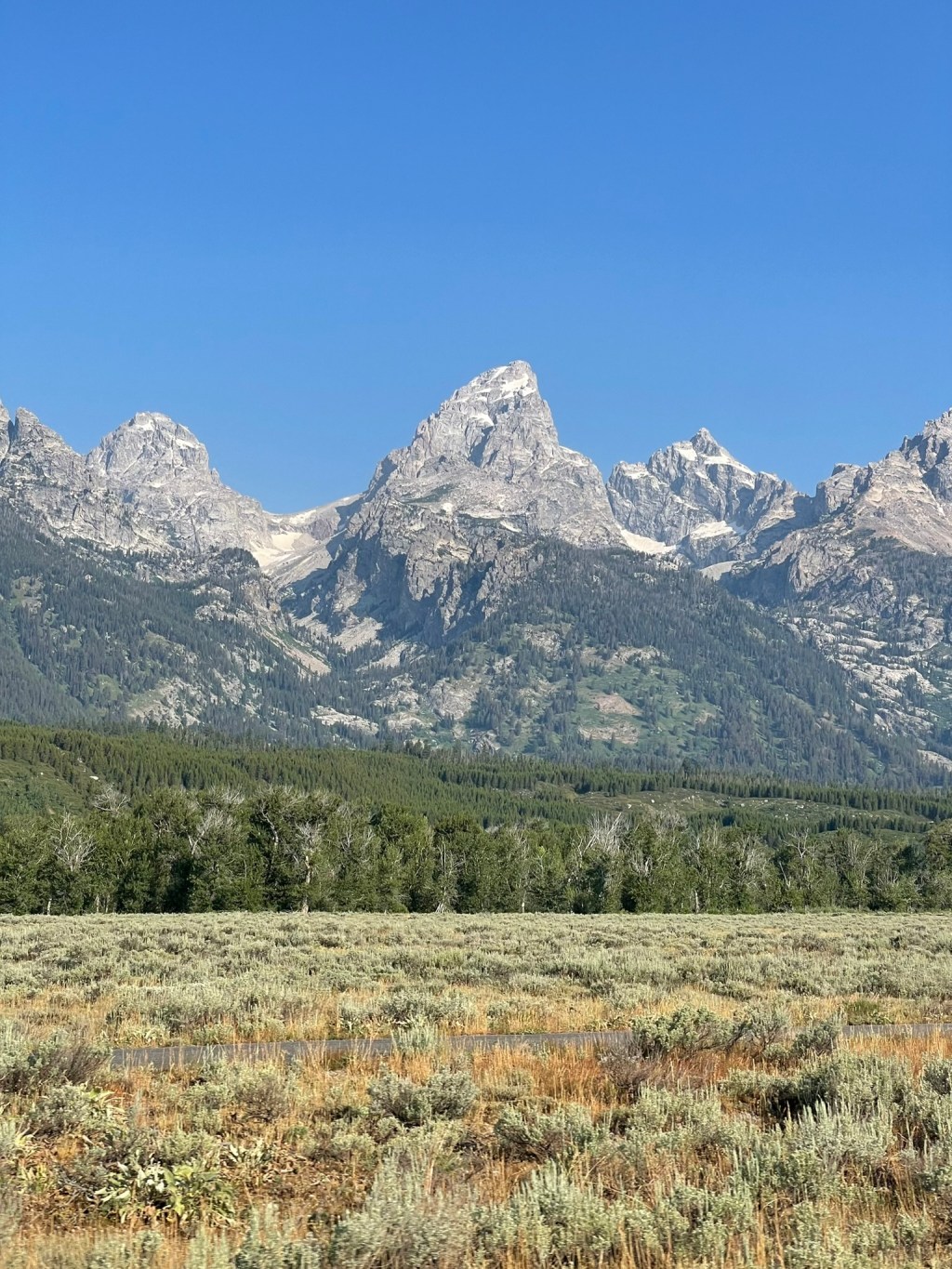
The inspiration for the Grand Teton is a funny story in itself. Trevor brought it up first after some mountaineering type trips in Colorado and Mt. Baldy, but before then I had no idea what climbing it would involve. I also had no idea what outdoor climbing in general involved outside of some top roping here and there. But inspiration is a funny thing, having such a clear vision of a goal yet having no idea what is involved in its pursuit made us pretty damn motivated to try and figure it out. And to start I pulled up Mountain Project for probably the first time in my life. I had climbed a few times before in a gym and outside, but never did much above 5.10 ish top roping or low grade boulders. The easiest way up the Grand was the Owen Spalding route, rated at 5.4 – which seemed incredibly easy at a first glance. It wasn’t until I started really researching that I began to understand the reality of traditional climbing ethics and that 3000 ft of exposure in bad weather can be pretty terrifying. But here we were, two kids with a spike in motivation and maybe 6 months before the timing was right. In that time, all we had to do was learn to lead climb, learn to make anchors and place gear, get in shape, and then go for it!
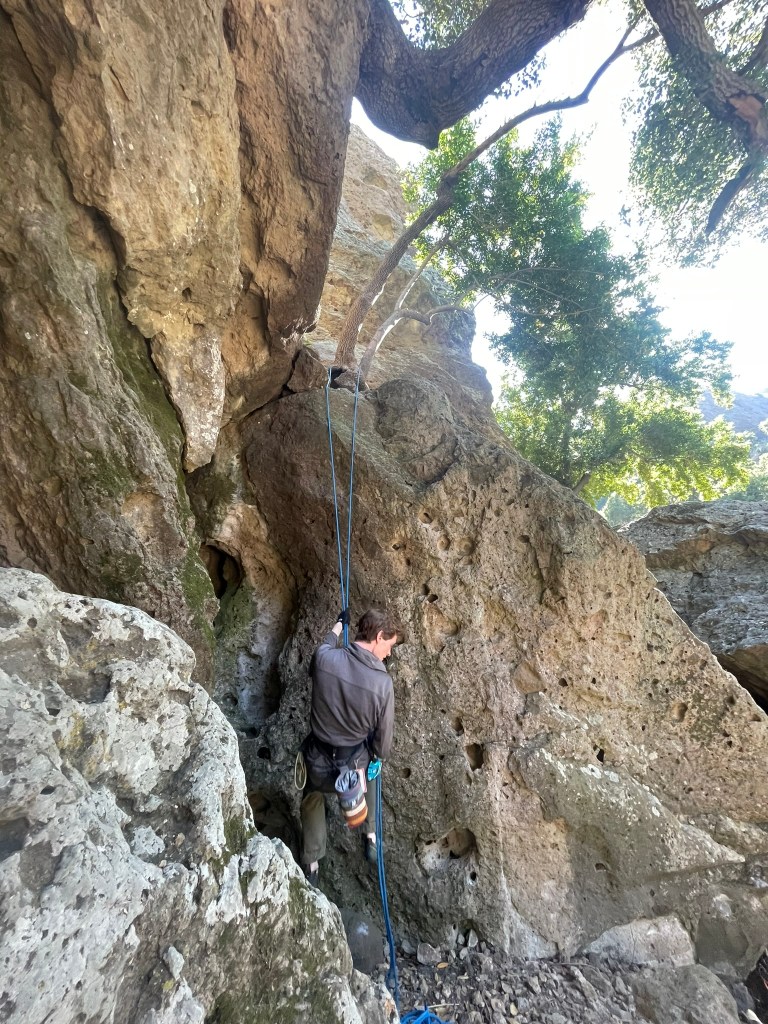
Trevor was the initiator of the idea to climb the grand and had booked a week off to travel in the Tetons for late July. At the time it was still early spring and we mapped out some intermediate milestones necessary to build up technical skills and experience. A majority of the climbing preparation is described within the “SoCal Climbing” post from earlier this year (https://maxhalk.com/2025/05/25/how-to-not-fall-socal-climbing/). But the TL;DR is that a lot of preparation went into this objective. The general strategy was to learn technical skills in a comfortable setting and then take our skills outside to practice. Doing this helped instill confidence that we could tackle similarly difficult technical terrain but with weather, exposure, and pressure in the mix. First we practiced some strenuous and exposed terrain first like Mt. San Antonio’s headwall chutes and Mt. Hood’s old chute / south headwall. Then we moved onto a lead climbing course at our local gym along with some outdoor practice at Malibu Creek for our first sport climbing experience. And finally we took a two day anchor, rescue, and trad gear placement course in Stoney point ahead of our first multipitch lead at Tahquitz. We paced each activity out over several weekends and tried to get reps in the climbing gym during the weekdays. I personally was still feeling the nerves about my overall climbing ability and ropes skills, but slowly felt better through a few months of ~2-3 climbing sessions a week. Then after our first multipitch climbing experience went well, I knew we at least stood a solid chance at making it to the summit. The nerves would still linger, but I could trust we had practiced the right skills and could lean on our experience when it was our time to shine.
When we first committed to climbing the Grand in the early spring of 2024, July seemed plenty far away to avoid thinking about it in earnest. But before I knew it, I was on a flight to Jackson and glancing at its striking summit within the broader Cathedral group. There is something special about the surrounding area – the mountains rise dramatically from its peaceful valley and the alpine environment is defined by massive and sharp granite peaks. People come from all across the continent to climb and ski in the Grand Teton National Park, where its namesake peak stands as a right of passage in many ways for the local community. While descending the Ford-Stettner couloir or completing the ‘picnic’ is probably out of my league for the next couple years, these traditions are part of the inspiration for making the journey out to climb this mountain and acquiring the skills necessary for an attempt in good style. After landing mid-week, I met Trevor and his dad after they had made it back from hiking in Death Canyon. We would stay in the Jackson Hole resort hostel for the next couple days, giving us a ~2 day window to camp at the Grand Teton’s lower saddle and make some summit attempts. For now we ate in town, visited the local mountaineering shop for last minute gear, and meticulously researched beta on the route (mostly through https://wyomingwhiskey.blogspot.com/). The next morning we would wake up and drive to the trailhead, starting our journey towards our basecamp.
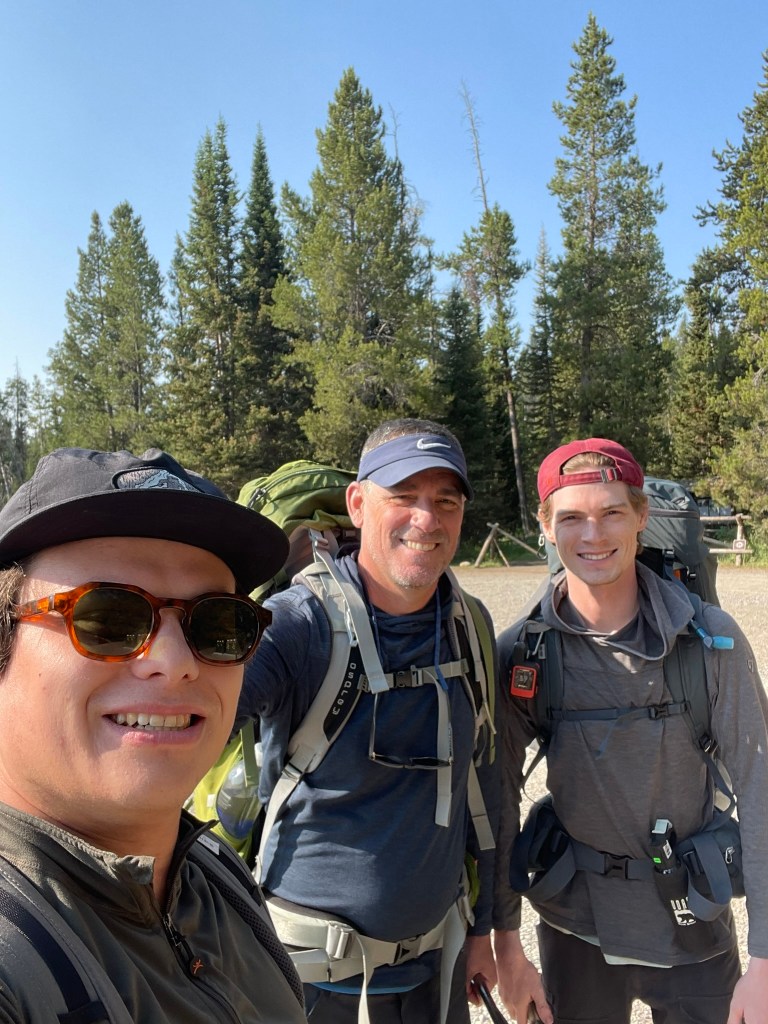
Trevor, his dad, and myself arrived at the Lupine Meadows Trailhead around 9am and were gifted with some beautiful weather. Our packs were heavy and filled with overnight gear, a rack & a half of gear, and a 60 m rope. The first ~2.5 miles of the trail felt smooth as we navigated a well maintained path and several switchbacks into Garnett Canyon. As soon as we rounded the corner into the canyon we got our first few of the huge granite walls cut by glaciers which loomed below the Grand’s north valley. Below us were a handful of lakes that accompanied the larger Jackson valley and made for a fantastic viewpoint. Not long after we made it to the first milestone of the hike: the platforms campsite. Here was the start of the alpine meadows of Garnett canyon and where Trevor’s dad would stay the night. We took a quick lunch and took in the views before our journey continued up the bolder fields ahead. We also were able to fill up completely on water from the river splitting through the canyon, a huge perk of the trip that would continue until our camp at the lower saddle. Trevor’s dad stayed back at this campsite where he would wait for us to get back from the summit and give us some peace of mind that help was close if we needed it. Ahead of us was still about 2500 ft of elevation gain across two rock bands before our campsite. We started off again and were immediately met with a beautiful alpine meadow perched right below the middle teton’s imposing east face. In all directions were huge granite walls carved by extinct glaciers that once inhabited this canyon. Soon we found ourselves on a slog of steep switchbacks which lined these walls ahead of us. The trail quickly became less and less friendly as we started to hop over large moraine fields and up looser talus slopes between sections of trail. Once we made it over the first rock band, the landscape changed dramatically into a seemly barron wasteland of rock and ice. It was incredible to witness and soon enough we could just make out the Grand Teton’s massive exum ridge as we passed to the north fork of Garnett Canyon proper.
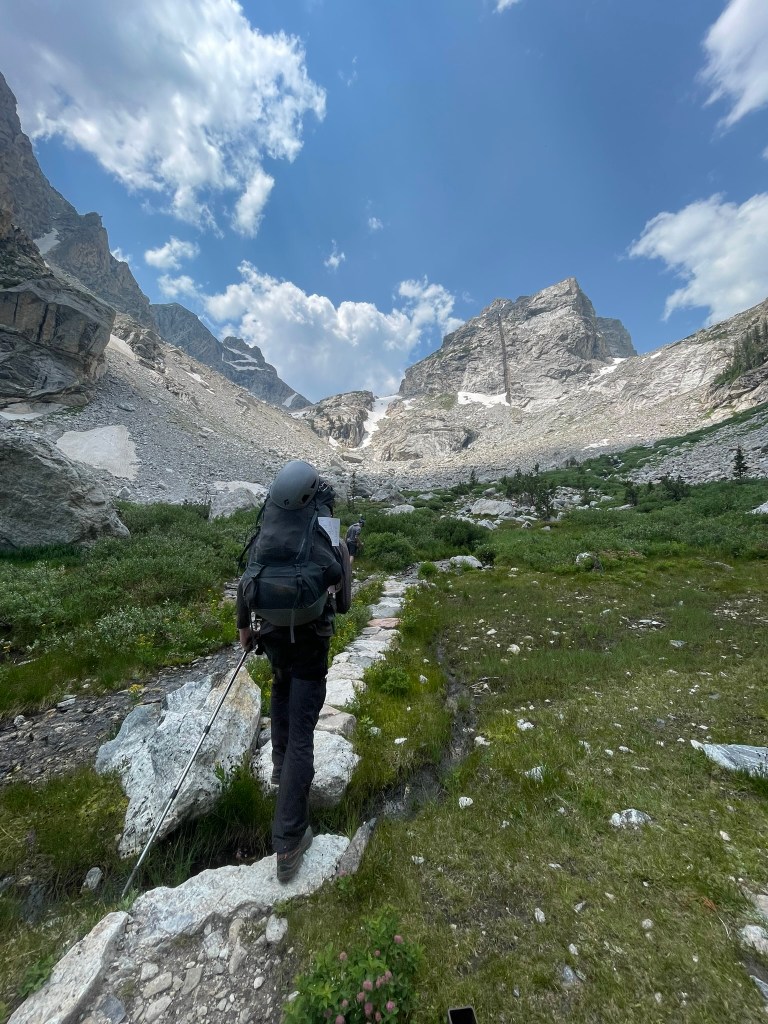
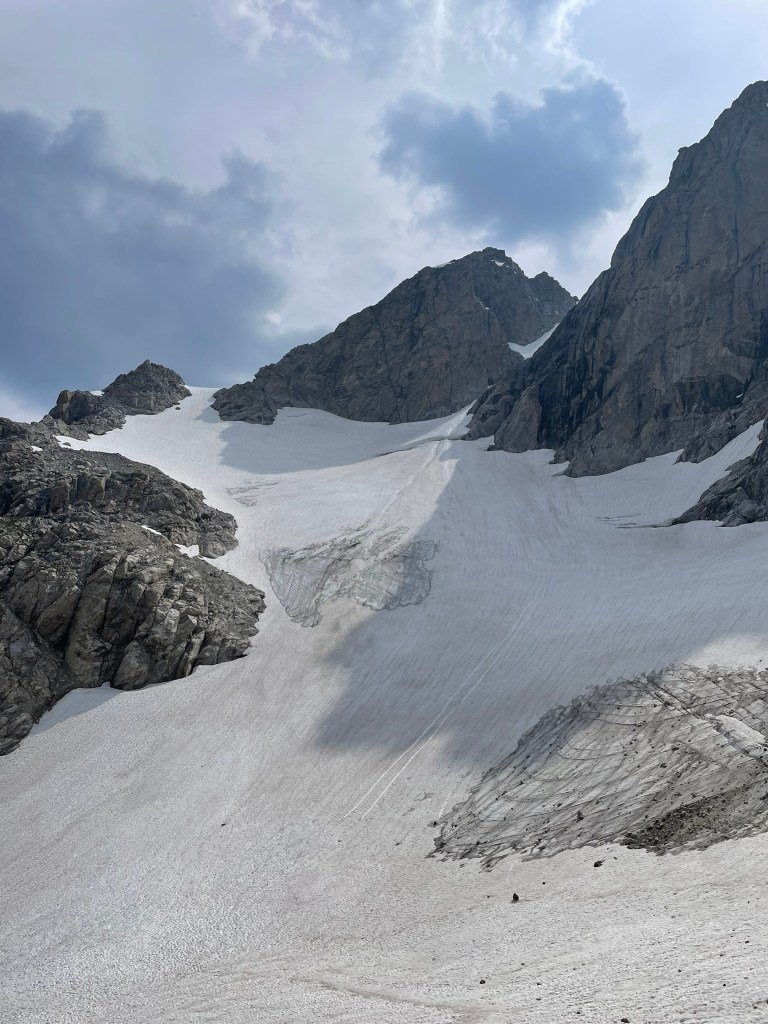
The last stretch of trail before we arrived at the lower saddle for camp was the 2nd rock band. It was a similar slog of talus and switchbacks to the first, but also had a section of steeper rock forming a headwall. Luckily there was a maintained fixed rope, which helped us haul our heavy overnight packs without fear of soloing or pulling out our technical gear. At this point I was getting pretty tired, but knew we were making great pace for setting up camp in the light and heading to bed early. When we arrived, we were greeted with many other groups setting up camp across the massive saddle between the Middle and Grand Teton. There was a large and semi permanent tent at the top of the saddle and occupied by a fairly large guide group. Nextdoor was a small wooden outhouse with one of the best toilet views you could ask for: the entire western drainage of the Teton range. Our campsite was shielded by a massive boulder and sat closer to the eastern side of the saddle. Trevor and I quickly put up our tent and made some camp meals before sun set. I had saved the wyoming whiskey webpage for beta and was reviewing our route to the Upper Saddle and Owen-Spalding ahead one last time. We were about to sleep at nearly 12,000 ft, so we quickly got ready for bed and prepared for some mediocre sleep before our 4 am alarm. The plan for the next day would be to summit, pack up camp, and then make it all the way back down to the trailhead – a truly huge day for us.
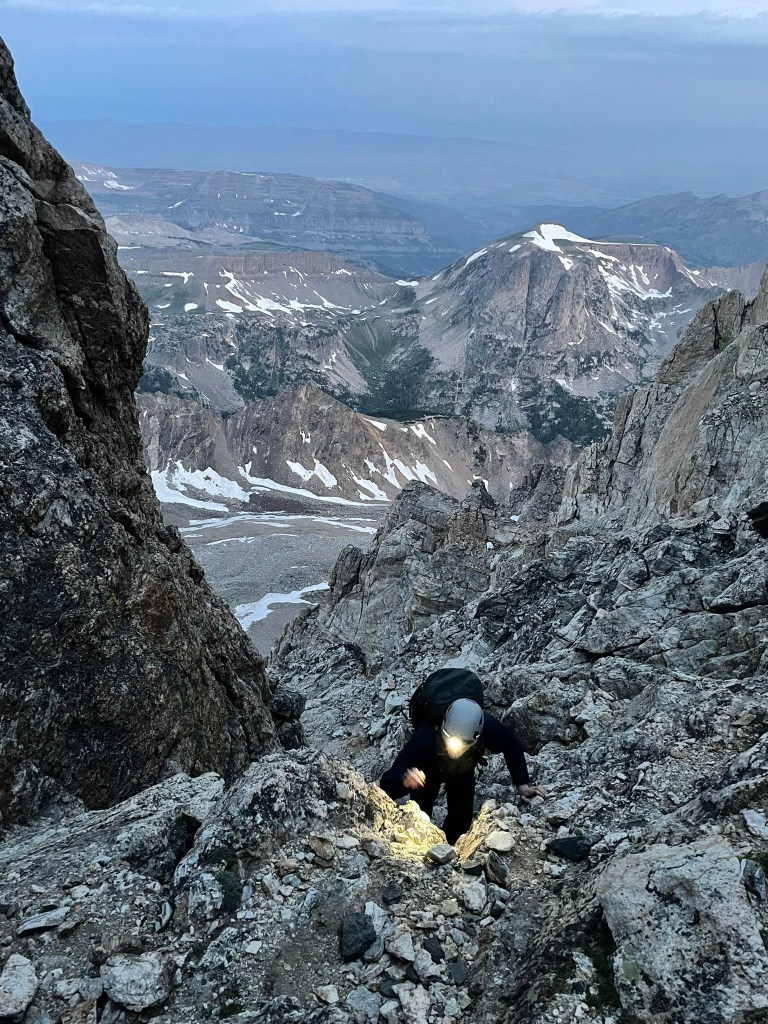
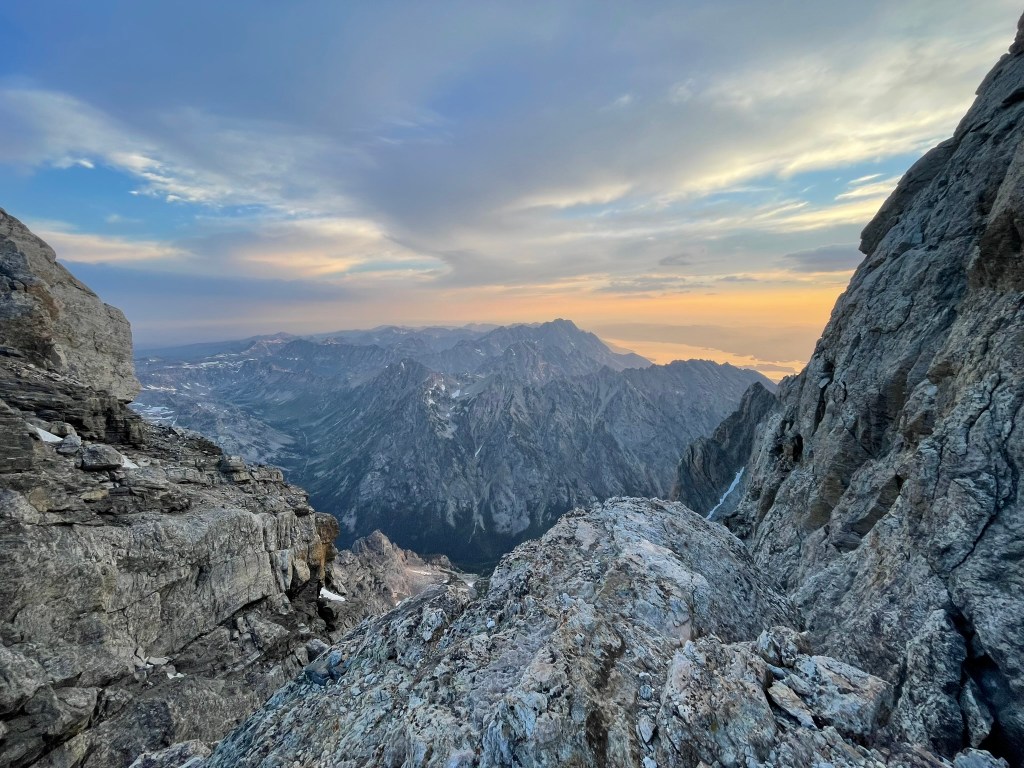
Sleeping was difficult, I got brief moments of true rest interspersed with many more moments of uncomfortable churning. Getting out of the tent at 4 in the morning was rough, but both Trevor and I got to work with final packing and making breakfast. We shared a bowl of oatmeal and then made our way towards the gradually steepening trail headed to the Upper Saddle. The route ahead was about 500 ft of talus and 1000 ft of ~4th class scrambling before the roped climbing even started. Route finding was the crux here and we both put in a ton of time researching our way. First up was the chockstone chimney, a ~50 ft section of exposed scrambling with pretty loose rock. This went by quickly and we found ourselves making it through the next couple of obstacles without much trouble. Climbing through the ‘eye of the needle’ was a highlight as we navigated our way through a natural cave / tunnel feature in order to avoid the more precarious ‘Briggs Slabs’ on our left. We also met some climbers on their way to the Upper Exum route and point them towards ‘Wall Street’ – a crazy exposed ramp that connects the scramble to the prominent Exum ridge. After this point the sun started to rise and we were gifted with a glorious orange glow to light up the range behind us. The Upper Saddle was in sight, but we took a moment to bask in the view behind us as it was the highlight of the trip so far in my eyes.
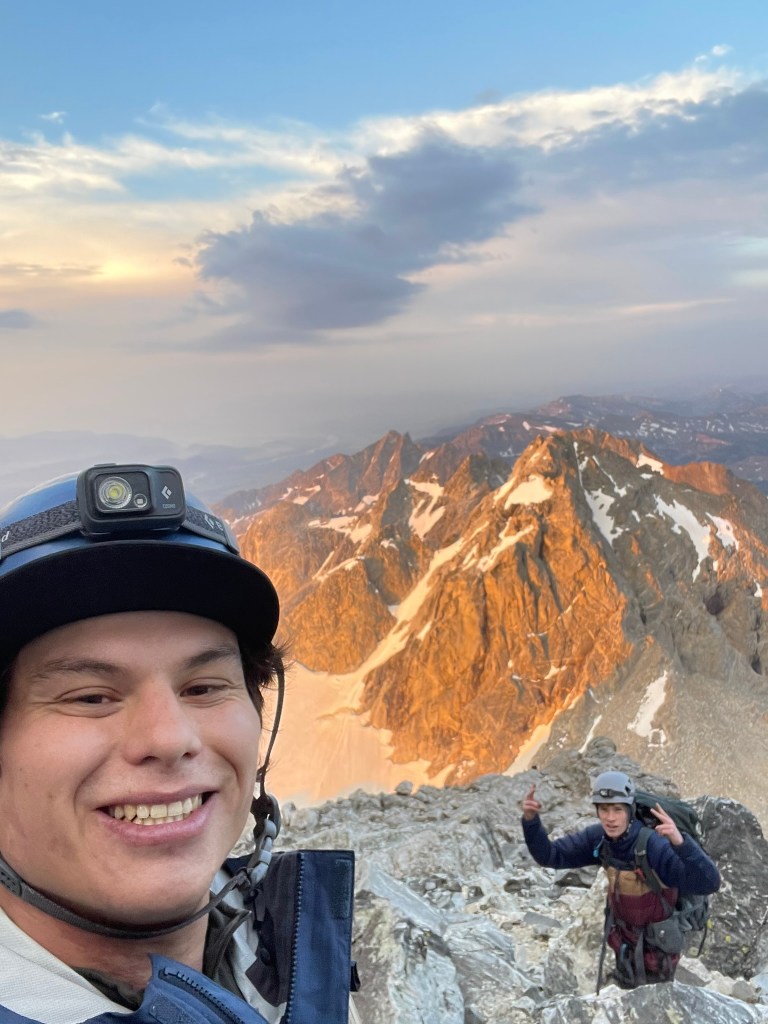
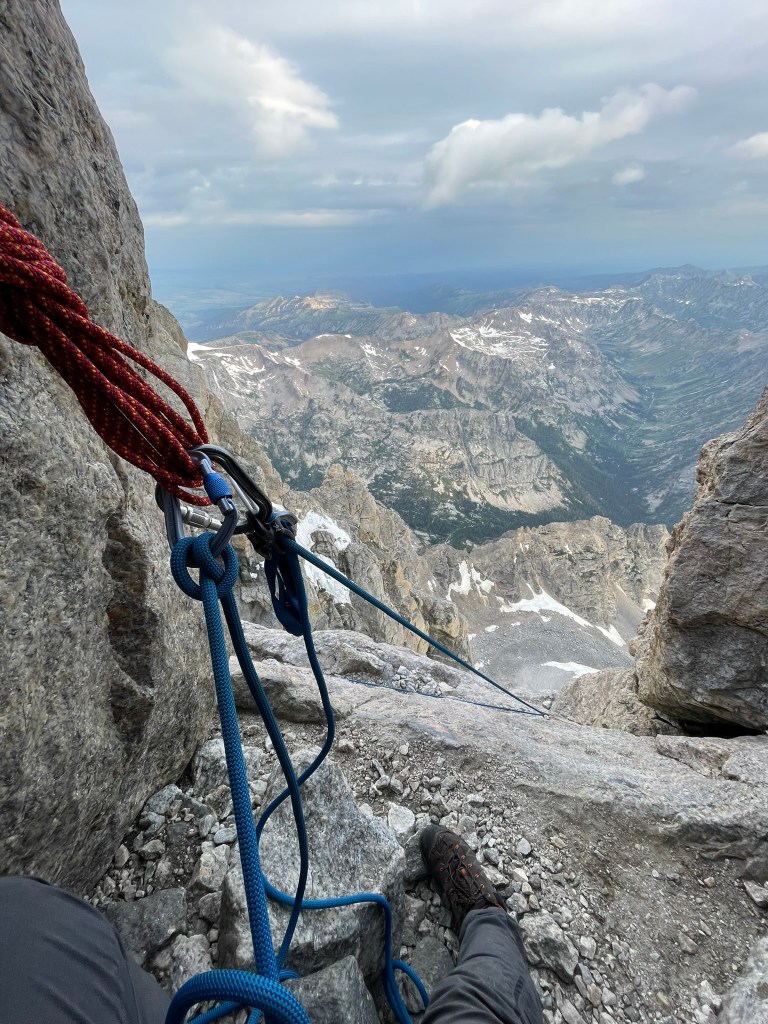
In contrast to the incredible alpenglow, we arrived at the Upper Saddle and were quickly greeted with the Grand Teton’s intimidating West Face. This second saddle marked the beginning of the Owen-Spalding route and rapidly dropped off on either side straight to the valley floor below. We sat there with two other groups and discussed the plan ahead. While the weather at that moment was calm, we knew there were clouds quickly approaching. We expected this storm to come and bring rain, but really we were afraid of any potential lightning. We had an updated forecast from inReach messaging Trevor’s dad in the morning and knew that lightning was a potential after about noon in the day. We had a solid 4 hours ish of time to get down from the summit, which was enough margin as long as we didn’t get stuck up there for some reason. At this point we had a decision to make and I was feeling pretty scarred to commit. I knew that it possible and that Trevor and I’s training to this point has us well prepared. So at that point I took charge and committed to the route by starting to build our first anchor. We decided to add one more pitch to be protected while making it past a traverse to the start of the climb. This section had easy climbing but made it’s way past the saddle and over about 2500 ft of exposure to the valley floor below. The belly roll and the crawl were two incredible features where you could hold onto jugs and smear your feet over an insane and terrifying setting. Shortly after I found myself at the 2nd entrance of the route and below an obvious belay ledge. I placed one final cam and up a sketchy off width crack before making the anchor.
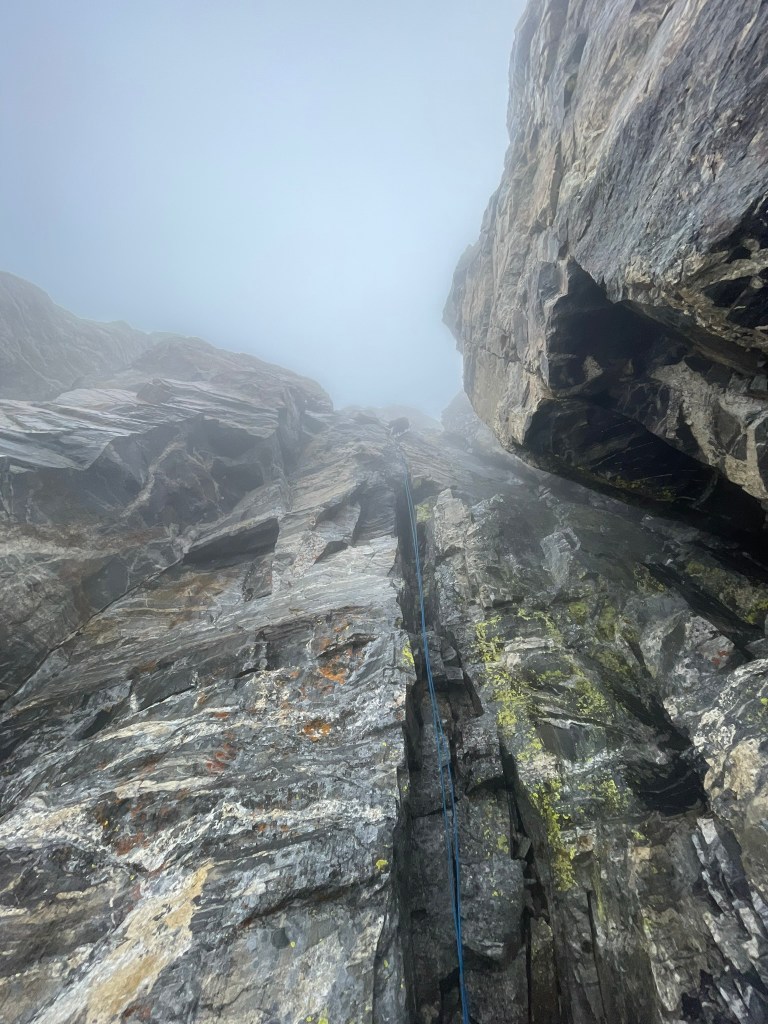
At this point the weather was slowly starting to get worse and Trevor was making his way through the first pitch. Our lack of radios made communication hilariously difficult for a traverse pitch, but luckily he understood my plethora of rope tugs as a sign that he was on belay. Next a free solo-ist passed us and tugged on our rope during the sketchy off width section. Then Trevor arrived and I started up the next pitch. At this point I was having a blast and was completely in the flow state. Climbing was not very difficult and the worst of the exposure was passed us. Pitch two had another natural tunnel and I was able to run out the majority of the climbing. Soon enough we reached the Owen chimney to mark the start of the third pitch. I continued to lead to help speed up the day and was feeling great. The weather on the other hand only got worse: there was a lot of wind, the start of rain, and a cloud came in to limit visibility quite a bit. Despite this climbing was still easy and pitch three only had one move that was a bit insecure. Otherwise we made it to the top, traversed over a relatively flat section to Sargent’s chimney, and into the last pitch. This chimney was the easiest so far and I was having a blast. Our timing was still pretty good but I knew we were still chasing the clock to avoid being stuck in worse weather still.
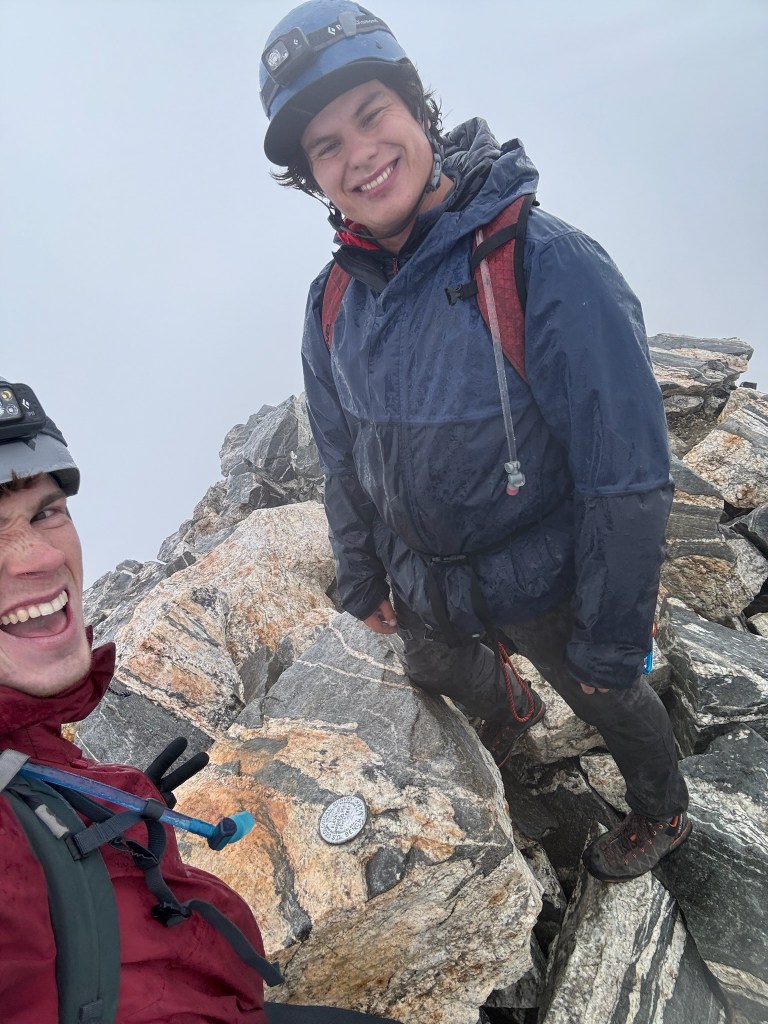
After finishing Sargent’s, we unroped and checked our maps one last time before making our summit push up the last few hundred feet of scrambling. With the clouds fully soaked in we had trouble finding any of the features described in Wyoming Whiskey’s page, so I took the lead and started up what looked like the best path to me. Soon we collided with the top of the Exum Ridge and could see the true summit lingering in the distance. On our right was the imposing east face snowfield, a crazy 50 deg slope where most of the ski descents for the mountain began. Traversing the ridge was a crazy experience, we straddled some sections of knife edge terrain & felt like we were on some crazy remote wasteland while covered in dense fog. Then we finally arrived on the last boulder patch and found the summit marker. At last we had finished the route and achieved this Grand milestone. Both of us were soaked to the bone and still feeling the rush of adrenaline from the climb. We looked around, took some photos of the blank white landscape, and then quickly made our way back to the top of Sargent’s chimney. There was a somewhat maintained anchor here and we made it down without any issue towards the main rappel below. Navigating this ledge section was fairly straightforward and we found a massive and well maintained anchor perched above the large cliff below. We had a 60 meter rope, which required us to stick as far as we could to the looker’s right of the cliff in order to make it to the ledges on the Upper Saddle. I tossed out the rope and heard it whip through the gusts of wind in front of us. On the way down I unsnagged the rope several times and successfully made it to the ledges without much issue.
While Trevor followed I began to feel quite cold in the wet and windy conditions. We had finally made it passed the worse of the exposure that day, but still had a massive amount of vertical to hike back down. We ate some snacks and then Trevor managed the descent route finding. This was relatively easy from a technical perspective, but was tedious and Trevor took a minor slip that cut open his hand. Luckily we packed a small first aid kit and we cleaned up the wound quickly. After this and having made it down about 1000 ft from the summit, the clouds opened up and we realised the Grand had its own little whether system which had been plaguing our ascent. Below this layer we could see all the way down to the valley floor and we laughed at how stark of a contrast it presented. Before reaching the Lower Saddle and our camp, we also made a rappel over the chockstone chimney which looked much stepper from above than I had remembered. When we finally made it to camp, I felt relieved but incredibly tired. Trevor graciously cleaned up camp, but I took a quick power nap after feeling pretty mentally drained from the exposure. At this point it was a little after noon and had marked 8 hours from when we left camp in the dark of night. The rest of the trail was about 5500 feet of descent across about 6 miles of terrain. We put on our heavy packs once again and began the last of our journey down towards the trailhead.
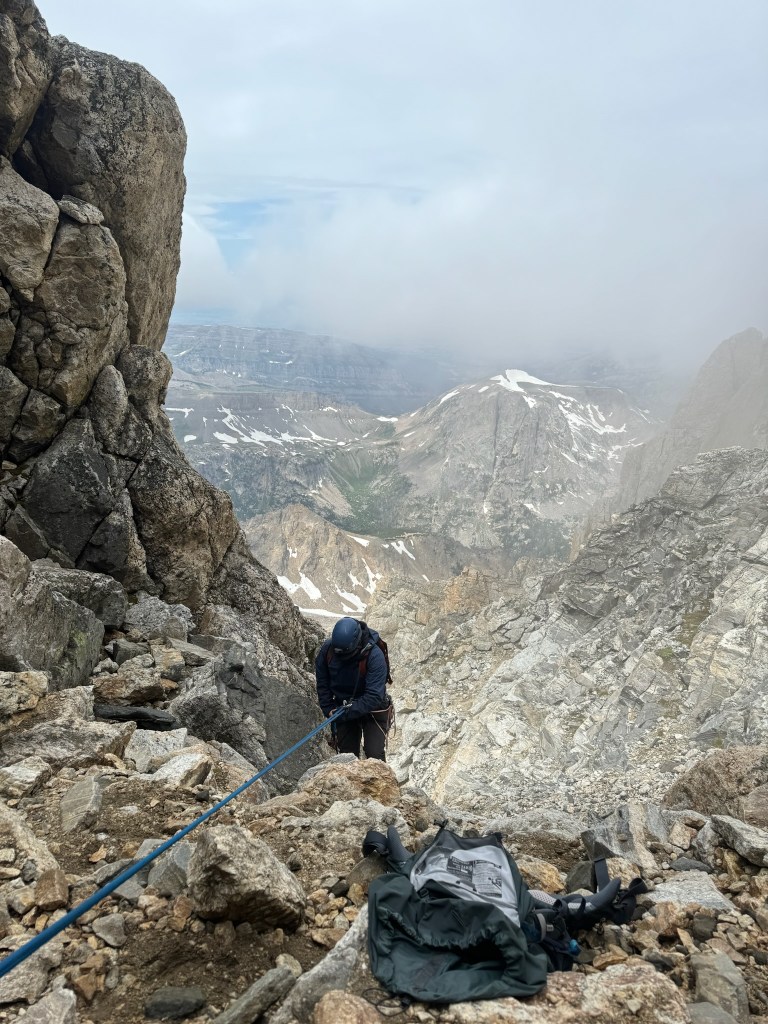
The fixed ropes at the 2nd rock band had a bolted anchor which served as an easy rappel and suddenly we were back to talus fields and steep switchbacks into Garnett Canyon. I was making relatively slow progress and trying to keep up with Trevor on the downhill. Keeping me motivated was Trevor’s dad back at the platforms campsite, where we would get some snacks and renewed energy for the descent below. It took a few hours, but we met up and quickly told the story of our treacherous journey that morning. He was super excited to see us and finally get to head back himself. So we didn’t rest long and continued back on the trail down to the valley. At this point we were passed 12 hours of continuous movement and I was feeling the fatigue. Every second felt longer than usual and the trail seemed to be endless. Really that was just my exhaustion kicking in and the descent was very casual. When we did finally make it back to the trailhead I was simultaneously relieved, excited, and enormously tired. Trevor and I laid on our backs next to the car and below the view of the mountain we had just climbed.
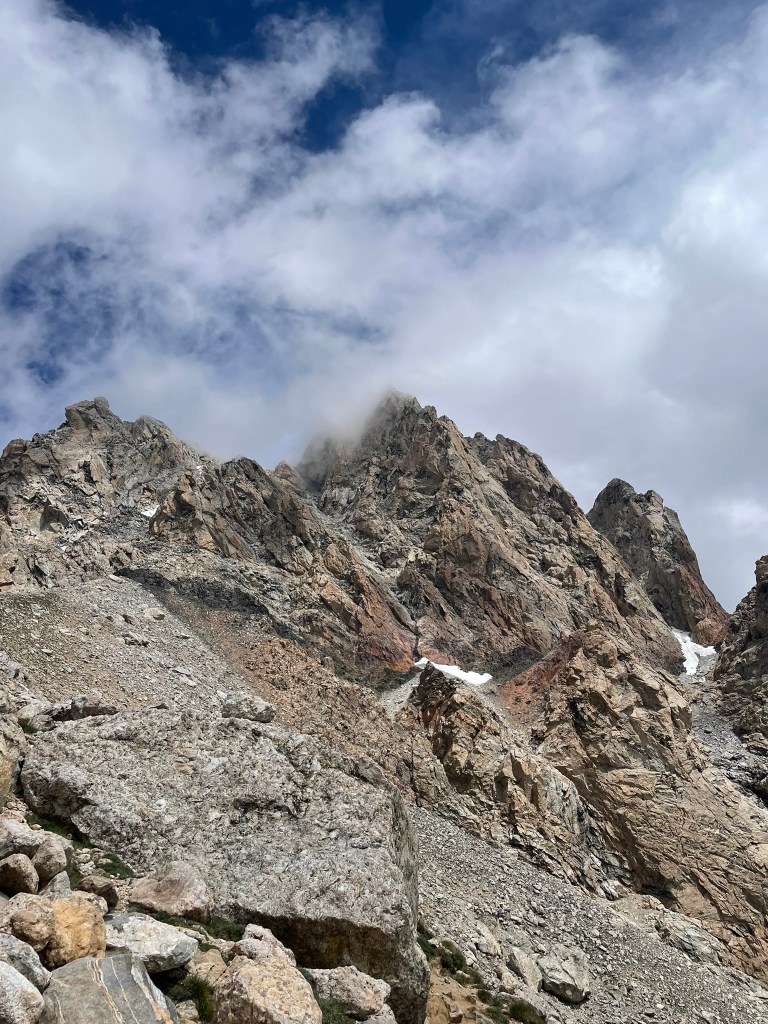
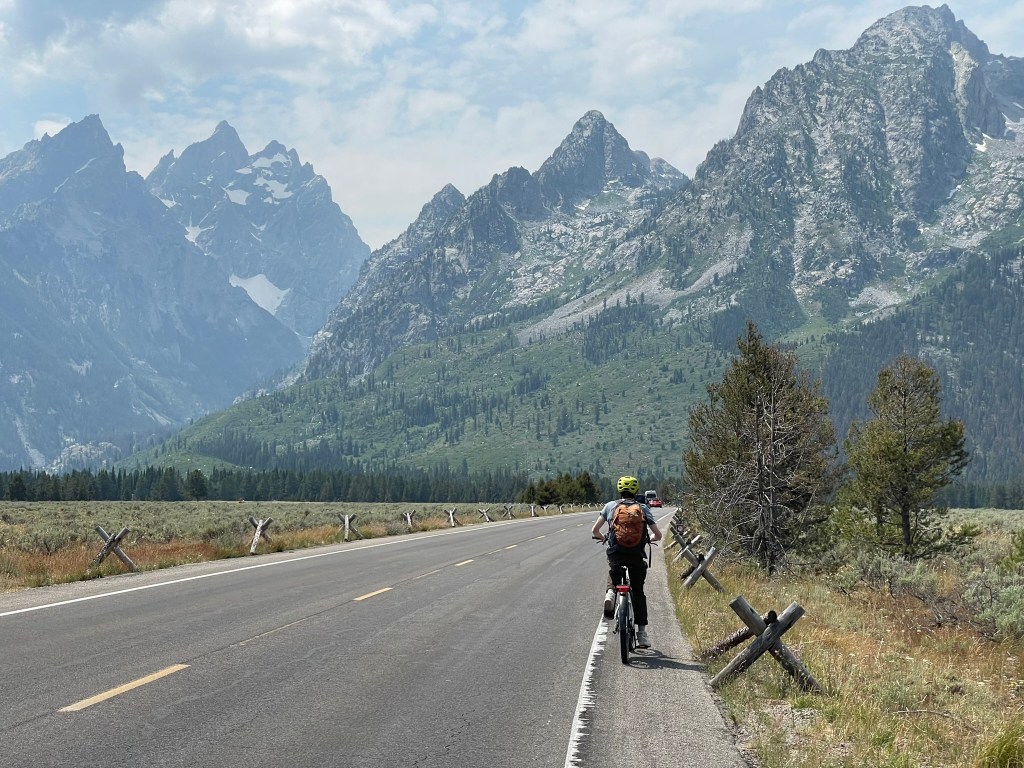
Later that night, the three of us drove back to our hostel in the Jackson Hole Resort and got some celebratory dinner at the Mangy Moose. We rehashed the day in great excitement and I felt tremendously proud of having finished our mission that began months before. In the coming days we spent some more time in the valley, ultimately e-biking the grand loop and seeing the vistas by Cascade Canyon to the north. It was pretty crazy to think that early in the same year we both never climbed on our own outside before and didn’t even know what true alpine or traditional climbing involved. The journey itself to climbing this mountain was a ton of fun, and I knew that I wanted to continue learning more skills and unlocking new peaks to climb. Really this mountain was the start of a passion for adventures in the mountains and a renewed sense of what was possible for the future.
 Max's Blog