In a shocking turn of events, my roommate (Trevor) and I decided to pivot to climbing as our weekend career post ski season. This was a purely functional endeavor at first; we were looking to climb mountains in the summer when ice & snow were mostly out of the picture. In its place was generally rock, which requires either a lack of fear or a large step increase in technical ability to protect oneself while climbing. So following the natural progression, Trevor and I picked up bouldering at a local gym in LA and quickly learned that we were bad at climbing anything above a V2. Despite this, we set an ambitious goal to climb some 5th class terrain in the high alpine a mere 4 month away (start: ~april, goal: end of july). In order for this to work, we approached this in our typical engineering fashion. First we planned out some ambitious climbing classes targeting specific technical skill sets: one for lead climbing, one anchor construction, one for trad gear placements. Next we planned some ways to ‘trial’ out our recently learned technical skills: one high vertical alpine climb, one outdoor lead, one outdoor trad multipitch. And finally we scheduled a regular ‘meeting’ to check in with progress and ensure things we planned were actually happening. At this point in April, we were feeling simultaneously stoked for the adventures ahead and incredibly stupid for the amount of high consequence technical skillsets and milestones that stood in our way. Oh at we were both working too much at this time 👍.
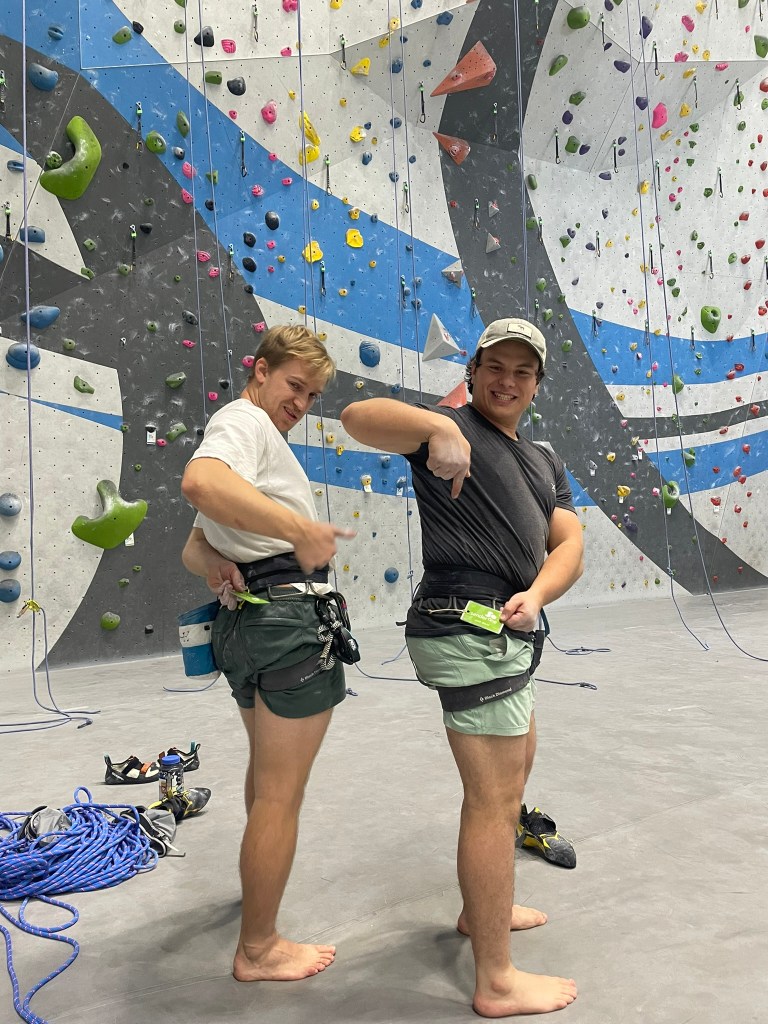
First up on our list was lead climbing indoors. This required some basic top rope skills (should be able to climb around 5.11) and familiarity with lead gear like carabiners and belay devices. Although I had climbed top rope in the past, both Trevor and I were just about at the threshold for failing this class outright from the beginning. Climbing 5.11a was out of the question and we focused on getting in as much practice as we could: maybe 2 times a week. Passing the test required the execution of a 5.10a lead climb and lead belay, something we both felt would be doable only with a real in-person class. Given our limited weekend ability, the only time we could both attend this turned out to be one day after our trip to Oregon to climb Mt. Hood (another post on this webpage). So after our summit and red-eye flight back to LA, Trevor and I headed to the gym for our 5 hour lead class that next morning. It turned out to be a great time despite our possibly poor preparation. Our instructor and other climbing partners were super accommodating and our climbing skills were not that bad. Both of us could actually lead and lead belay each other on the easiest 5.10a of the gym by the end of the class. Both of us were monumentally terrified of the experience too, but we knew that some mock lead practice would probably solidify our skills enough to pass the indoor test within a few weeks. The only problem was our anchor and trad classes: they were planned for the following weekend and at the time seemed like a crazy way to proceed.
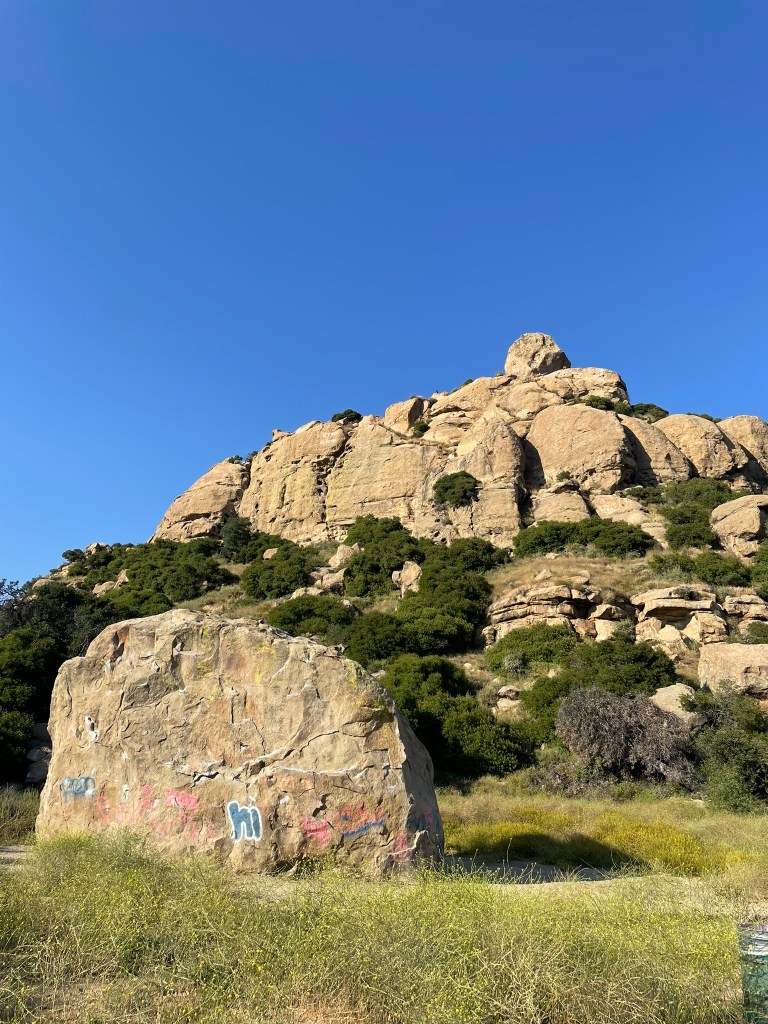
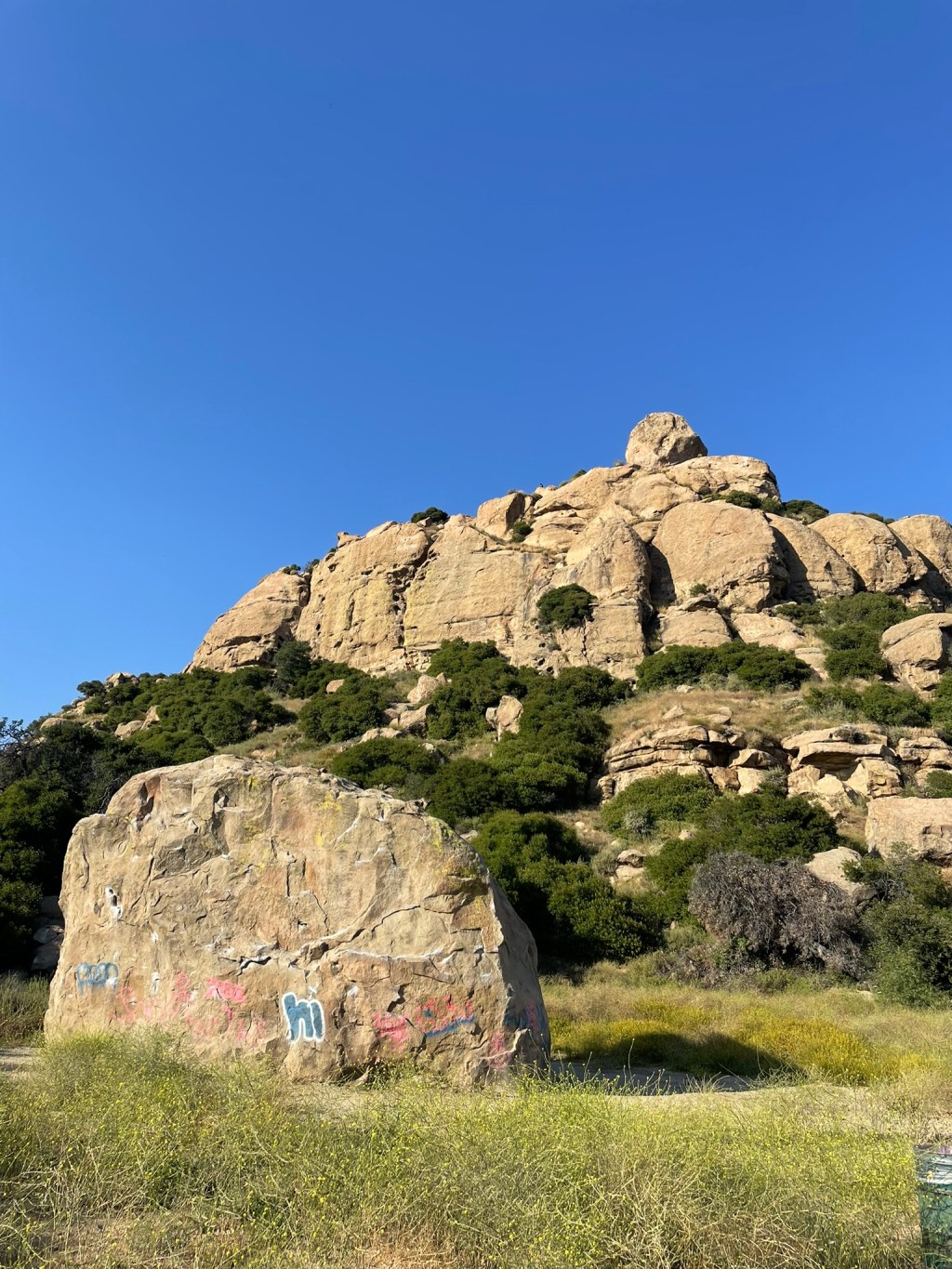
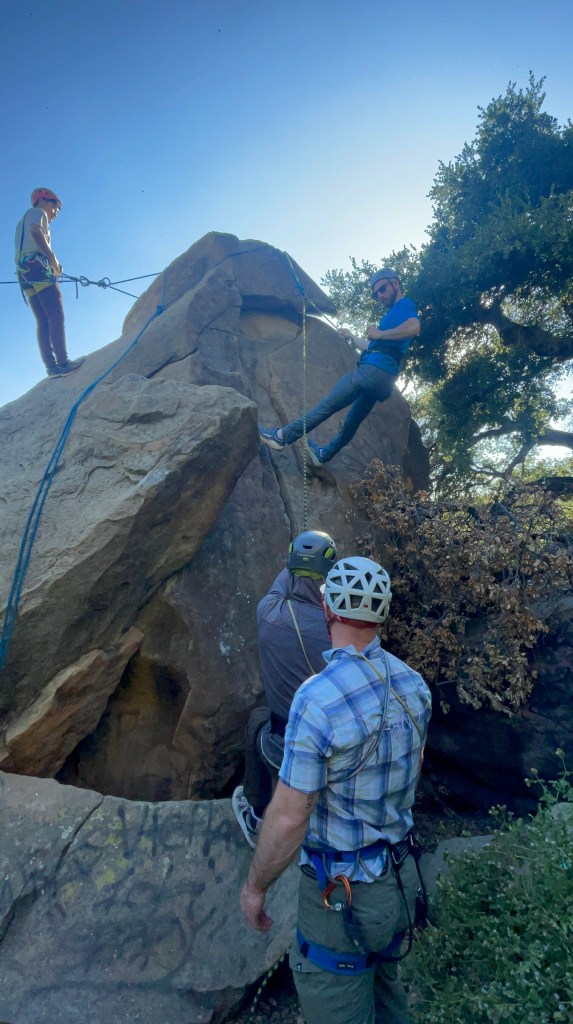
After an alarmingly quick week and two measly weekday climbing sessions, Trevor and I found ourselves driving to Stoney Point for our first of two full day courses on traditional climbing. Stoney Point is a pretty cool location to climb. Not because of the nearby traffic noises or distasteful graffiti, but because it was the birthplaces of American climbing to some degree. This group of sandstone rocks was ‘discovered’ in the 1930s by SoCal locals in the Sierra Club as a potential crag. A few decades later, legends like Royal Robbins and Yvon Chouinard got their start at Stoney Point along with many others who would go on to define California’s climbing history. I couldn’t help but start to feel some parallel’s to our own climbing journey. Even though we had no where near the same lifestyle or bravery it must have taken to develop new climbing techniques in unknown areas, our plan was still bold in its own way and was physically in the same place. Adding to this feeling was an excitement from the crazy amount of information learned in the first day. Traditional climbing revolved around the management of rope and anchors. Rope and anchors revolved around the understanding and implementation of knots. The functionality of these in union seemed endless and took some of the fear away from our lack of experience in the moment. Throughout the next day we continued to practice anchor and knot techniques, but with the addition of cams, nuts, and hexes to interface with rock cleanly. Ultimately the class aimed to convey a series of concepts that the govern traditional climbing system. Real rock is extremely diverse and requires similarly diverse ways to accommodate natural features for adequate protection. The goal in any case is to build an anchor that is ‘bomber’ (you trust with your life), belay from this anchor to start climbing, and continually place temporary gear to catch potential falls. Each pitch (a rope’s length) is finished with another anchor to get your partner up the same route while they clean all the gear which was just placed on the way up. Now that both you and I know how to climb, we are both ready for practice in consequential terrain (not legally binding).
After our first weekend crash course, Trevor and I headed back outdoors to test our knowledge on some truly beginner terrain. While searching for some good trad routes near LA, I came across an large granite spire called Tahquitz rock right outside of San Jacinto. To my surprise, this rock shared Stoney Point’s incredible history and was also one of the first few crags that developed free climbing. Starting in 1936 with a route called “The Trough”, started a movement from the Sierra Club to push the boundaries of free climbing into grades like 5.8. Even the Yosemite decimal system used to define grades like 5.8 was initially developed at Tahquitz rock (and later popularized in Yosemite). In a fitting nature, The Trough was the route that stuck out to me the most. It’s route-finding was incredibly straightforward, it was only three pitches, and it was graded 5.4 (or 5.0 according to the Sierra Club’s initial grading). Similar to Stoney Point, climbing this route first also seemed like an homage to the history and pioneers of free climbing itself in the sense that we were truly starting from the bottom of what is possible.
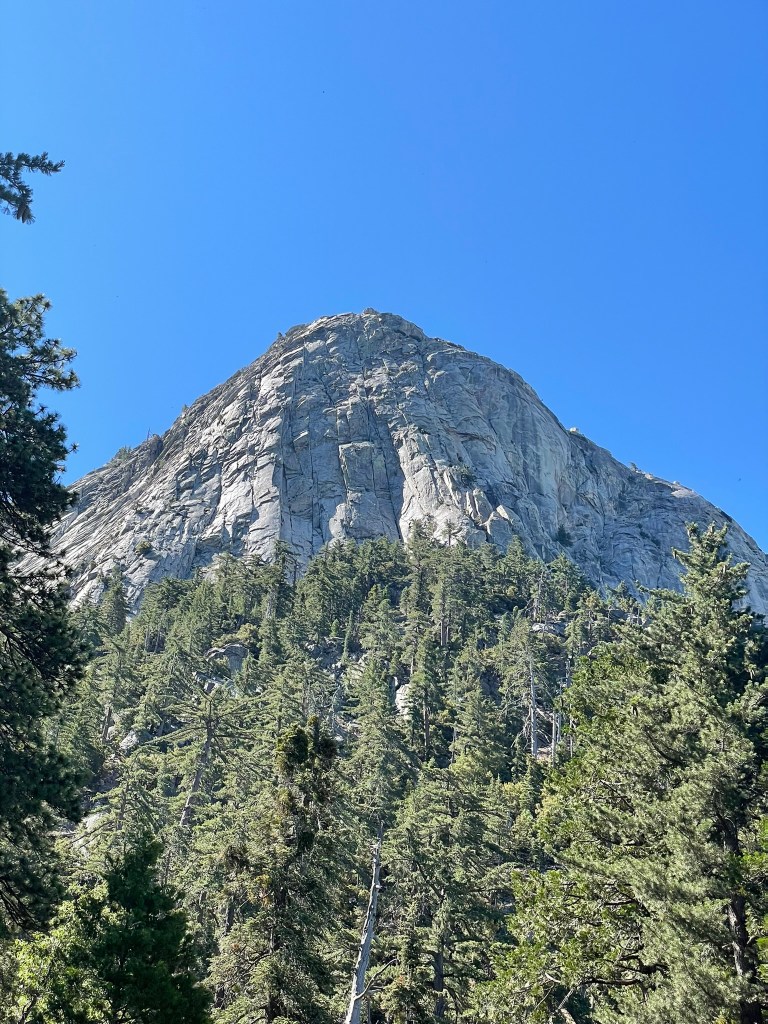
Getting to Tahquitz is an easy ~2 hour drive from LA and starts near a town called Idyllwild planted right in the center of the valley behind San Jacinto. The landscape is beautiful and filled with giant redwood trees that sit below both Tahquitz and Suicide rock. Tahquitz is about 800 ft tall and looks like the head of a spear jutting up from the hillside. Below it sits a trailhead and a steep ~mile and a half hike up some sporty switchbacks. Trevor and I brought about 10 cams ranging from 0.4 – 3, a set of nuts, 10 alpine draws, and a handful of anchor building materials, some of which were purchased last minute at the shop in town. Once we got to the base of the route we decided to do a “practice pitch” in the approach just to make sure our systems were dialed. Shortly after, I began on the sharp end of the rope and made my way onto my first lead on gear for pitch 1. Climbing was relatively straightforward and mostly contained a series of gullies & chimneys to a small ledge. Getting to the ledge required a few steps on a friction slab, which was a little spooky. Otherwise it made for a great introduction and I quickly built a gear anchor on the ledge. Once Trevor joined me, it was high turn to lead and pitch 2 above us seemed like similar climbing. Unfortunately we didn’t bring any radios, so I sat at the belay station waiting for Trevor to make progress without knowing what he was about to encounter. Nothing went wrong, but it took about an hour or so for him to make it to the end of pitch 2 and make a slung anchor around a tree. I followed after and only came across one issue – a stuck #3 cam (RIP).
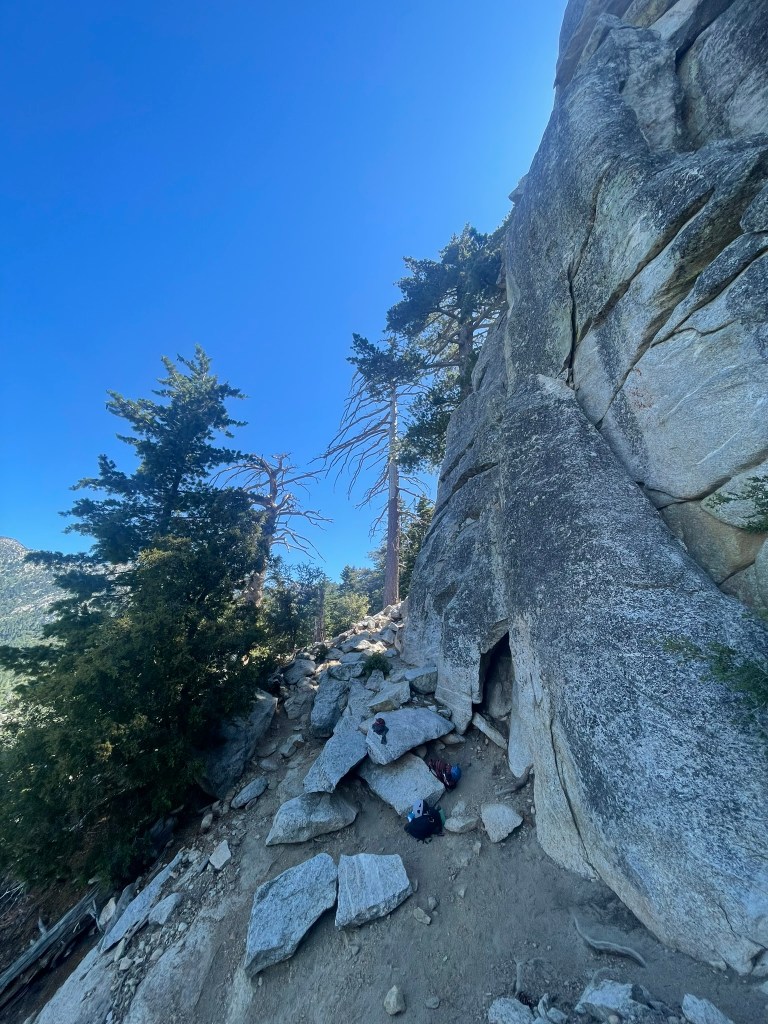
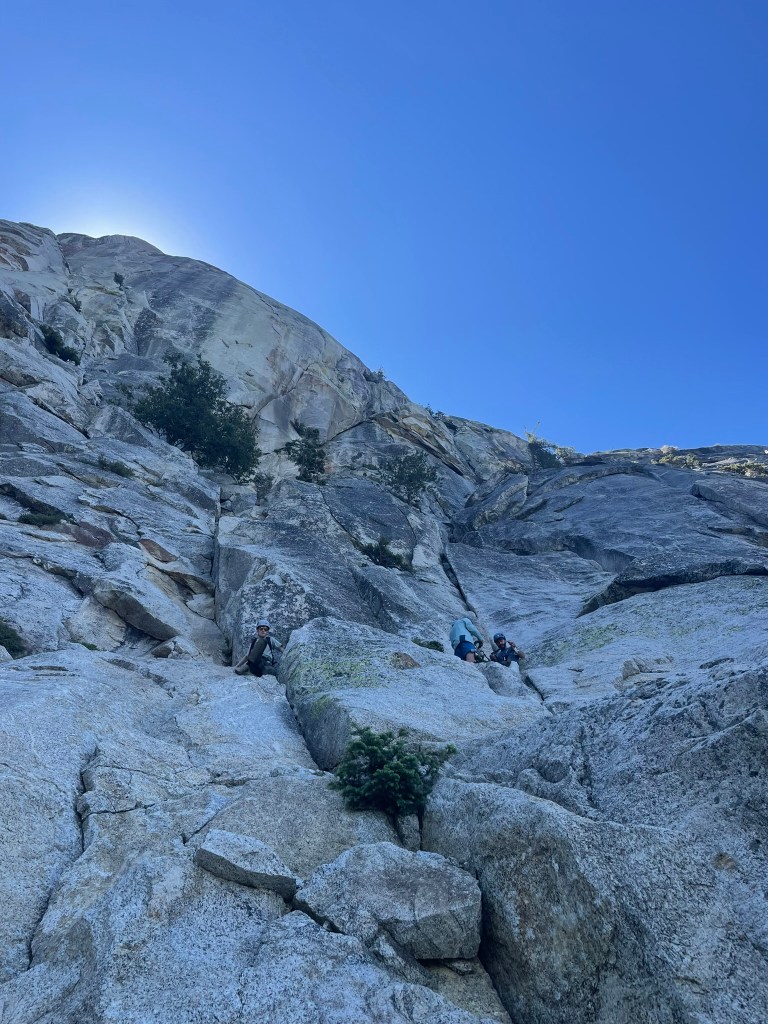
At the start of pitch 3, I was back again and feeling super psyched to lead. Below me was some crazy exposure for someone who had never climbed more than a rope’s length, but I felt like the climbing was well within my reach. Above me were some chimneys and dihedrals that were all pretty mild and I new my next anchor would be a slung tree. There was only one move in this pitch that spooked me. I placed some gear right before it, but still felt a little insecure stemming up a chimney with very few holds. It made we question whether we could climb any higher of a grade, but I still made it through without much of an issue. Getting to the top of the pitch was awesome and I practiced making the next anchor a comfortable hanging position. Technically I could have raced right to the peak, but figured I would take it easy and add in one more pitch. At this point Trevor came up and we both felt great, but also were out of water. I volunteered to quickly lead the next pitch to save some time and before I knew it we were at the peak. Since we were doing this in the first week of July, temps were in the 80s and we felt it. The descent was fairly not going to take us that long, but we were exhausted from the mental aspect of climbing and the relatively long period of time we were out there. Starting down the route was a small chimney and some friction slabs at a relatively low angle – probably 4th class terrain. We worked our way through with another group that had just summitted and then made our way back to the trail on the front side of the rock.
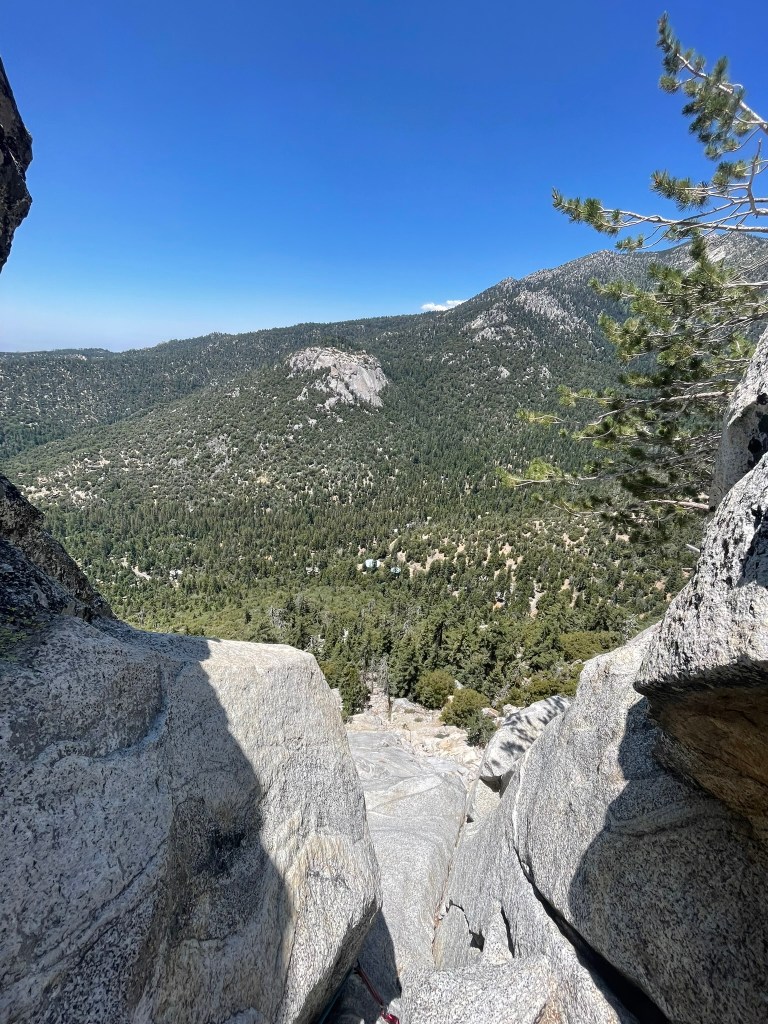
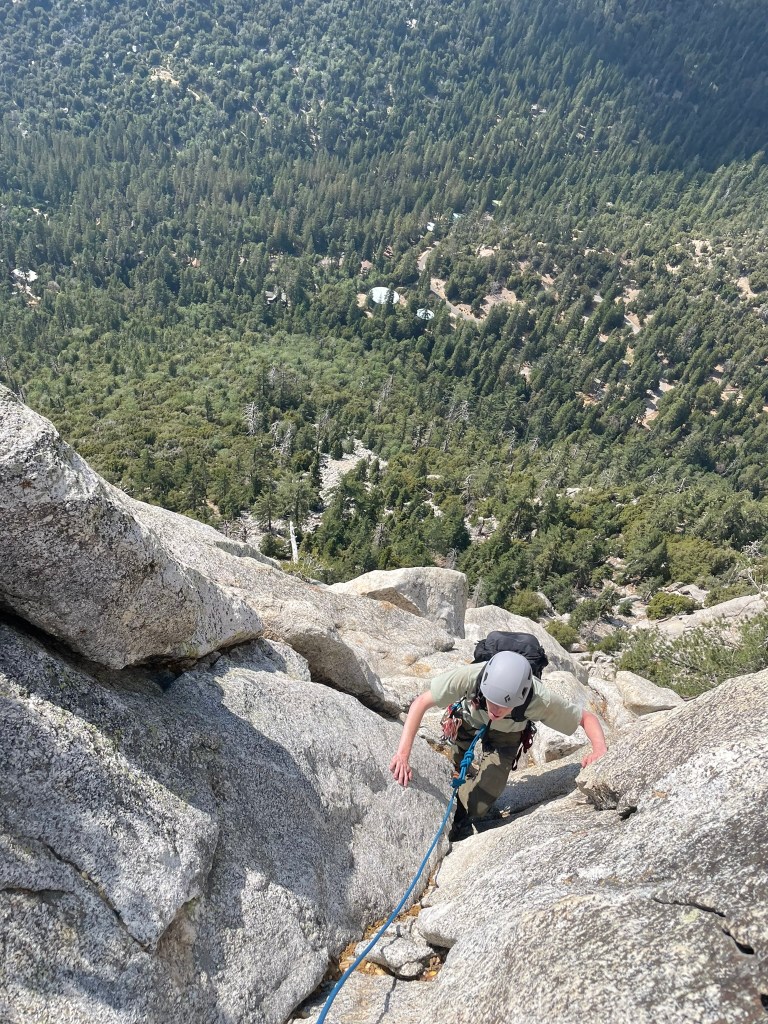

At this point we were feeling super dehydrated and just wanted to make it back to the car. This made the descent fell way longer than it actually was and by the time we finally made it down we felt unbelievably thirsty. Despite this, we did actually make it through our first multipitch route unscathed and it was a blast. Climbing relatively easy terrain on stellar rock and with massive exposure below is such a great experience and made me want to come back for more routes right away. But first, we headed in town for some glorious Italian food to celebrate. I couldn’t help but drink as much water as I possibly could as we ate and chatted about the adventure of the day. Later that summer, we’d go for our alpine objective. It was the same grade, but would really test our new found skills and navigation in consequential terrain. Learning how to climb is really a career effort, starting it at Stoney Point and Tahquitz felt pretty special. After this first experience I am incredibly excited for that journey.
 Max's Blog