It’s hard to believe you can still ski in the early summer, but its even crazier to believe June can provide 5000 ft of quality snow. My first taste of summer skiing came from a trip to Mt. Hood, known for a variety of glaciers covering its 360 deg volcanic prominence in Northern Oregon. The mountain is part of the Cascade range, which spans from California to British Columbia and has dozens of volcanos reaching into the high alpine. Hood is an incredibly popular destination for both mountaineers and skiers due to its two south facing resorts and vicinity to Portland. Our plan was to make a quick weekend trip up to the mountain to summit and ski as much of its vertical as we could.
I flew out on a Friday morning directly from a work trip in Texas to Portland, Oregon to kick off the trip. My roommate Trevor met me there, having picked up some rental skis, crampons, and boots at a local mountaineering shop. Shortly after we blitzed to Hood River, a gem of a town next to the Columbia River Gorge and about an hour outside of the mountain. A mutual work friend of ours had bought a house with a fantastic view of the river and Mt. Adams nearby, which served as our brief headquarters before the early start on Saturday. The town itself was an outdoor sports mecca, with big mountain sports and wind surfing as the focal point. But for now, we only had time for a cruise into town for pizza to fuel up and carbo-load. We’d have just over an hour to snooze before nearly 5500 ft of elevation over just 3.5 miles of travel the next morning. As you would expect with a volcano, our route was a straight line from Timberline resort to the summit headwall and gradually increased in slope through the entire ascent. Weather and snowpack was forecasting well, so fitness and timing would be the crux of the summit.
The Ascent
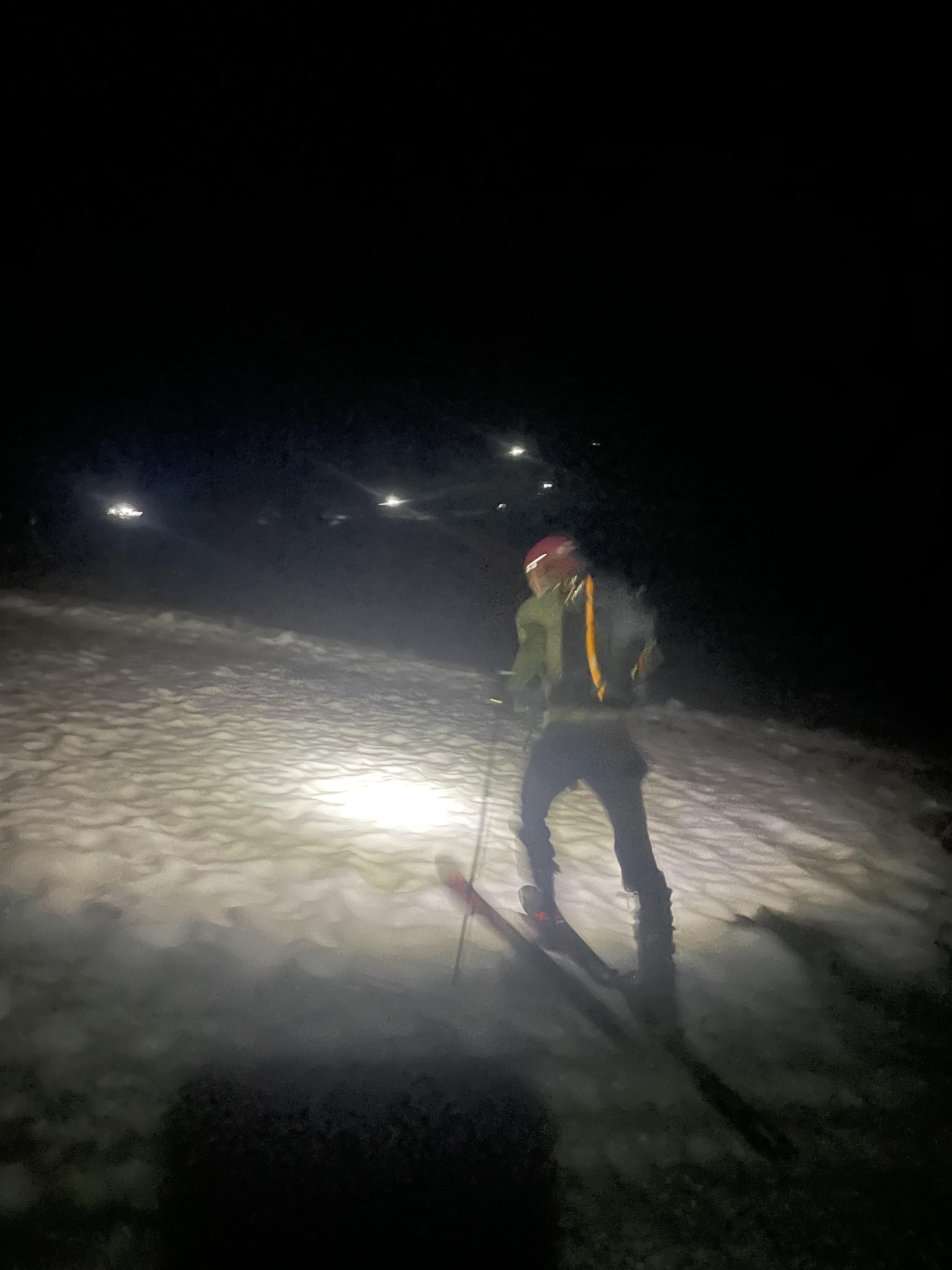
Alarms rang at midnight and we awoke in a haze before quickly grabbing some coffee. There was little left to pack, so we rushed in the car and headed about an hour south towards Mt. Hood’s Timberline resort. What surprised me most was the amount of snow on the way to the parking lot. Car height snow banks cover the shoulders of the road well before we arrived and the lot itself was carved into the base of the snowpack. As palpable as the snow was the crowds, which consisted of about a dozen other groups prepping for the climb at 1 am. It was clear we were going to be accompanied by many other parties that morning, but at least it served as a signal we had good conditions for a summit push. About 20 mins after arriving to the lot we headed off on our skins, also marking Trevor’s first uphill tour. Conditions were as expected: nearly bulletproof snow crust clearly from an midnight freeze. For the first 1500 ft or so we made great pace, especially for a beginner uphill skier. But after a while, the slope angle gradually increased, requiring some more careful foot placement and the use of our ski crampons. Eventually kick turns were necessary and Trevor felt reasonably uncomfortable moving forward on skis. Luckily we were nearly at the top of the Palmer lift, serving as an easy ledge for transitioning to boots and a good spot for stashing skis.
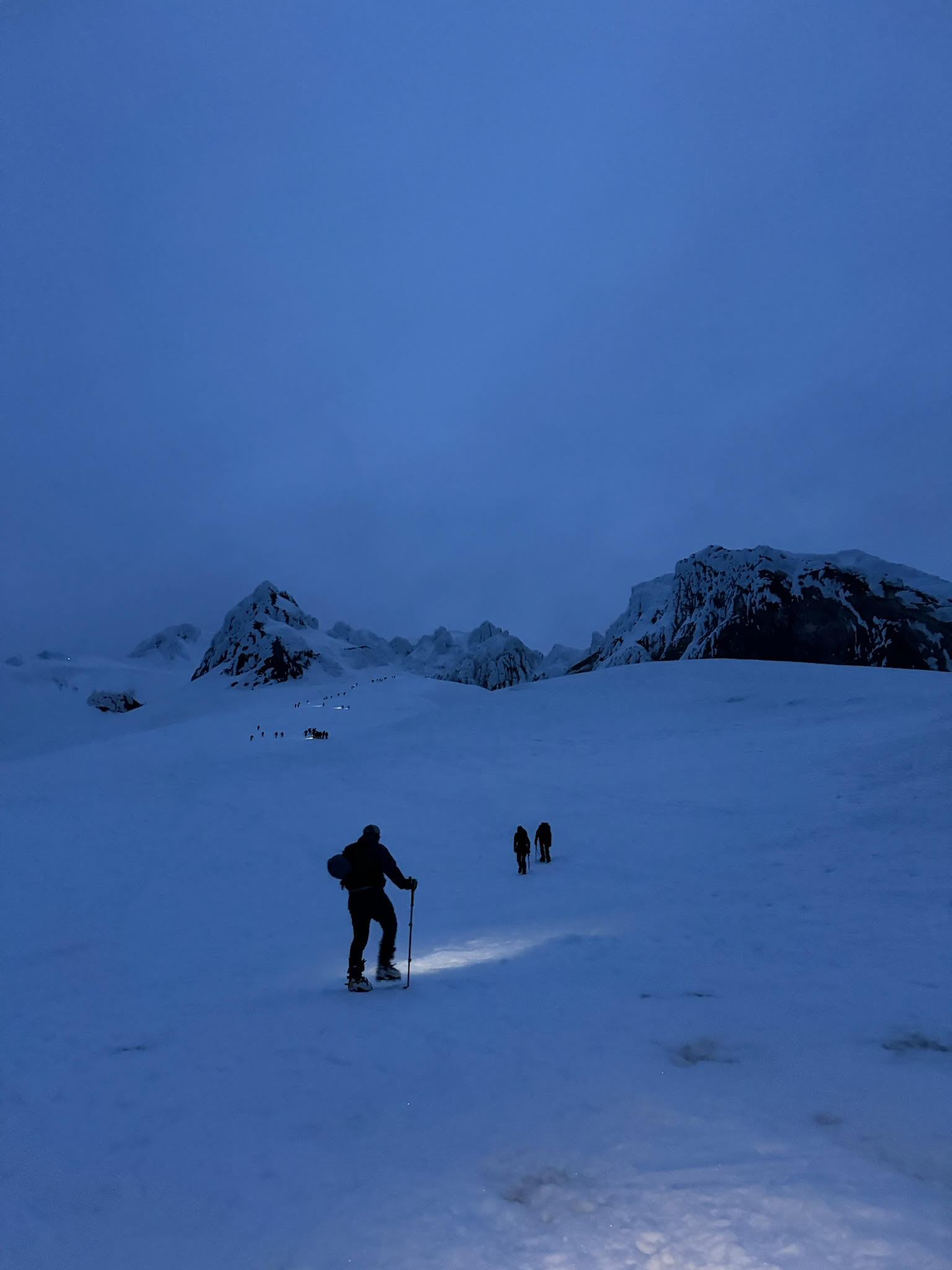
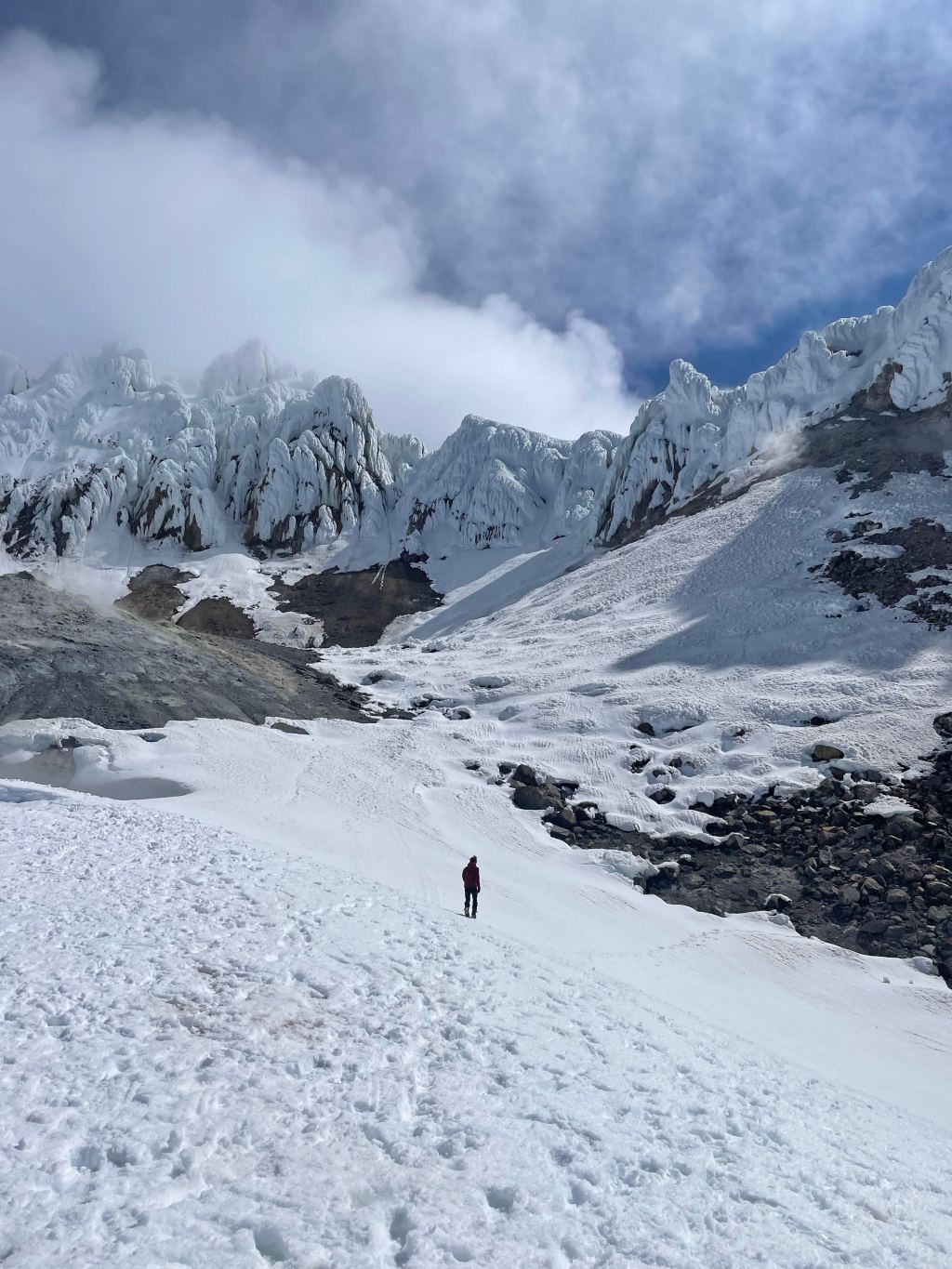
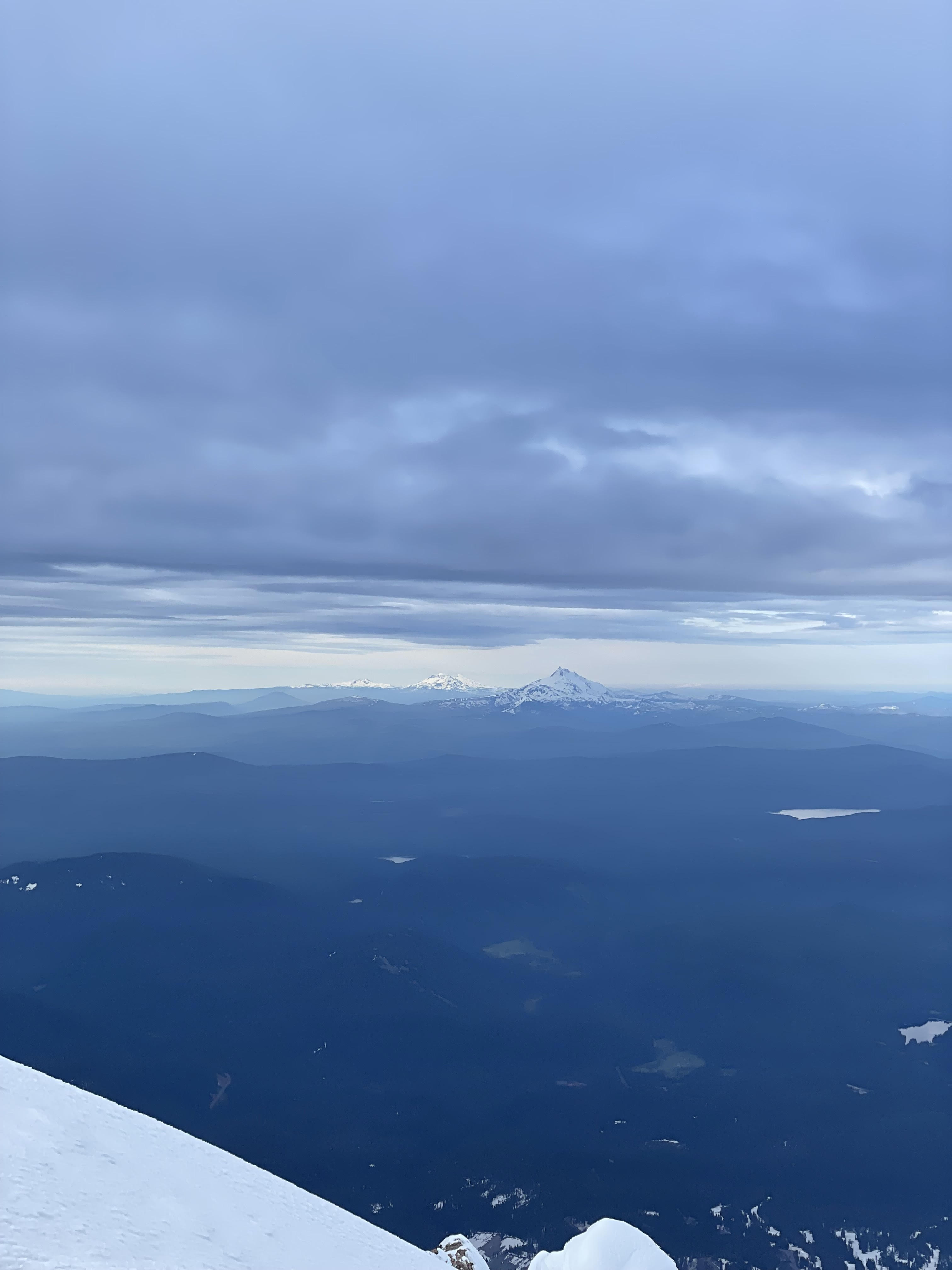
Despite being at the top of the Timberline resort, we still had nearly 3000 ft to the summit. About two-thirds of this vertical was a moderate boot pack up the Palmer snowfield to reach ‘Devil’s Kitchen’, a basin of volcanic fumaroles staged below the imposing summit headwall. Hiking this portion of the mountain was a slog. Trevor and I made relatively slow progress compared to the lower uphill touring. Several times we stopped for water and snacks, each time giving us some expectedly great energy boosts. It was during this portion of the hike that the first light of the morning illuminated the surrounding landscape. To our south was Mt. Jefferson and the Three Sisters: two sets of prominent volcanos along Mt. Hood’s same range. The view was incredible and helped us push to about 4000 ft at the basin of Devil’s Kitchen. There we brought out our ice axes and fueled up once more in preparation for the steep headwall climb. For many reasons, this was the most physically demanding and risky portion of the day. It was only about 6 am in the morning, but any warming from the sun could rapidly melt the rime ice coated pillars of Mt. Hood’s summit. While climbing this could manifest in heavy icefall, an objective hazard that could lead to serious consequences while climbing the steep snow. Adding to this risk, the several dozen other parties joining our ascent were raining more small chunks of ice and snow to the climbers below. Our best chance at success would be to push ourselves to climb quickly and reduce the duration of exposure as much as possible.


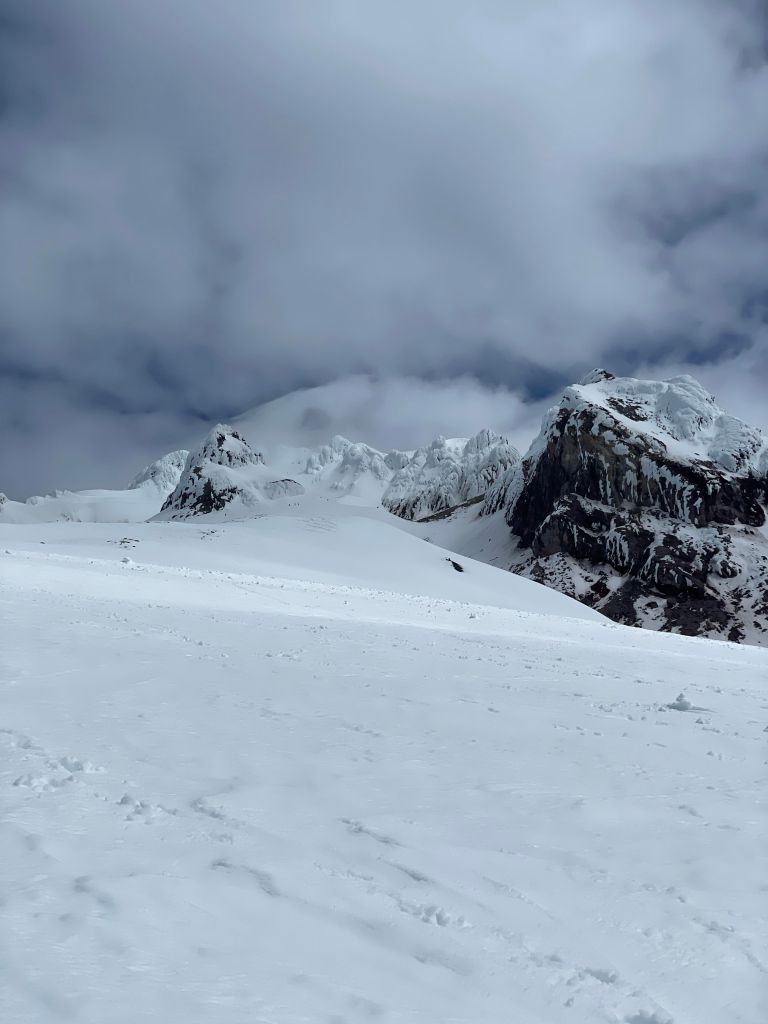
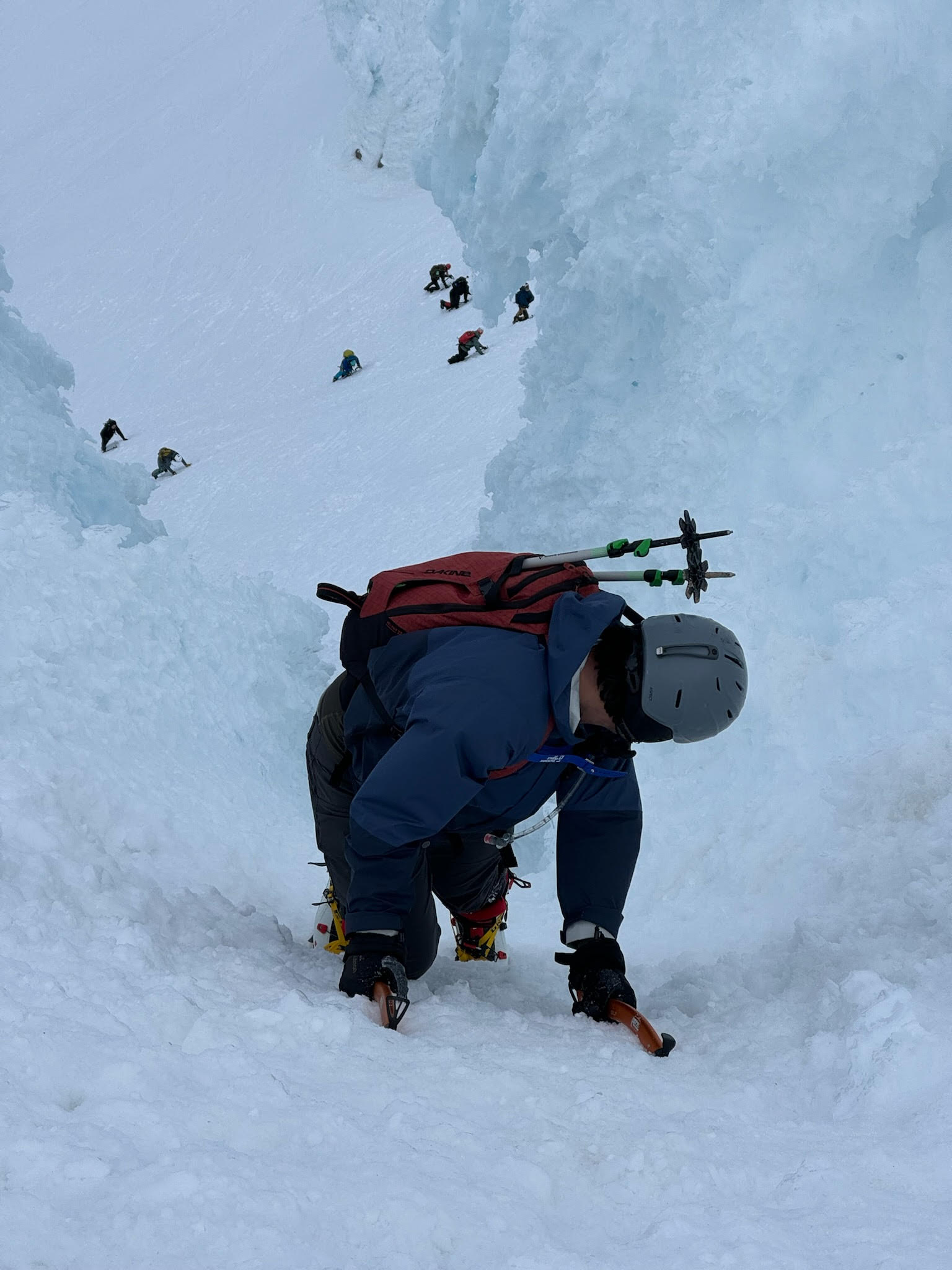
Climbing the ~40-50 deg headwall was incredibly demanding. Each step was equivalent to climbing a ladder with rungs spaced far apart, except this was the final 1000 ft of a 5500 ft day. Progress was incredibly slow, but we knew we couldn’t delay. Crowds made everything harder due to the falling ice and bottlenecked topout. We chose to climb the ‘Old Chute’, a wide open and steep clearing that lead up to a ridgeline near the summit. Another route called the ‘Pearly Gates’ was our original intention and was significantly less crowded, but had a large and open Bergschrund blocking its entrance like a moat before a castle. The concession of the Old Chute still worked out for us and we finally made it to the summit right before 8 am. The view was incredible and revealed more volcanos looming to the north in Washington. Below us was a sea of clouds, adding to the incredible prominence of Mt. Hood to the Oregon floor thousands of feet below. We could only spend a few minutes there due to the lingering sun warming, so we quickly made our way back towards the chute. Instead of the wide open clearing we climbed up, we chose to downclimb an adjacent rime ice tunnel to its right. This section was slightly less crowded but was incredibly steep. Progress was slow and intimidating, going any faster would create more risk but moving slow was tiring and tedious. Despite the increasing fatigue we continued consistently and eventually made it back to a rocky ledge below the headwall. I waited about 20 mins or so and fueled up before Trevor joined me, which made for a great feeling of relief having survived the most intense exposure of the mountain.

The Descent
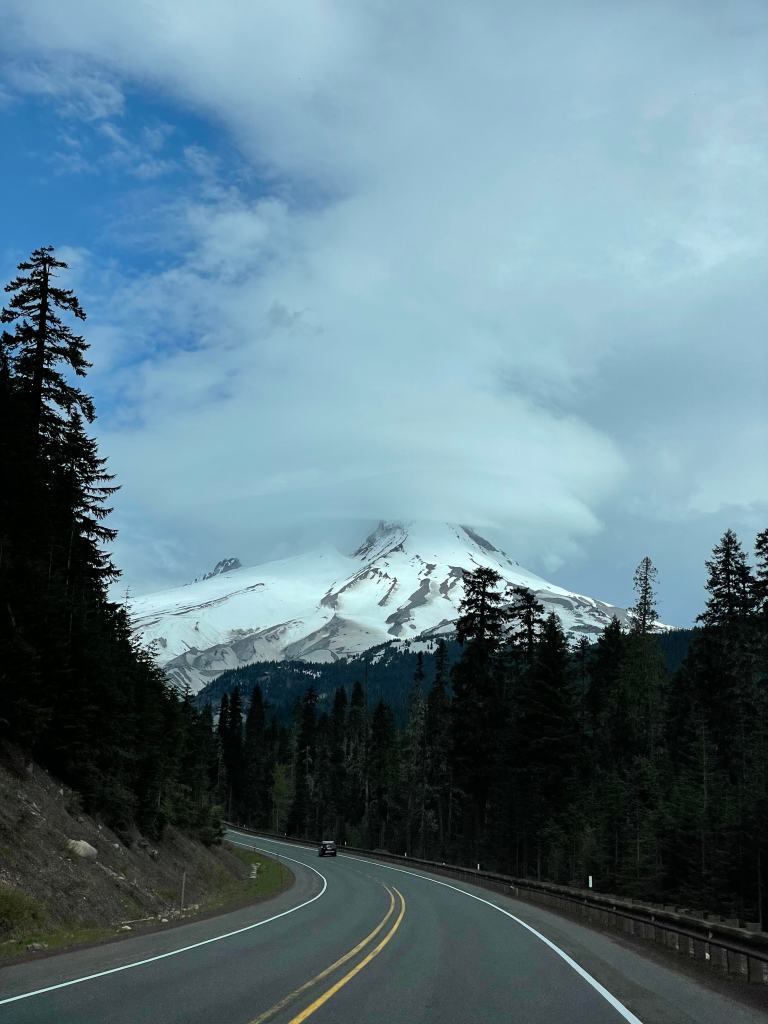
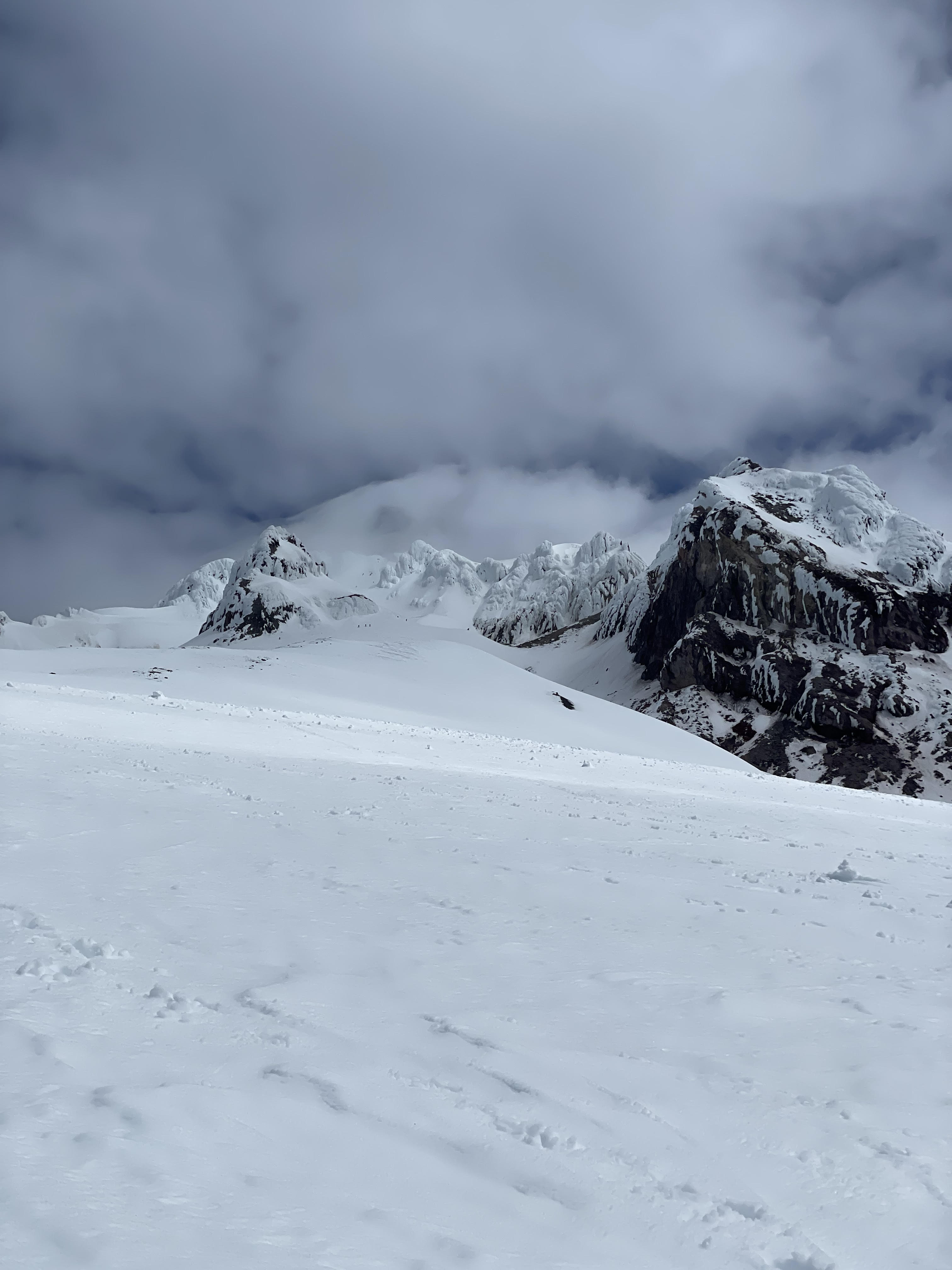
Thankfully the remaining descent was much better than the headwall. A few hours of sun baking had made much of the hardpacked snow soft and easy for travel. The first 2000 ft or so we were able to take off our crampons and glissade down the mountain. We passed another several dozen parties still making their way up while craving on our asses down the gradual slope. Finally we found our stashed skis near the top of the now active Palmer lift. I was feeling incredibly tired, but also had a rush of emotions having only 2000 ft to go on skis. Turns felt unbelievably difficult and I had to stop many times while I made my way through the resort. The whole time I found it crazy to believe just how much vertical gain we had made in just a short distance. Nearly three full sized ski lifts spanned less than half of the mountain’s alpine terrain. Nearing the bottom of these lifts was our car waiting in the lot and making it there finally was an amazing feeling. We made it through the climb with little hiccups and felt like we had really pushed ourselves physically. As we took off our gear, the mountain was lit up well in the now afternoon light and we could see gigantic lenticular clouds stuck at the peak above. The view was even better as we drove back, ironically being the first time we saw the peak during daylight. The next stop was the airport back to LA, marking the end of our brief Oregon vacation. Mt. Hood was an incredible climb and one that I will definitely mark for a repeat, maybe even to ski from the summit!


 Max's Blog