Category: Ski Mountaineering

  • Risks and Rewards – Tuckerman Ravine

    Risks and Rewards – Tuckerman Ravine

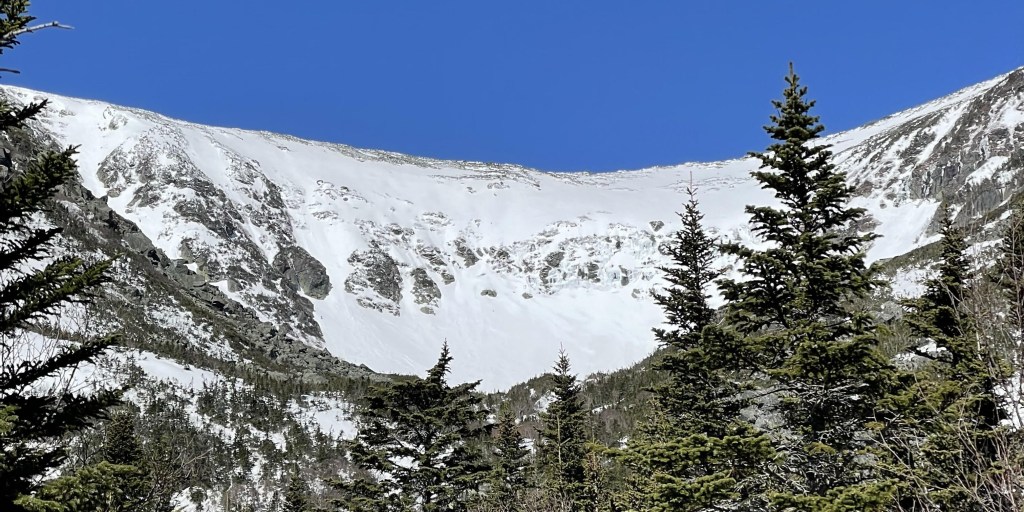
    Ever since I’ve heard about Tuckerman Ravine and its renowned spring skiing I’ve wanted to plan a trip out to the White Mountains. Photos of its steep and exposed headwall look nothing like typical east coast glade and tree-cut skiing I was used to. A successful spring excursion and descent of the ravine seemed like a right of passage for those growing up in the area. Despite trying on several occasions, I was never able to get an outing out of the planning stage while I attended college relatively nearby in college. Unexpectedly an opportunity arose nearly 3 years after graduating when a spring reunion coincided with a great Friday opportunity to complete the Mt. Washington trek. Soon enough I flew out to Boston and made my way up to a friend’s cabin in nearby Franconia, NH.
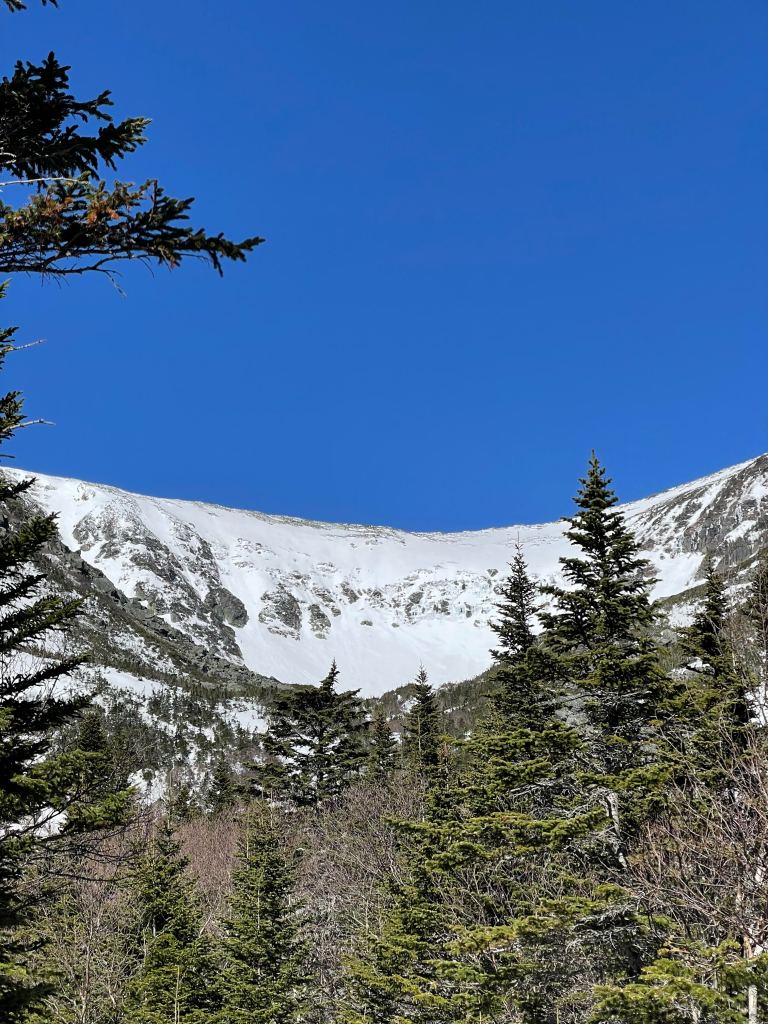
    Tuckerman Ravine viewed from Pinkham’s Notch, April 26th, 2024

    It was at the cabin that my friends and I started scoping out our lines in more detail with the help of “Best Backcountry Skiing in the Northeast: 50 Classic Ski and Snowboard Tours in New England and New York” by David Goodman. We figured the slope angles boasting 55+ deg headwall lines were quite sandbagged, but it put some fear into our minds while we still could enjoy the comfort of the cabin. This was the first time I would be putting myself into a true “no-fall zone” as most of the headwall required skiing above some massive cliff bands. At the time I knew my friends had skied the ravine once before, so I figured they could take some pressure out of the potentially terrifying descent. What I didn’t know at the time was that they both didn’t climb and ski the headwall itself, making our upcoming trek new terrain for us all.
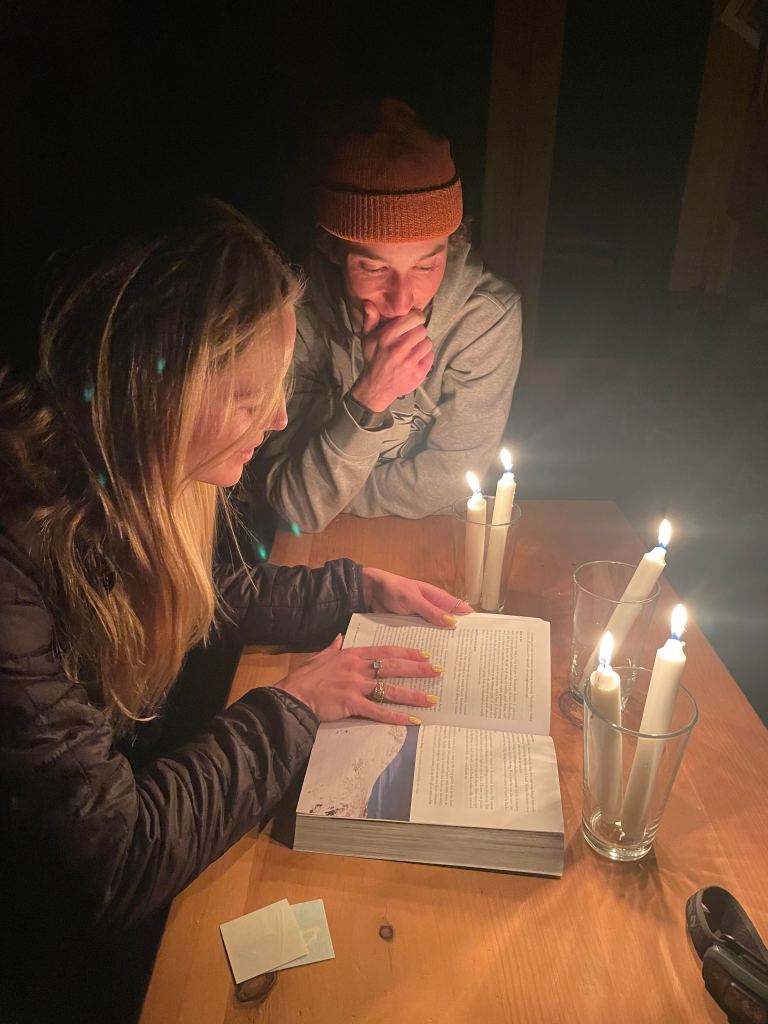
    Power outages are no excuse for a lack of research

    Mt. Washington is most famous for its extreme Winter weather and highest peak of the American Northeast. Its not until the spring season that its two approach headwalls make for some fantastic ski descents. On April 26th, the three of us made our way from the Pinkham Notch trailhead to the base of Tuckerman’s Ravine. Starting off around 8 in the morning, we first hiked about a mile with skis on our back before transitioning into skins. Another mile or two went by before we made it to a cabin near the base of the ravine, which was packed with other skiers hungry for spring turns. Grace and Devin had both skied here before, which made me feel pretty good about spotting some crazy lines on the bowl visible from the base cabin. Although these looked pretty doable from below, I knew that this headwall was no joke. Looking at the guidebook the night before, most of the prominent descent options were above 50 degrees and very exposed – a fall would likely send you over the center cliff bands and be fatal. Knowing this should have been the first warning sign, none of us had arrest devices (an ice axe) and only myself had steel crampons. Grace had micro spikes and Devin had plain old ski boots, which are both wildly far from comfort when climbing 50+ degree snow.
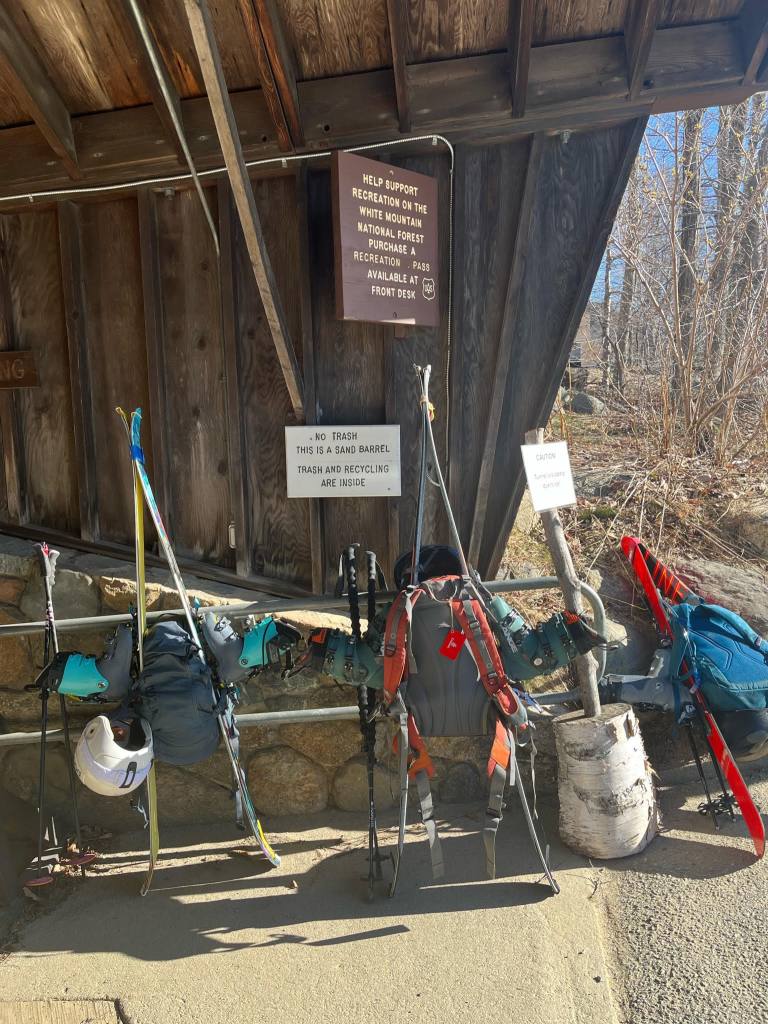
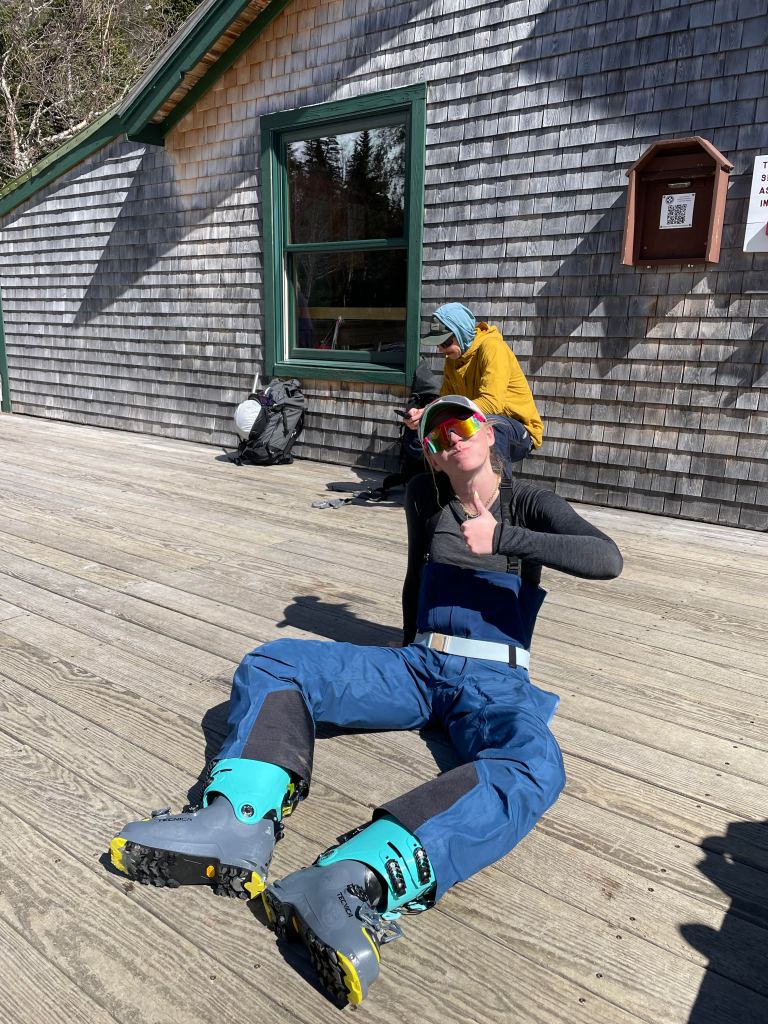
    Mandatory gear photo
    Grace post hut refueling, ready to gain some vert

    Despite our lack of preparedness, we were super pumped up to begin our climb and knew we could turn around if things got hairy. For our first ascent we chose to climb straight up “The Chute”, which was a well defined and classic descent on the left side of the headwall. Starting from flat bowl basin, the slope rose immediately to about 30-40 degrees as we booted to a resting point underneath the rocky chute choke. We could see the steep main ascent and planned our route along the mostly defined boot pack on our right. The bootpack then traversed across the chute and onto a perch before we reached the main ascent exposure for another check in. At that point, Grace and Devin had barely made it across, evident of their gear failing to work at this slope angle. While we had recognized the rest of the slope was only steeper and likely not doable, I had agreed to move forward and dig a larger bootpack with my steel crampons into the snow ahead. At that point, I had all but committed to the full ascent due to the risk downclimbing and slightly better gear. However, Grace and Devin were in pretty poor shape. Deciding to turn back around, they slowly made it back to our first resting point with only a small slip in arrestable terrain. I could just barely see them on my ascent, but knew we had narrowly avoided a potential slip in exposed terrain.
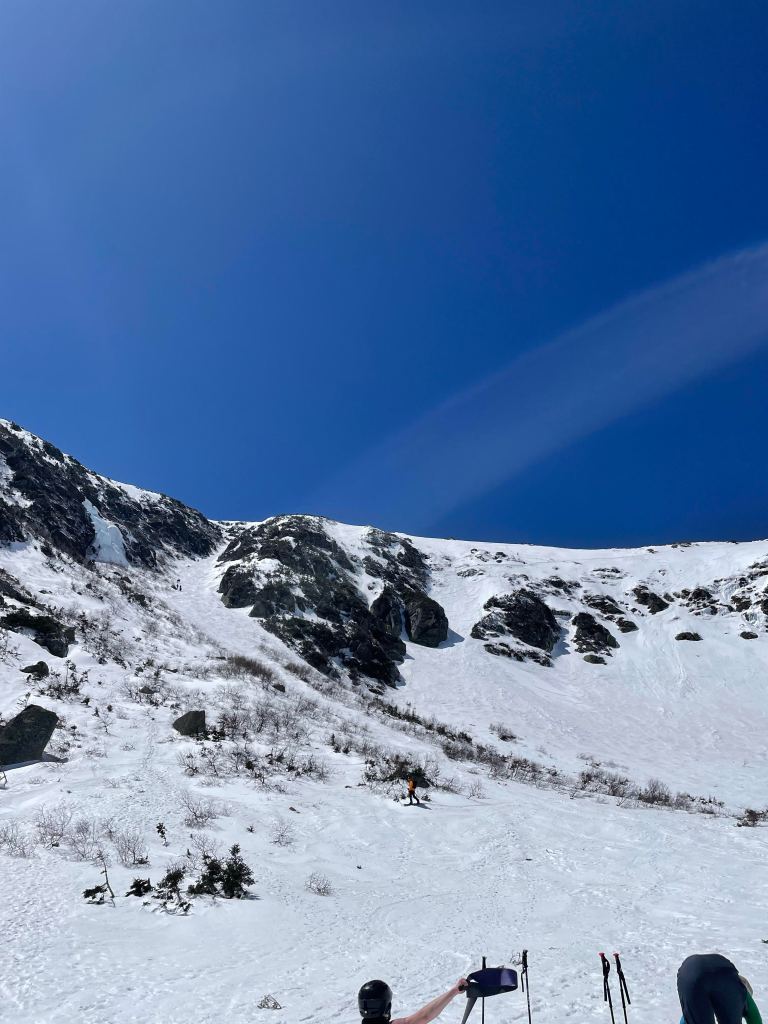
    View at the base of the headwall, with the Left Gully and the Chute most prominent

    Now climbing solo, I followed another climbing up the bootpack with increased apprehension. Falling at this point was not an option and I only had non-arrest ski poles and crampons to aid my ascent. Instinctively I knew the best way to continue was to stay calm and avoid panic. Loosing composure in that area would likely require a rescue and would only make my fear and risk worse. A healthy dose of adrenaline also helped, as I nearly sprinted my way up the steepest section of the headwall and into the rocky ridgeline ahead. The climber I had followed transitioned near me and gave me some reassurance that the ski descent would be possible, despite the incredibly intimidating rollover visible below. I gave myself probably 10 minutes at the top of the headwall to calm down, sip some water, and transition into my ski gear. The whole time I was on a relatively mellow slope prior to descending, but was on edge due to the strict no fall zone until I was about halfway down. Finally I began moving downhill on skis slowly, the whole time looking for tracks leading to the chute below. I was looking for a dogleg underneath a small cliff band, which traversed to the top of the line. Most of the way this was relatively mellow, but required one hefty turn at the steepest point and over the main headwall exposure. Inside I was terrified, but was able to keep my composure and move past the cliff band into the main portion of the chute. At this point I was incredibly relieved to make it past the no fall zone, but still had some crazy steep skiing ahead of me. I probably waited another five minutes or so to muster up courage before committing to the line. It was my first time experiencing sizable slough, small & loose avalanches that followed my turns across the chute. Despite this adding to the pressure, I made it down unscathed and felt incredible to have made it down the apron. At this point Grace and Devin had made it up to the top of “Left Gully”, a more mellow but still 40+ degree slope on the far left of the ravine. I sat by some rocks and watched their fast paced and mogul filled descent through the gully before meeting up with them at the crowded resting spot below.
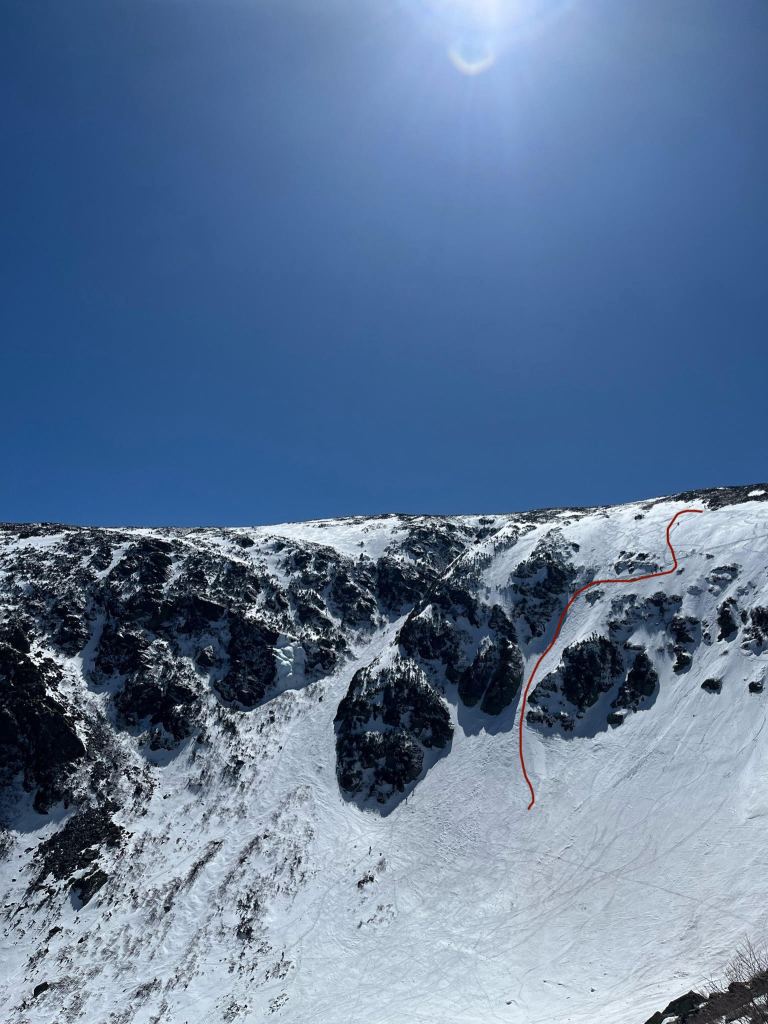
    Ski descent of “The Chute” on the left side of the ravine headwall, upper dogleg is between 50 and 55 degrees

    Once we all made it down we celebrated the successful journey through the ravine. All of us had some great skiing despite the turnaround for Grace and Devin. I felt particularly glad to have kept my composure and executed some high consequence skiing. We drank some beers and made our way to the “Lobster Claw” for a last half lap and mellow bump skiing before our final transition on the way down. Overall the day was an absolute blast having skied with great conditions and weather. Stoke was high all around and we were able to witness some much better skiers than us rip lap after lap on the most technical ravine descents. Even our way down was great, the Sherburne trail was filled in for most of trip back to the trailhead (although we definitely met quite a few dirt batches on the way). When we finally made it down, we all felt completely spent and were excited to make our way back to Boston for the night.
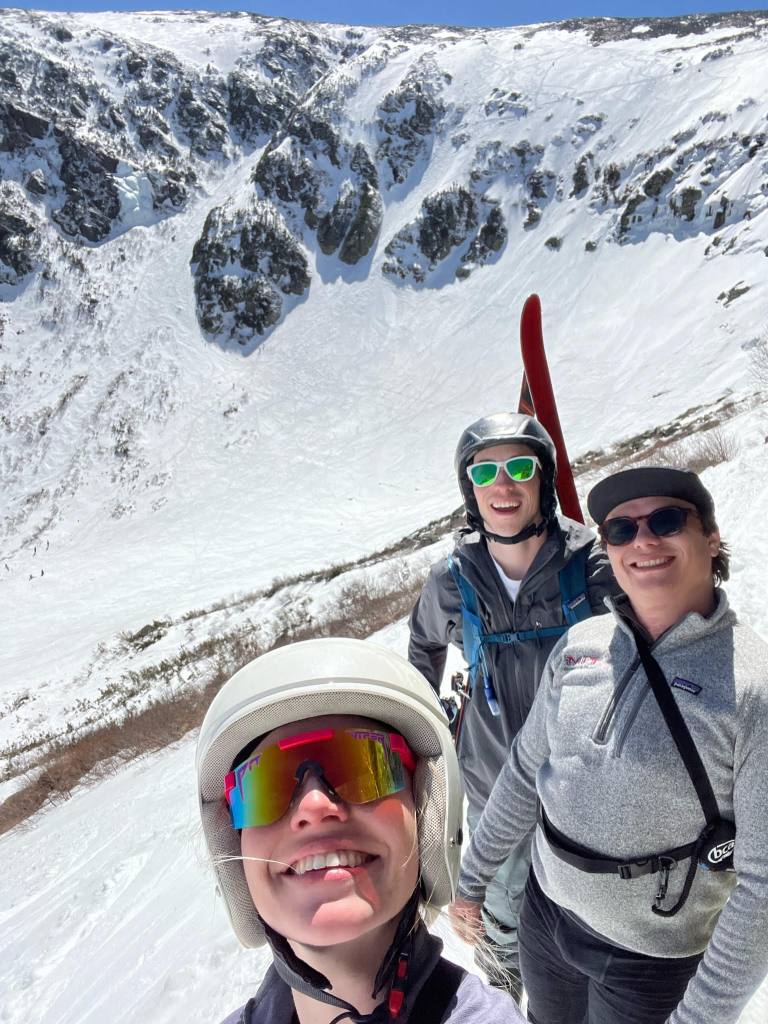
    Grace, Devin, and myself (from left to right) at the midway point of the “Lobster Claw” and overlooking the previous chute skiing of the day

    Tuckerman Ravine can be relatively low risk if climbed and skied correctly, but we learned a crucial lesson about planning and preparation for this go around. Any ascent above 35-40 degrees really requires crampons, and any ascent above exposure really requires an arrest device. Moving forward we all have invested in gear that will make our future travel more safe and now know to be more mindful of researching beta prior to packing our final gear for a trip. Normal backcountry risks did not feel high during our approach and ski descent due to the good weather, snow conditions, and trail popularity. But in this case it was the terrain itself that carried high consequences. Keeping a level head and stopping when necessary was what kept us safe that day.
  • An Introduction – Mt. San Antonio

    An Introduction – Mt. San Antonio

    Skiing and outdoor adventures have been a part of my life as long as I can remember. Growing up on a small lake on the east coast meant tons of winter ice skating and sledding, with weekend trips to our local Jersey ski resort for good measure. Since then I’ve slowly ventured into skiing and hiking bigger and bigger mountains, gaining a taste for more ambitious adventures. Now that I have a full time job, I have the money & desire to tackle some bigger challenges while having a blast skiing. This is also the purpose of the blog I’m writing now: to bring life to a journey of experiences in the mountains as I develop with them.

    Myself a few years ago at Aspen Highlands, about to ski the bowl

    So why ski mountaineering? From my perspective, this is one of the most exciting ways to elevate my love of resort skiing, while challenging myself to learn new skills, improve my physical fitness, and find others who share my passions. I’ve also been inspired by the incredible feats of ski mountaineers in the modern ski touring & cinematic era that people like Nicolai Schirmer, Cody Townsend, and many others have defined. Schirmer is the king of steep, fast, and technical ski mountaineering in the northern Norwegian fjorns and documents his adventures on a staggeringly high cadence on youtube. Townsend has a similarly impressive resume of skiing & mix of online content, but with an incredibly ambitious goal of completing the “50 Classic Ski Descents of North America”. This list defines fifty inspirational and daunting ski descents ranging from straightforward couloirs in California to seldom achieved expeditions to the tallest peaks in Canada & Alaska. The idea of combining challenging mountain ascents with the reward of epic ski descents is incredibly motivating and will hopefully provide me a life long journey with some cool people at my side.

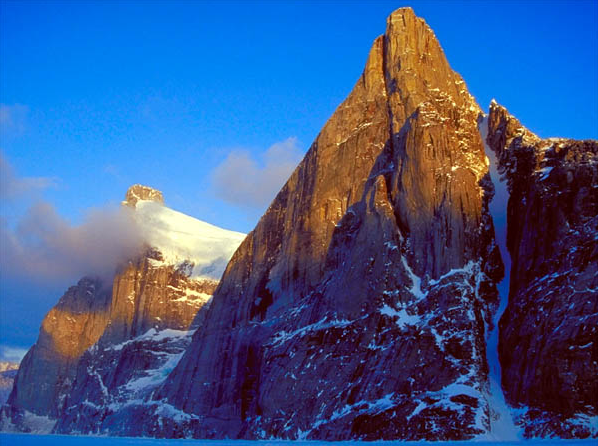
    Polar Star Couloir, a particularly esthetic couloir from “Fifty Classic Ski Descents of North America” by Chris Davenport, Penn Newhard, and Art Burrows

    Round 1 – Scouting Mission

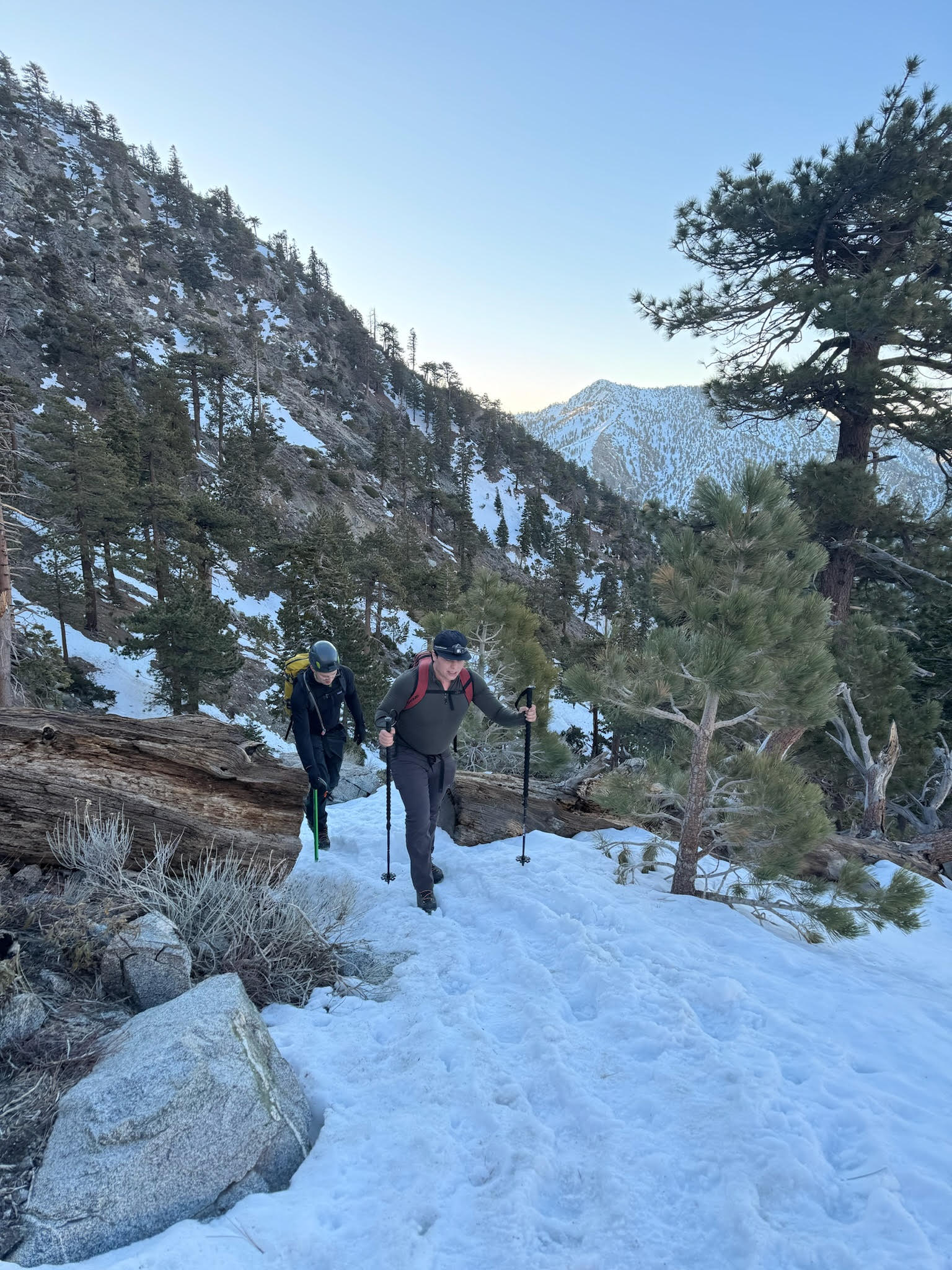
    This past spring was the start of my journey into the winter backcountry. I took an AIARE Level 1 course and toured a few times into simple terrain in the Wasatch range of Utah. However the first real trial run begun with Mt. San Antonio (aka. Mt. Baldy) in the Angeles National Forest of Southern California, a lot closer to my LA homebase. It’s a fairly straightforward hike, starting with a ~3 mile trail of switchbacks from Mt. Blady village to a small ski hut at the base of a headwall 800 vertical feet from the summit. On April 13th, 2024, my roommates and I set out on a ‘scouting mission’ to first summit the peak and then learn more about the potential to ski some of the fantastic couloirs within Baldy’s headwall. Slight wind & rain was predicted on that Saturday morning as we left the Redondo Beach house at 4 o’clock in the morning. The alpine start kept us crossing fingers for a better outlook and as the morning’s first light appeared on the slopes above it was clear that we’d lucked out with pristine clear conditions.

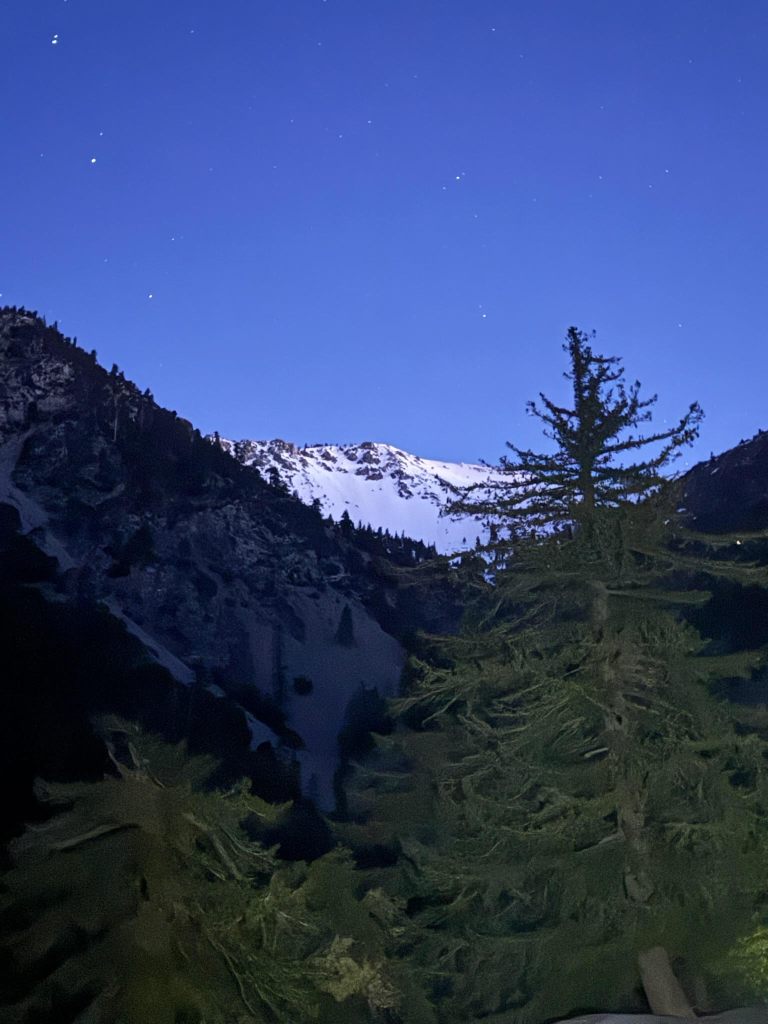
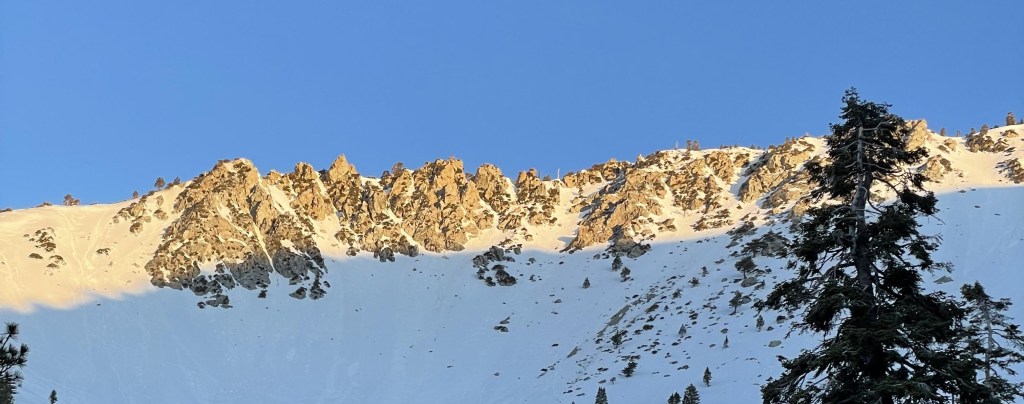
    Mt. Baldy’s headwall at the first sign of light in the morning

    While we took in the view, I quickly realized I was out of shape for a long approach with a moderately heavy pack for the day. Putting one foot in front of the other, we managed to make it to the ski hut by a quarter past 7. This gave us time to scope out the headwall ascent in more detail as we transitioned into crampons and took out our ice axes for their inaugural use. We eventually chose to climb up “Dosie’s Dare”, the Southmost couloir of the headwall. Slight southwest winds and a few hours of spring warming made for a daunting ascent, as small instances of rockfall plagued the climb. The three of us made sure to avoid the main rockfall trajectory, consistently scan for debris, and remind ourselves to avoid warming for successive attempts. Eventually we made it up the couloir, feeling tired but ready for the remaining few hundred feet to the summit. At this point I was exhausted and making slow steps, but still managed to make it to the peak about a minute or two behind my friends. The view was spectacular and presented a ~270 deg view of a sea of clouds in the valley below. After a brief pause, we glissaded our way down soft wet snow and down to the trailhead by about 1:30 in the afternoon. I was completely wiped out and found myself with a new appreciation for more demanding ascents of the mountaineers I find inspiring. Regardless, the adventure of the day was worth every step and had us itching for a repeat with skis.

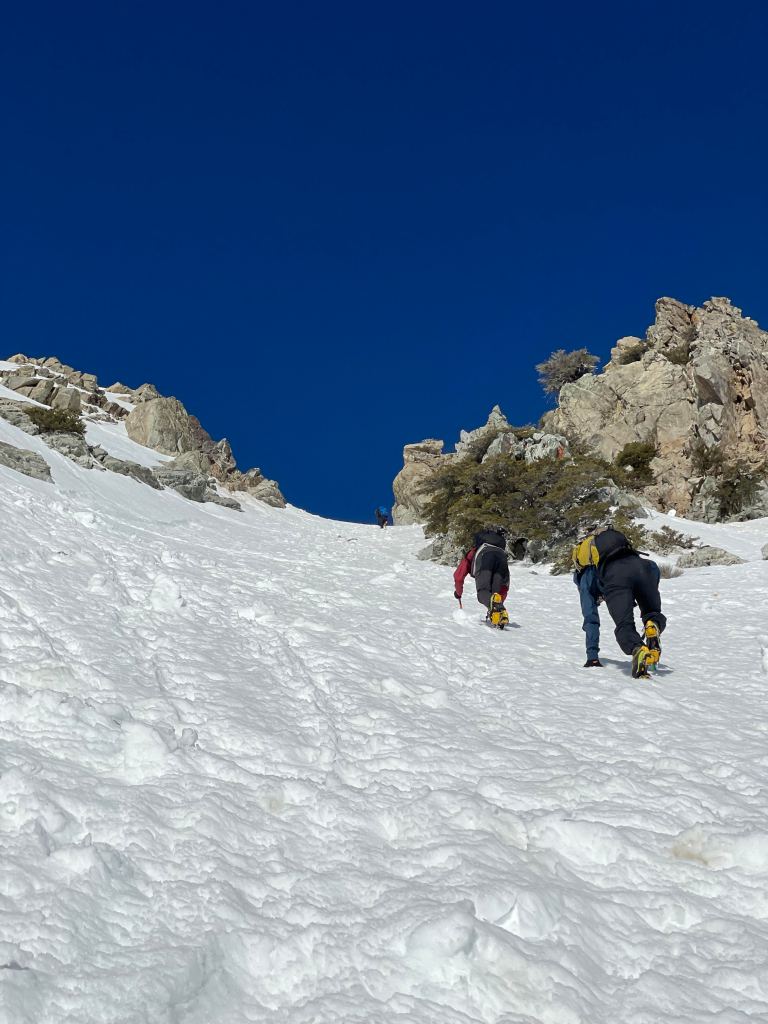
    Trevor and Max making their way up
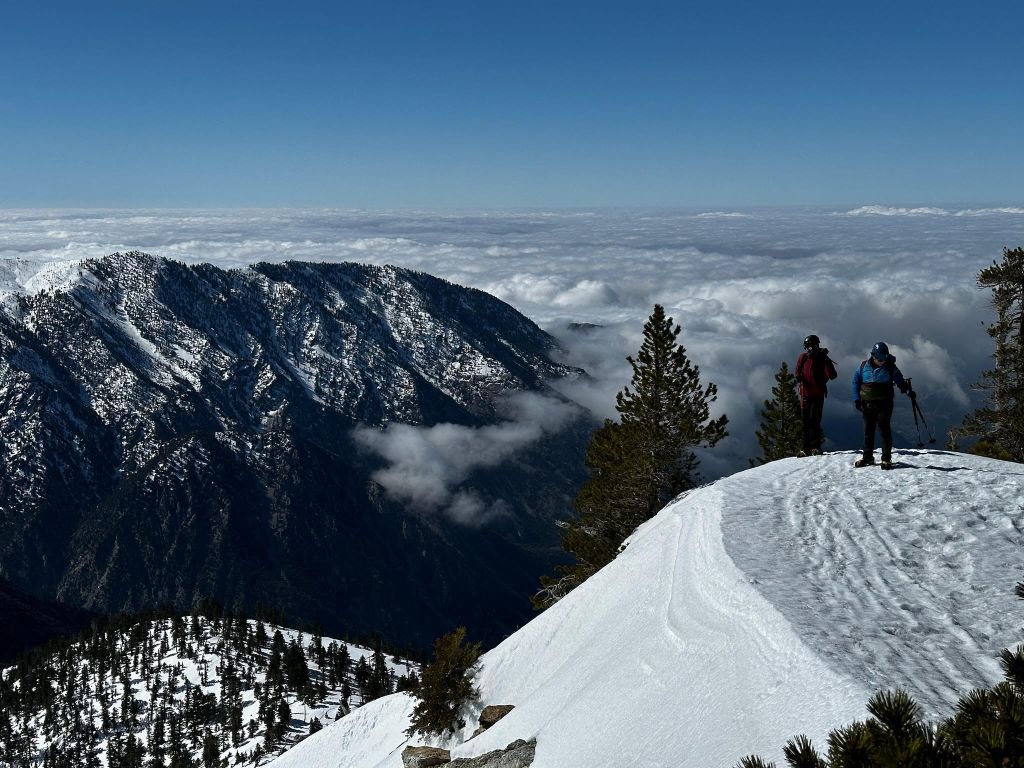
    Myself and Max at the top of the headwall

    Round 2 – Chute Skiing

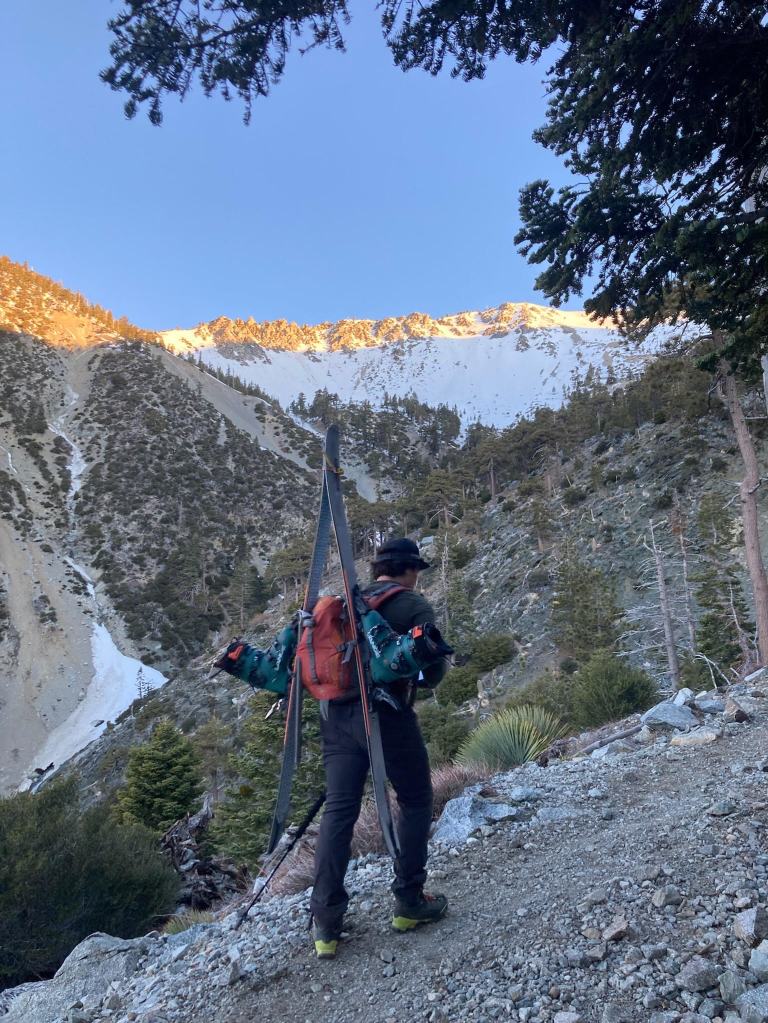
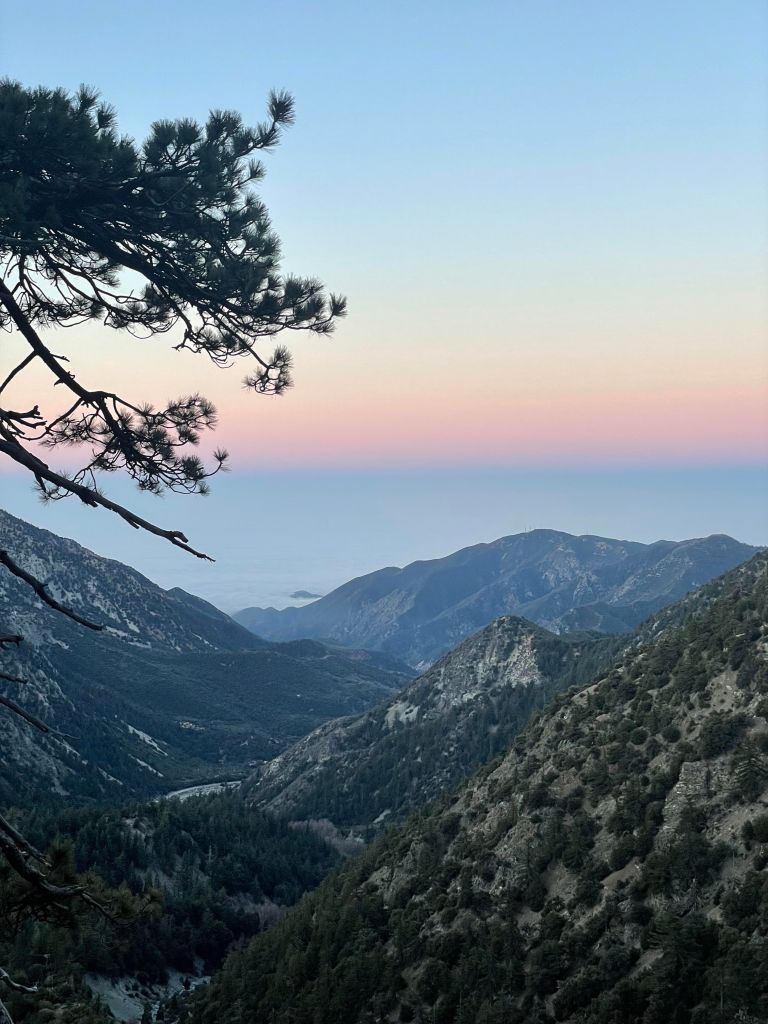
    Exactly one week later, we set off for a repeat ascent of Mt. Baldy’s headwall. This time Trevor and I packed an alpine ski kit, marking Trevor’s first time in the backcountry on skis and my 4th. Starting off at the trailhead I was nervous for my physical fitness while my pack was probably 15 pounds heavier than our previous journey. But in the week leading up to this hike, I did significantly more preparation in the gym (last time it was close to zero to be fair). Getting to the ski hut took a while, but the views of the San Bernadino valley with a repeat cloud layer inversion were fantastic. Shortly after the first light hit the top of the Baldy headwall and we swiftly made it to the ski hut at around 7:30 in the morning.

    Making my way up the trail with a view of the headwall chutes above
    A glorious view of the cloud layer below us in San Bernadino

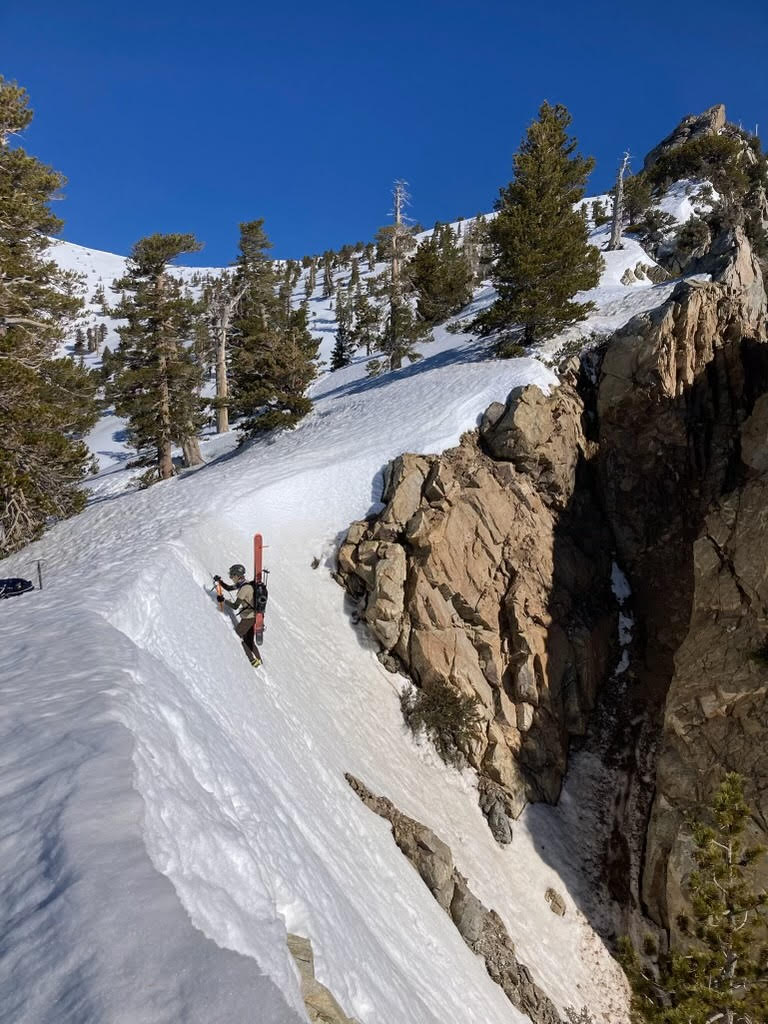
    Matt and Trevor aimed to climb the Girly Man couloir, a narrow and steep classic of the headwall that made the most direct passage to the ridgeline marking our summit for the day. I was the only one in the group to have alpine touring bindings, so I took a stab at skinning up the larger open bowl to the left of the rocky headwall. While making some switchbacks up the slope, I was accompanied by a group of three slowly hiking with crampons and axes. While otherwise unnoteworthy, this was probably a signal I should have been booting along with them. Following some more sketchy kick turns and a near fall, I made my way over to a tree and transitioned into crampons. After another 30 mins and many groups passed, I made my way up to a larger triangular rock on the ridgeline where my group was waiting. Trevor and Matt had successfully climbed the couloir and seemed to have a blast doing so. Looking down the slope was quite intimidating, but it was also not on the table for a ski descent given its rock filled crux.

    Trevor topping out of the Girly Man Couloir, it’s a lot steeper than it looks!

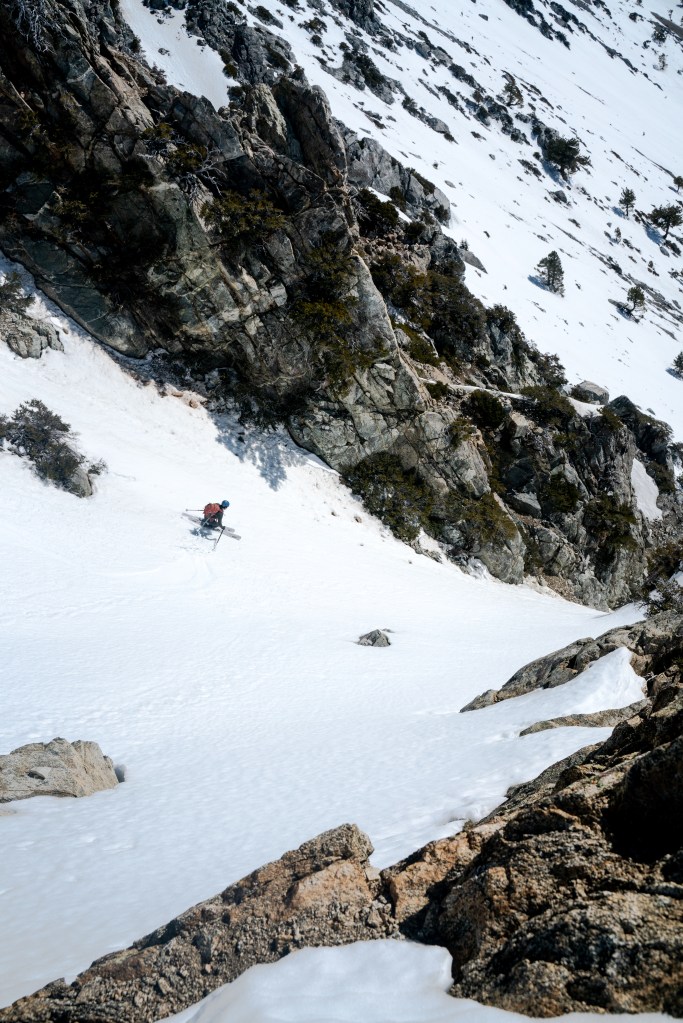
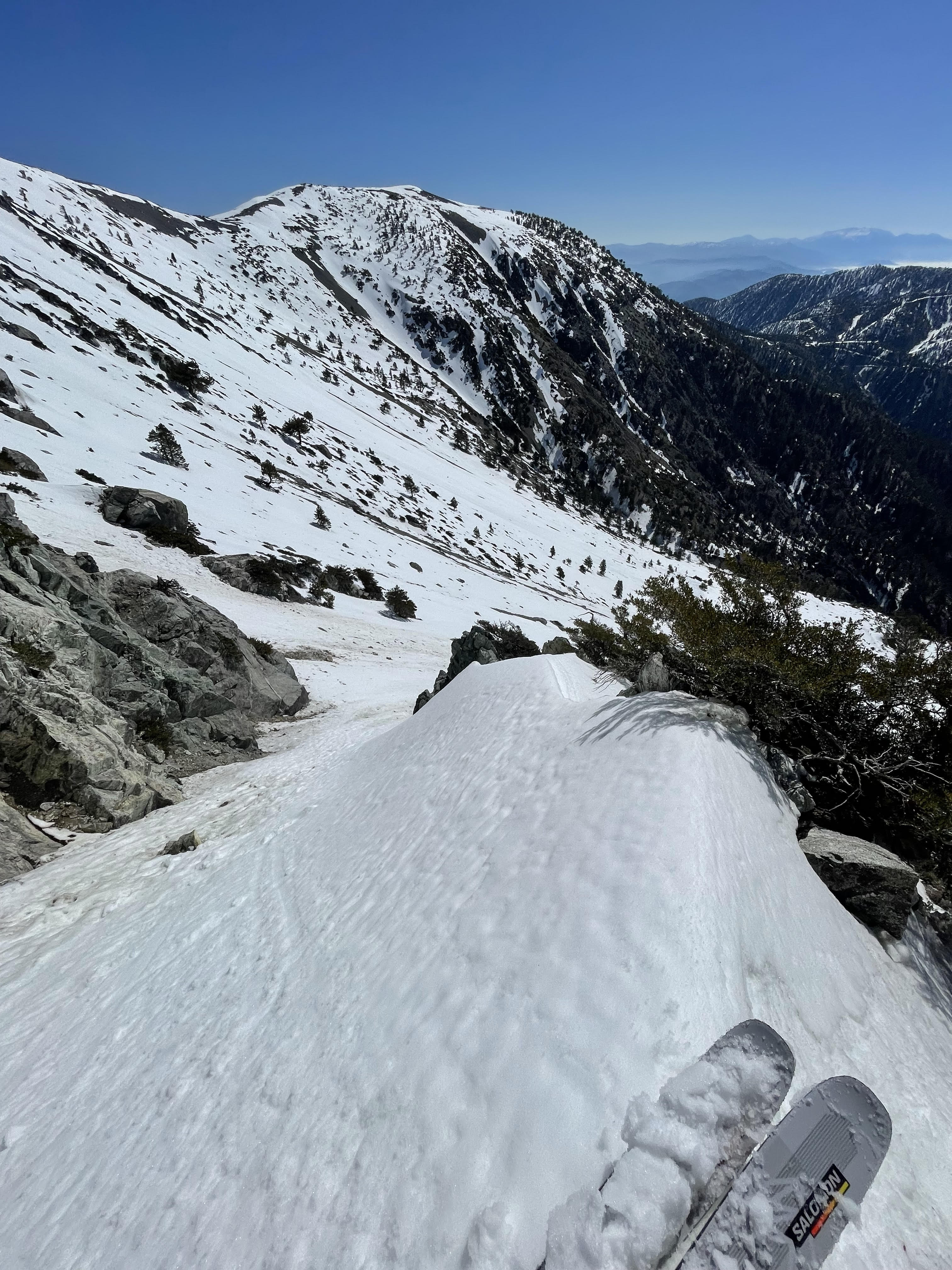
    Following some hydration and calories, we were ready to make our ski descent and I was particularly stoked for it. The chosen line was called the Hourglass Chute (also called the Shit Chute) and was one over from the Girly Man ascended by Matt and Trevor. Ironically, Matt did not pack his snowboard and Trevor was an intermediate skier. While Trevor opted for the more mellow bowl I had partially skinned, I was going solo down the chute. Upon inspection, the upper snowfield was near perfect: prime corn snow, untouched, and a 40 ish degree slope. The first 10 turns were awesome and it was clear this chute was the perfect selection for the day. I was pumped with adrenaline as I approached the crux at the bottom of the snowfield and the center of the hourglass. At this point, the lactic acid in my legs from the vertical experienced throughout the day had fully caught up to me. Not wanting to risk any falls, I made a few careful hop turns and side steps through the narrow and steep choke. Soon after I was nested on a safe perch immediately after and decided to take a brief break. After that point was a short runout and right turn into the longer bowl apron. Linking a few turns at a time, I made it down the slope feeling sore but full of excitement. The only hiccup was some rockfall behind me that motivated my quick descent to a break point in the rocks below. While I waited for Matt and Trevor, I realized that I skipped my meeting spot (a small bush at the chute exit) and caused them a brief panic before we finally met up at the ski hut. Trevor had his own descent adventure while navigating his first backcountry ski down the Baldy bowl. He took a single tumble, but otherwise made some good turns visible from Matt & I at the exit. Matt on the other hand repeated our glissading adventure from the week prior.

    Myself on the hourglass chute descent, April 20th, 2024

    The ski hut post descent was a great time for a break and chat with other skiers as our stoke was still high from the riskiest part of the day. We packed up after another refuel and headed down the ~2.5 mile descent feeling great but sore. The car felt incredibly far away and I was particularly slow moving and tired as I made the final few steps. Despite the soreness, I was incredible happy with our two part quest to ski the headwall. Both ascents felt like exactly the right difficulty to test our endurance and technical skills while navigating the ski mountaineering landscape. Onto the next trip!

    Some bonus footage!